Improving drawing skills Worksheets for Ages 5-8
3 filtered results
-
From - To
Enhance your child's artistic abilities with our "Improving Drawing Skills Worksheets for Ages 5-8". These expertly designed worksheets are perfect for young artists, providing guided exercises that make learning to draw fun and interactive. From basic shapes to detailed pictures, these activities help kids refine fine motor skills, boost creativity, and increase confidence in their artistic talents. Each worksheet is crafted to match the developmental stage of children ages 5-8, ensuring they are both challenged and motivated. Ideal for parents, teachers, and caregivers aiming to nurture their child's passion for drawing, these resources promise hours of educational fun!
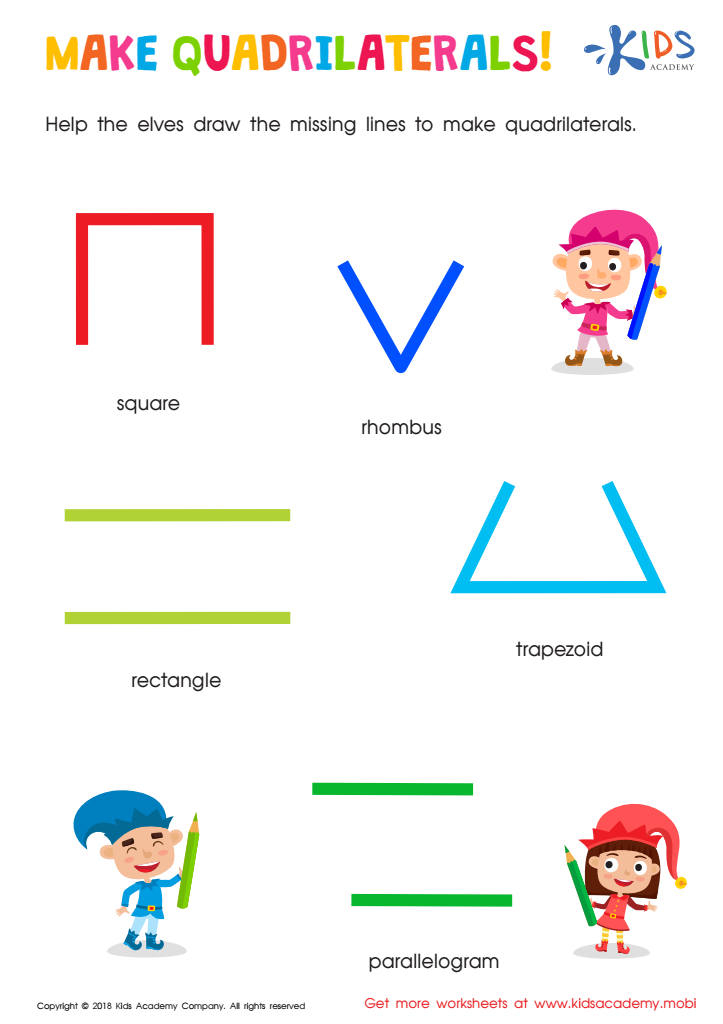
Make Quadrilaterals Worksheet
 Assign to My Students
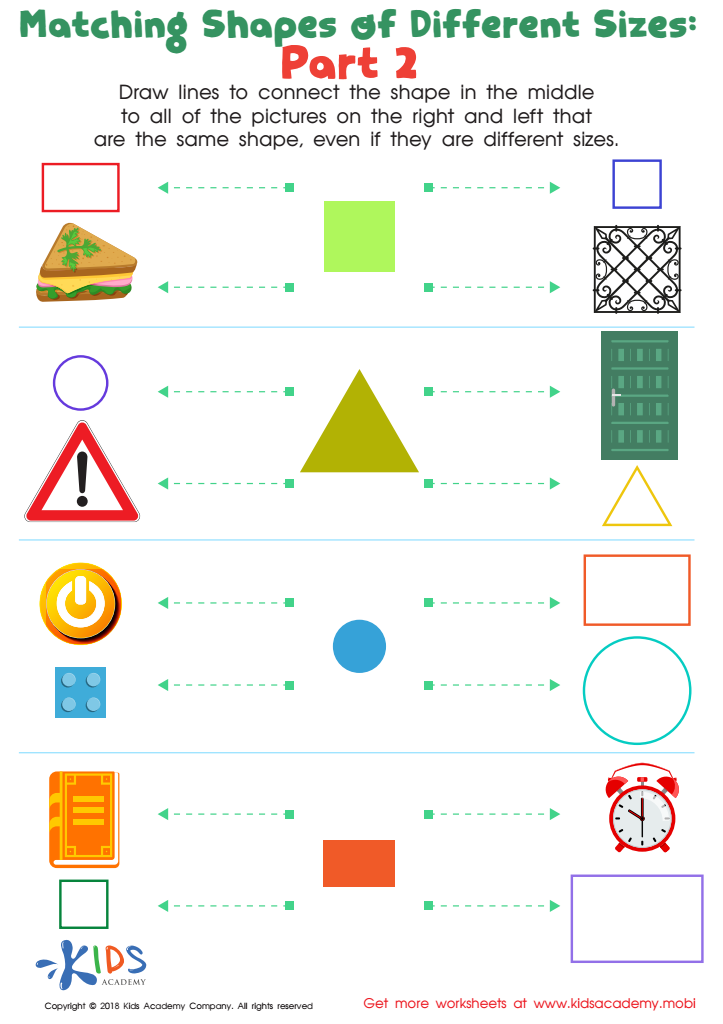
Geometry: Part 2 Worksheet







Drawing at ages 5-8 is more than just a fun activity; it plays a crucial role in a child's overall development. Parents and teachers should care about improving drawing skills for several compelling reasons.
Firstly, drawing boosts fine motor skills. These involve the small muscles in the hands and fingers, crucial for tasks like writing, buttoning clothes, and using utensils. By honing these skills through regular drawing, children can comfortably manage more complex tasks as they grow.
Secondly, drawing encourages creativity and imagination. When kids express their thoughts and ideas visually, it helps them think outside the box. This creative mindset can better equip them to solve problems and approach life’s challenges innovatively.
Social and emotional development also benefit from drawing. It provides an outlet for children to express emotions they might not yet have the words to describe. It also fosters a sense of accomplishment and boosts self-esteem when they create something unique.
Lastly, drawing enhances cognitive development. It helps kids understand concepts like shapes, sizes, and colors, laying a foundation for mathematical thinking and spatial awareness. It also sharpens observational skills as they learn to depict the world around them.
For these reasons, nurturing drawing skills during these formative years is essential for a child’s well-rounded development.








