Improving problem-solving abilities Worksheets for Ages 5-8
4 filtered results
-
From - To
Unlock your child's potential with our engaging "Improving Problem-Solving Abilities Worksheets" designed specifically for ages 5-8! These interactive worksheets cultivate critical thinking skills through fun and age-appropriate challenges, enhancing your child's analytical abilities. Explore a vibrant variety of activities that encourage creativity, logical reasoning, and independent thinking. With colorful illustrations and relatable scenarios, children will enjoy tackling puzzles, completing mazes, and answering questions that stimulate their minds. Perfect for reinforcing classroom learning or enriching home education, these worksheets ensure that learning is both enjoyable and effective. Give your child the tools they need to become confident problem solvers today!
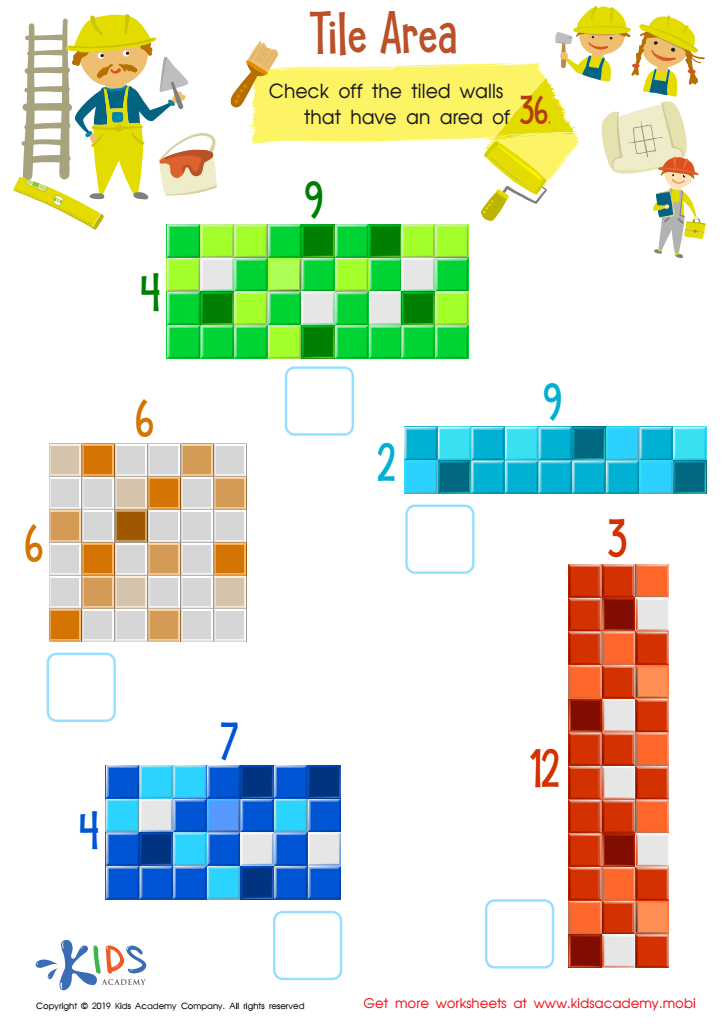
Tile Area Worksheet
 Assign to My Students
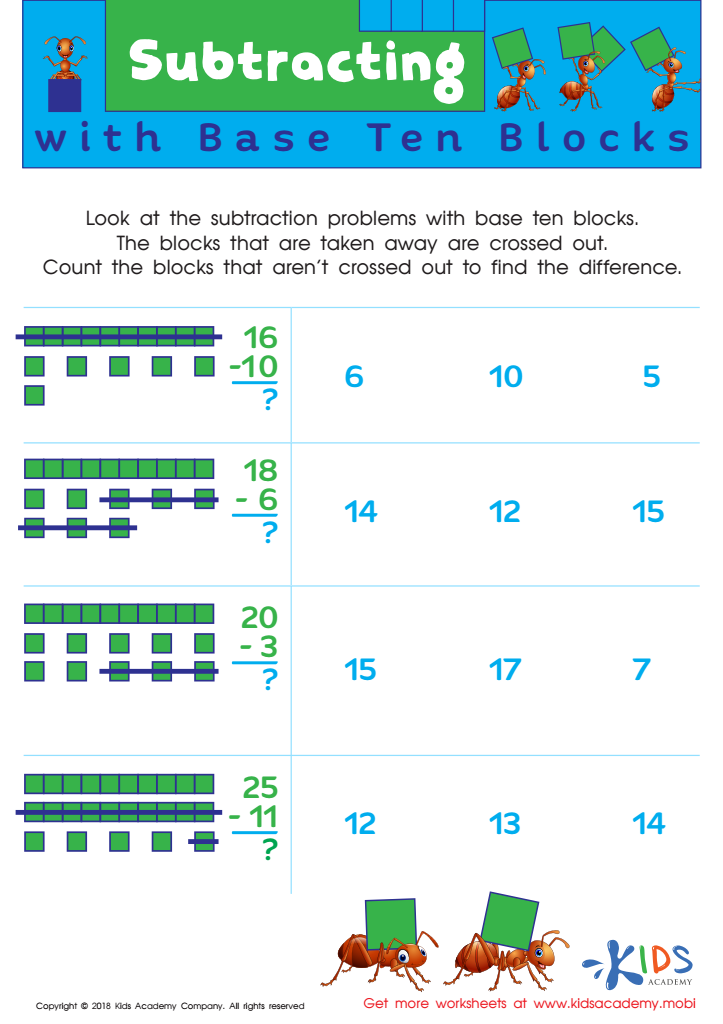
Subtracting with Base Blocks Worksheet
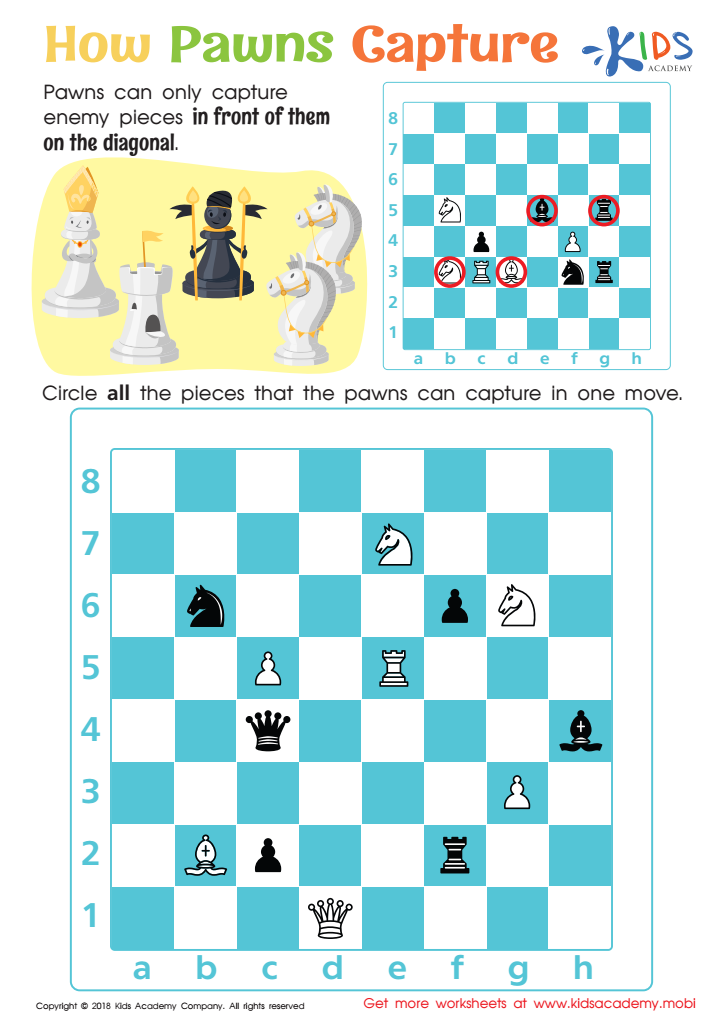
How Pawns Capture Worksheet
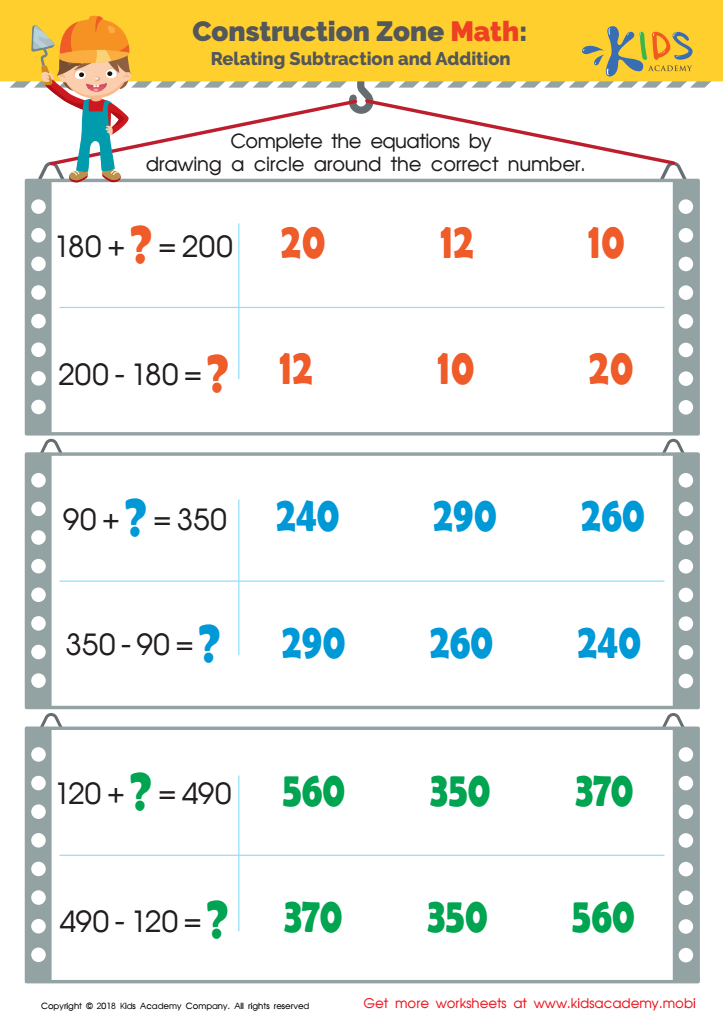
Construction Zone Math: Relating Subtraction and Addition Worksheet








Parents and teachers play a crucial role in fostering problem-solving abilities in children aged 5-8, as these skills are foundational for future learning and life experiences. At this age, children are naturally curious and eager to explore the world around them. Encouraging effective problem-solving helps them develop critical thinking skills, resilience, and confidence in their abilities.
These early years are pivotal for cognitive development; fostering problem-solving skills lays the groundwork for math, science, and even social skills. When children learn to approach challenges creatively and collaboratively, they enhance their ability to analyze situations, think critically, and come up with multiple solutions.
Moreover, nurturing these abilities fosters a growth mindset, a concept formalized by psychologist Carol Dweck. Children learn that failures are stepping stones to success rather than setbacks, thus promoting perseverance.
In addition, improved problem-solving reduces frustration in learning. Children gain greater autonomy and self-efficacy, making educational experiences more engaging. Ultimately, enhancing problem-solving skills in young children equips them not just for academic success, but for navigating the complexities of everyday life, making parents and teachers vital partners in this developmental journey.








