Learning times tables Worksheets for Ages 5-8
3 filtered results
-
From - To
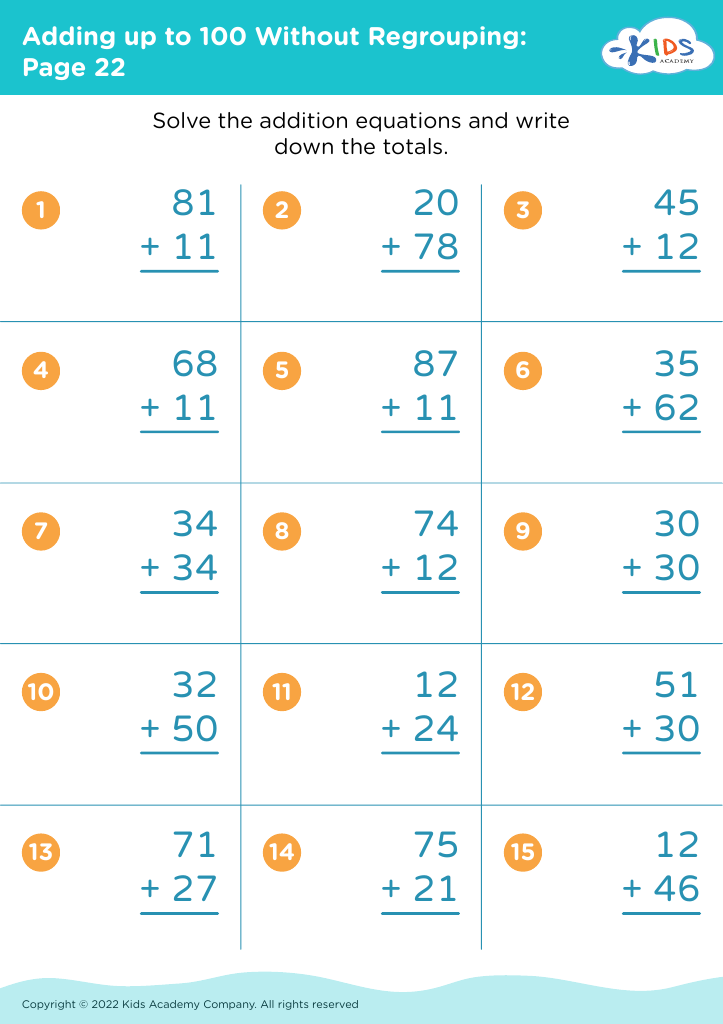
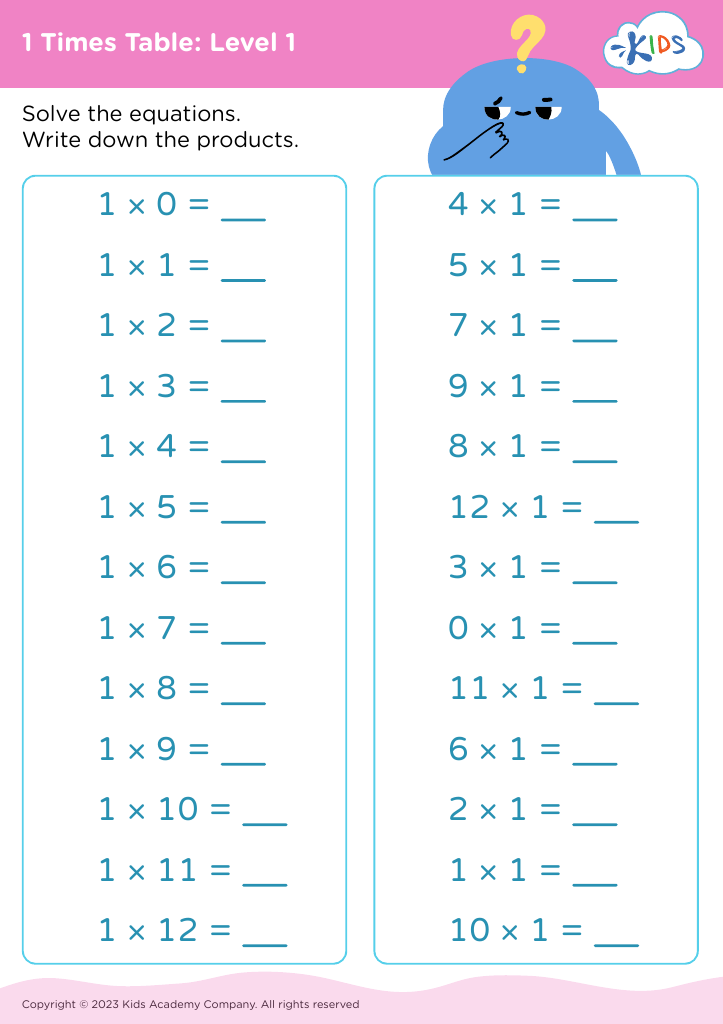
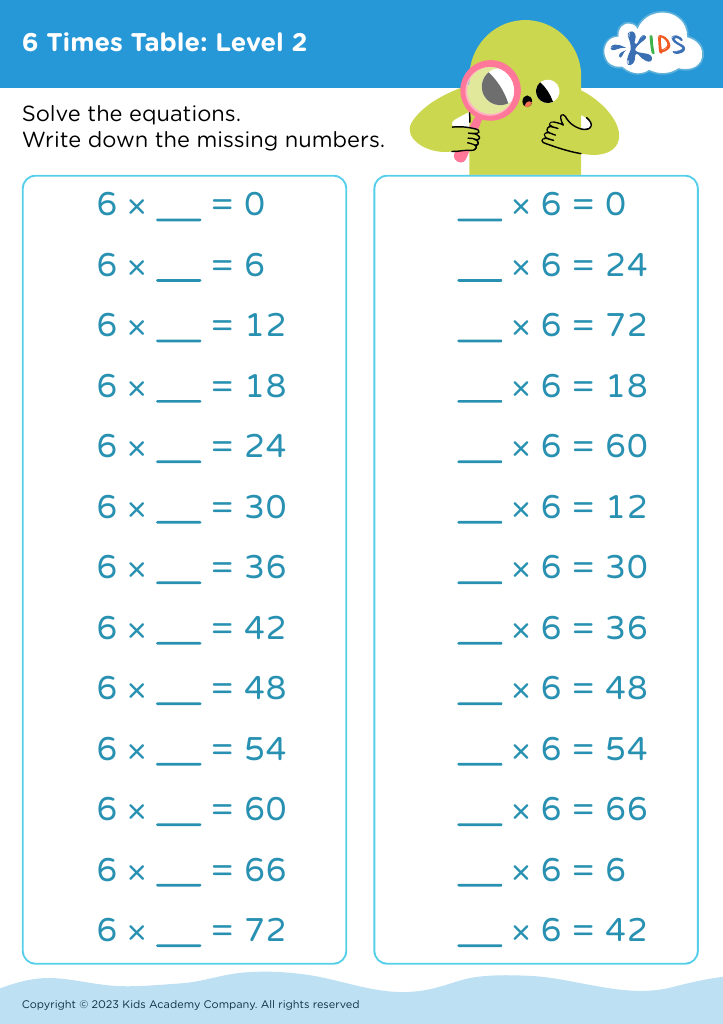
Boost your child’s math skills with our engaging Learning Times Tables Worksheets designed specifically for ages 5-8. These worksheets make mastering multiplication fun and interactive, offering a variety of activities to reinforce learning. Your little ones will enjoy colorful illustrations and relatable scenarios that help embed times table concepts. Each worksheet is crafted to cater to different learning styles, ensuring clarity and retention. Perfect for independent practice, homework, or classroom use, these resources empower children to build a strong mathematical foundation. Explore our collection today and watch your children gain confidence and expertise in their times tables!







Learning times tables is crucial for children ages 5-8 for several reasons. First, it lays a strong foundation for essential mathematical skills. Mastery of multiplication facts enhances a child’s ability to perform more complex arithmetic operations, such as division or fractions, later on in their education. This foundational competence fosters greater confidence in their math abilities, reducing math anxiety that many children experience as they progress through school.
Moreover, times tables are essential for real-life applications, enabling children to solve practical problems in everyday situations, such as cooking, shopping, and calculating distances. Understanding multiplication encourages logical thinking and helps develop problem-solving skills.
Additionally, memorizing multiplication tables aids in cognitive development by enhancing memory retention and recall abilities. As children practice and internalize these facts, they also build their attention spans and focus, integral traits for successful learning.
Parents and teachers should consider times tables not merely a math skill but a key building block for broader educational achievement. By engaging children early on in a fun, interactive way, caregivers can foster a positive attitude towards mathematics and inspire a lifelong love of learning.








