
Numerical recognition Worksheets for Ages 5-8
3 filtered results
Difficulty Level
Grade
Age
-
From - To
Subject
Activity
Standards
Discover engaging Numerical Recognition Worksheets designed for children ages 5-8, available on our website! These worksheets help young learners develop essential foundational math skills by recognizing and writing numbers. With a variety of activities, including tracing, coloring, and matching games, children will enhance their numerical literacy while having fun. Our user-friendly design makes it easy to download and print, giving parents and educators the tools needed to support early math education. Whether at home or in the classroom, these worksheets are perfect for fostering a positive learning experience. Explore our collection today and empower your child's learning journey with numbers!
Favorites
With answer key
Interactive
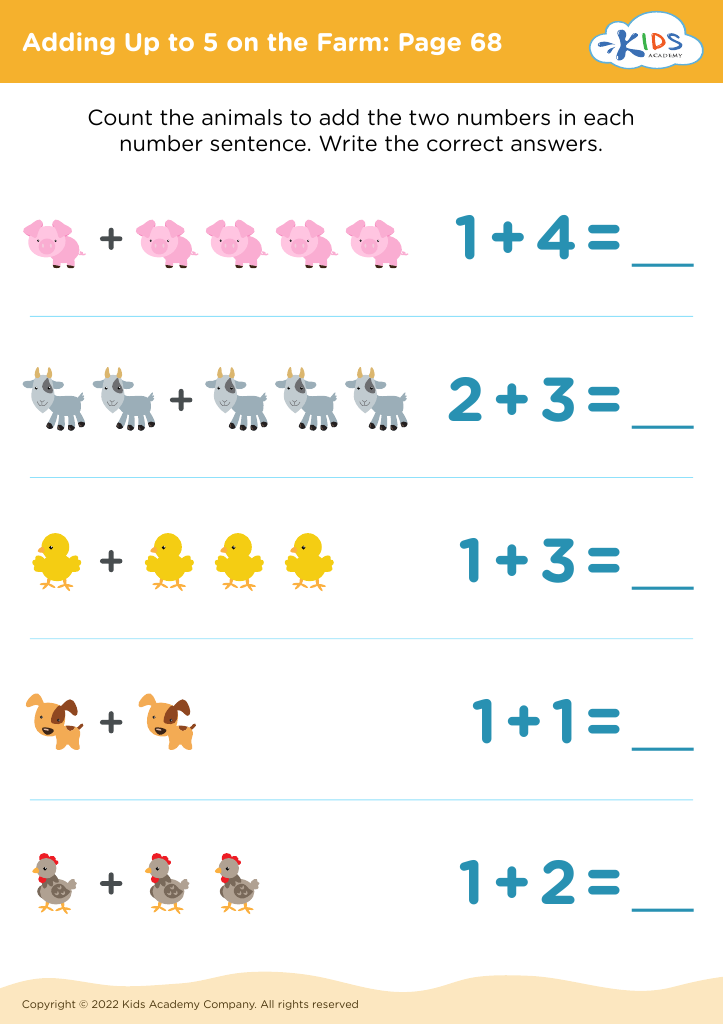
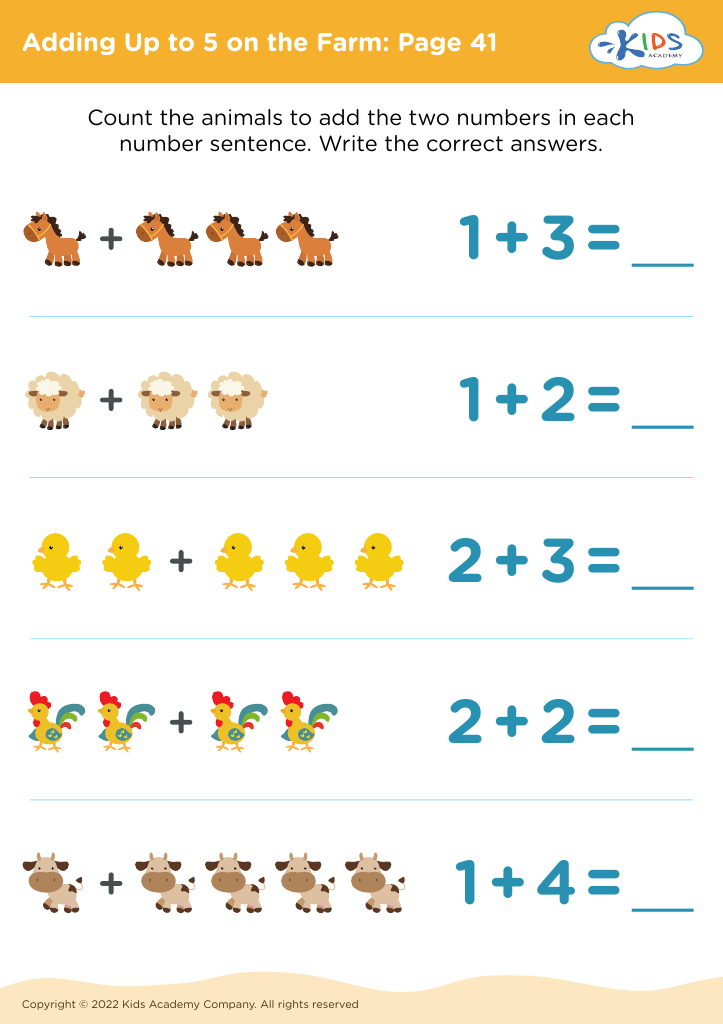
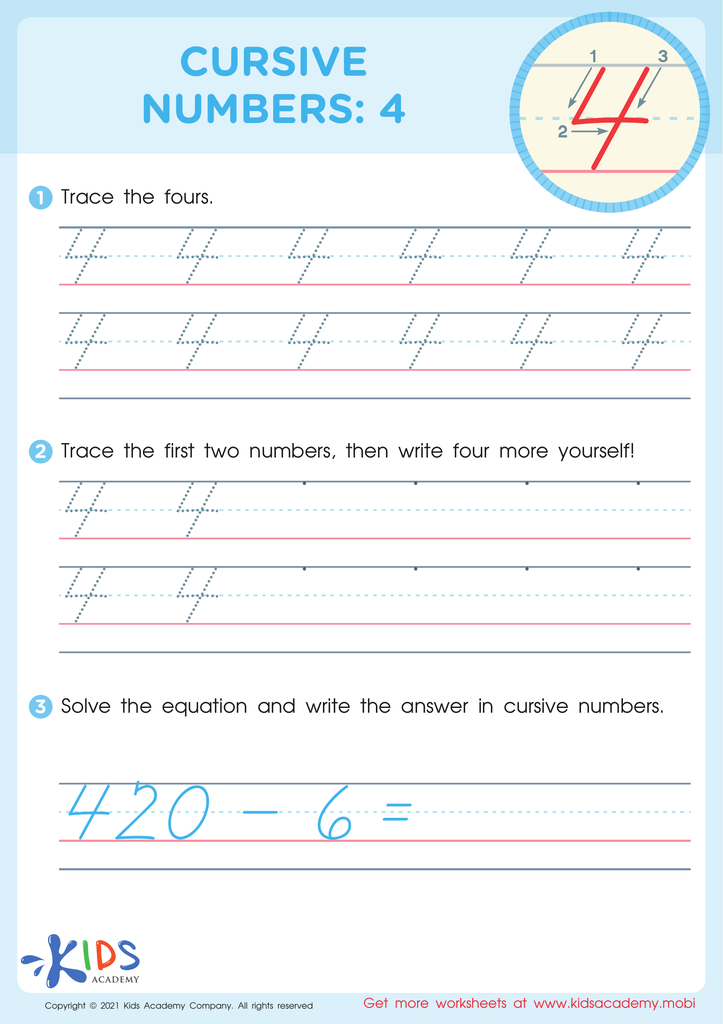
Cursive Numbers: 4 Worksheet
Math is challenging, and teaching cursive alongside it can be overwhelming. Make lessons enjoyable and your child will be more likely to stay engaged. Utilize worksheets to practice tracing the number 4 in cursive. With regular practice, your child can learn to write the number on their own.
Cursive Numbers: 4 Worksheet
Worksheet
Join Kids Academy for Free
Who is primarily going to use this learning content?








Numerical recognition is a crucial foundational skill for children aged 5-8, setting the stage for their overall mathematical development. At this early age, children begin to interact with numbers, and their ability to recognize and understand numerical concepts directly influences their future academic success.
Firstly, numerical recognition fosters cognitive development by enhancing critical thinking and problem-solving skills. Familiarity with numbers helps children grasp fundamental arithmetic operations like addition and subtraction, which are essential for more complex mathematics later on.
Secondly, early numerical recognition supports daily life skills. Children learn to read prices, understand time, and measure quantities, allowing them to connect math to real-world situations. This context not only makes learning engaging but also reinforces the importance of mathematics beyond the classroom.
Furthermore, consistent practice in number recognition builds confidence in children's math abilities. Children who struggle in this area may develop negative attitudes toward math, leading to anxiety or avoidance of the subject as they grow. Encouraging numerical recognition ensures that all children, regardless of their initial skill level, receive the necessary support to thrive and cultivate a positive mathematics experience.
In summary, both parents and teachers should prioritize numerical recognition to empower children, foster confidence, and lay the groundwork for future mathematical achievements.








