
Practice counting Worksheets for Ages 5-8
6 filtered results
Difficulty Level
Grade
Age
-
From - To
Subject
Activity
Standards
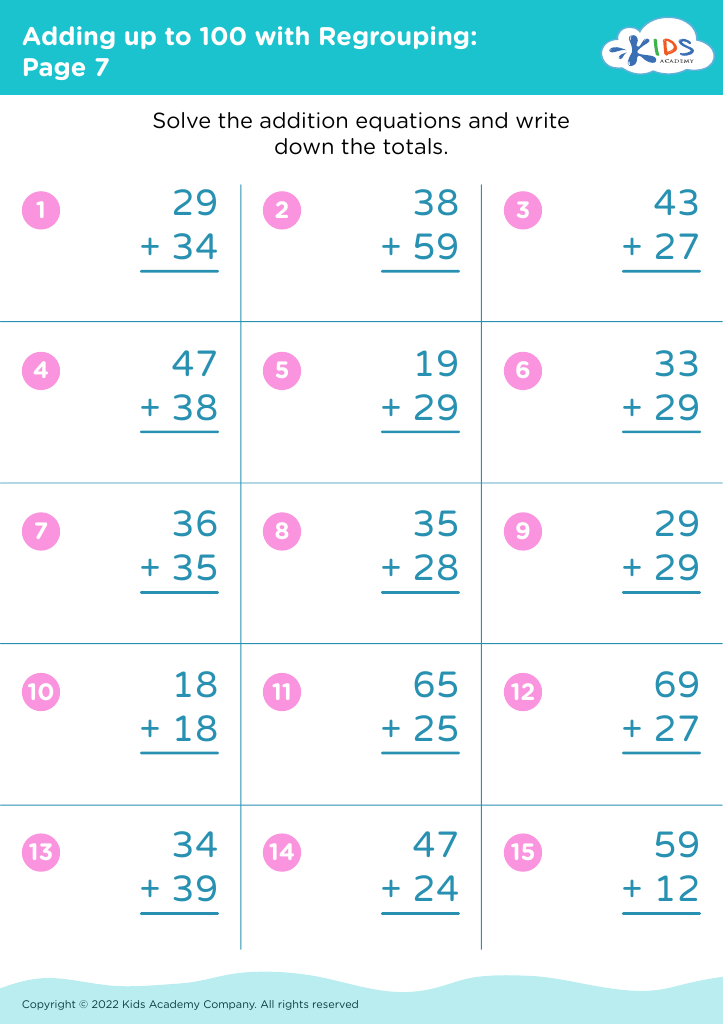
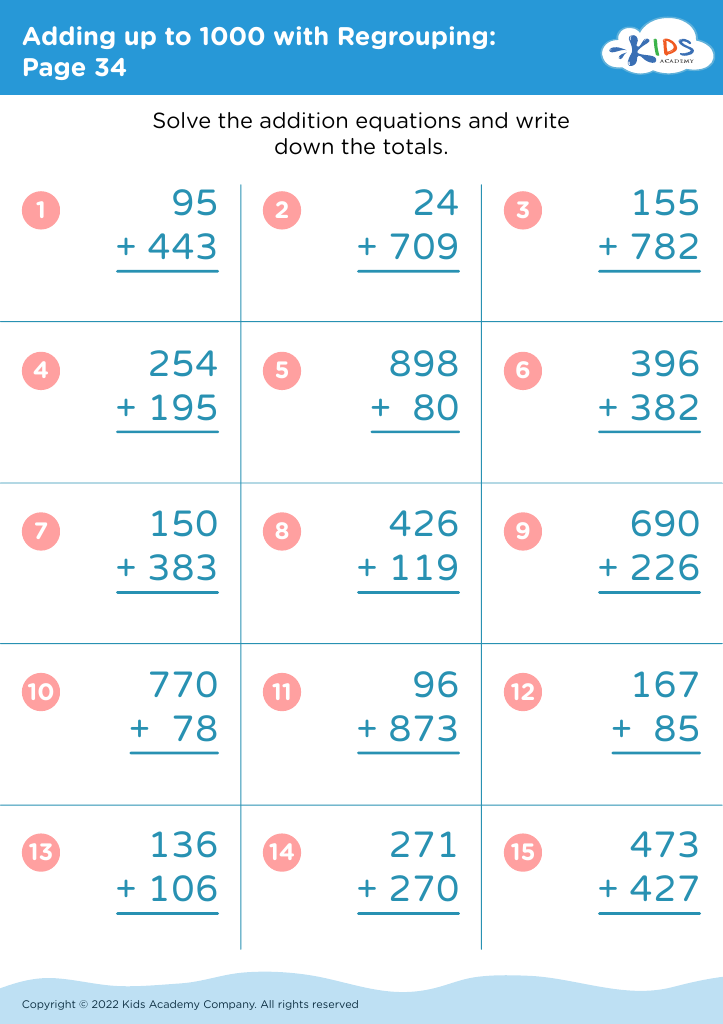
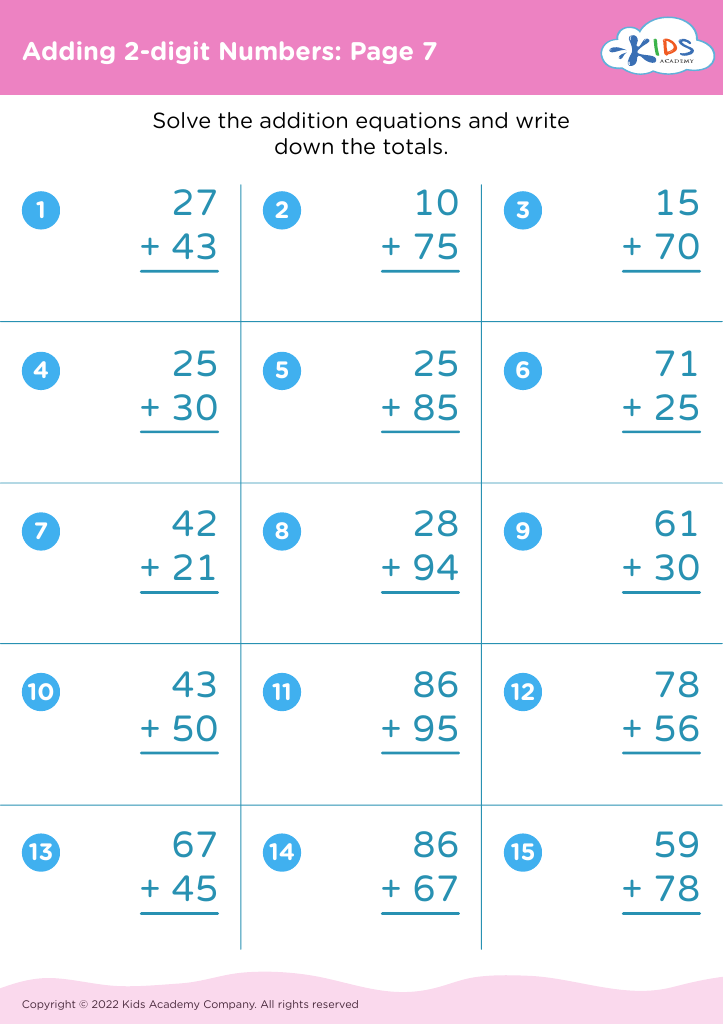
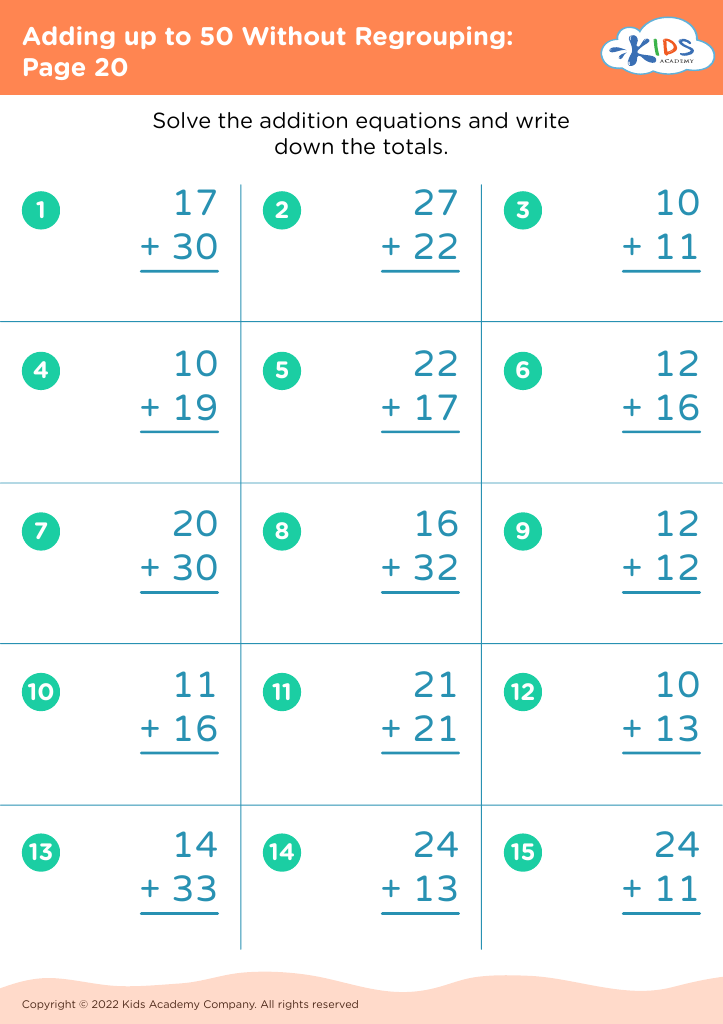
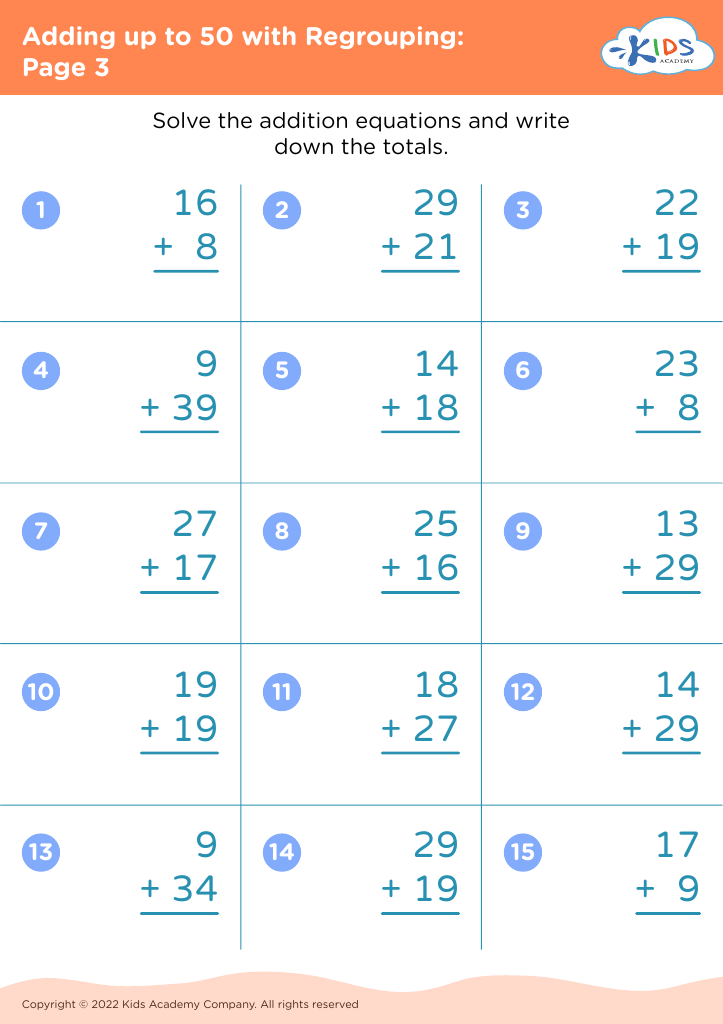
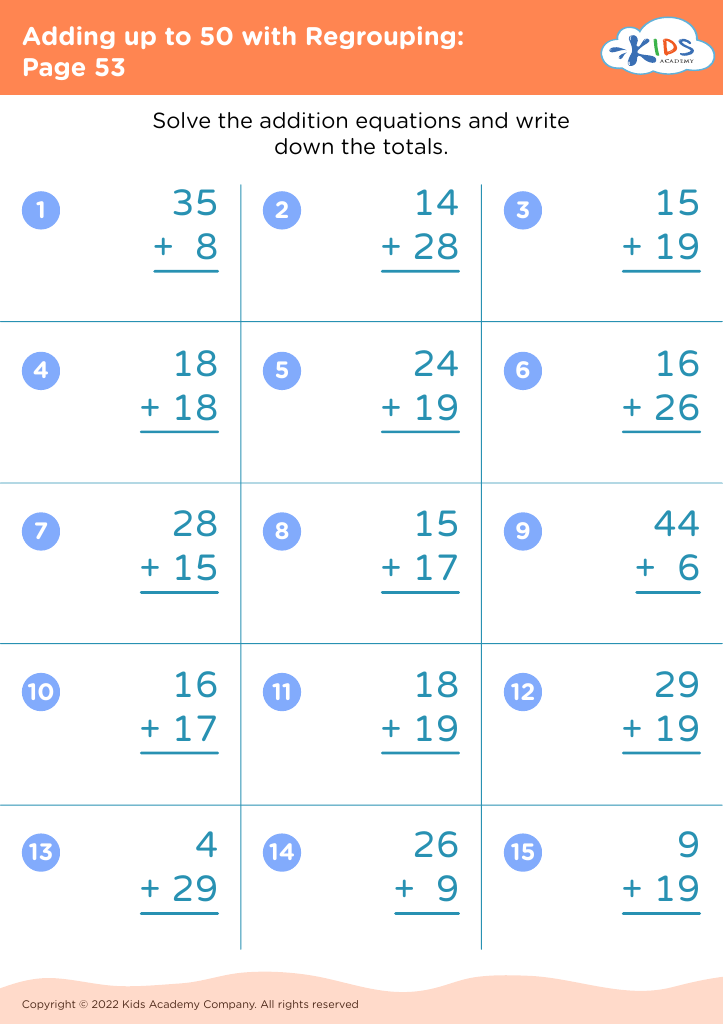
Discover engaging and educational "Practice Counting Worksheets" designed for ages 5-8! Our worksheets help children enhance their counting skills through fun and interactive activities, including object counting, number sequencing, and simple addition. Perfect for early learners, our expertly crafted sheets promote confidence and proficiency in math fundamentals. With colorful illustrations and varied exercises, kids stay motivated and enthusiastic about learning. Ideal for classroom use or at-home practice, these worksheets provide invaluable support for young minds eager to master counting. Visit Kids Academy to access an array of resources that make math enjoyable and accessible for all.
Favorites
With answer key
Interactive
Join Kids Academy for Free
Who is primarily going to use this learning content?






Counting is a fundamental building block of early math skills, and for children ages 5-8, it's crucial for several reasons. Firstly, it establishes numerical understanding, enabling children to recognize numbers, understand their order, and comprehend quantities. This foundational skill supports more complex math concepts such as addition, subtraction, multiplication, and division later on.
Practicing counting also helps children develop problem-solving and logical thinking skills. As they count and recount objects, they learn to categorize, compare, and contrast different quantities, cultivating analytical abilities that are valuable across all areas of learning and daily life.
Moreover, counting practice fosters a sense of number sense or 'numeracy,' much like literacy in reading. Children become comfortable with numbers and can use them flexibly, confidently, and efficiently in various contexts, from simple tasks like counting toys to understanding money and telling time.
Social aspects are significant too; engaging in counting games and activities encourages cooperative play and communication skills, as children often work in pairs or groups, discussing and sharing their thoughts.
Finally, mastery of counting boosts a child's confidence in their abilities, providing a strong sense of achievement and a positive attitude toward math. Parents and teachers who focus on counting practice not only support academic success but also nurture lifelong learners with a strong, versatile foundation in numeracy.








