Predicting outcomes Worksheets for Ages 5-8
3 filtered results
-
From - To
Unlock your child's potential with our "Predicting Outcomes Worksheets for Ages 5-8"! These engaging, age-appropriate worksheets are designed to help young learners develop critical thinking and reasoning skills. Through a variety of fun activities, children will practice making predictions based on visual cues, context, and storytelling, enhancing their comprehension and analytical abilities. Our tailored worksheets encourage creativity and imagination while reinforcing essential learning skills. Perfect for home or classroom use, these resources support educational growth in an enjoyable and interactive way. Foster your child’s cognitive development and watch them thrive as they explore the exciting world of predicting outcomes!
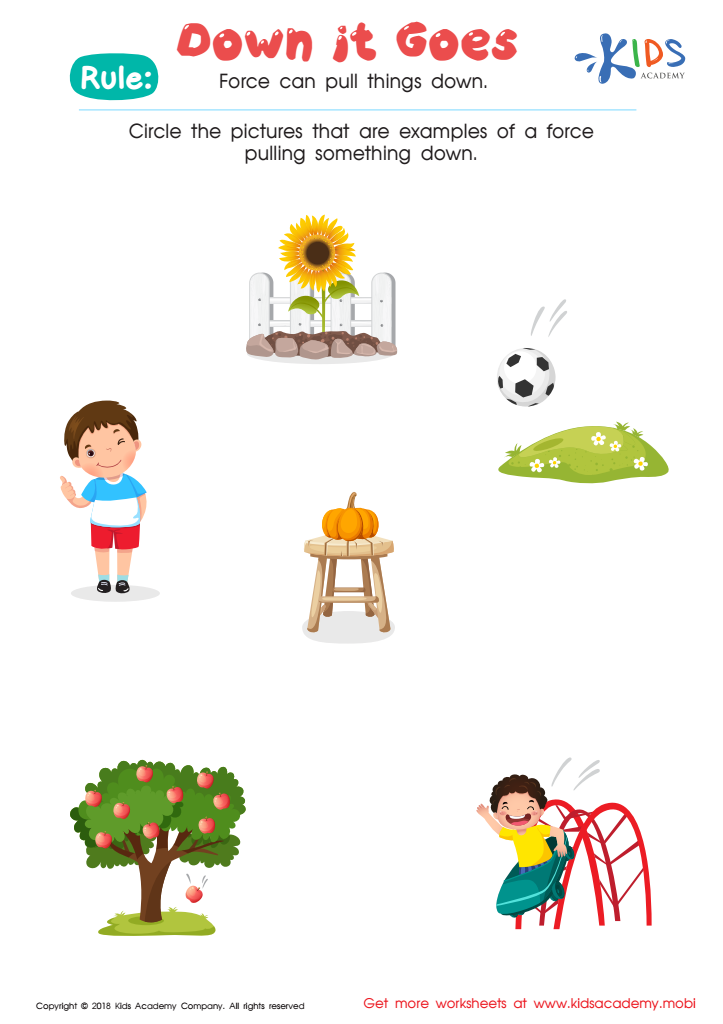
Down it Goes Worksheet
 Assign to My Students
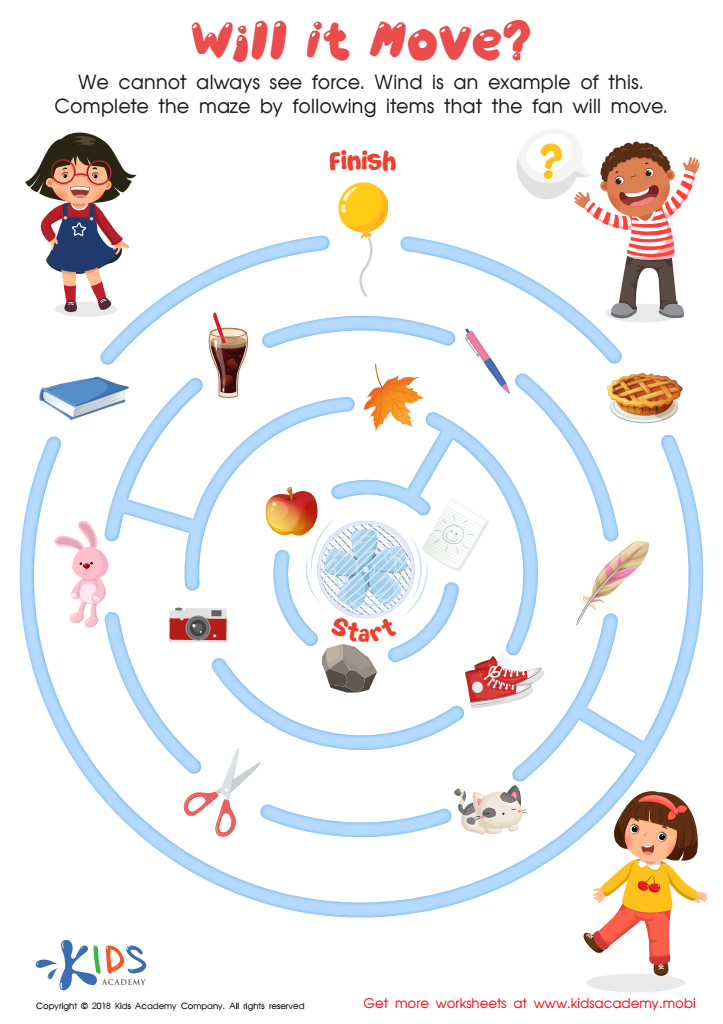
Will it Move? Worksheet

Race Car Ramp Worksheet







Predicting outcomes for children aged 5-8 is vital for parents and teachers as it significantly impacts their development and learning trajectories. This age bracket is foundational for cognitive, social, and emotional growth. By anticipating outcomes such as academic achievement, social skills, and behavioral tendencies, educators and caregivers can implement targeted strategies tailored to each child's unique strengths and needs.
For parents, understanding potential future challenges empowers them to boost their children’s confidence, foster resilience, and instill lifelong learning behaviors. It aids in creating supportive home environments where positive habits and skills are reinforced.
Teachers benefit by tailoring curricula and instructional methods, ensuring that all students thrive in the classroom. By using predictive assessments, teachers can identify students who may require additional support, enabling early interventions that can offset learning difficulties.
Moreover, predictions foster proactive communication between parents and teachers, enhancing a collaborative approach toward a child's education. Overall, by caring about predictive outcomes, parents and educators position children for success, enabling positive growth in their foundational years and setting the stage for future learning and social interactions.








