Sentence structure understanding Worksheets for Ages 5-8
5 filtered results
-
From - To
Boost your child's reading and writing skills with our engaging Sentence Structure Understanding worksheets specially designed for ages 5-8! These fun and interactive activities help young learners grasp basic sentence concepts, from recognizing subject and predicate to mastering punctuation and capitalization. Aligned with educational standards, our worksheets provide ample practice to enhance kids' grammar, fluency, and comprehension. Ideal for use at home or in the classroom, they equip your child with essential language skills that form the foundation for effective communication. Start your child’s journey toward language mastery today with our expertly crafted resources!
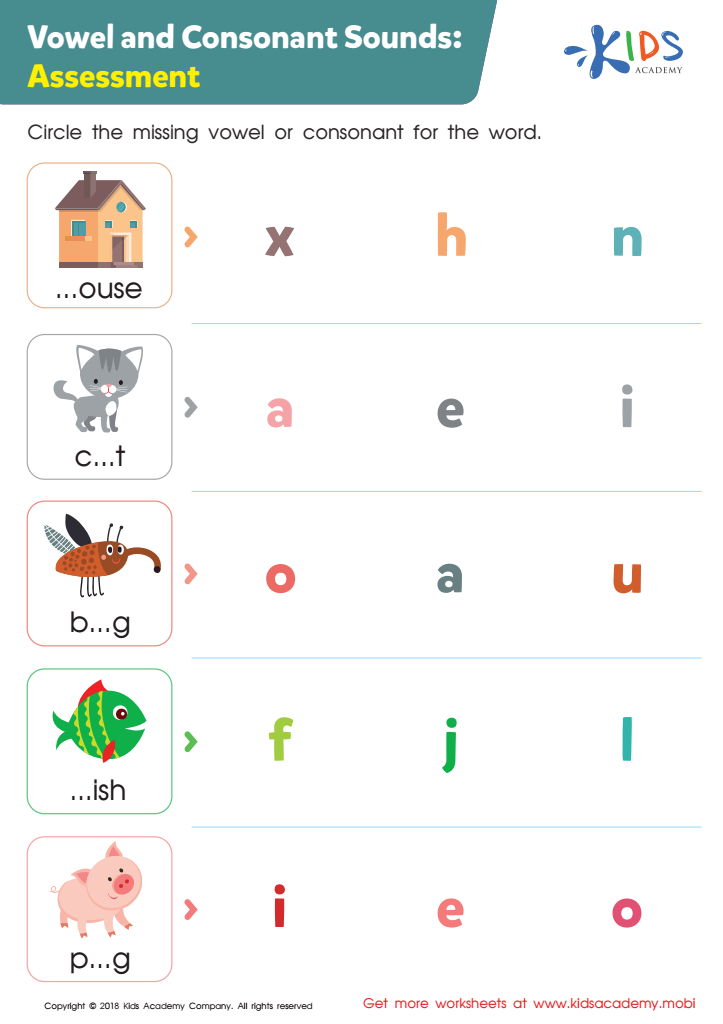
Vowel and Consonant Sounds: Assessment Worksheet
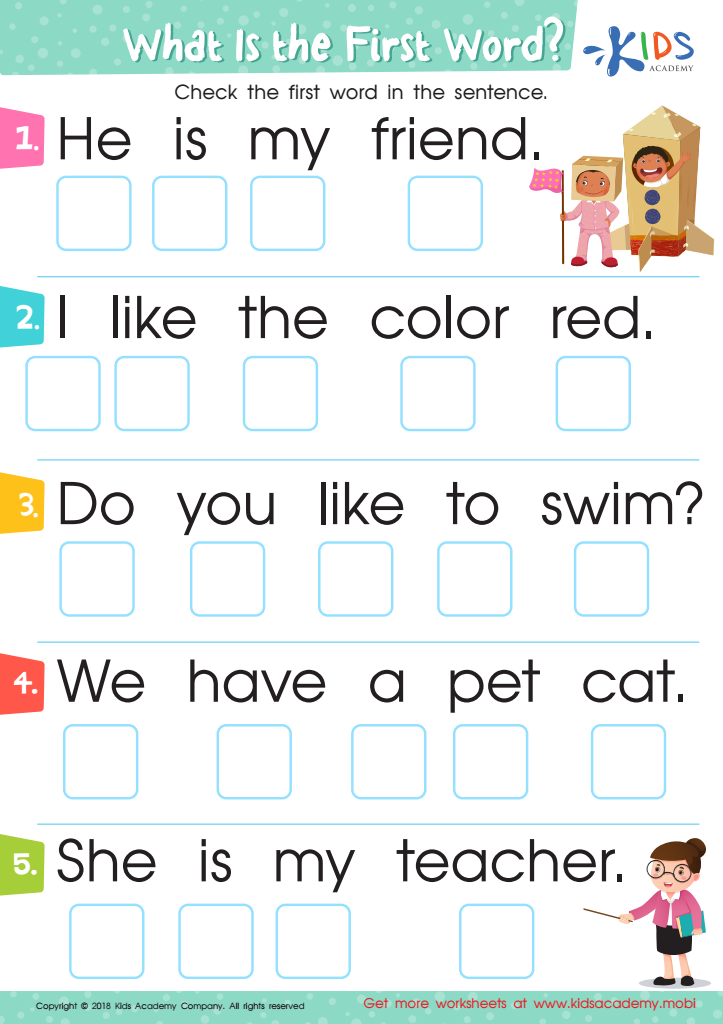
What is the First Word? Worksheet
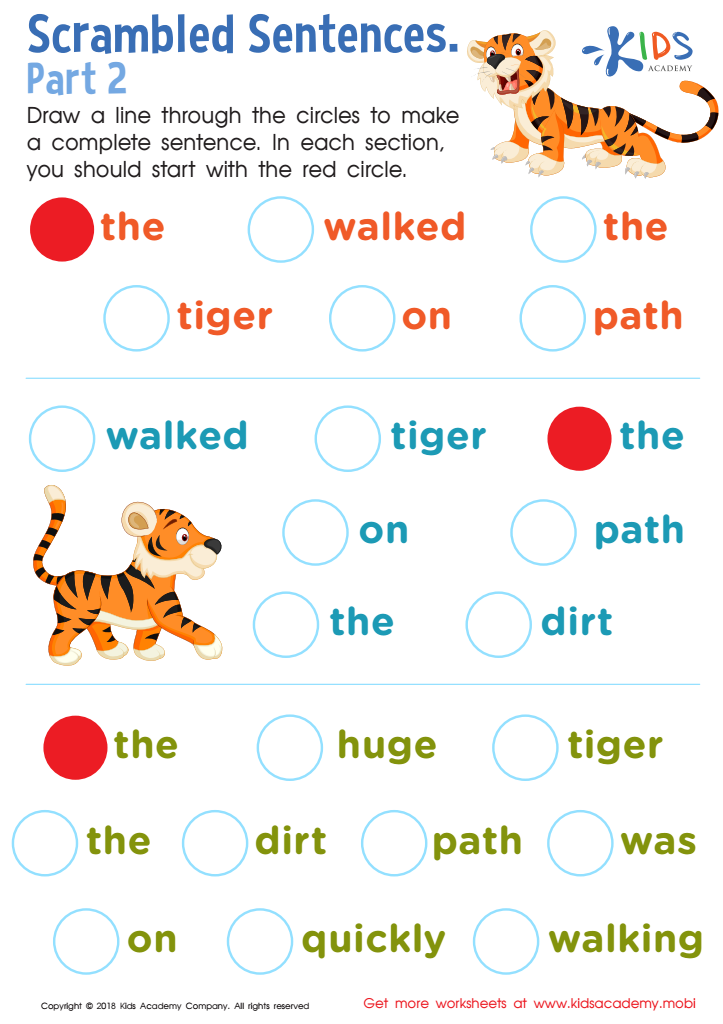
Scrambled Sentences Part 2 Worksheet
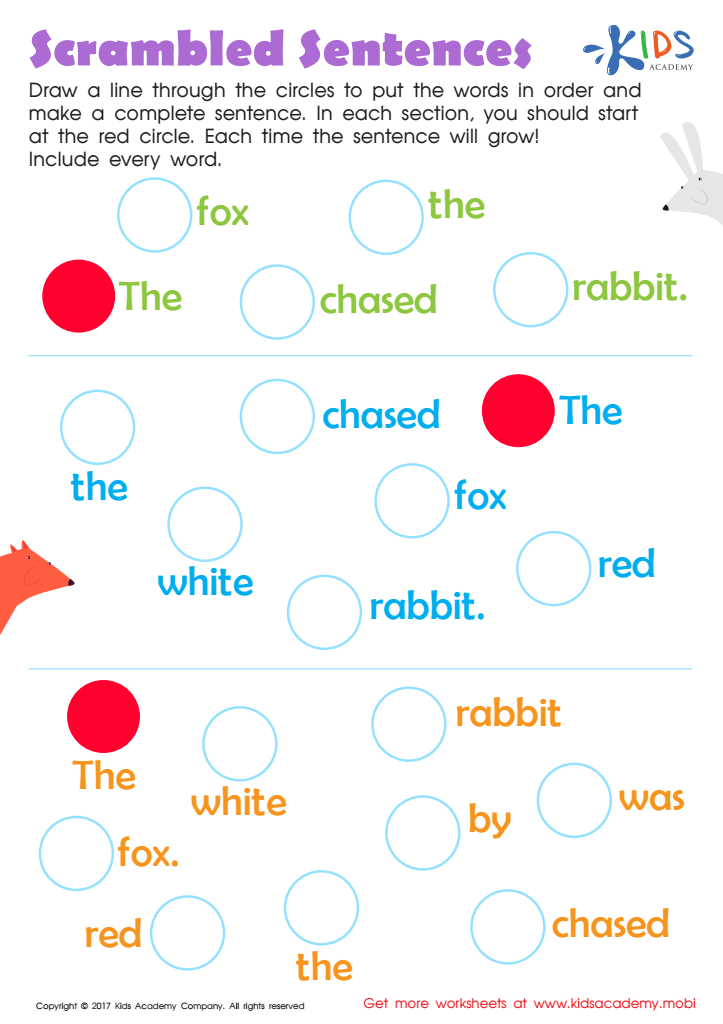
Scrambled Sentences Worksheet
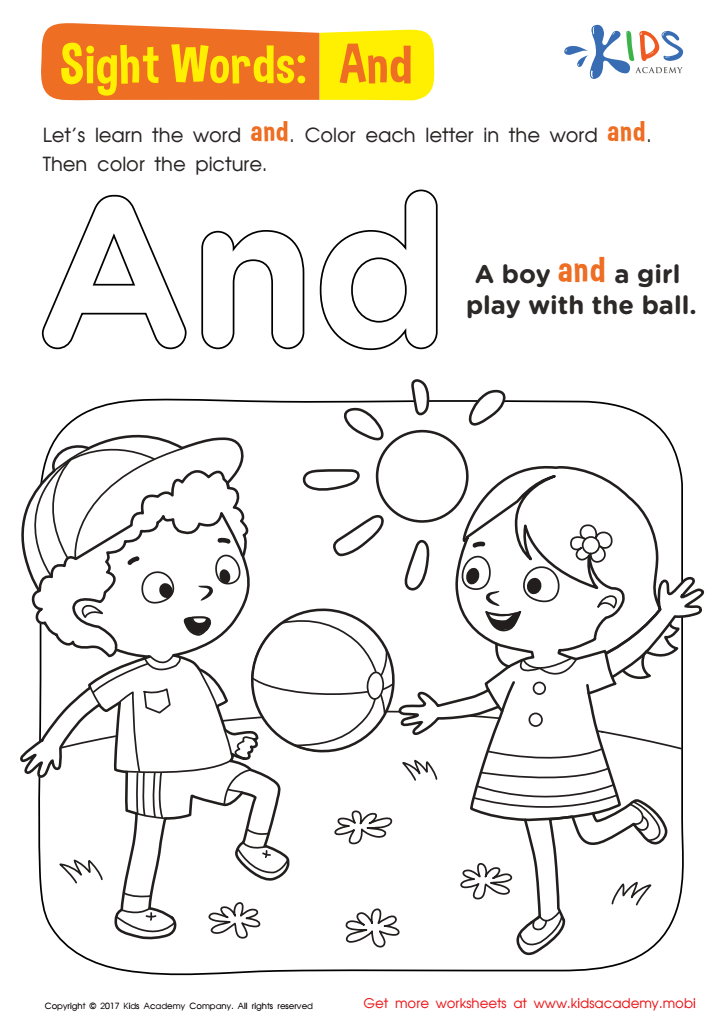
And Worksheet Sight Words Worksheet
 Assign to My Students







Understanding sentence structure is crucial for children aged 5-8 as it forms the cornerstone of literacy and effective communication. At this impressionable age, children transition from speaking in phrases to forming complete thoughts in written and spoken language. Parents and teachers should care about sentence structure for several reasons.
First, strong sentence skills enhance reading comprehension. When children grasp how sentences are built—understanding subjects, predicates, and the placement of adjectives and adverbs—they can read more fluidly and accurately interpret text.
Second, proficiency in sentence structure boosts writing abilities. Children learn to express their ideas clearly and coherently, making their writing more engaging and easier to understand. This foundational skill will be crucial for future academic success as assignments become more complex.
Third, early mastery of sentence structure fosters confidence. When children can communicate their thoughts effectively, they are more likely to participate in class discussions and social interactions.
Lastly, proper sentence structure lays the groundwork for learning additional languages. Understanding grammar basics makes it easier for children to grasp new linguistic rules.
In summary, a strong grasp of sentence structure in early years sets the stage for continued academic and social development, making it an essential focus for both parents and teachers.








