
Synonym recognition Worksheets for Ages 5-8
3 filtered results
Difficulty Level
Grade
Age
-
From - To
Subject
Activity
Standards
Discover our engaging Synonym Recognition Worksheets designed for children aged 5-8! These worksheets help young learners grasp the concept of synonyms, enhancing their vocabulary and language skills in a fun and interactive way. Each activity is tailored to cater to different learning styles, ensuring comprehension through play and practice. With colorful illustrations and age-appropriate exercises, children will enjoy finding words with similar meanings and improving their language fluency. Perfect for classroom use or at-home learning, our worksheets encourage creativity and critical thinking. Start boosting your child's verbal confidence today with our exciting synonym activities! Explore our resources now!
Favorites
With answer key
Interactive
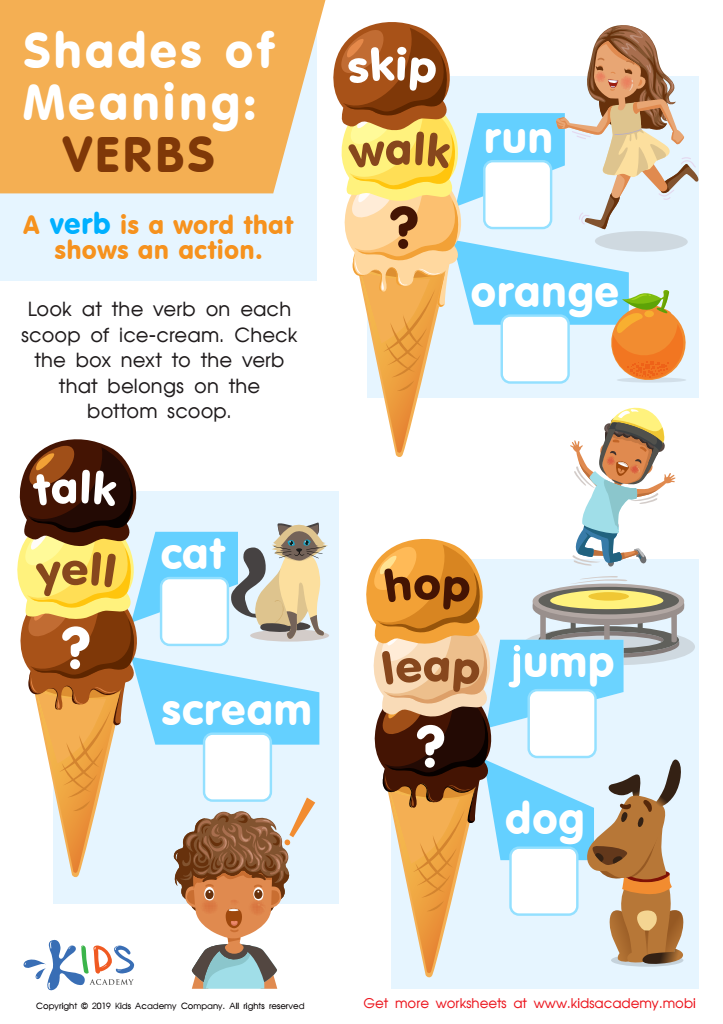
Shades of Meaning: Verbs Worksheet
Verbs are words that show action. Introduce kindergartners to verbs by having them check the box next to the verb that belongs on the bottom scoop in a worksheet. This is a great way to teach them this important part of speech and help them learn to write proper sentences and speak correctly.
 Assign to My Students
Shades of Meaning: Verbs Worksheet
Worksheet
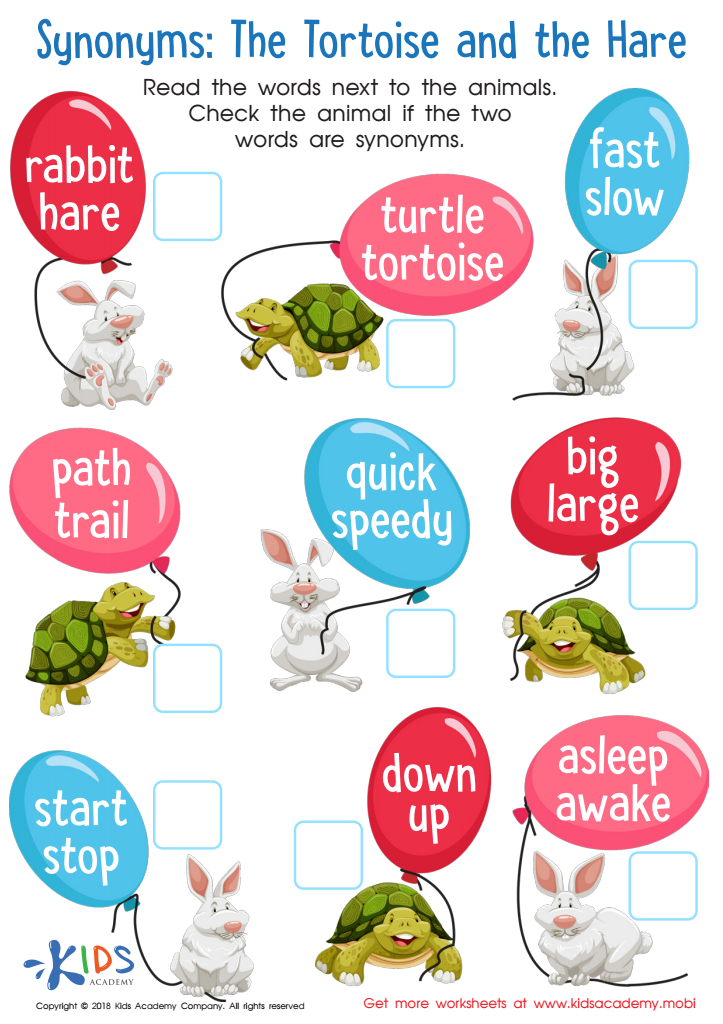
Synonyms: The Tortoise and Hare Worksheet
Help your kids identify words with similar meanings with this worksheet featuring a colourful picture of the Tortoise and the Hare. Show them how to check the boxes of animals with words that have similar meaning, then let them find more on their own. They'll love the challenge and you'll appreciate the educational value.
Synonyms: The Tortoise and Hare Worksheet
Worksheet
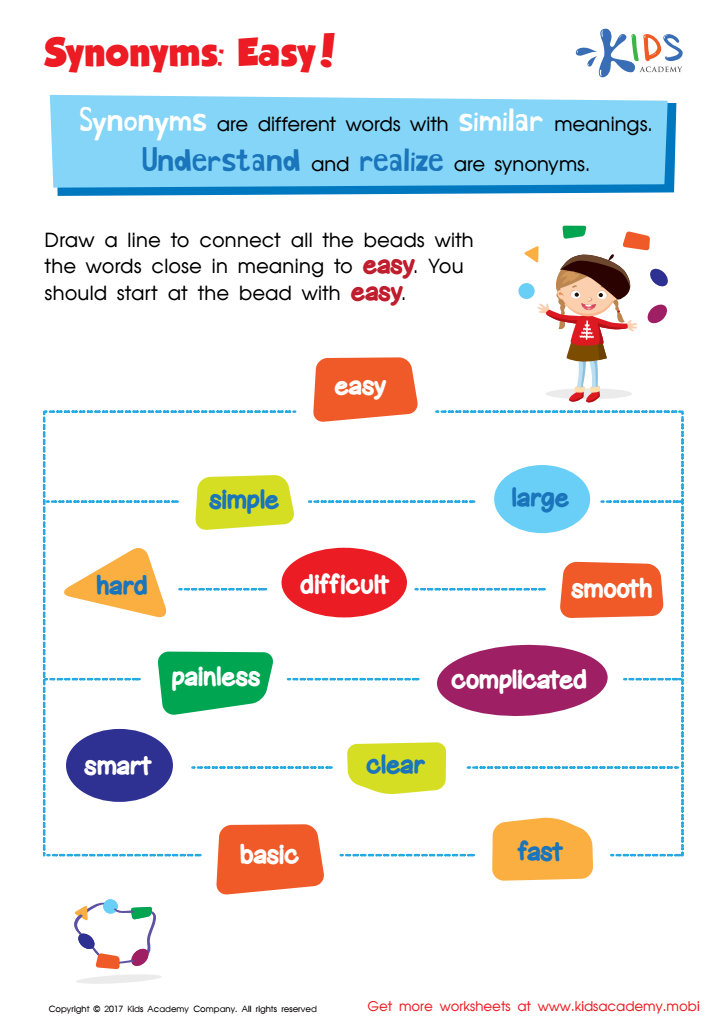
Free Synonym Worksheet
Grade 3s can build their vocabulary with free synonym worksheets. Unlocking the door to better communication, these worksheets help children identify new and interesting words. A great example is finding synonyms for the word easy. Give your kid a boost today!
Free Synonym Worksheet
Worksheet
Join Kids Academy for Free
Who is primarily going to use this learning content?







Synonym recognition is a crucial skill for children ages 5-8, and there are several compelling reasons for parents and teachers to prioritize it. Firstly, understanding synonyms enhances vocabulary development, allowing children to express themselves more effectively. A rich vocabulary not only boosts writing and speaking skills but also fosters greater reading comprehension, helping children make connections between texts.
Moreover, recognizing synonyms promotes critical thinking and encourages linguistic flexibility. When children learn that different words can convey similar meanings, they become more aware of language nuances, enabling them to choose words that best fit their intended message, context, or emotion.
Additionally, synonym recognition aids in building confidence. Children who can articulate thoughts with varied language are often more self-assured in their communication. This self-confidence translates into better participation in discussions and classroom activities, supporting overall engagement in learning.
Lastly, providing exposure to synonyms through playful activities, games, and discussions nurtures a love for language. When parents and teachers actively engage with children in synonym recognition, they inspire curiosity and enthusiasm for literacy—fundamental building blocks for lifelong learning. Thus, fostering this skill will equip children with essential tools for academic success and effective communication in the future.








