Understanding arrays Worksheets for Ages 5-8
3 filtered results
-
From - To
Discover our engaging "Understanding Arrays Worksheets" designed specifically for ages 5-8! These interactive resources help young learners grasp the concept of arrays through fun activities, games, and colorful illustrations. By working with these worksheets, children will enhance their math skills, learn about grouping, and develop a foundational understanding of multiplication concepts. Suitable for home or classroom use, these worksheets promote hands-on learning, making math enjoyable. Start fostering critical thinking and problem-solving skills today with our exciting array worksheets that cater to different learning styles. Perfect for parents and teachers aiming to inspire a love for math in early learners!
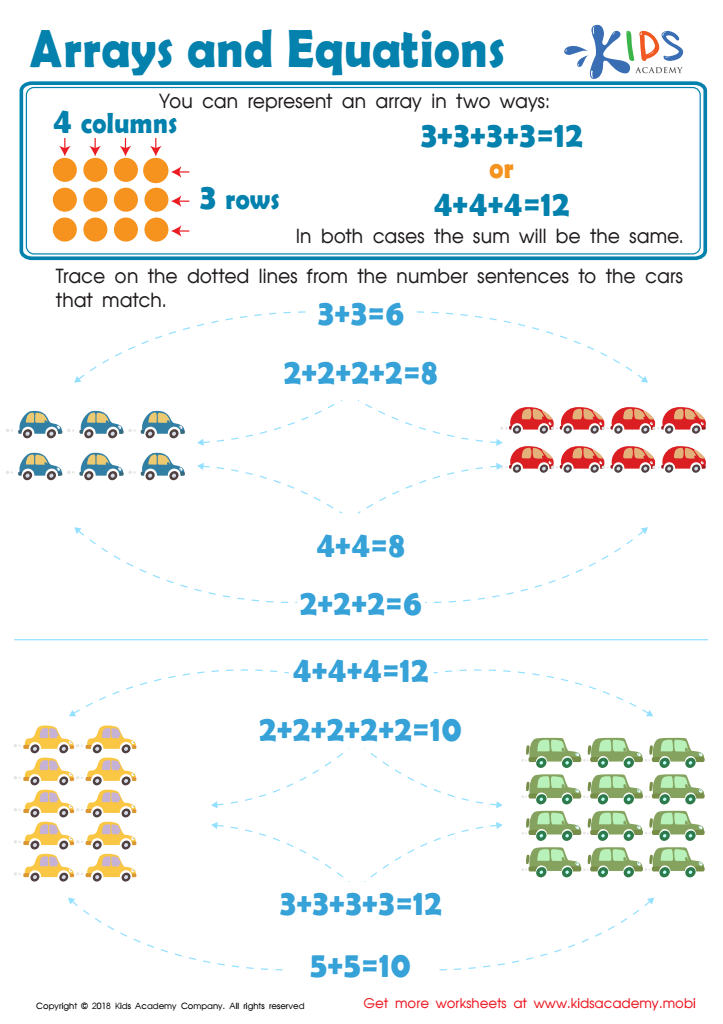
Arrays and Equations Worksheet
 Assign to My Students
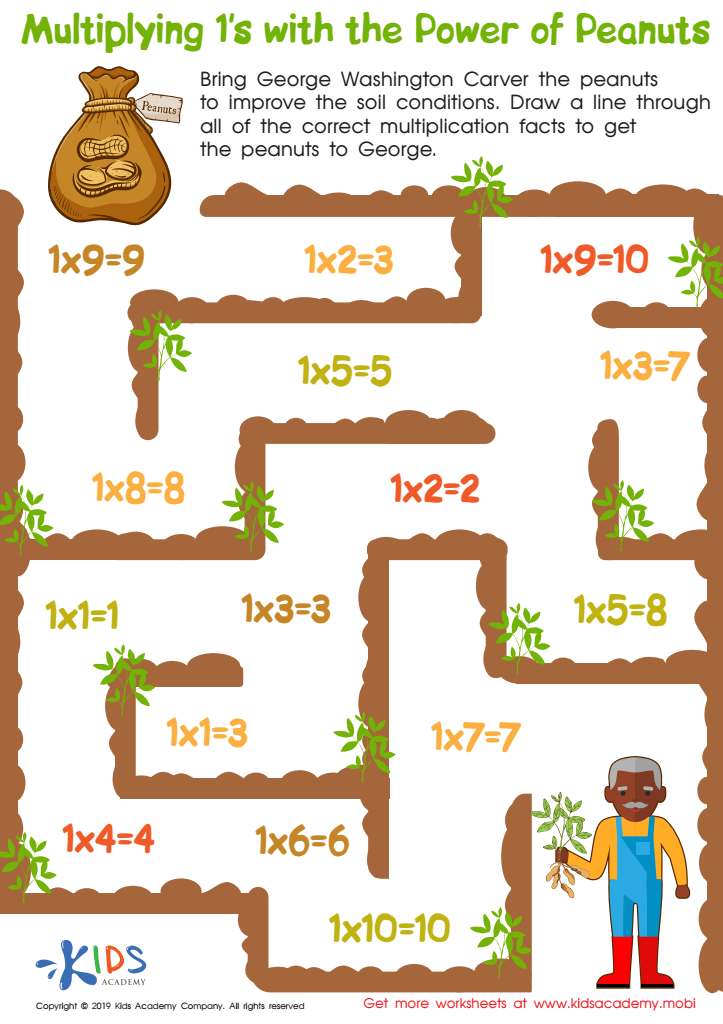
Multiplying 1’s With the Power of Peanuts Worksheet







Understanding arrays is crucial for children aged 5-8, as it serves as a foundational concept in mathematics that promotes effective problem-solving and critical thinking skills. Arrays, which are organized arrangements of objects or numbers in rows and columns, visually represent mathematical operations and concepts, making them easier for young learners to grasp.
For parents and teachers, introducing arrays can enhance numeracy skills, as they directly relate to learning multiplication and division. By recognizing patterns in arrays, children can develop multiplication concepts from repeated addition and gain a deeper understanding of division through grouping.
Moreover, learning about arrays supports the development of reasoning abilities. Children learn to analyze, compare, and make predictions based on observable patterns in arrays, which can lead to greater confidence in tackling mathematical challenges both in and out of the classroom.
In a world increasingly driven by data and technology, fostering a strong mathematical foundation through concepts like arrays prepares children for future academic endeavors and real-life problem-solving situations. By emphasizing the importance of arrays, parents and teachers contribute to building essential cognitive skills that will benefit children's overall educational journey.








