Understanding citizenship Worksheets for Ages 5-8
6 filtered results
-
From - To
Dive into the world of citizenship with our engaging worksheets, tailored for ages 5-8! These bright, interactive activities are designed to simplify the concepts of community, rights, and responsibilities. Through fun exercises like coloring, matching, and problem-solving, young learners grasp important civic values and social skills. Each worksheet promotes teamwork, respect, and informed decision-making. Perfect for classrooms and at-home learning, our materials lay the foundation for responsible, informed citizens. Whether learning about their role in the community or practicing kindness, these worksheets make understanding citizenship enjoyable and accessible for young minds. Start fostering good citizenship today!
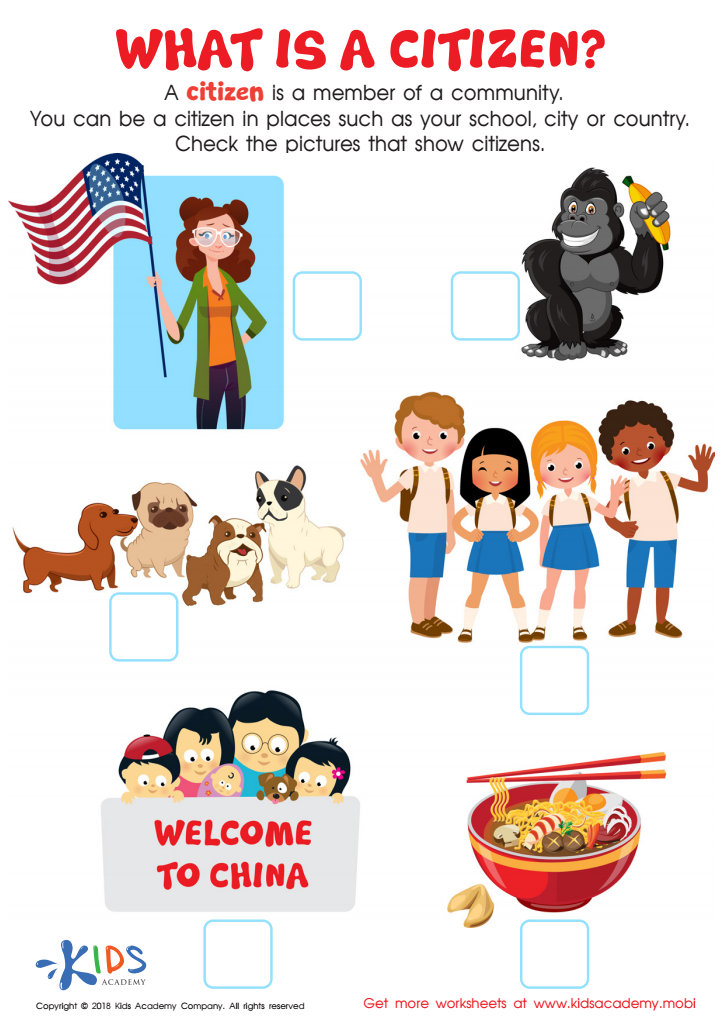
What is a Citizen? Worksheet
 Assign to My Students
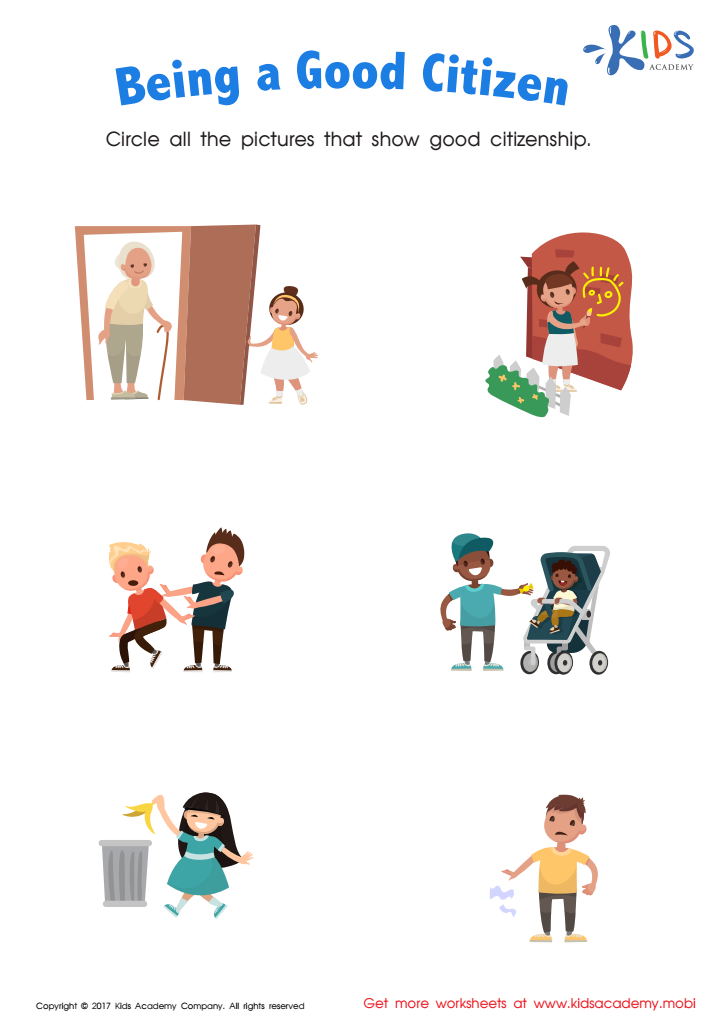
Being a Good Citizen Printable
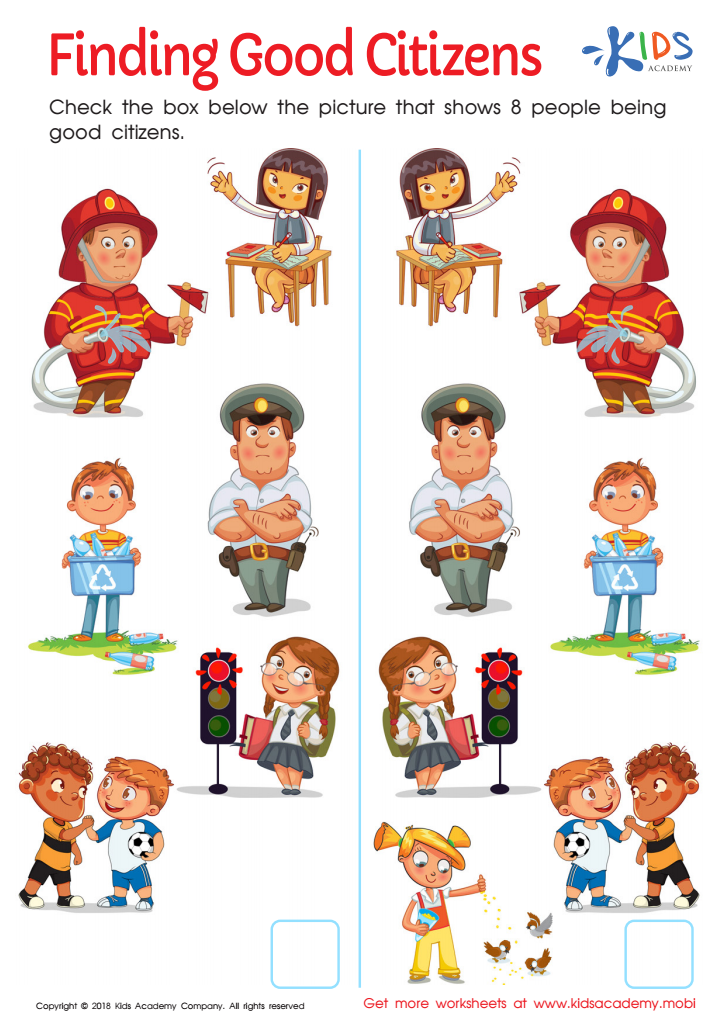
Finding Good Citizens Worksheet
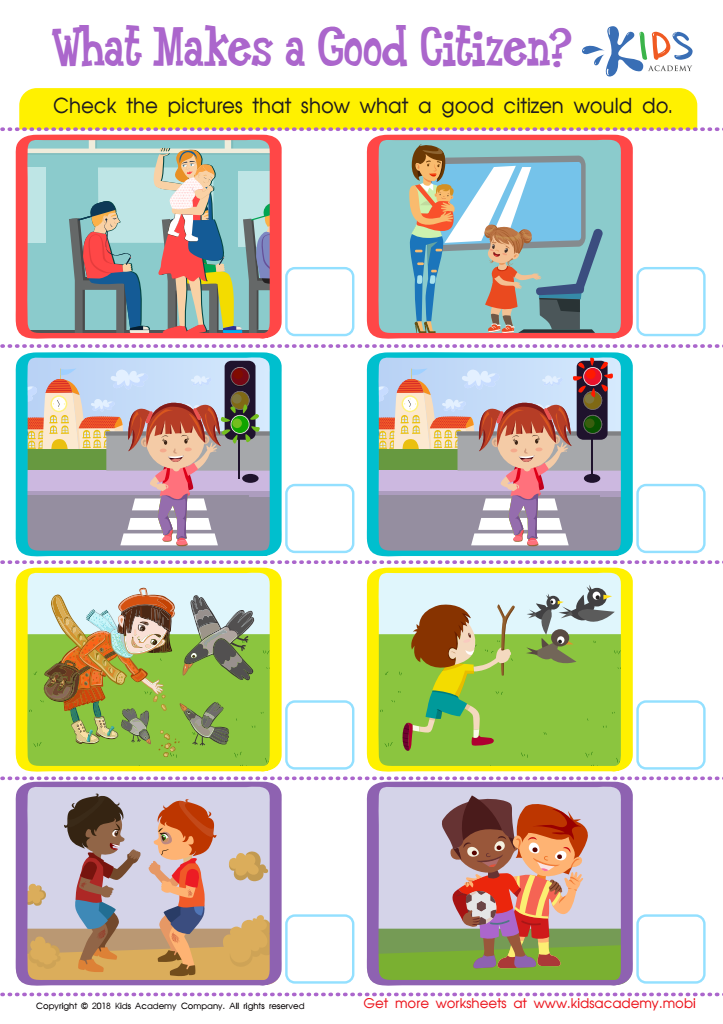
What Makes a Good Citizen? Worksheet
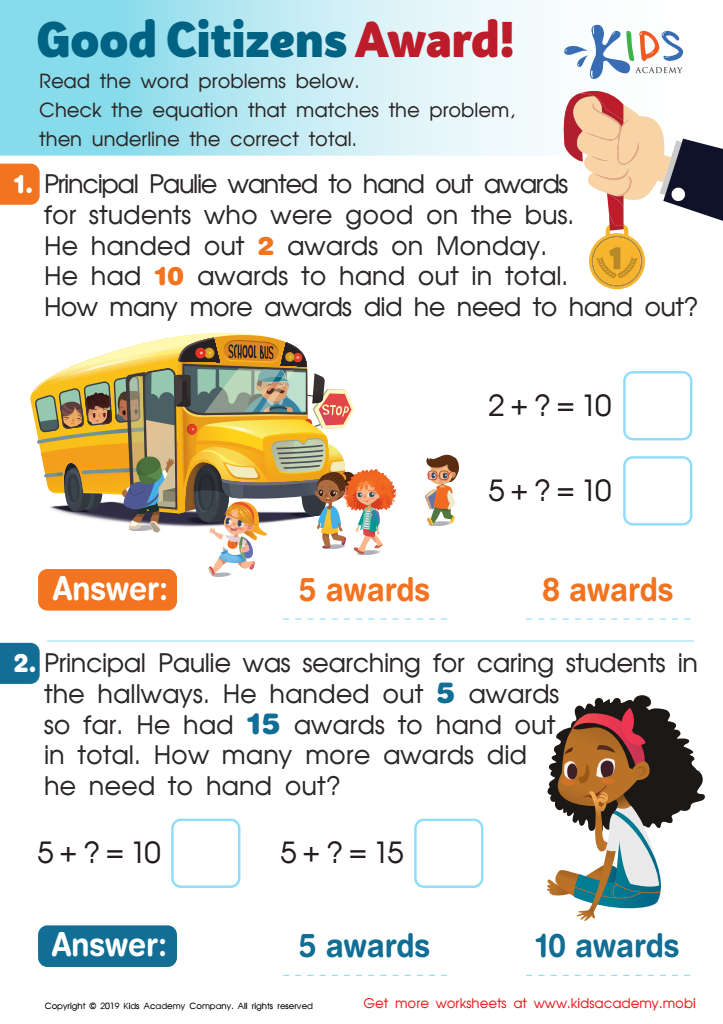
Good Citizens Award! Worksheet
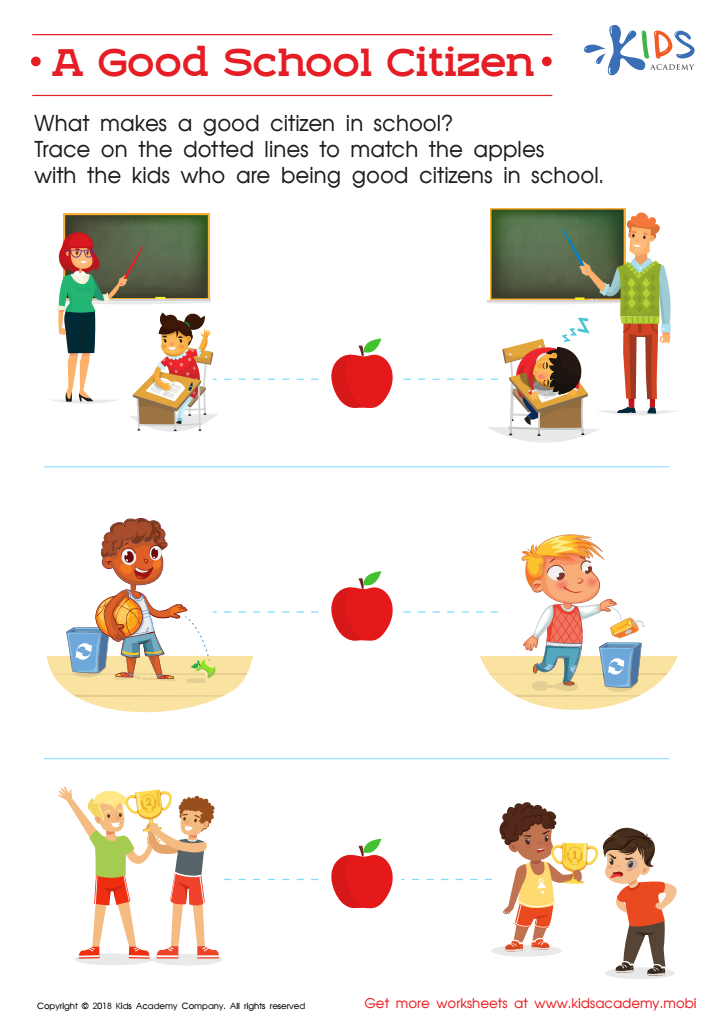
A Good School Citizen Worksheet








Understanding citizenship from an early age is crucial for youngsters, particularly those aged 5-8, as it lays the foundational blocks for their future roles in society. At this developmental stage, children are highly impressionable and are beginning to grasp core values such as fairness, responsibility, and community. Teaching them about citizenship helps inculcate these essential values early on, fostering a sense of belonging and individual moral responsibility.
For parents and teachers, nurturing a child's understanding of citizenship encourages positive social behavior. It teaches them empathy, respect for diversity, and the importance of contributing to the common good. When young children learn to appreciate the respect and responsibilities that come with being part of a community, they are more likely to grow into conscientious adults who contribute positively to society.
Furthermore, learning about citizenship helps children understand their rights and responsibilities, fostering a sense of security and belonging. It equips them with the skills to resolve conflicts, cooperate with peers, and engage in democratic processes on a very foundational level, such as voting in a class. In essence, early exposure to civic concepts empowers children to develop into well-rounded individuals who respect others and actively participate in their communities, making the world a better place starting from their formative years.








