Understanding clocks Worksheets for Ages 5-8
6 filtered results
-
From - To
Discover our engaging "Understanding Clocks Worksheets" designed for children aged 5-8! These interactive resources introduce young learners to the concept of time, helping them read analog and digital clocks while developing essential math skills. Our worksheets feature vibrant illustrations and hands-on activities that make learning fun and enjoyable. Children can practice telling time, explore the difference between hours and minutes, and solve practical time-related problems. Perfect for classroom use or at-home learning, these worksheets will help your child gain confidence and proficiency in understanding time. Start your child's cooking adventure in learning to read clocks today!
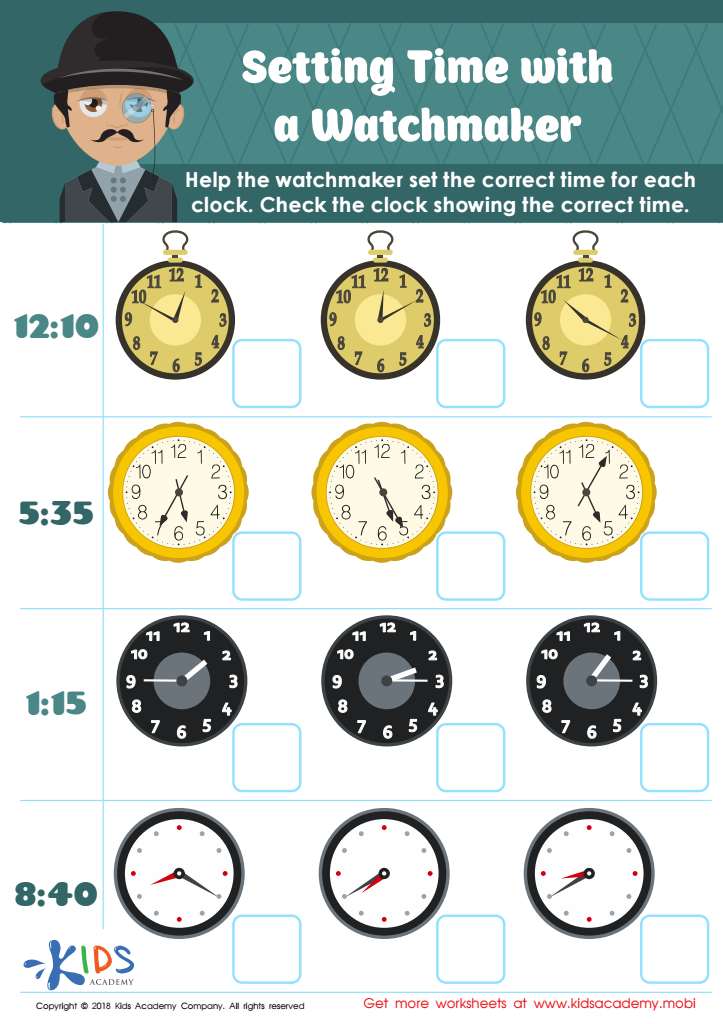
Setting Time with Watchmaker Worksheet
 Assign to My Students
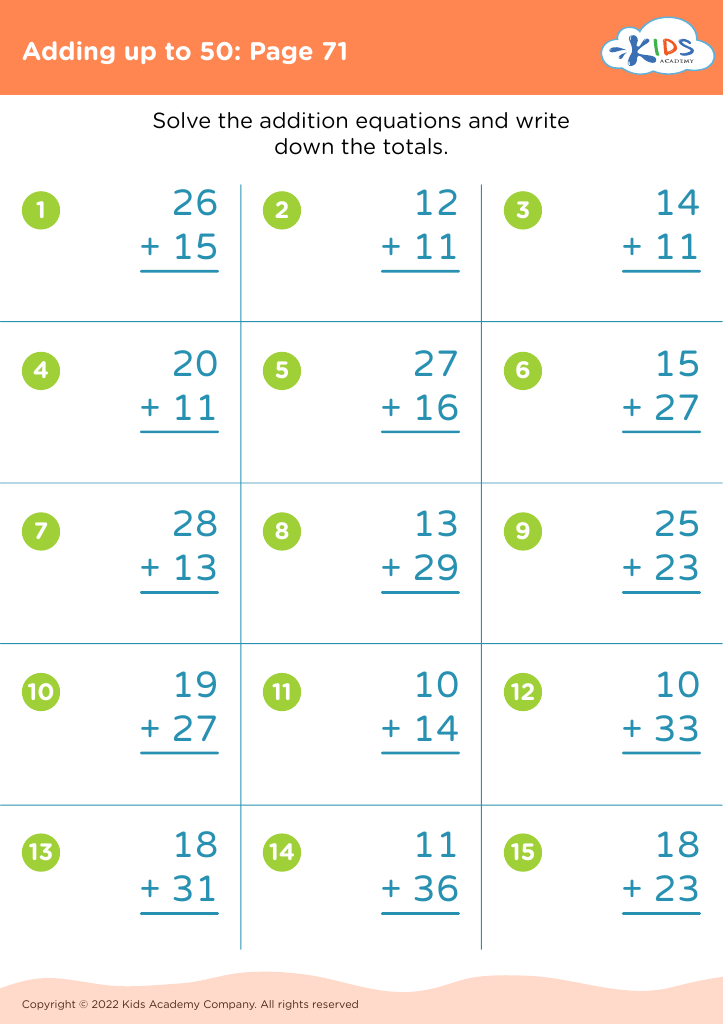
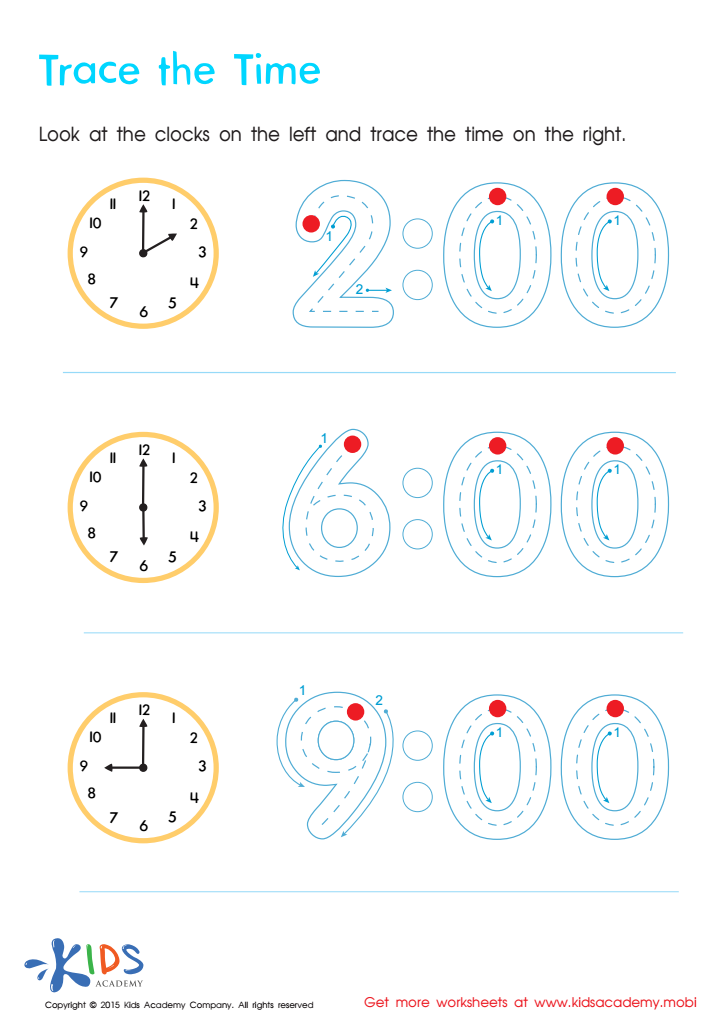
Telling The Time Worksheet: Part 2
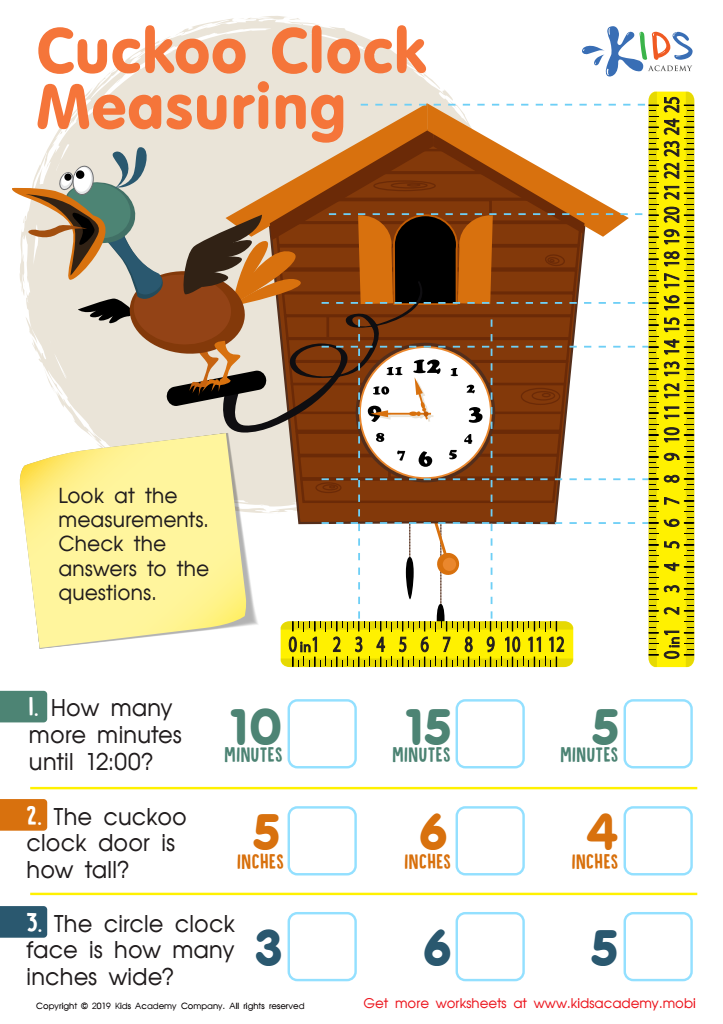
Cuckoo Clock Measuring Worksheet
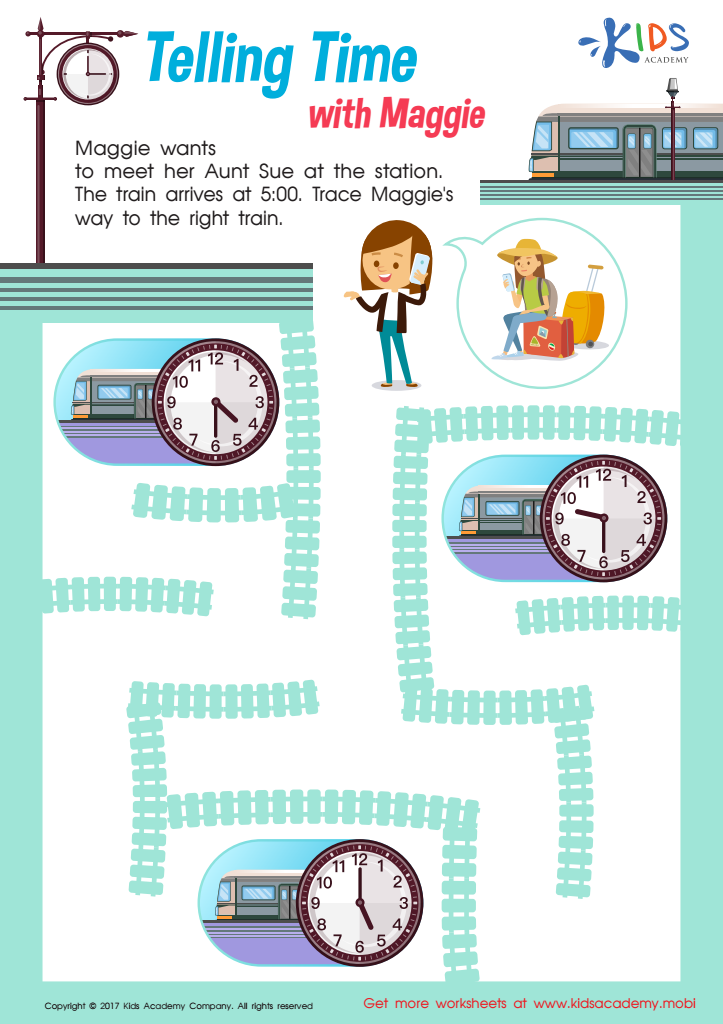
Telling Time With Maggie Time Worksheet








Understanding clocks is a crucial skill for children aged 5-8, and parents and teachers should prioritize this learning for several reasons. Firstly, learning to tell time fosters independence; children who can read clocks will be better equipped to manage their daily routines, from getting ready for school to understanding when it's time for meals and play. This sense of autonomy boosts their confidence and responsibility.
Moreover, grasping the concept of time helps in developing essential cognitive skills. It encourages mathematical thinking as students learn to recognize numbers, understand sequences, and develop a sense of duration. These foundational skills are vital for future academic success.
Additionally, time helps children connect with their social environment. Learning about daily schedules enables them to coordinate activities with friends and participate in group events, thereby enhancing their social skills. Teachers and parents can also use time as a teaching tool for concepts like patience, planning, and the importance of routines.
Incorporating clock-related games and activities can make the learning process enjoyable and engaging, leading to better retention and deeper understanding. By fostering time-telling skills, educators and parents are preparing children not just academically but also socially and emotionally for the challenges of growing up.








