Understanding plurals Worksheets for Ages 5-8
7 filtered results
-
From - To
Discover engaging "Understanding Plurals" worksheets designed for children ages 5-8 to enhance their language skills! Our printables encourage young learners to grasp the concept of plurals through fun and interactive activities. Each worksheet includes colorful visuals and simple exercises that help children practice identifying and forming plural nouns. Ideal for both classroom and home learning, these resources support early literacy development while making learning enjoyable. Whether your child is just starting to explore plurals or needs reinforcement, our comprehensive worksheets are perfect for fostering confidence in language usage. Download now and make mastering plurals a delightful experience for your little one!
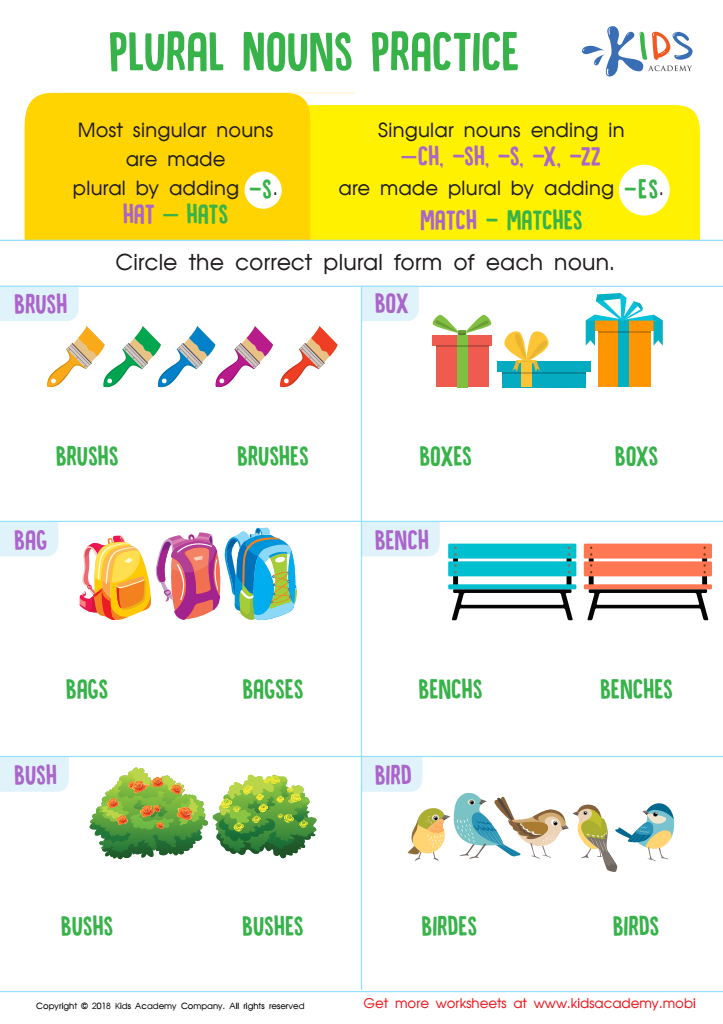
Plural Nouns Practice Worksheet
 Assign to My Students
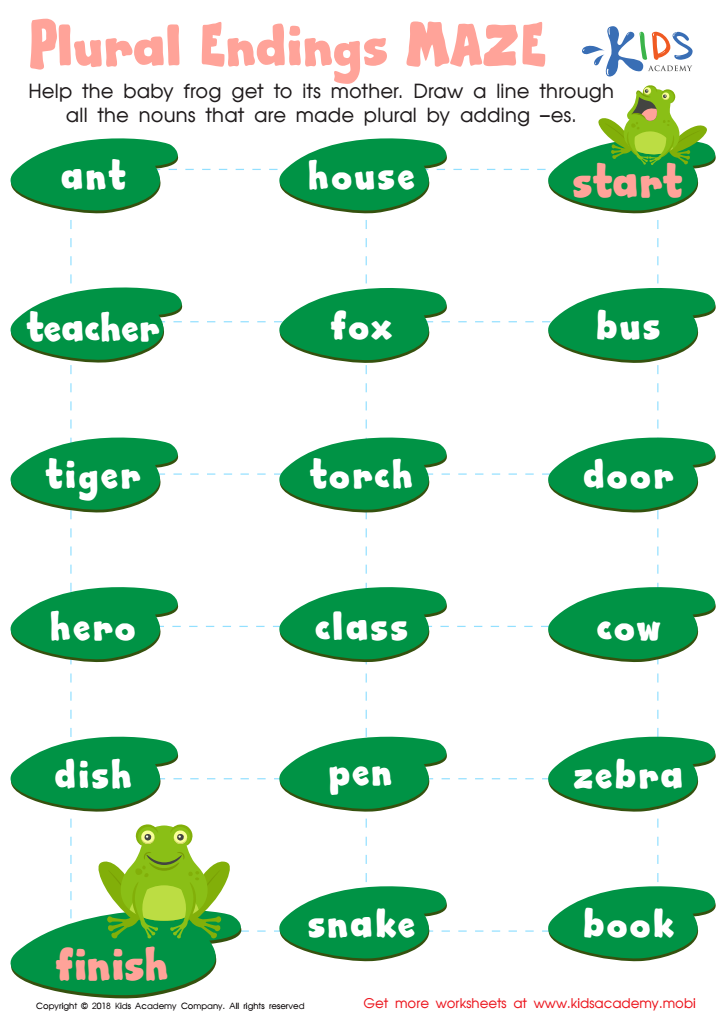
Plural Endings Maze Worksheet
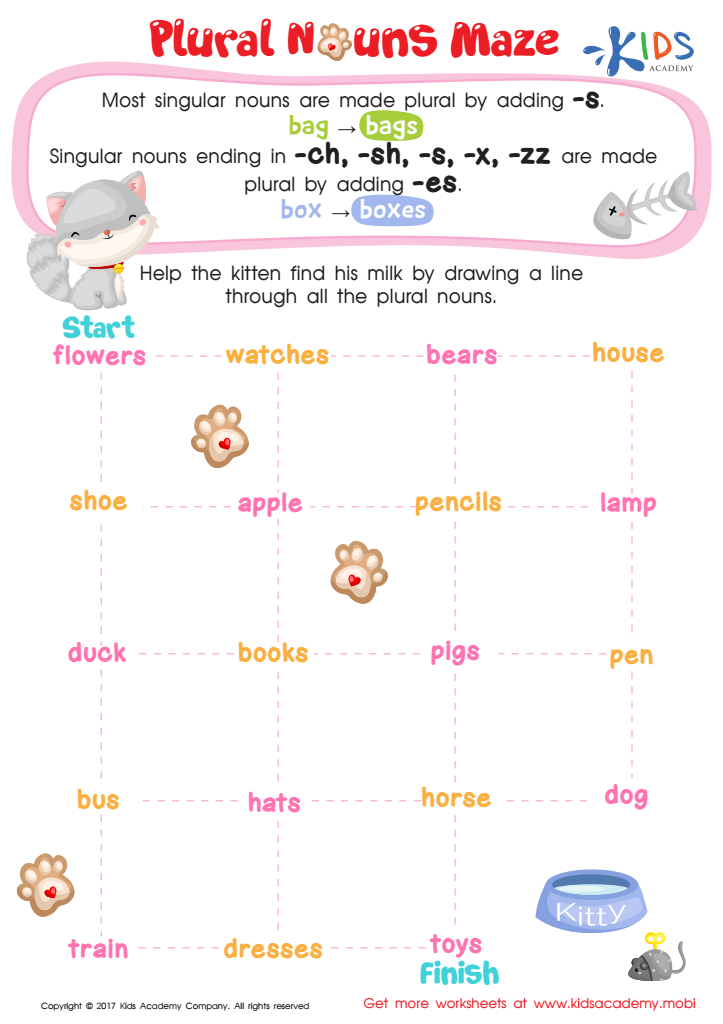
Plural Nouns Maze Worksheet
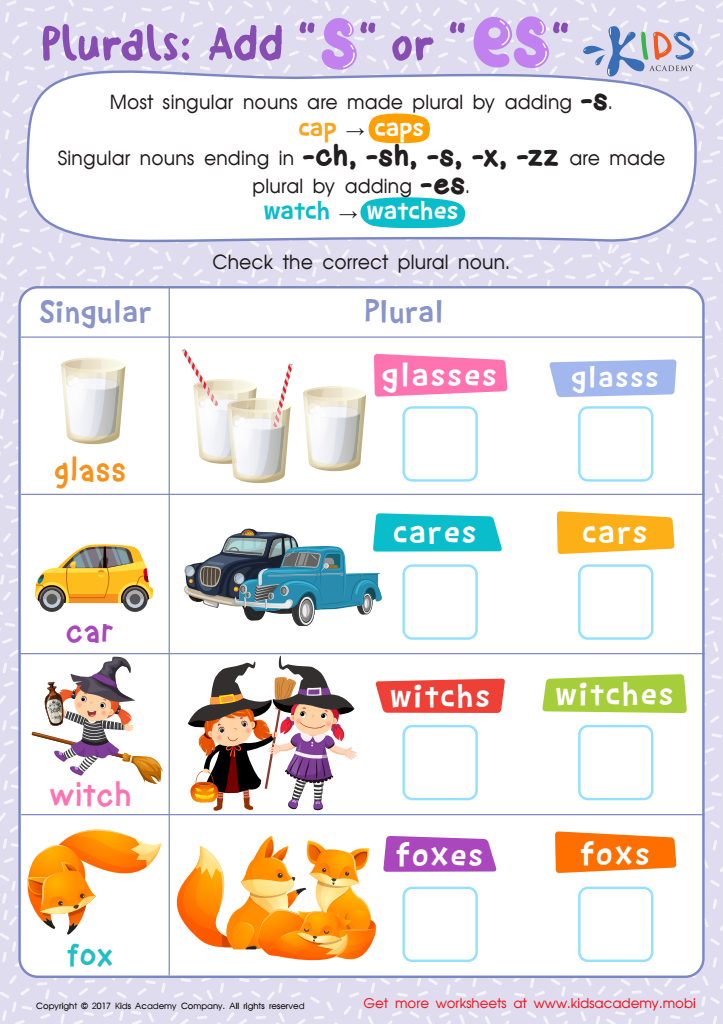
Plurals: "–es" or "–es"? Worksheet
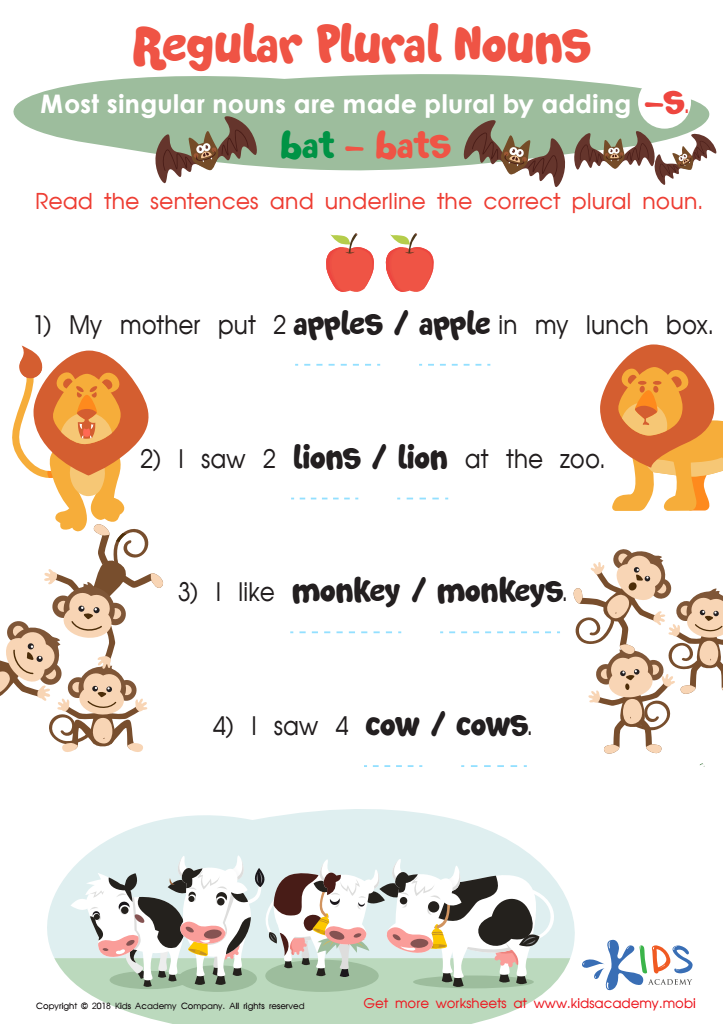
Regular Plural Nouns Worksheet
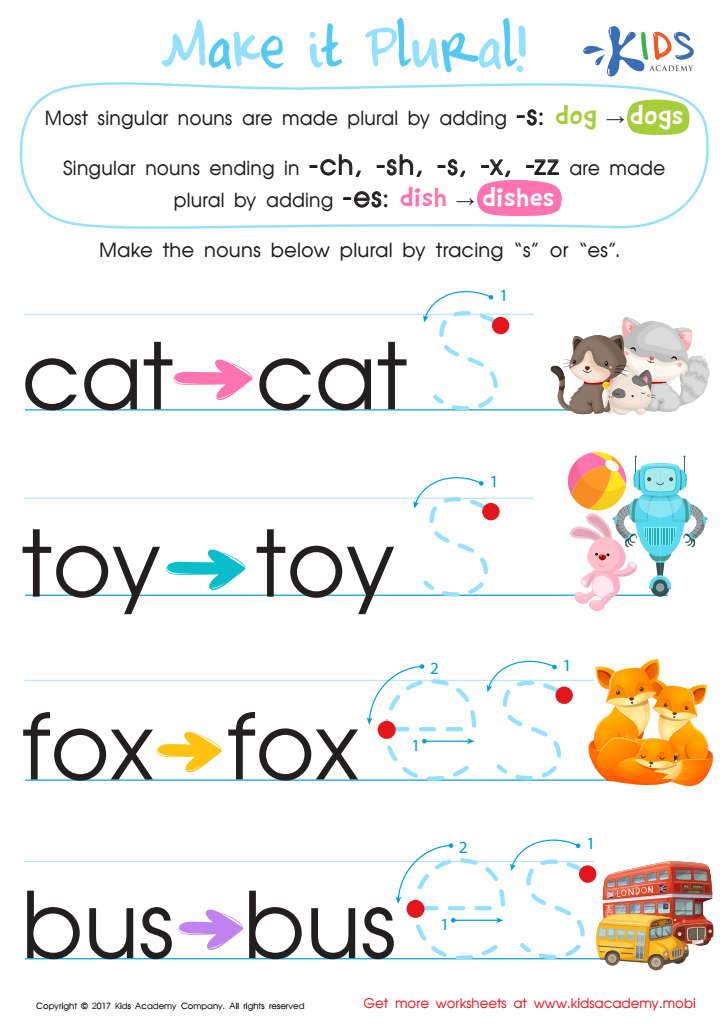
Make it Plural Worksheet







Understanding plurals is essential for children aged 5-8 as it forms a foundational component of their language and literacy development. At this age, children are expanding their vocabulary and learning how to connect words with meaning. Grasping plurals helps them communicate more effectively and enhances their ability to express thoughts and ideas clearly.
When children learn to recognize and use plurals, they develop critical reading and writing skills. This skill aids in comprehension, as many texts introduce plural nouns; if children struggle with plurals, they may misunderstand the content. Mastery of plurals also enables them to form sentences that are grammatically correct, which is crucial for effective communication and storytelling.
Moreover, understanding plurals can boost children's confidence in using language. As they successfully apply this knowledge in conversation and writing, they'll feel more empowered participating in discussions, sharing experiences, or crafting narratives.
Lastly, attention to plurals reflects a broader focus on language mechanics, fostering strong foundational skills essential for future academic success. Teachers and parents play a vital role in supporting this learning, whether through playful activities, reading together, or encouraging creative expression, ensuring that children build a strong linguistic foundation for lifelong learning.








