Word formation understanding Worksheets for Ages 5-8
3 filtered results
-
From - To
Introduce your child to the exciting world of language with our "Word Formation Understanding Worksheets" designed specifically for ages 5-8. These engaging worksheets aim to enhance your child's vocabulary and comprehension skills through fun exercises focused on word recognition, blending, and building new words. Each activity is designed to be age-appropriate, promoting critical thinking while ensuring a playful learning experience. Whether your kid is learning to form simple words or exploring new vocabulary, our worksheets will support their language development while fostering a love for reading. Download and watch your child’s linguistic journey ignite!
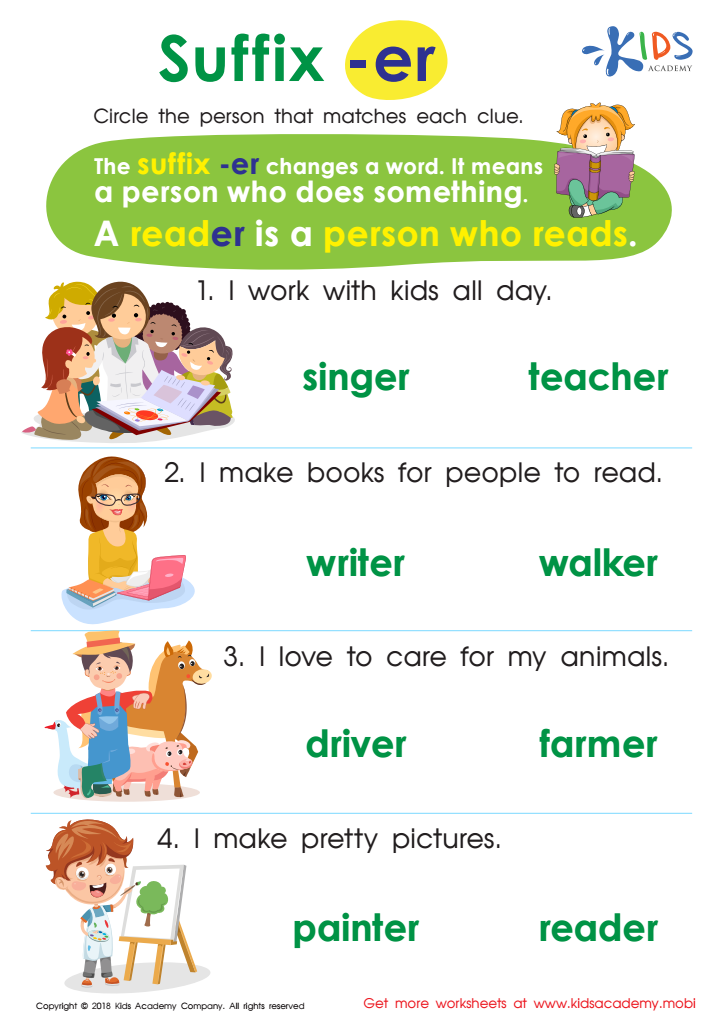
Suffix –er Printable Worksheet
 Assign to My Students
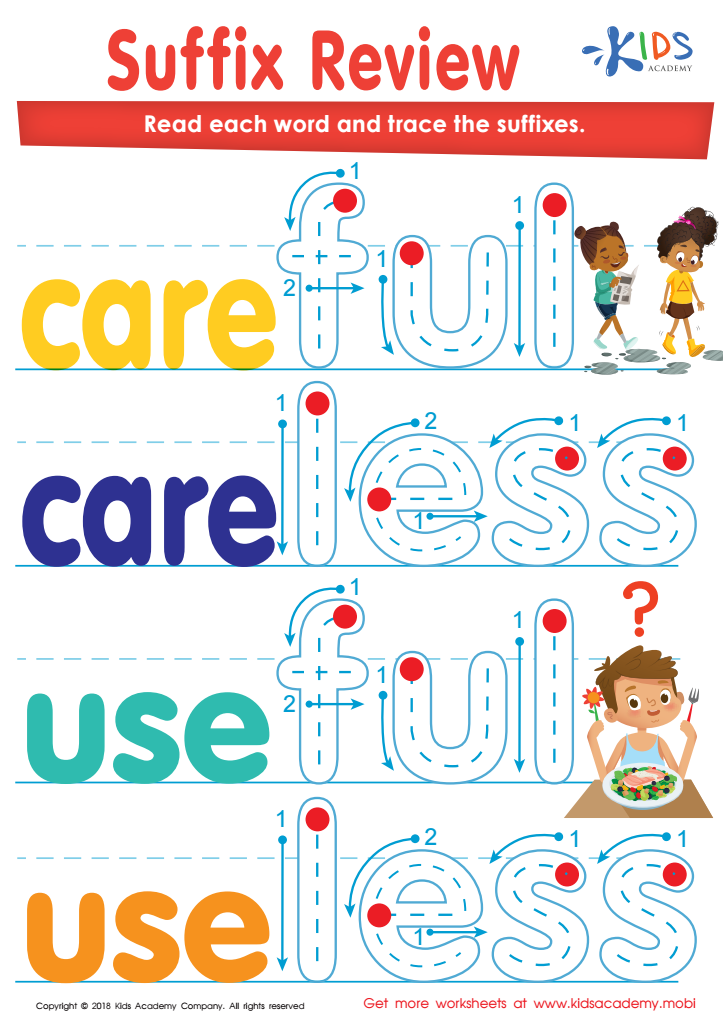
Suffix Review Worksheet
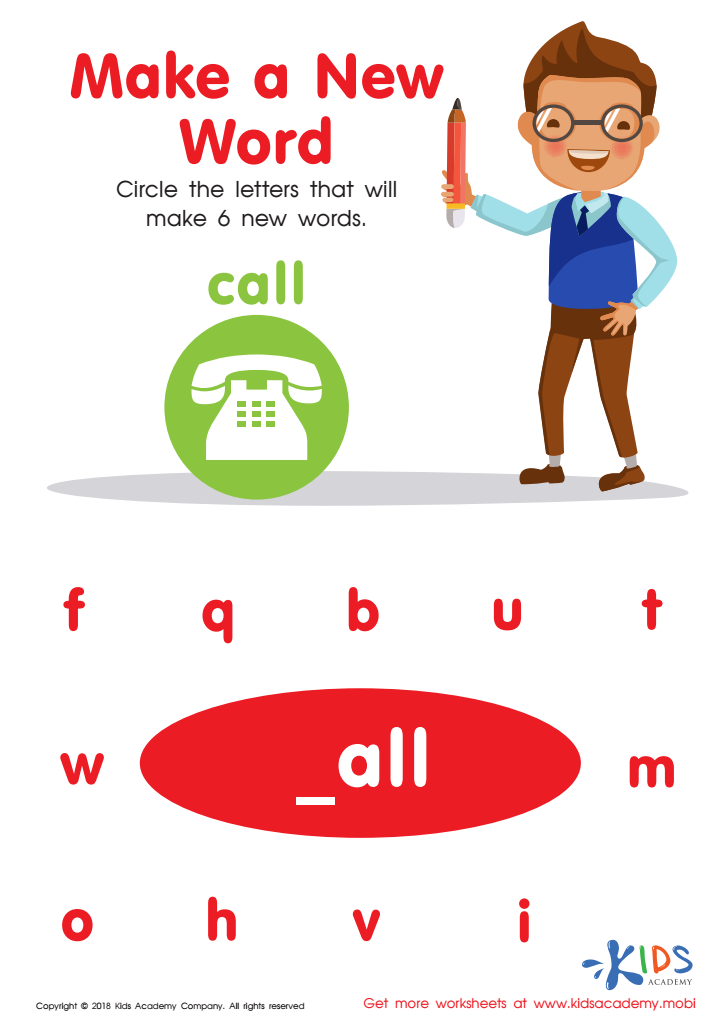
Make a New Word Worksheet







Understanding word formation is crucial for children aged 5-8 because it lays the foundation for their literacy development. During these formative years, kids are learning to read and write, skills vital for academic success. When children grasp how words are constructed—recognizing root words, prefixes, and suffixes—they enhance their vocabulary and reading comprehension. This knowledge helps them decode unfamiliar words, leading to greater confidence in their reading abilities.
Moreover, mastering word formation encourages critical thinking and problem-solving skills. Children learn to analyze how words can change their meanings by adding different parts, fostering a deeper understanding of language. This understanding is essential when they encounter new concepts, as they can connect new vocabulary with what they already know.
Additionally, word formation plays a significant role in writing skills. By understanding the components of words, children can improve their spelling and composition, expressing their ideas more effectively.
Ultimately, when parents and teachers prioritize word formation, they equip young learners with tools for academic achievement and a lifelong love of language. Supporting this understanding creates a strong foundation for effective communication, necessary not just in school, but throughout their lives.








