Basic geometry knowledge 2D Shapes Worksheets for Ages 5-8
3 filtered results
-
From - To
Introduce young learners to the world of geometry with our "Basic Geometry Knowledge 2D Shapes Worksheets" designed for ages 5-8. These engaging printable worksheets help children explore and master fundamental shapes like circles, squares, triangles, and more. By completing fun and interactive activities, kids will develop essential skills in shape recognition, tracing, matching, and distinguishing among various 2D forms. Perfect for both classroom and at-home learning, these worksheets provide a solid foundation in geometry while boosting fine motor and cognitive skills. Spark your child's curiosity and confidence in math with these carefully curated educational resources.
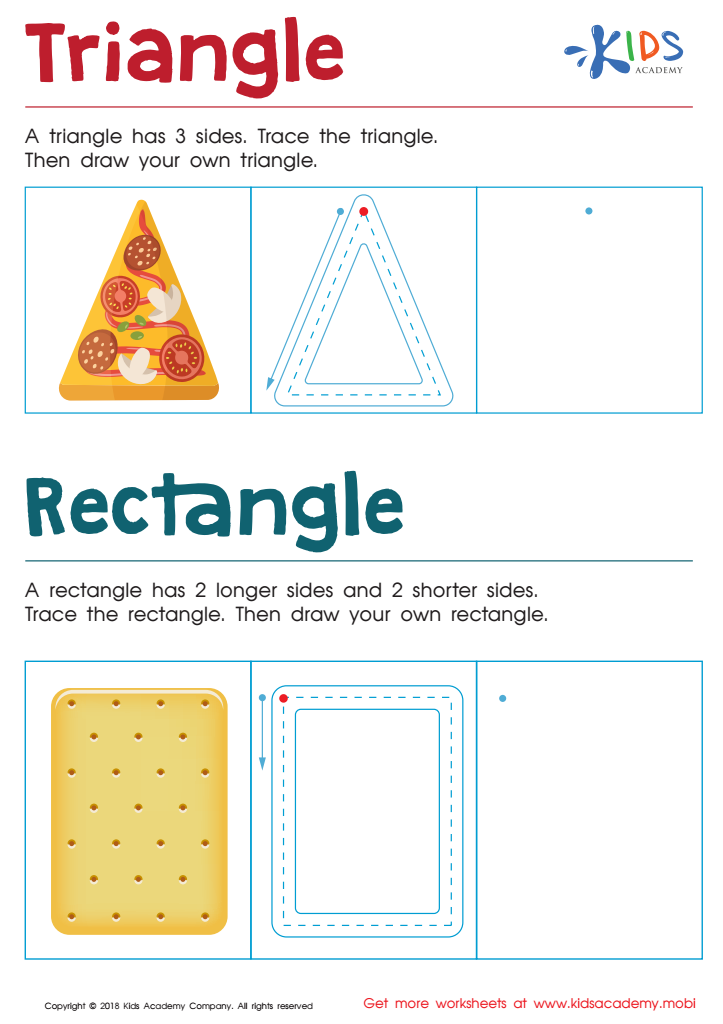
Triangle Rectangle Worksheet
 Assign to My Students


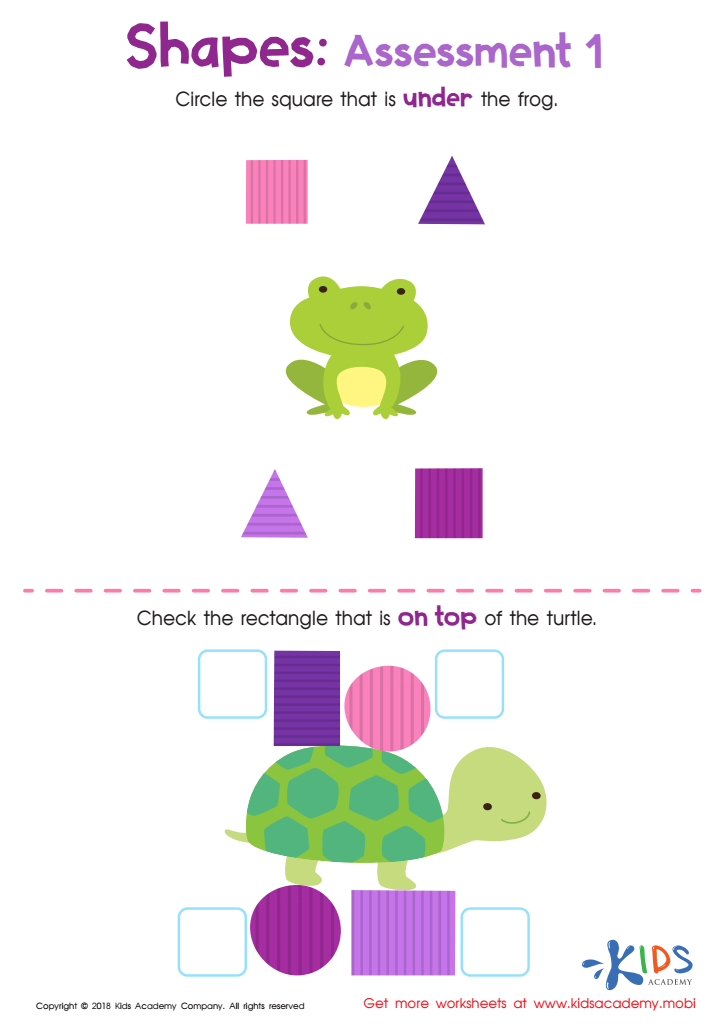
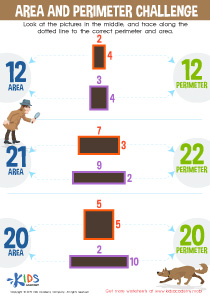
Geometry – Assessment 1 Worksheet
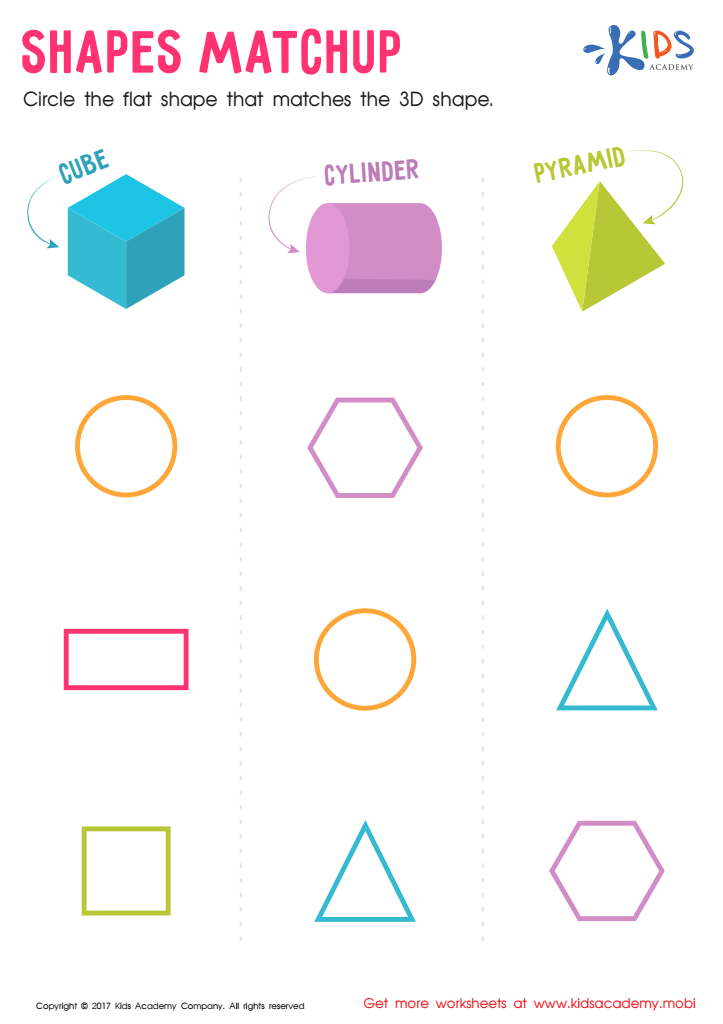
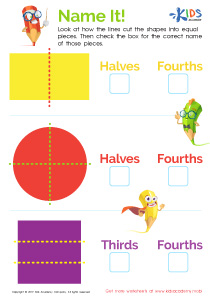
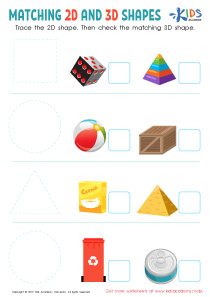
Shapes Matchup Worksheet








Parents and teachers play a crucial role in laying a strong educational foundation for children, and understanding basic geometry, specifically 2D shapes, is an essential part of this foundation for kids aged 5-8. First, recognizing and differentiating between 2D shapes like circles, squares, triangles, and rectangles helps children develop spatial awareness and visual discrimination skills. These skills are fundamental in more complex problem-solving and critical thinking tasks they will encounter in higher grades.
Geometry improves fine motor skills as children draw and manipulate shapes. It also introduces them to vocabulary and concepts that are foundational in higher mathematics, such as angles, symmetry, and measurement. These early experiences pave the way for understanding more complex geometric principles later on.
Moreover, learning about shapes extends beyond the classroom: it helps children understand and interpret the world around them, from recognizing traffic signs to arranging toys. This practical knowledge fosters a child’s cognitive development and enhances their ability to make connections in everyday situations.
Lastly, interactive and engaging activities with 2D shapes, like puzzles or building blocks, can make learning fun and increase a child’s enthusiasm and motivation toward education.
In essence, a solid understanding of basic geometry during these early, formative years equips children with essential skills that support their overall cognitive development and future academic success.