Critical Thinking Adding 2-digit Numbers Worksheets for Ages 5-8
3 filtered results
-
From - To
Enhance your child's mathematical skills with our "Critical Thinking Adding 2-Digit Numbers Worksheets" designed for ages 5-8. These engaging worksheets encourage young learners to think analytically while mastering the addition of two-digit numbers. By incorporating critical thinking strategies, these activities foster problem-solving abilities and promote confidence in math. Children will learn not only to perform basic calculations, but also to understand the concepts behind the numbers as they tackle exciting challenges and puzzles. Perfect for home or classroom use, our worksheets provide a fun and effective way to build essential math skills in an enjoyable and interactive way.
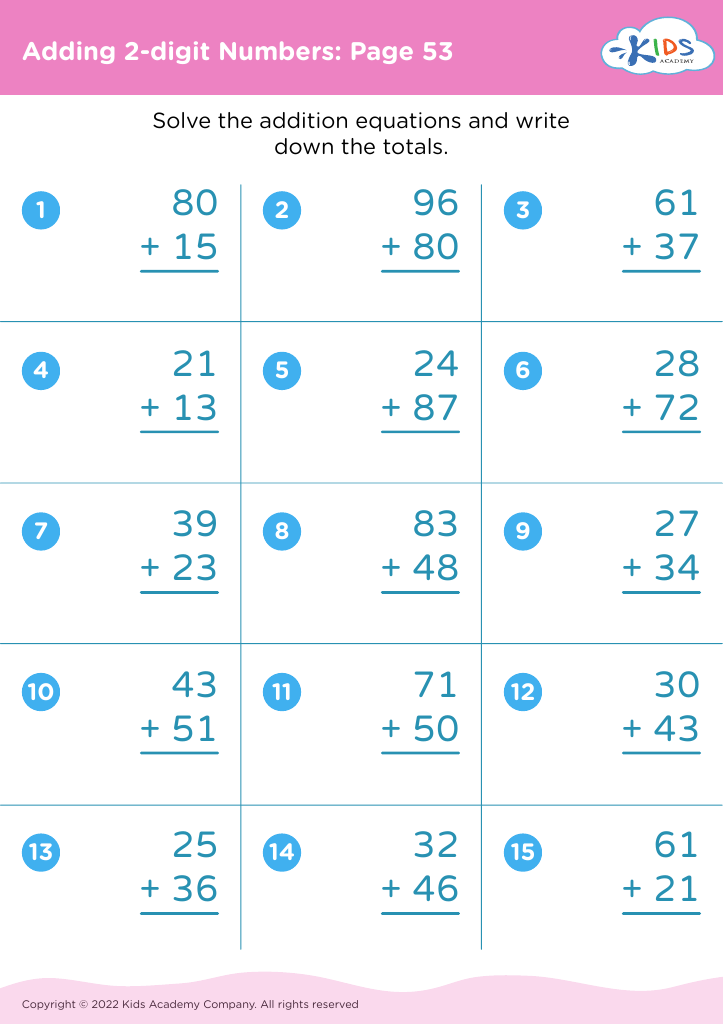
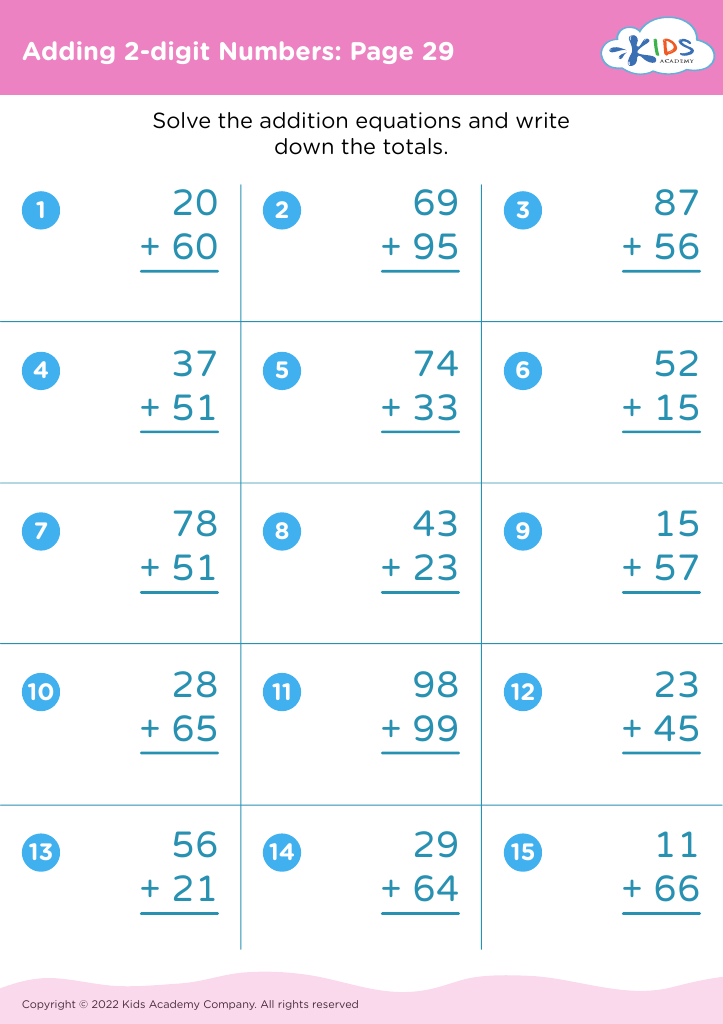
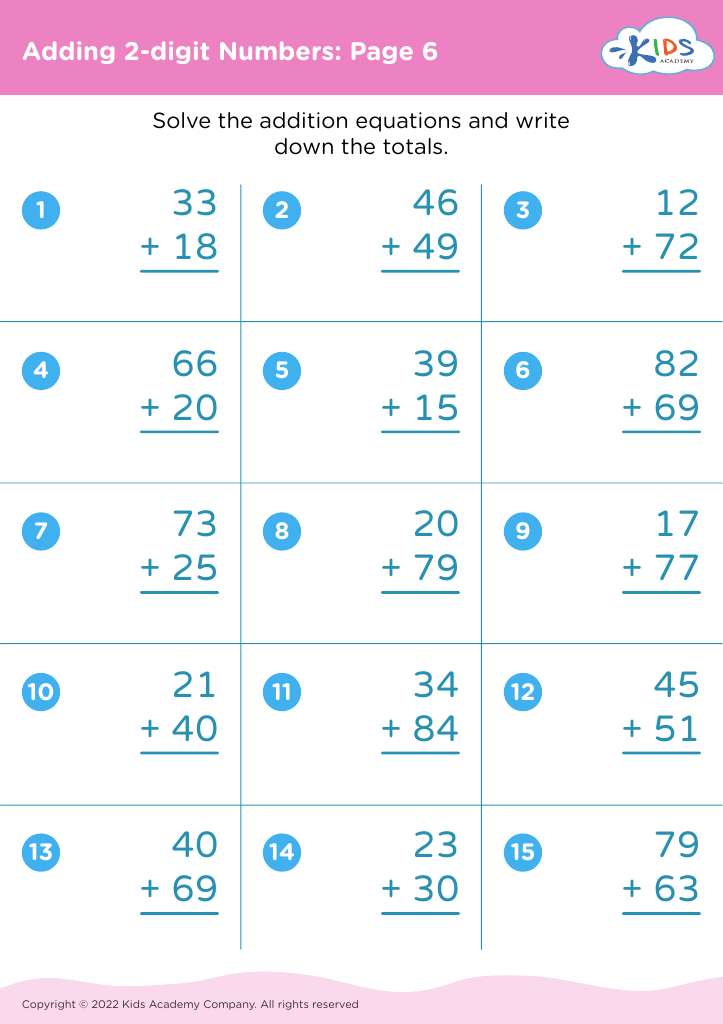








Critical thinking skills are vital for children's overall development, especially when it comes to understanding concepts like adding 2-digit numbers. For children aged 5-8, grasping these fundamental math skills helps foster not just arithmetic abilities but also essential problem-solving capacities. Engaging in critical thinking allows young learners to analyze, evaluate, and create strategies for approaching addition, rather than just memorizing procedures.
When parents and teachers cultivate critical thinking in numeracy, they encourage children to explore various ways to combine numbers, enhancing flexibility in thought. This not only increases their mathematical confidence but also establishes a growth mindset, where challenges are seen as opportunities for learning rather than obstacles. By comprehensively understanding how to add, children learn to apply this skill across different contexts, making connections that deepen their overall comprehension.
Moreover, critical thinking promotes an inquisitive nature—children start asking questions about their processes and outcomes, leading to greater engagement in learning. This foundational skill translates to other academic areas, aligning with 21st-century educational goals. Ultimately, fostering critical thinking in math at this young age equips children with the tools they need for their current studies and future challenges. Parents and teachers play a crucial role in nurturing this critical educational component.








