Understanding patterns Adding 2-digit Numbers Worksheets for Ages 5-8
4 filtered results
-
From - To
Enhance your child's mathematical skills with our "Understanding Patterns: Adding 2-digit Numbers" worksheets designed for ages 5-8. Through engaging and interactive activities, these worksheets help young learners master the art of adding 2-digit numbers while identifying and understanding numerical patterns. Ideal for both classroom settings and at-home practice, our carefully crafted problems boost arithmetic fluency and pattern recognition, essential foundations for more advanced math concepts. Developed by professional educators, these fun and educational worksheets are perfect for guiding young students towards mathematical confidence and success. Make math learning enjoyable and effective with our expertly designed resources!
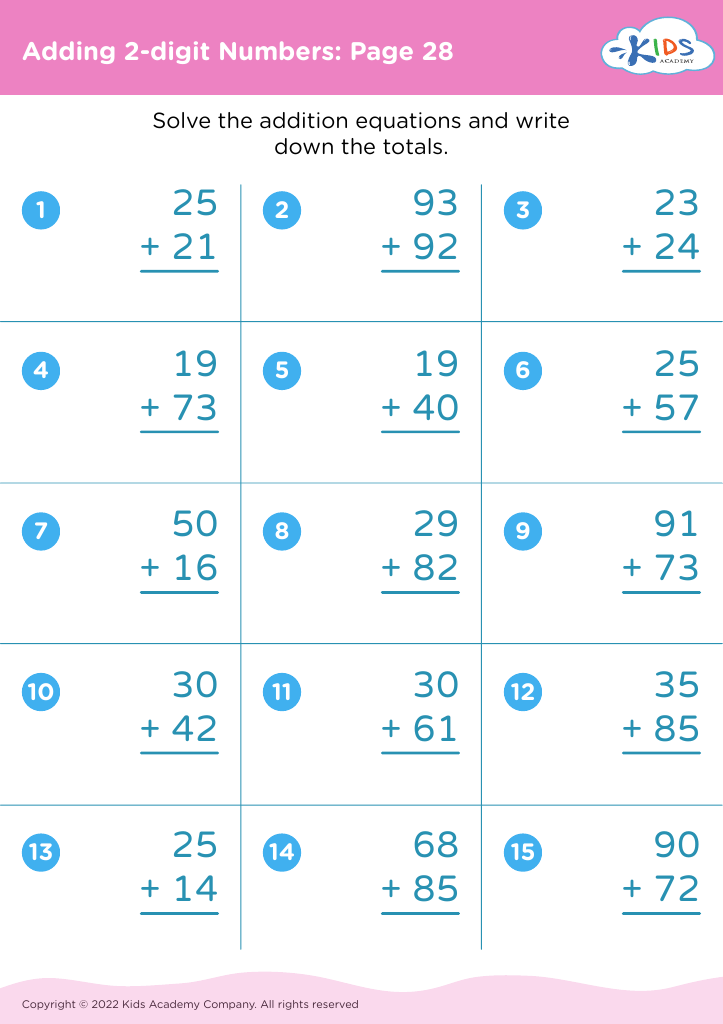
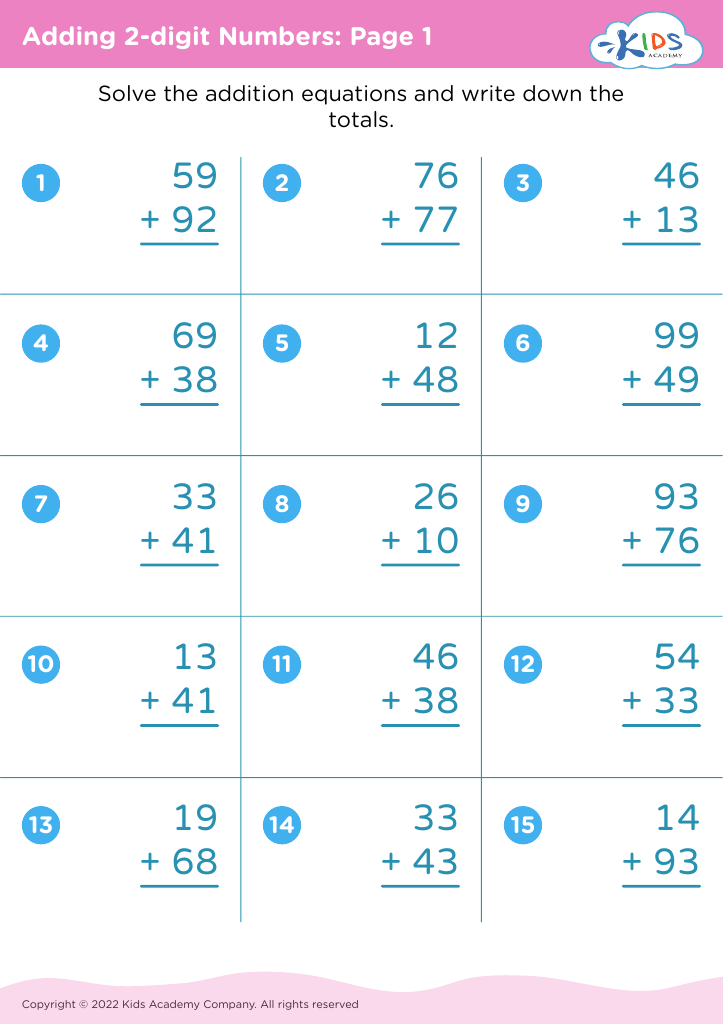
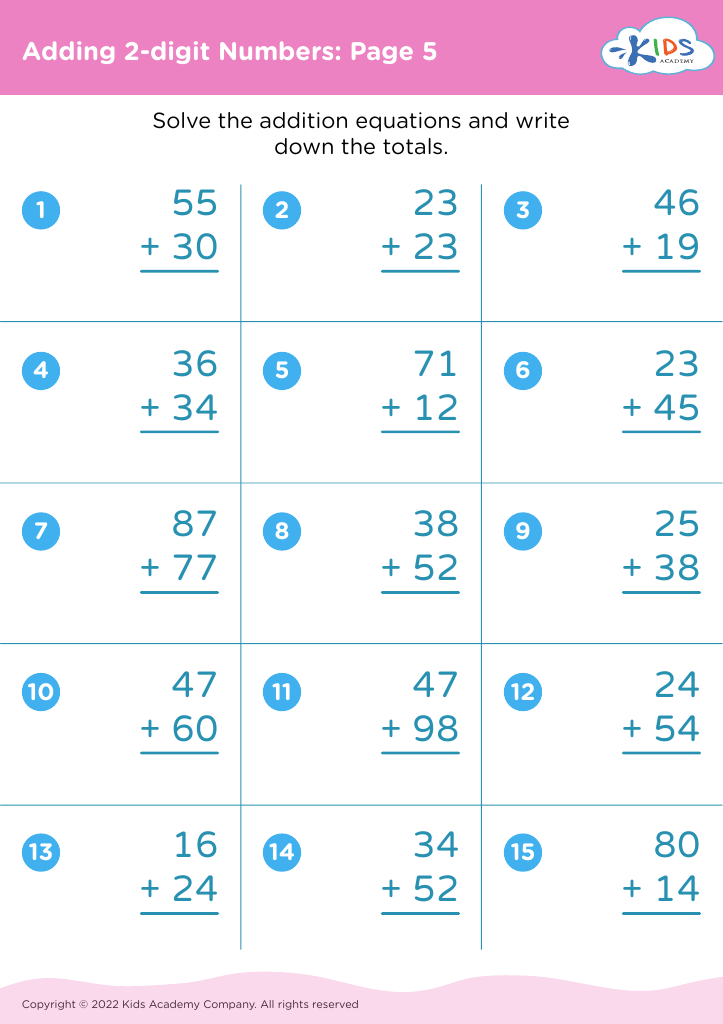
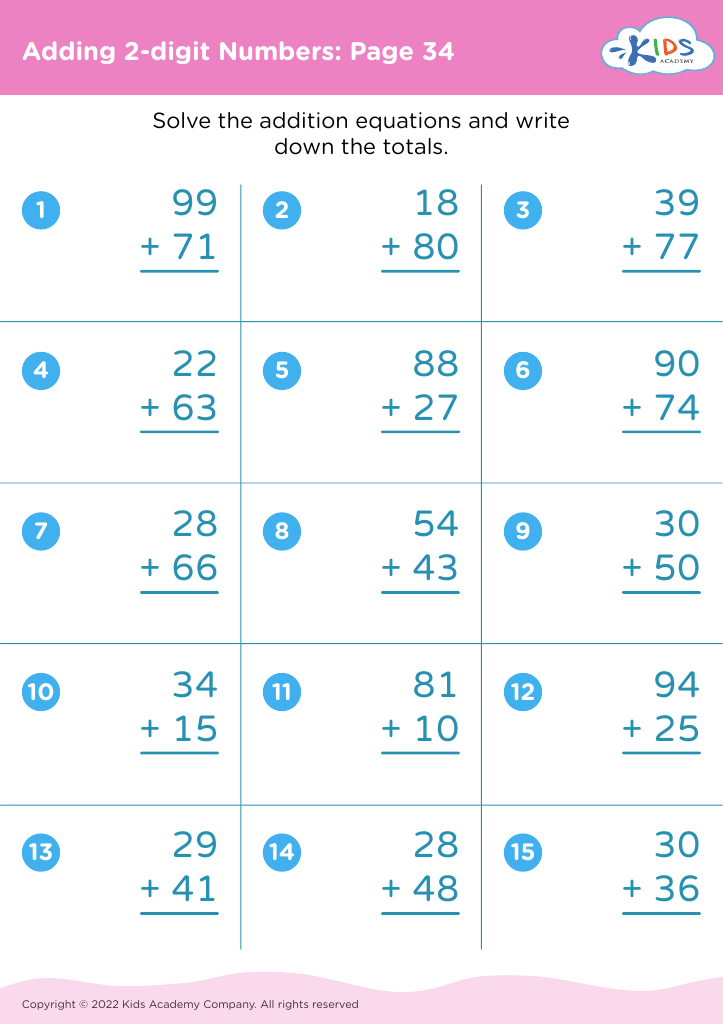








Understanding patterns in adding 2-digit numbers is foundational for young learners, and parents and teachers should invest in this concept for several reasons. First, recognizing patterns aids in mental arithmetic, simplifying complex problems into more manageable steps. When children grasp the patterns in addition, such as always adding ones first and then the tens, they develop a structured approach to problem-solving.
This understanding bolsters their number sense, a critical component in mathematics that enables them to understand relationships between different number sets, estimate effectively, and understand properties of numbers. Enhanced number sense subsequently makes Mathematics less intimidating and more intuitive, paving the way for learning multiplication, division, and more advanced concepts.
Moreover, fostering pattern recognition contributes to cognitive development beyond math. It enhances logical thinking, sequencing skills, and optimism toward problem-solving, traits valuable in all areas of academics and daily life.
Parents and teachers play vital roles by introducing and practicing these fundamental patterns through engaging activities and relatable examples. Positive reinforcement in early years instills confidence and fosters a growth mindset, ensuring children feel empowered to tackle more sophisticated arithmetic challenges as they progress. These early experiences build a strong mathematical foundation indispensable for continued educational success.








