Animal identification Adding at the Zoo Worksheets for Ages 5-8
8 filtered results
-
From - To
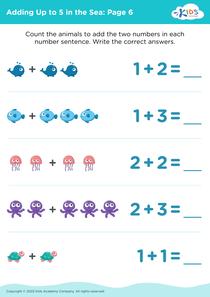
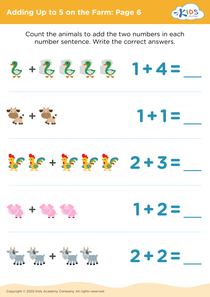
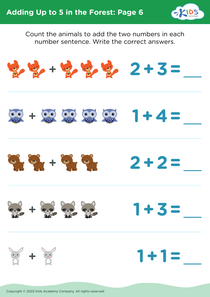
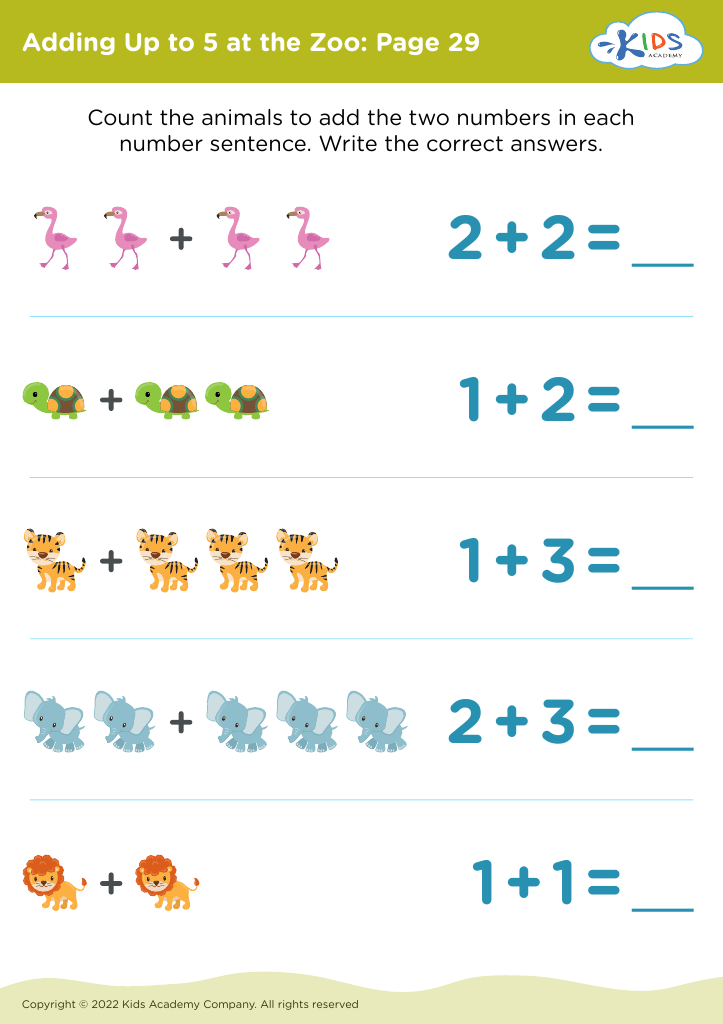
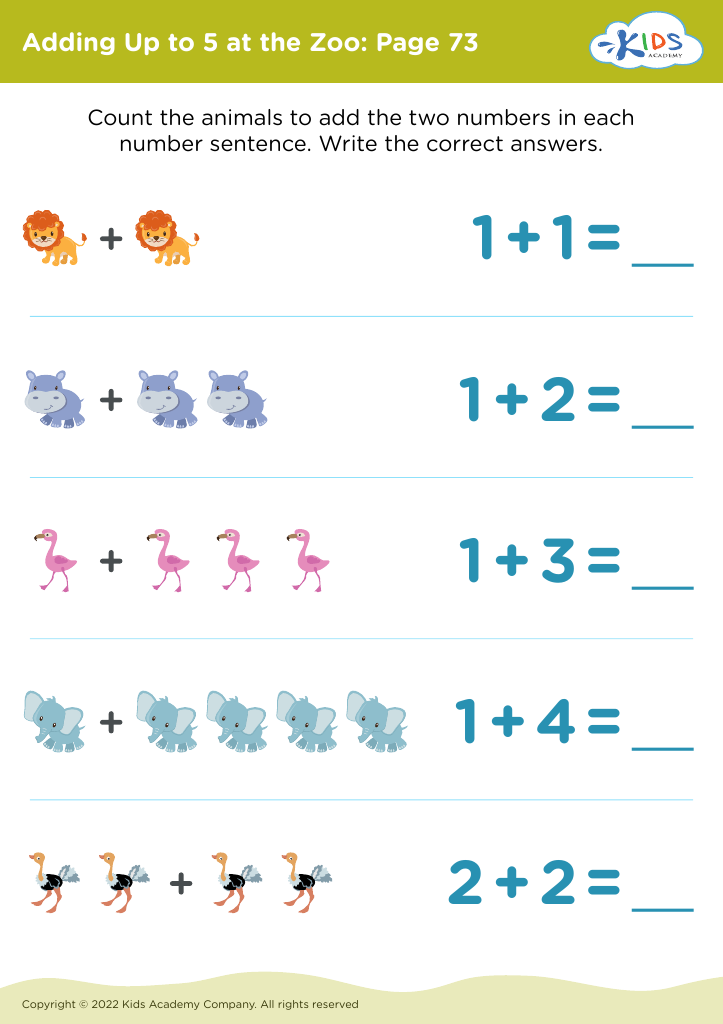
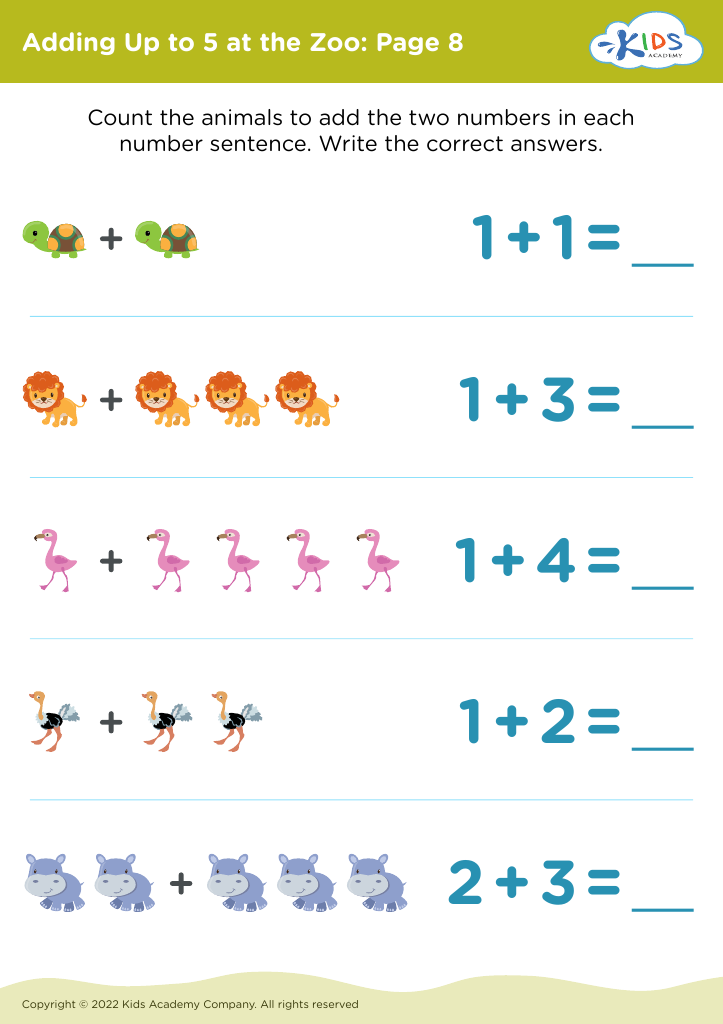
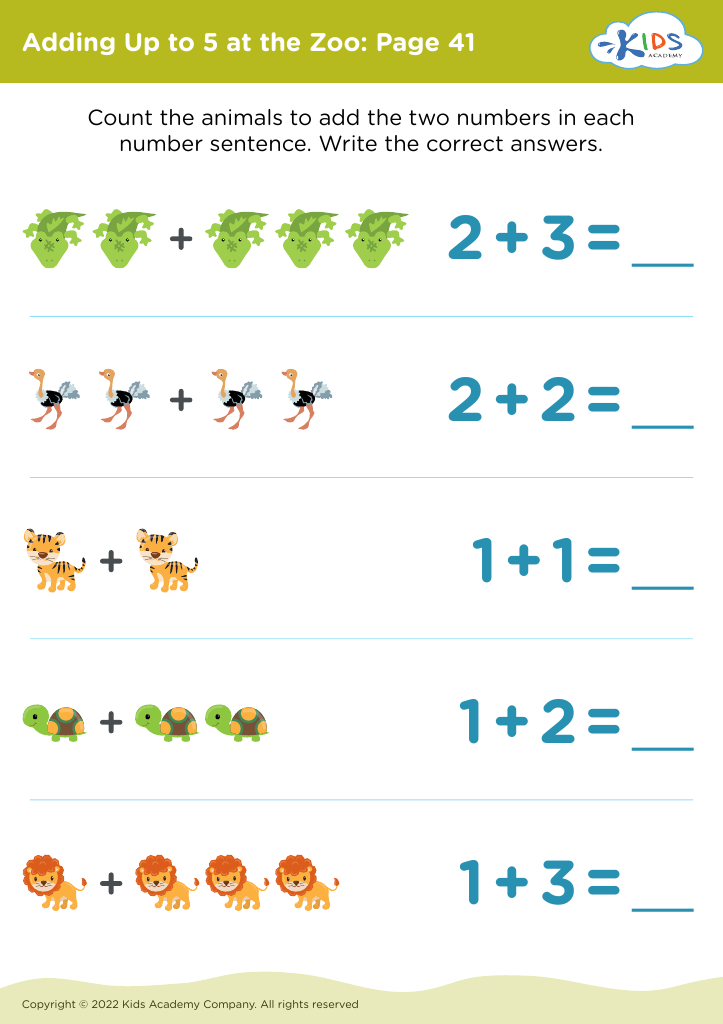
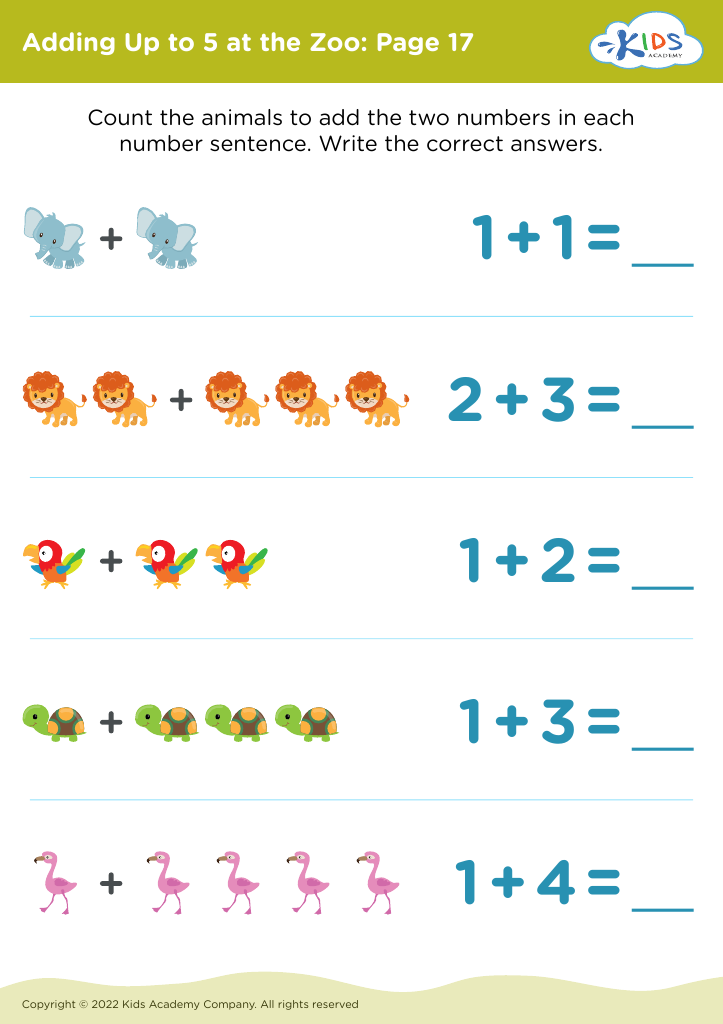
Our "Animal Identification Adding at the Zoo Worksheets for Ages 5-8" combine learning and play to enhance math skills in young minds. These engaging worksheets help children practice addition while identifying their favorite zoo animals. Perfect for early learners, these fun activities build essential math competencies and foster animal recognition. Designed to inspire curiosity and a love of learning, our worksheets develop critical thinking and counting skills, while colorful, zoo-themed content captivates the imagination. Ensure your child enjoys learning with these comprehensive and interactive addition worksheets, making math practice a delightful adventure!
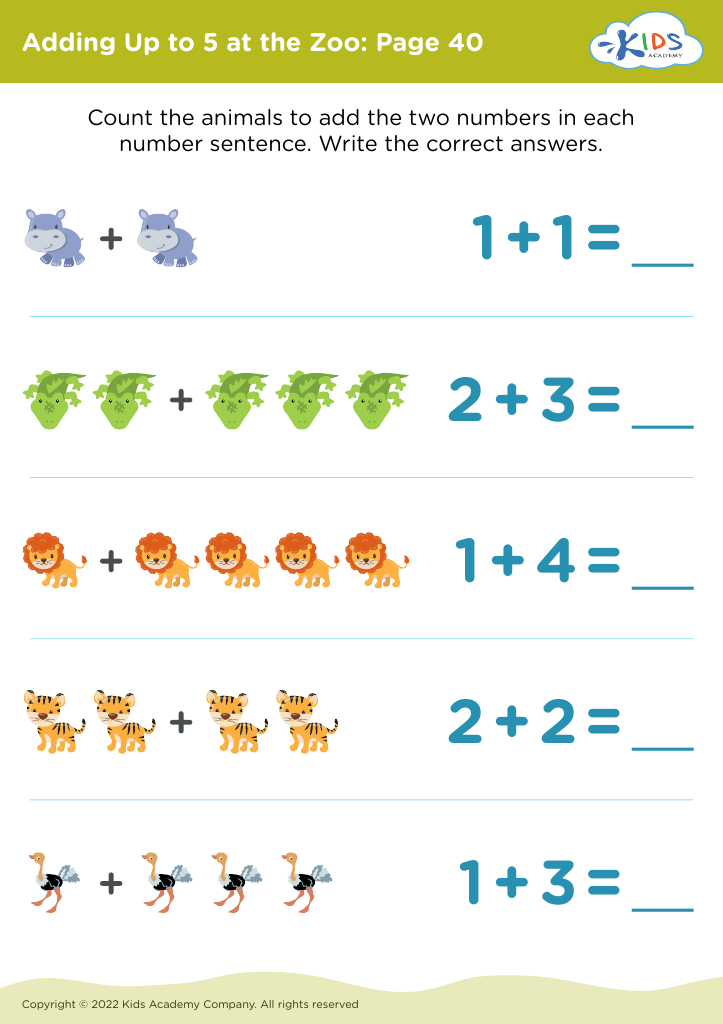
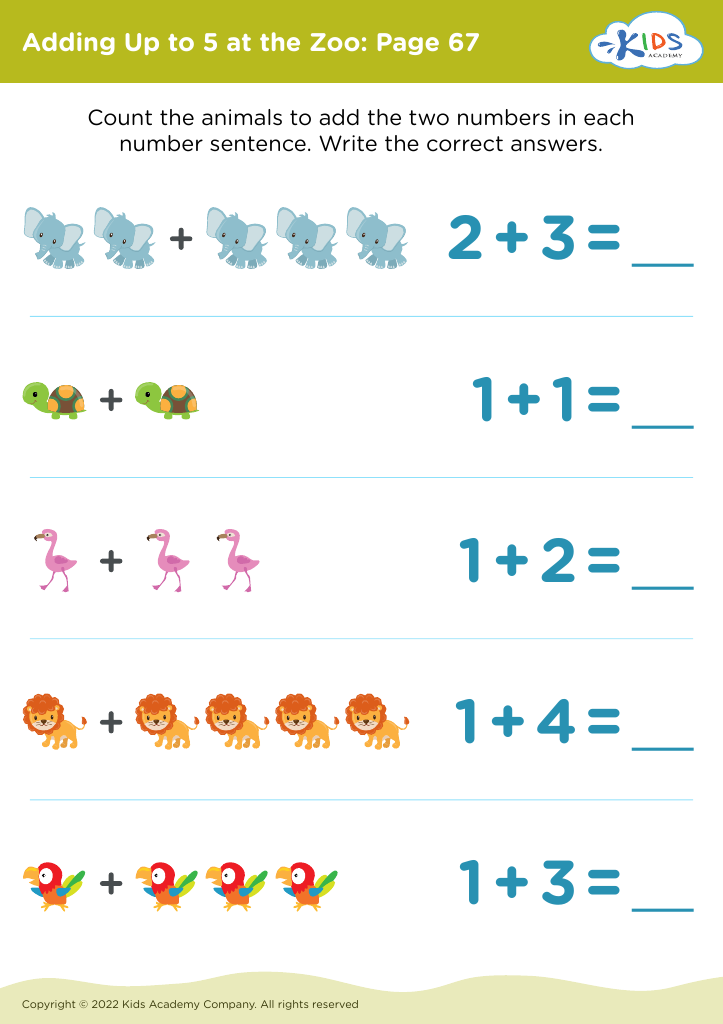
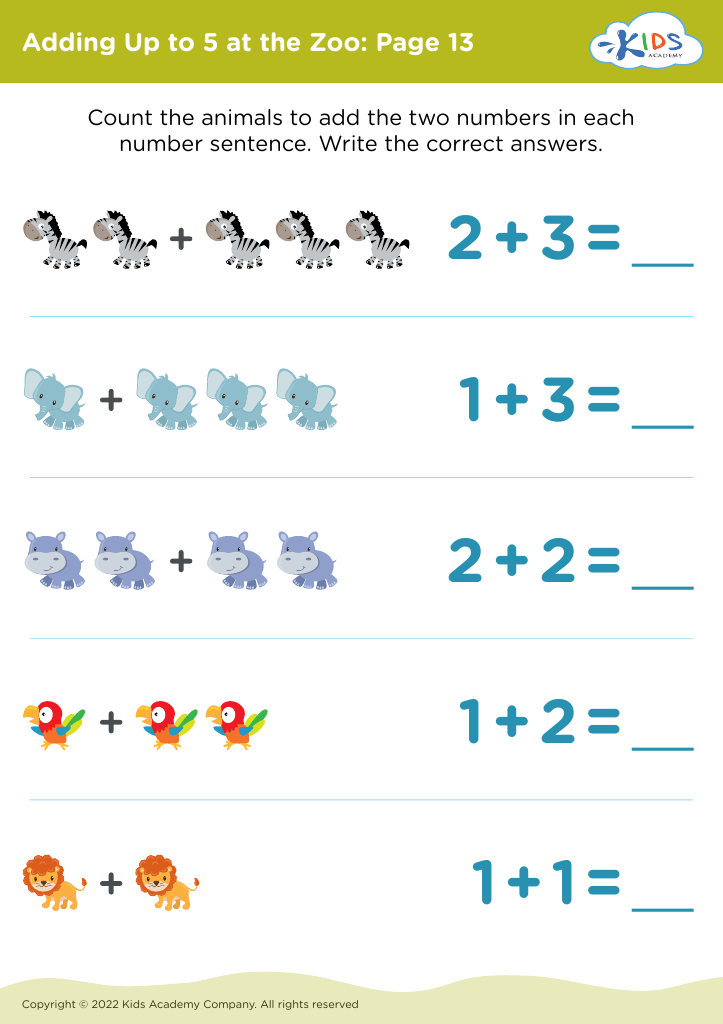



Parents and teachers should prioritize activities like Animal Identification at the Zoo for children aged 5-8 due to its multifaceted educational and developmental benefits. Firstly, such activities ignite children’s natural curiosity and enthusiasm for learning about the world. Encountering diverse animal species fosters a sense of wonder and a deeper appreciation for biodiversity and conservation efforts. Through identification, children enhance their observational skills, learning to recognize differences and similarities in animal characteristics.
Moreover, the zoo environment provides a tangible context for interdisciplinary learning. Language skills are developed as children name animals and describe features, while basic math skills are enhanced through counting exercises and understanding patterns. This form of active learning solidifies knowledge more effectively than passive methods, promoting memory retention through engagement and interaction.
Additionally, social skills get a boost as children learn to follow instructions, take turns, and share knowledge with peers and adults. These activities can also instill a sense of responsibility and empathy toward living creatures, contributing to emotional and ethical development.
Overall, Animal Identification at the Zoo serves as a comprehensive educational tool that supports cognitive, social, and emotional growth, making it a valuable endeavor for young children in early education.