Animal recognition Adding at the Zoo Worksheets for Ages 5-8 - Page 2
43 filtered results
-
From - To
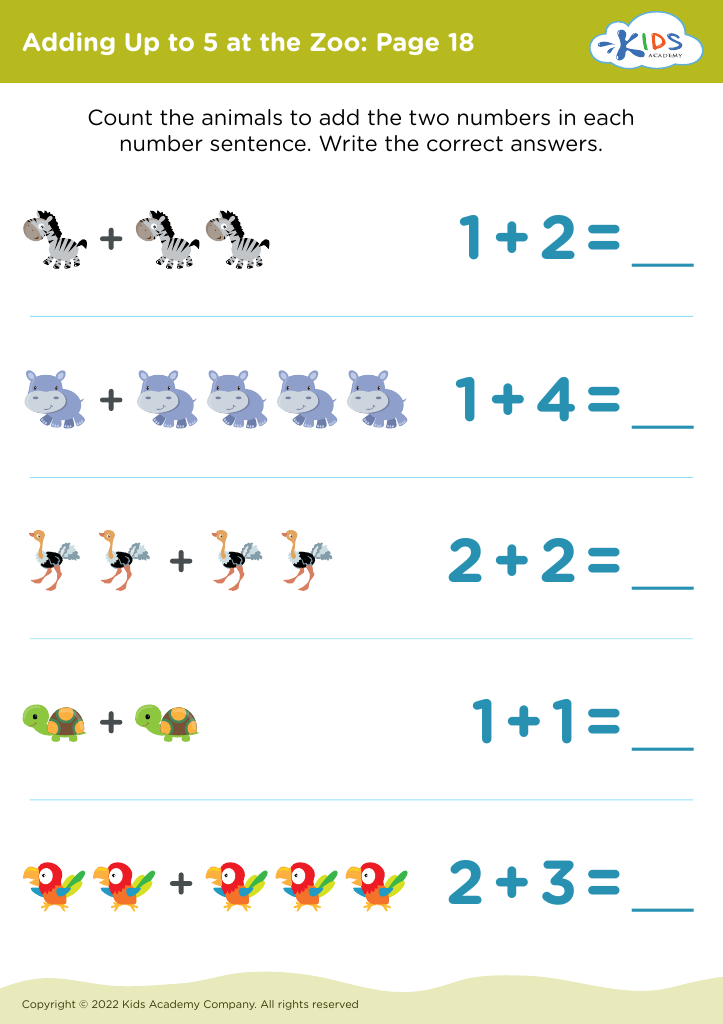
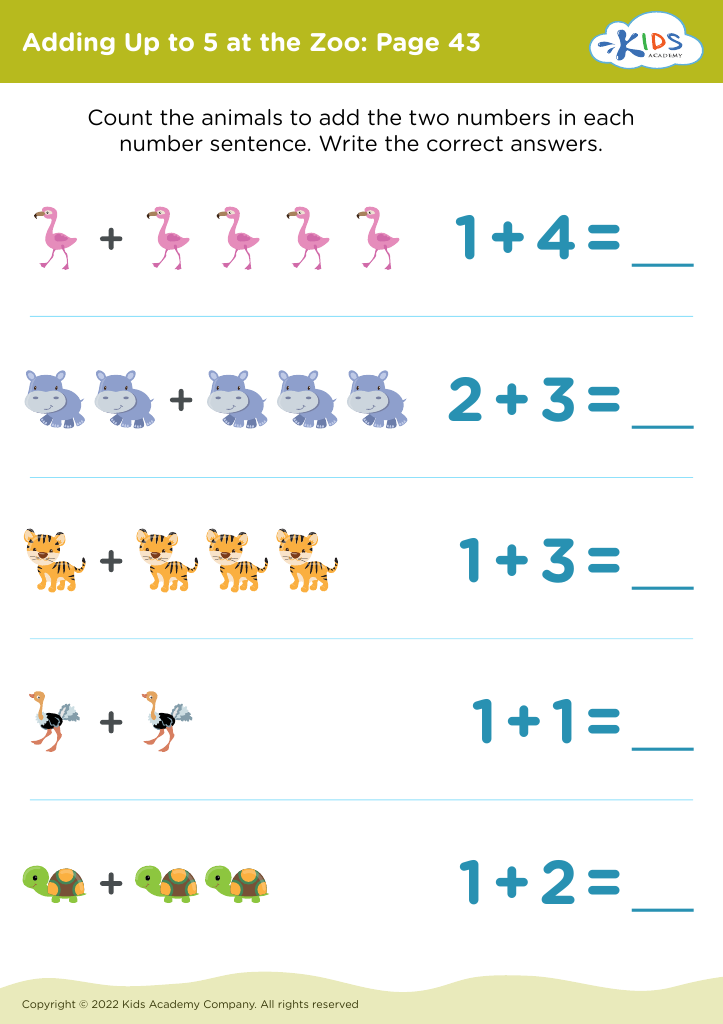
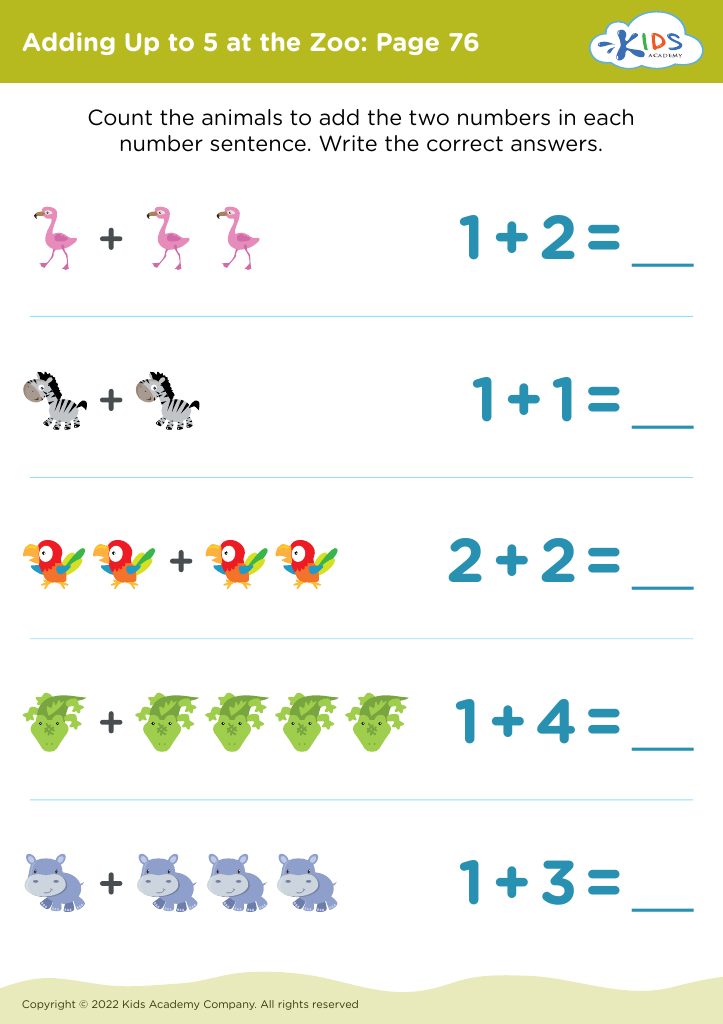
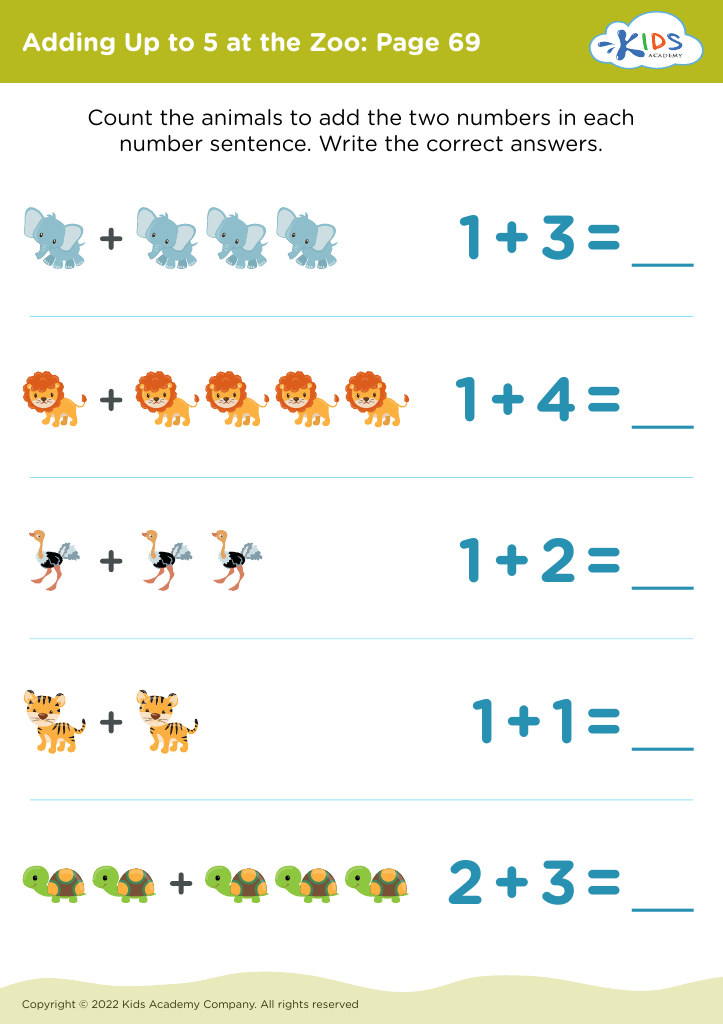
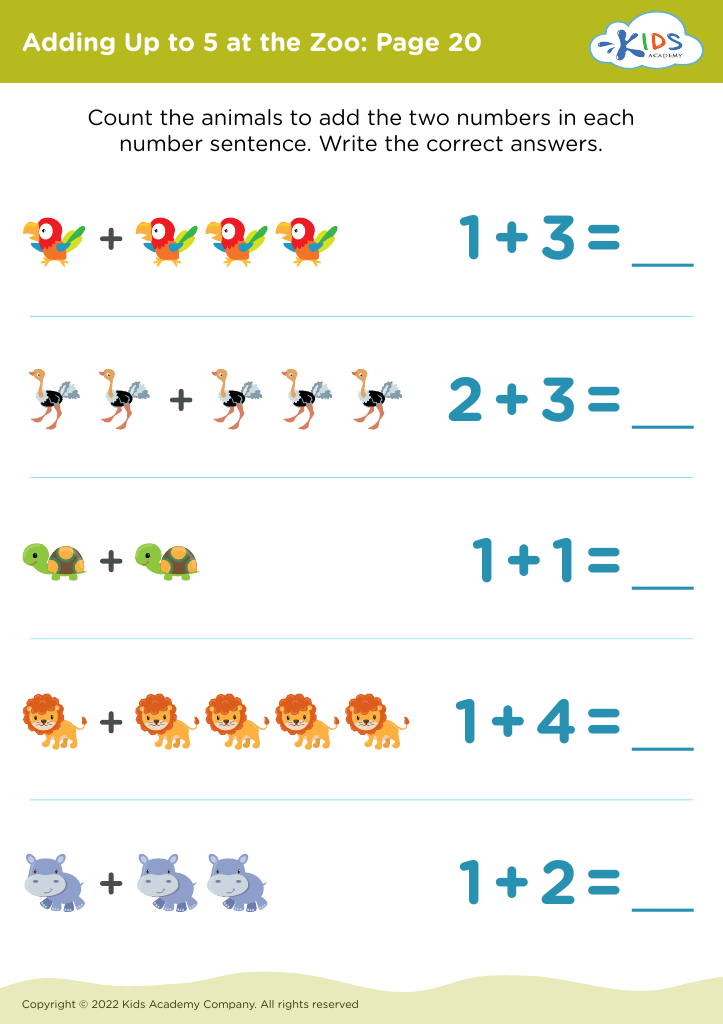
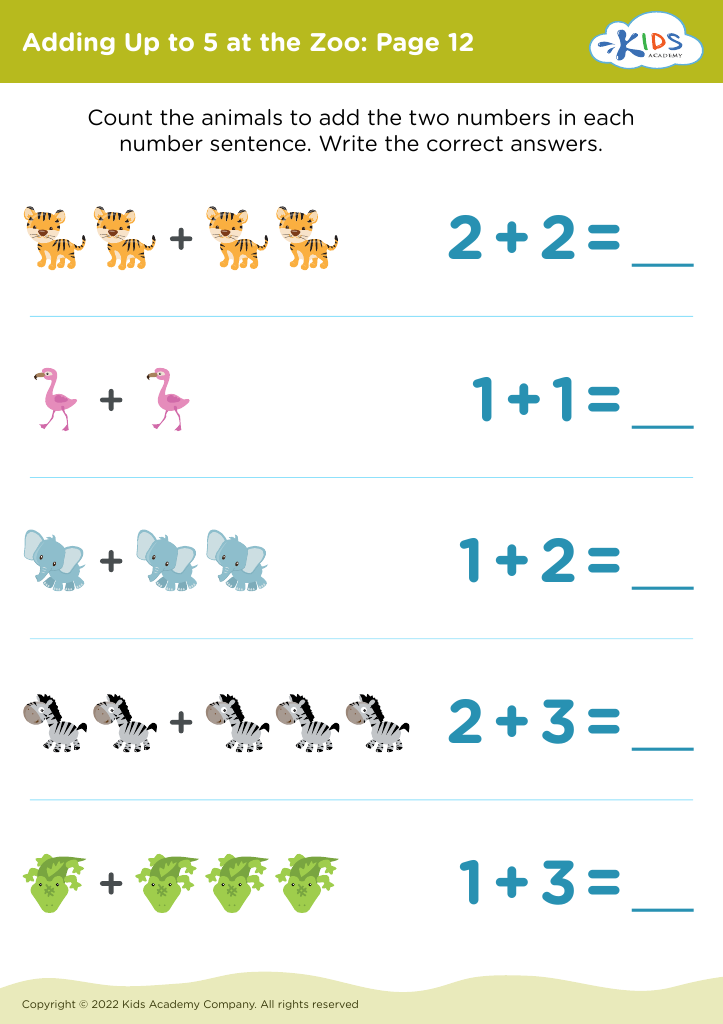
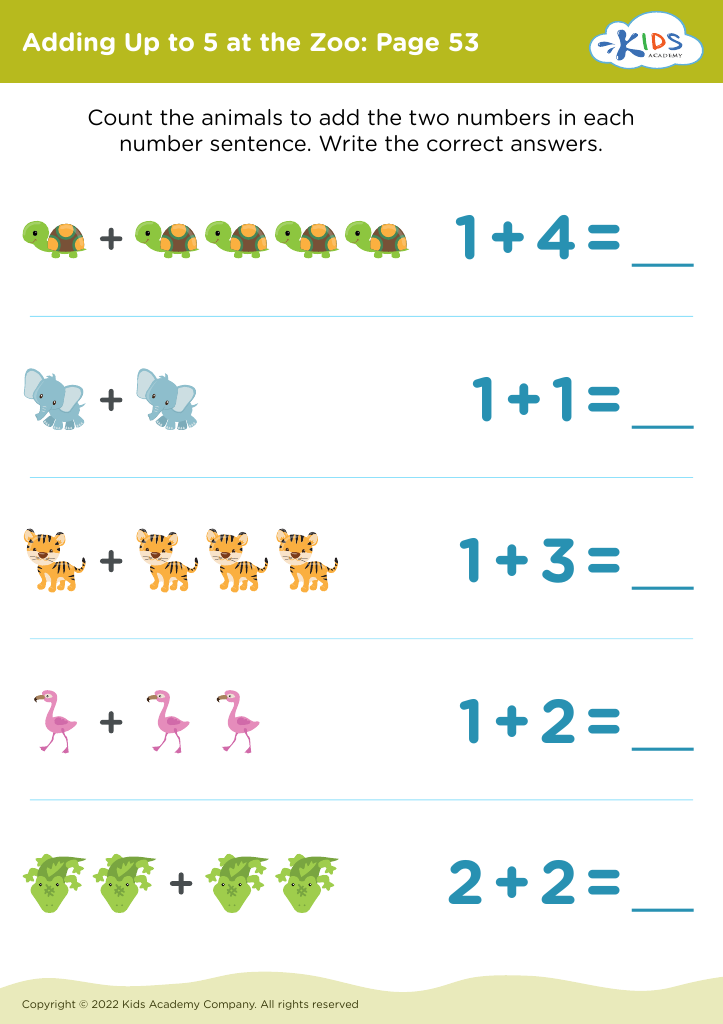
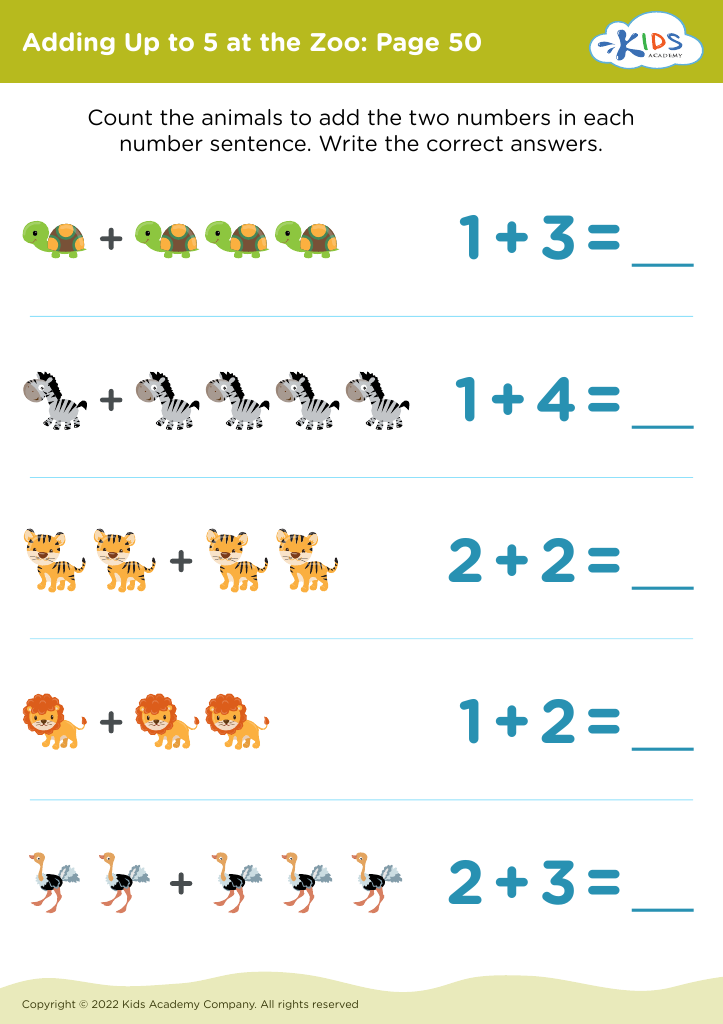
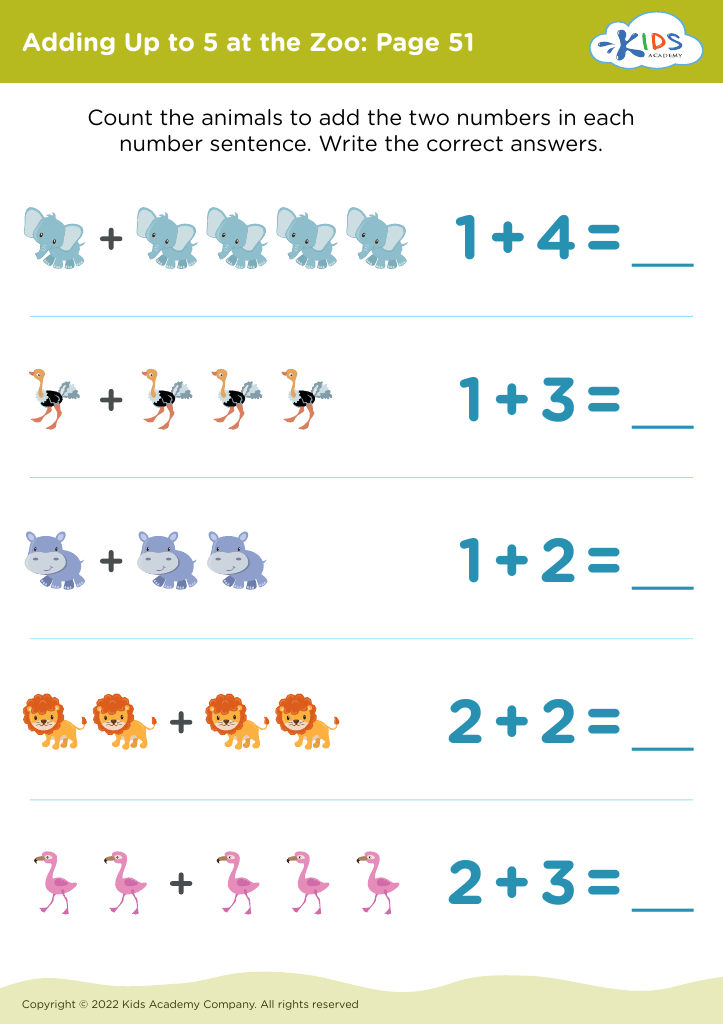
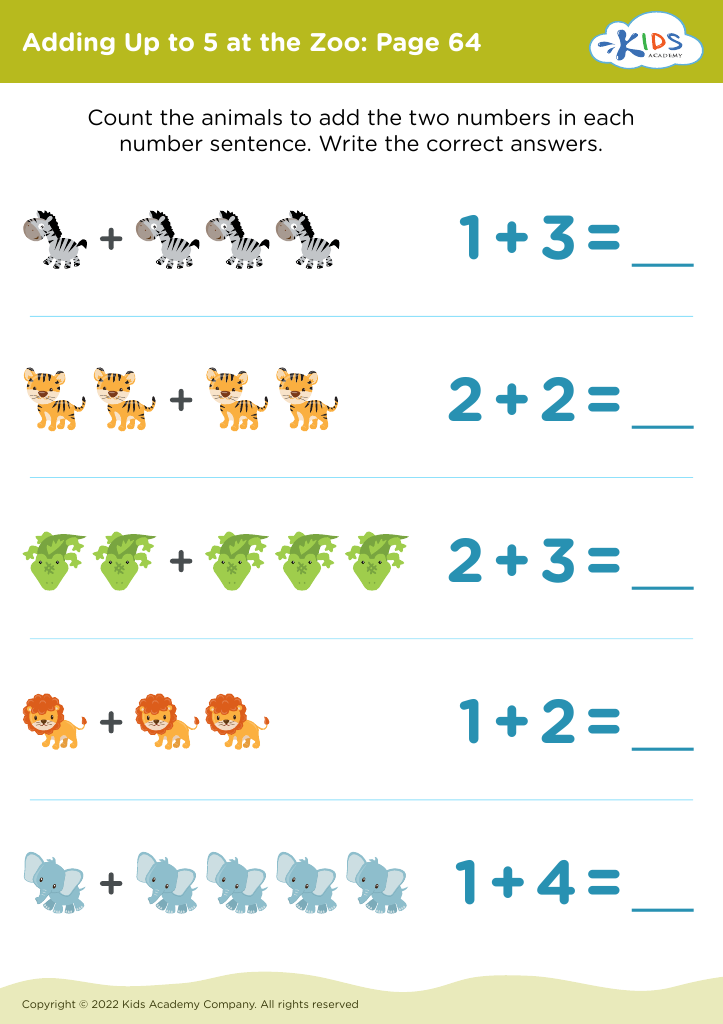
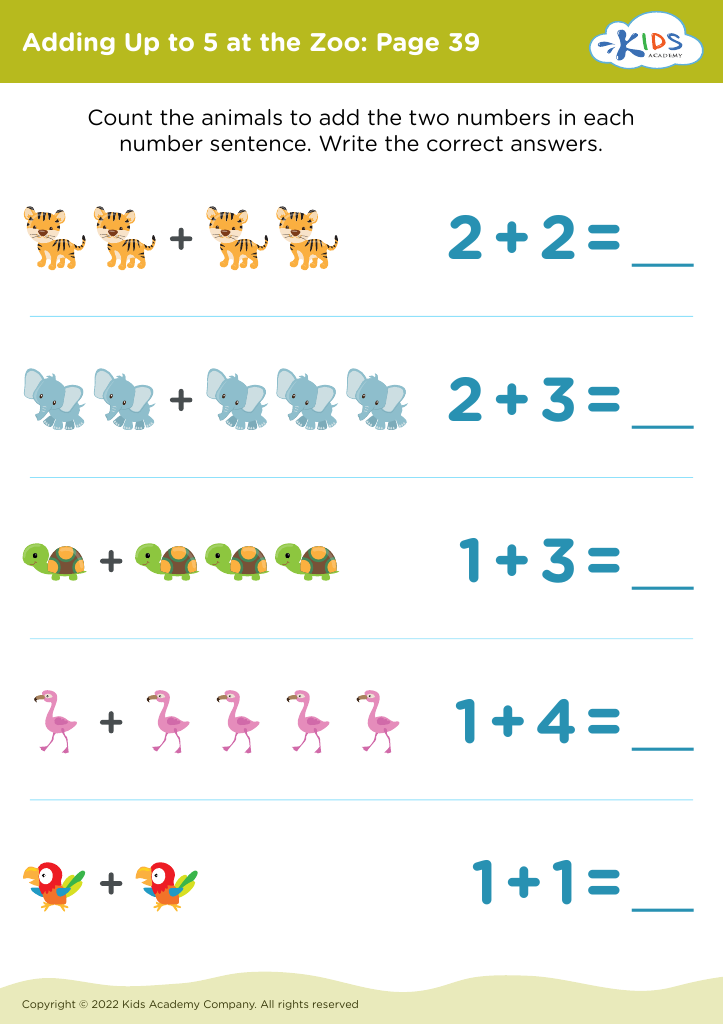



Animal recognition at the zoo is a vital learning experience for children aged 5-8. During this stage of development, children are naturally curious and eager to explore the world around them. Zoo visits provide a unique opportunity for hands-on learning, allowing young children to identify and understand diverse animal species they may only know from books or videos.
Understanding animal recognition fosters not only cognitive skills but also emotional and social development. Children learn about different habitats, diet, and behaviors, which enhances their knowledge of biology and ecosystems. These experiences can spark conversations about ecology, conservation, and the importance of protecting wildlife, nurturing a sense of responsibility for the environment.
Additionally, visits to the zoo promote critical thinking and observation skills. As children interact with their surroundings—spotting animals, deciphering vocalizations, and discussing characteristics—they engage in inquiry-based learning. This interactive environment fosters a love for learning and exploration.
For parents and teachers, promoting animal recognition in such a hands-on setting can create memorable educational moments that inspire lifelong learning and advocacy for wildlife conservation. Encouraging curiosity and knowledge about the animal kingdom helps shape responsible, informed individuals in our increasingly interconnected world.