Basic Arithmetic Adding at the Zoo Worksheets for Ages 5-8
7 filtered results
-
From - To
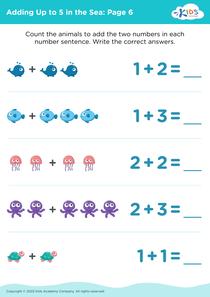
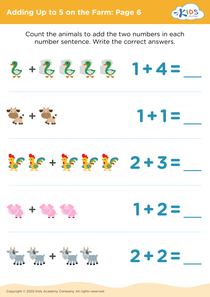
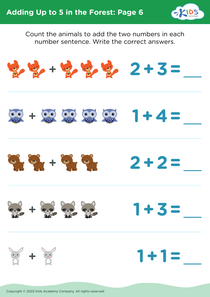
Explore the exciting world of arithmetic with our "Basic Arithmetic Adding at the Zoo Worksheets for Ages 5-8." Perfectly crafted for curious young learners, these engaging worksheets integrate fun zoo themes to make addition simple and enjoyable. Children will delight in counting adorable animals while developing essential math skills. Ideal for both classroom and home settings, our printable materials help reinforce counting, addition, and problem-solving abilities. Encourage your child's love of learning with these captivating and educational resources. Make math an adventure at the zoo today! Check out more engaging activities on our Kids Academy website.
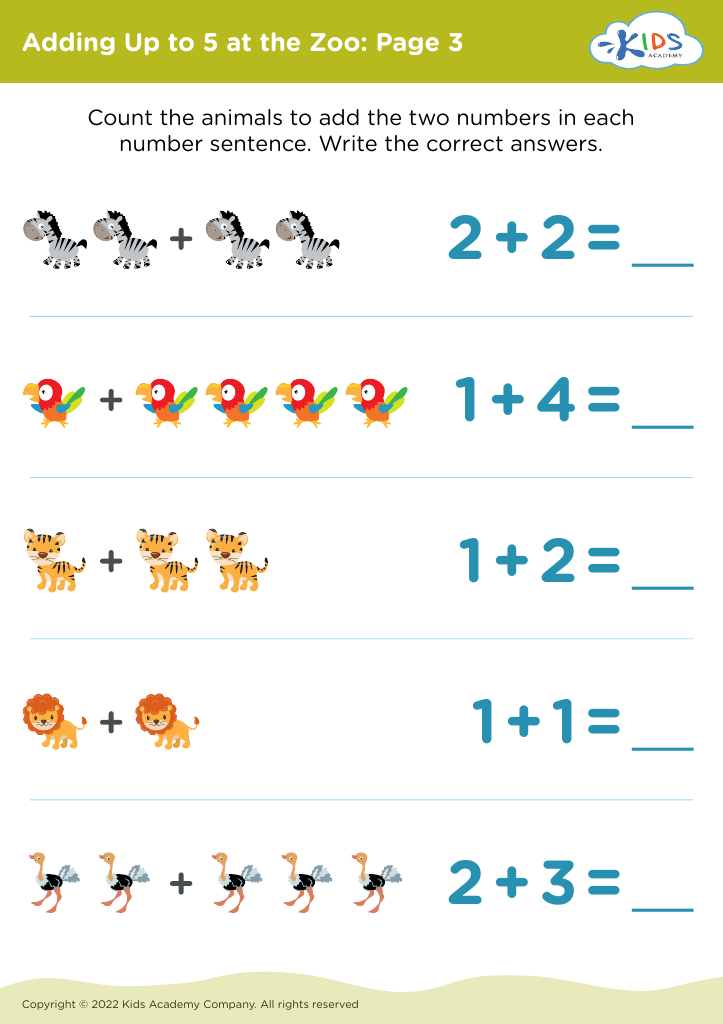
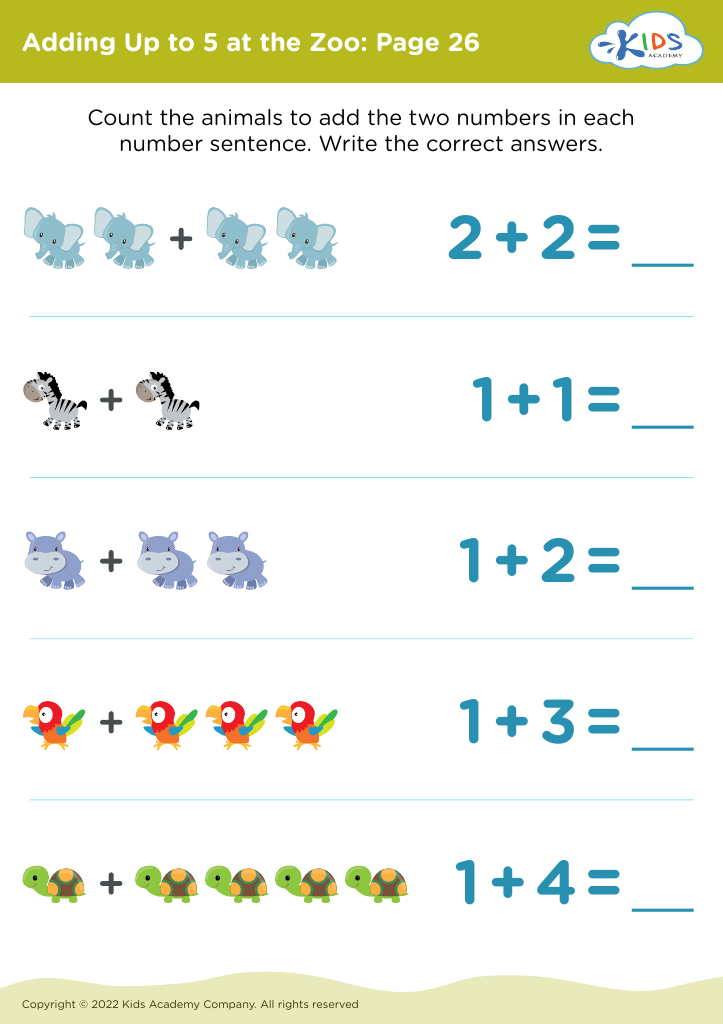
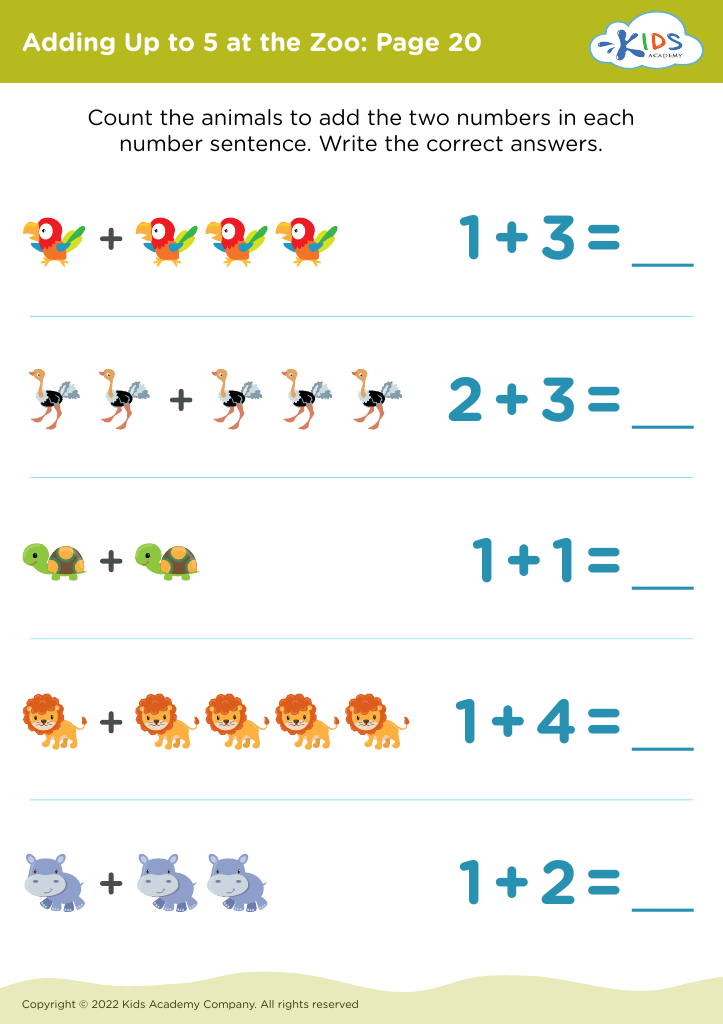
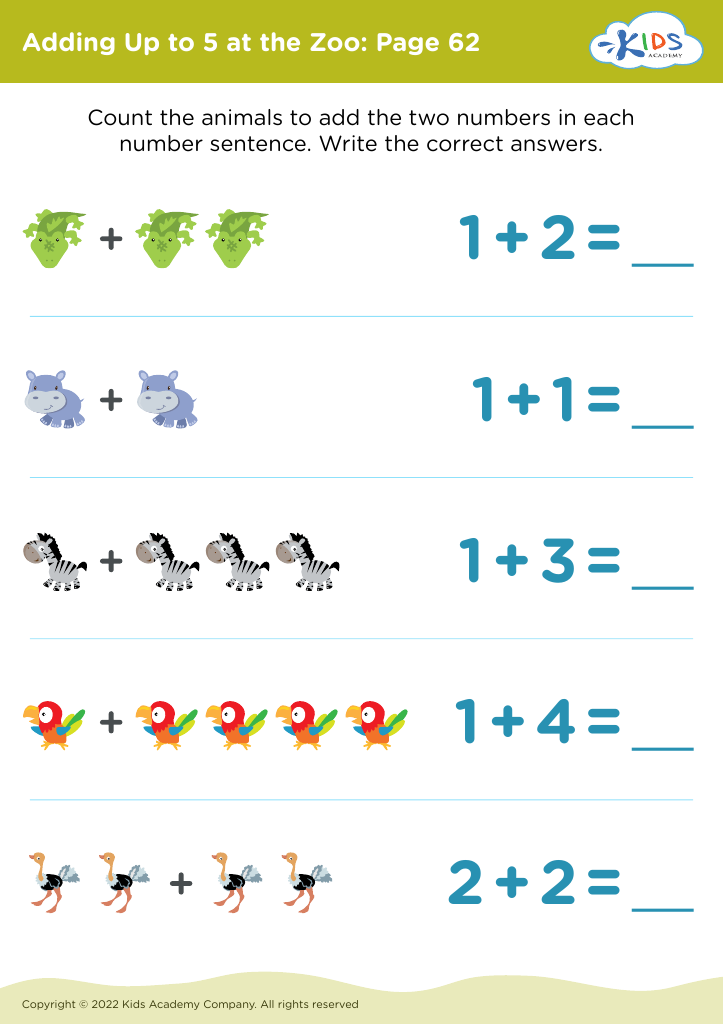
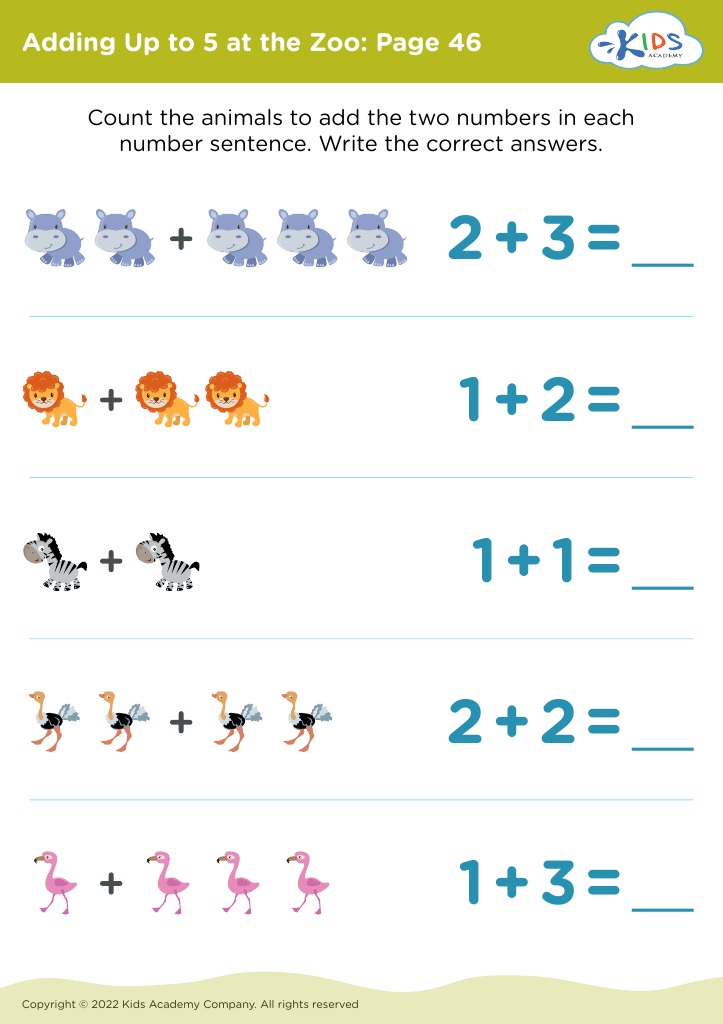
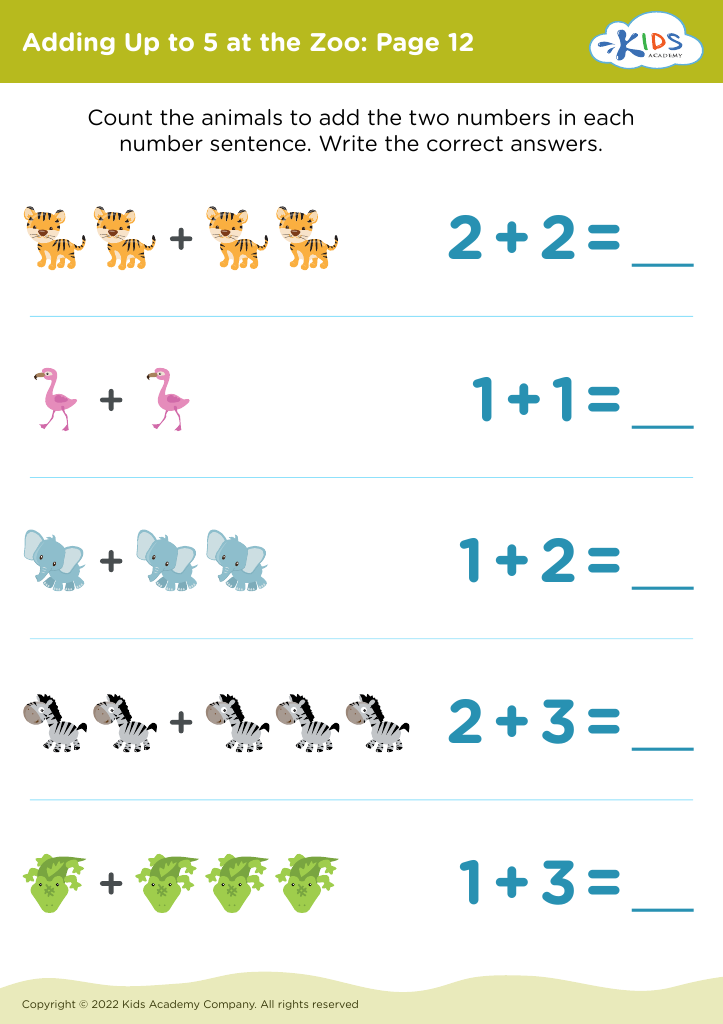
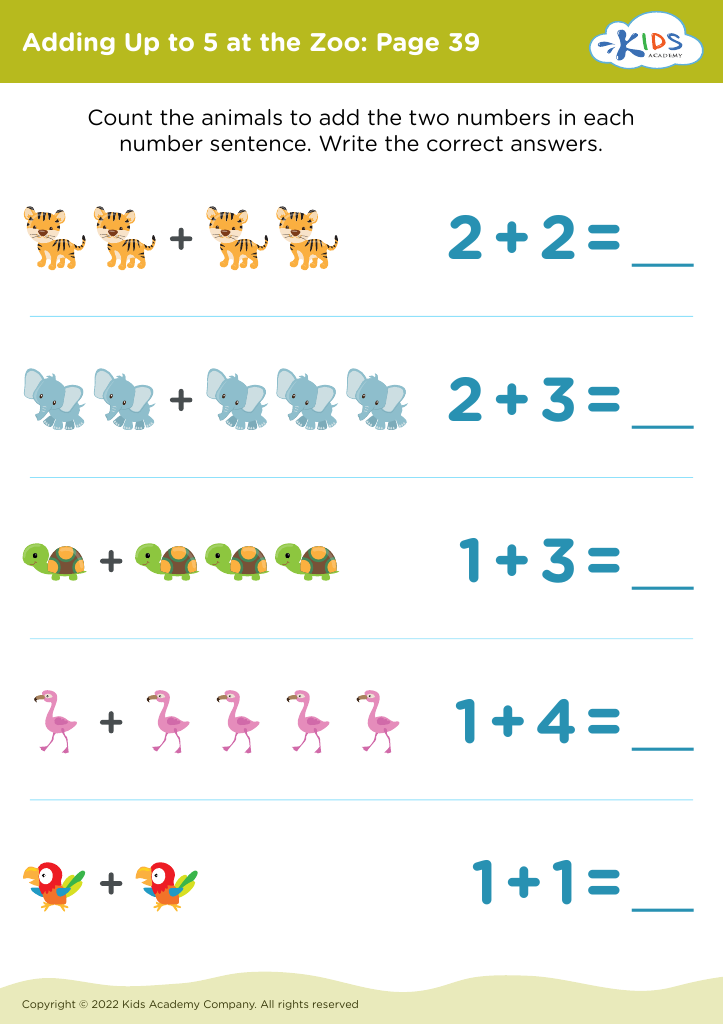



Basic Arithmetic Adding at the Zoo is an engaging and educational activity designed specifically for children aged 5-8, presenting a unique way for young learners to master essential math skills. This innovative approach intertwines arithmetic with a fun, familiar, and stimulating environment— the zoo. It not only reinforces core mathematical concepts but also captivates children's imaginations.
Parents and teachers should care about this method primarily because it transforms learning into an exciting adventure. Arithmetic is a foundational skill crucial for future academic success in various subjects like science, engineering, and technology. By embedding math into a narrative children find enthralling, the activity boosts both comprehension and retention.
Additionally, integrating animals into math problems leverages children's natural curiosity about the animal world. This interest-driven learning fosters a deep engagement, making mathematical concepts more relatable and easier to grasp. The zoo setting also encourages visual and contextual learning, which is particularly effective for young brains that thrive on visual stimulation and context-based education.
Lastly, this approach promotes the development of critical thinking and problem-solving skills while also encouraging a love for learning. By associating arithmetic with enjoyable and relatable scenarios, children develop a positive attitude towards math, setting a strong foundation for lifelong learning.