Filters

18 filtered results

Clear all filters
Favorites
With answer key
Interactive

18 filtered results

Difficulty Level

Grade


Subject

    Explore our engaging "Cognitive Development Adding at the Zoo Worksheets" designed for children ages 5 to 8! These fun, interactive worksheets combine the excitement of the zoo with essential math skills, promoting important cognitive development. Kids will enhance their addition skills while identifying various animals and learning interesting facts about them. Suitable for classrooms or at-home learning, these worksheets encourage not only mathematical understanding but also critical thinking and problem-solving. Perfect for young learners, they make practicing math enjoyable and effective. Dive into a world of learning and let your child discover the joy of numbers through creative zoo-themed activities!
    Check out this FREE Trial Lesson on Adding at the Zoo for age 5-8!

    Match Exactly the Same

    Favorites
    With answer key
    Interactive
    • 5-8
    • Cognitive Development
    • Adding at the Zoo
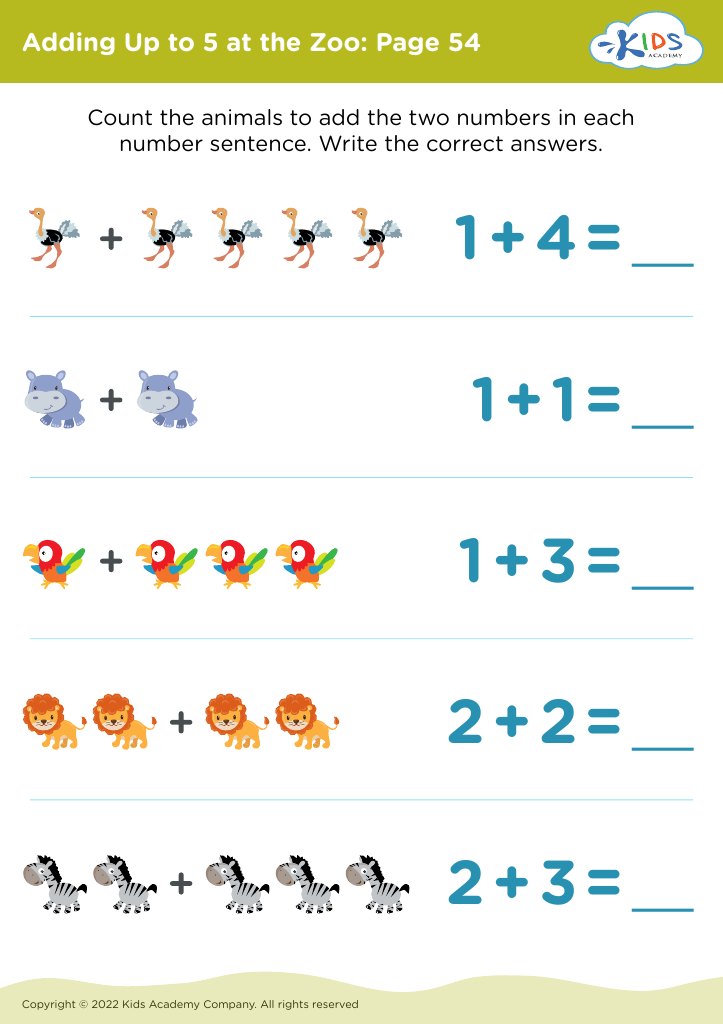
    Adding Up to 5 at the Zoo: Page 54
    Adding Up to 5 at the Zoo: Page 54
    Adding Up to 5 at the Zoo: Page 54
    Worksheet
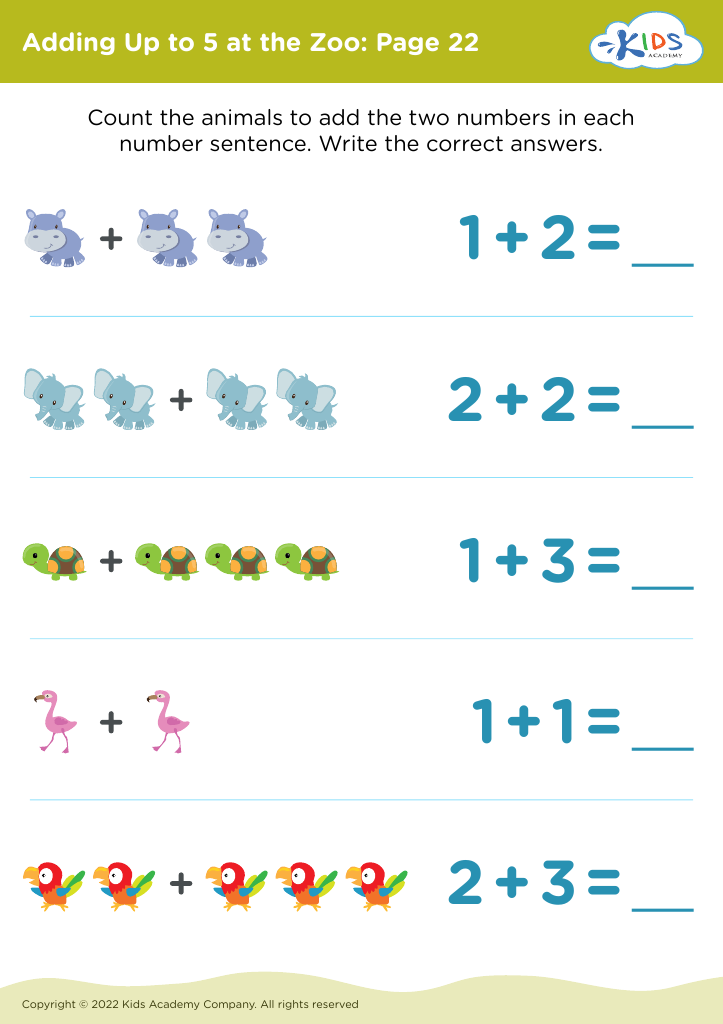
    Adding Up to 5 at the Zoo: Page 22
    Adding Up to 5 at the Zoo: Page 22
    Adding Up to 5 at the Zoo: Page 22
    Worksheet
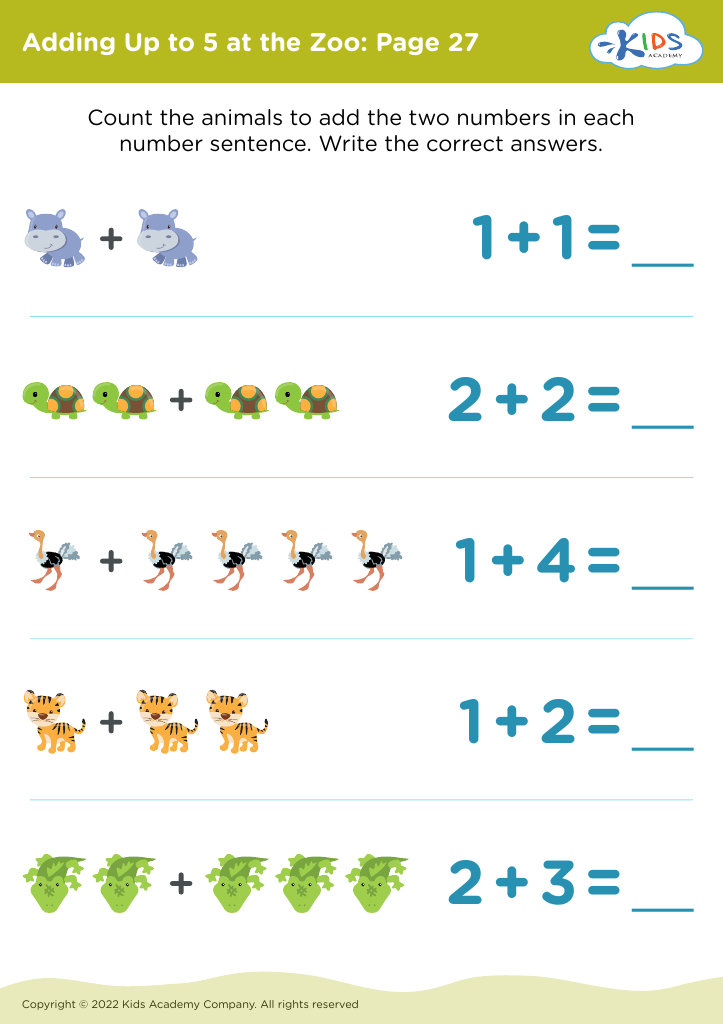
    Adding Up to 5 at the Zoo: Page 27
    Adding Up to 5 at the Zoo: Page 27
    Adding Up to 5 at the Zoo: Page 27
    Worksheet
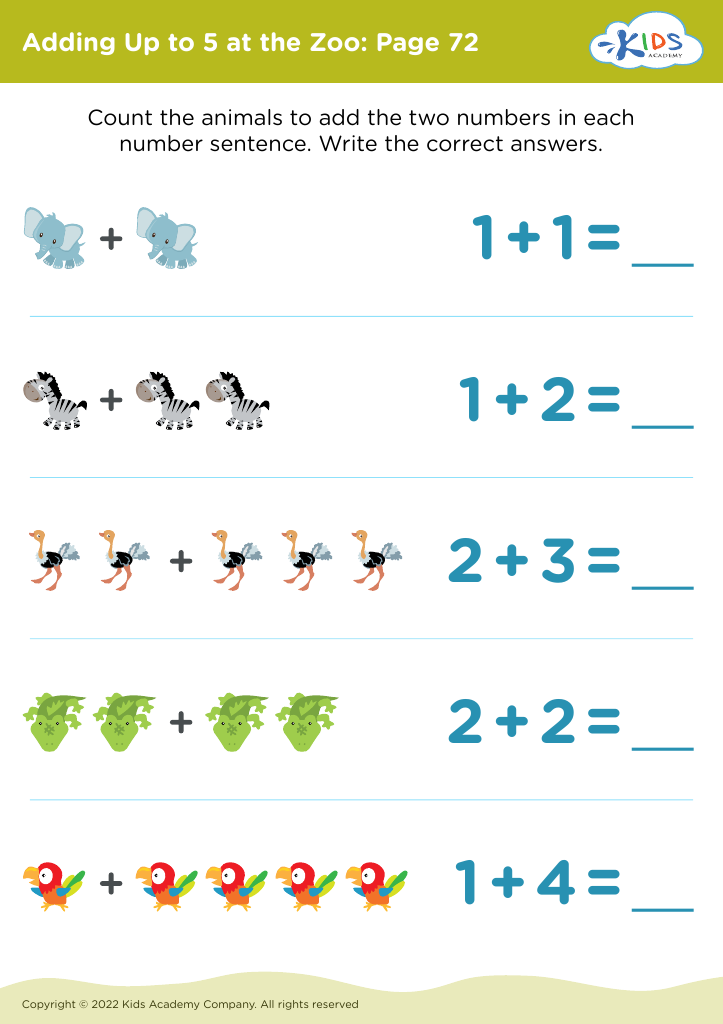
    Adding Up to 5 at the Zoo: Page 72
    Adding Up to 5 at the Zoo: Page 72
    Adding Up to 5 at the Zoo: Page 72
    Worksheet
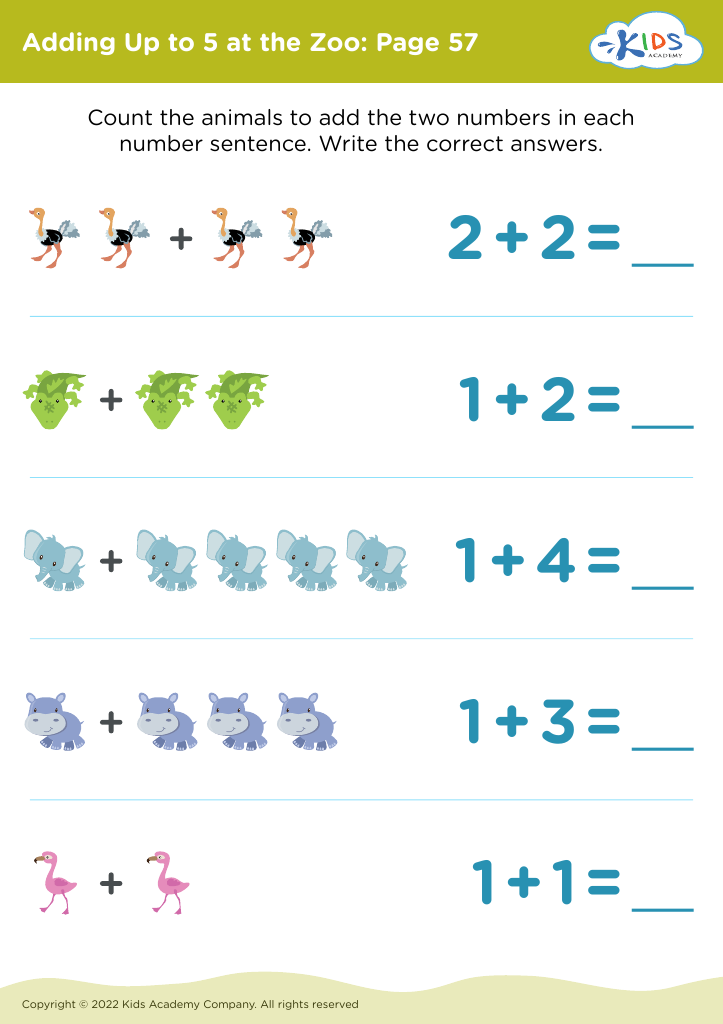
    Adding Up to 5 at the Zoo: Page 57
    Adding Up to 5 at the Zoo: Page 57
    Adding Up to 5 at the Zoo: Page 57
    Worksheet
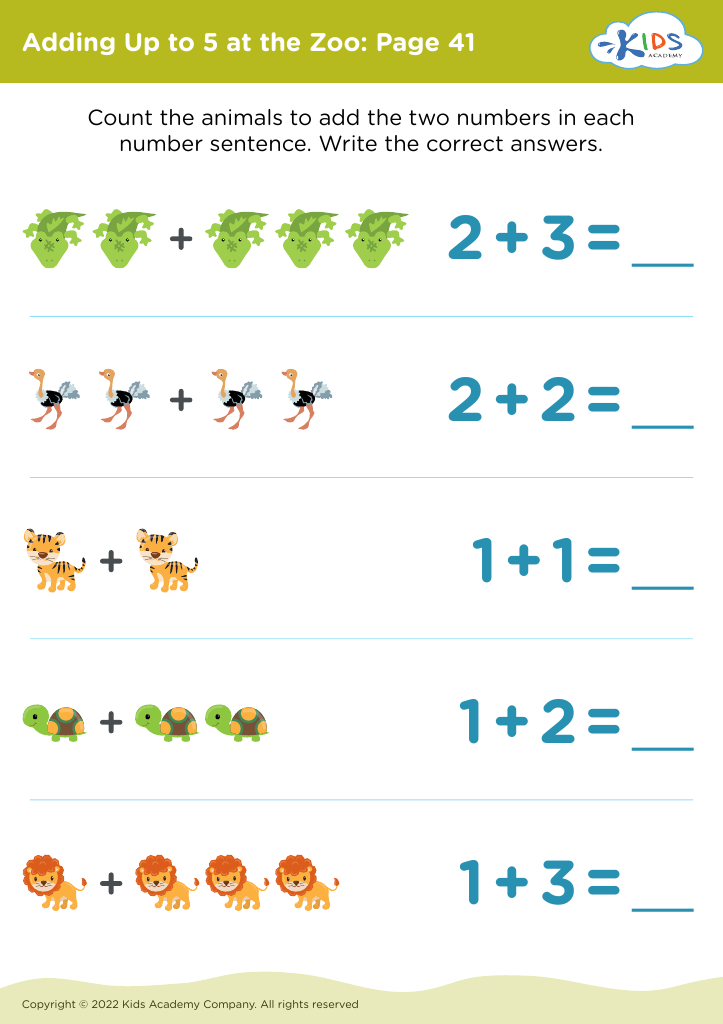
    Adding Up to 5 at the Zoo: Page 41
    Adding Up to 5 at the Zoo: Page 41
    Adding Up to 5 at the Zoo: Page 41
    Worksheet
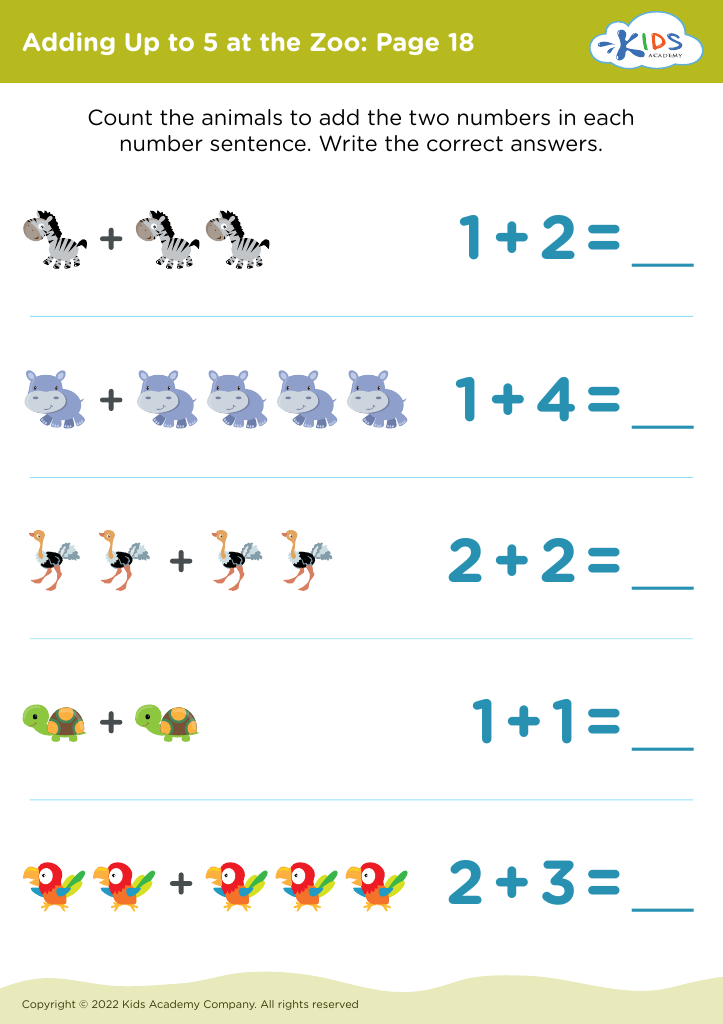
    Adding Up to 5 at the Zoo: Page 18
    Adding Up to 5 at the Zoo: Page 18
    Adding Up to 5 at the Zoo: Page 18
    Worksheet
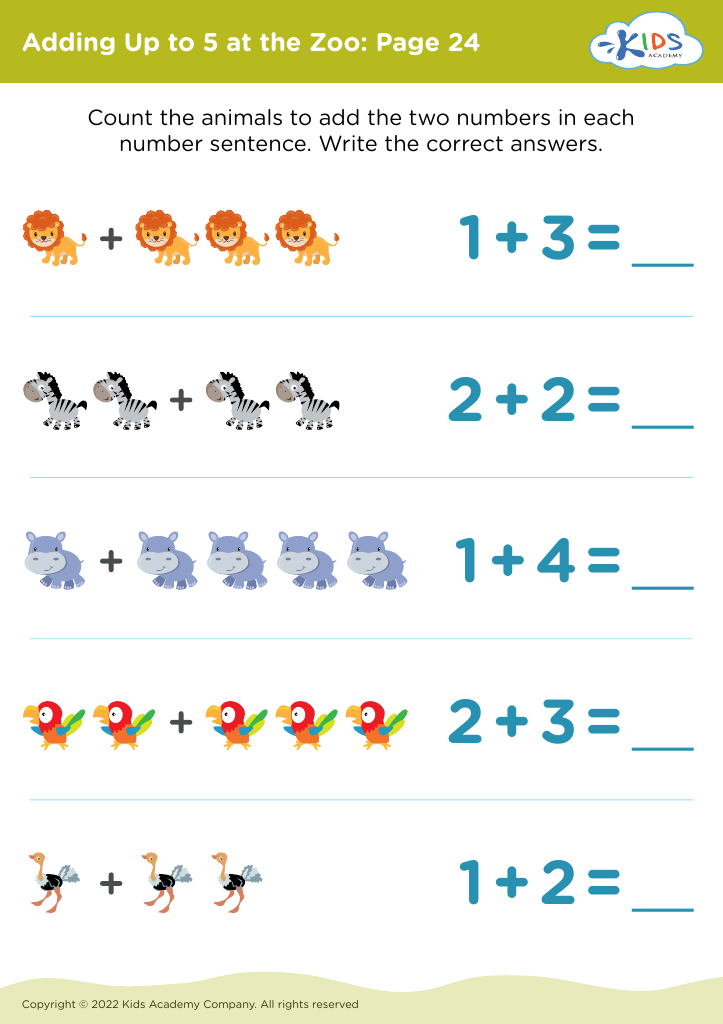
    Adding Up to 5 at the Zoo: Page 24
    Adding Up to 5 at the Zoo: Page 24
    Adding Up to 5 at the Zoo: Page 24
    Worksheet
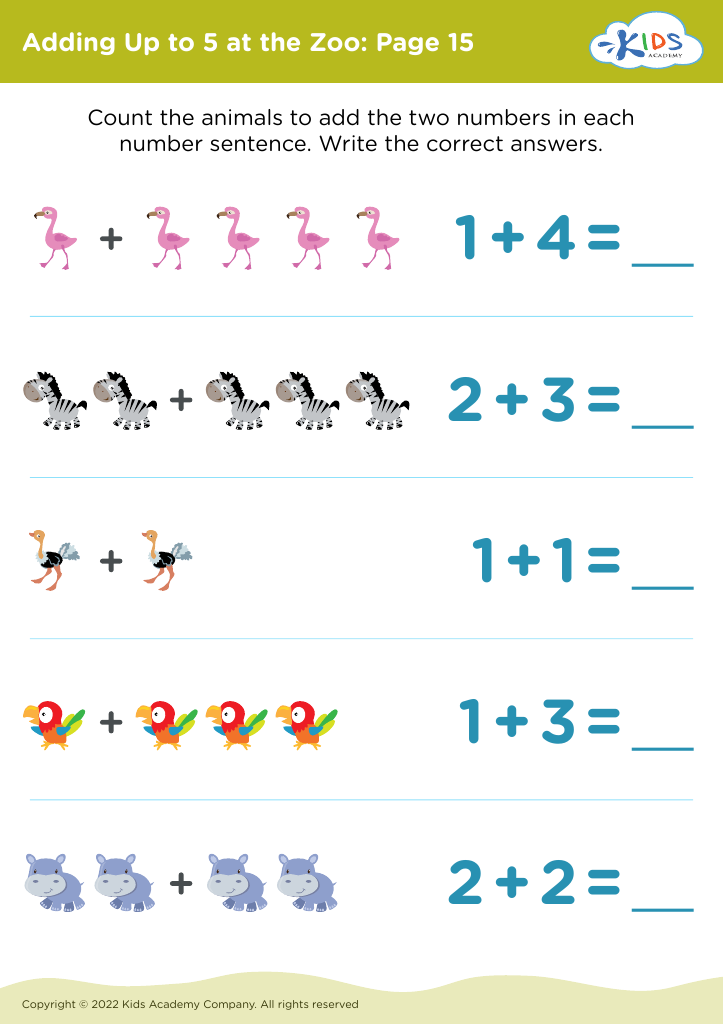
    Adding Up to 5 at the Zoo: Page 15
    Adding Up to 5 at the Zoo: Page 15
    Adding Up to 5 at the Zoo: Page 15
    Worksheet
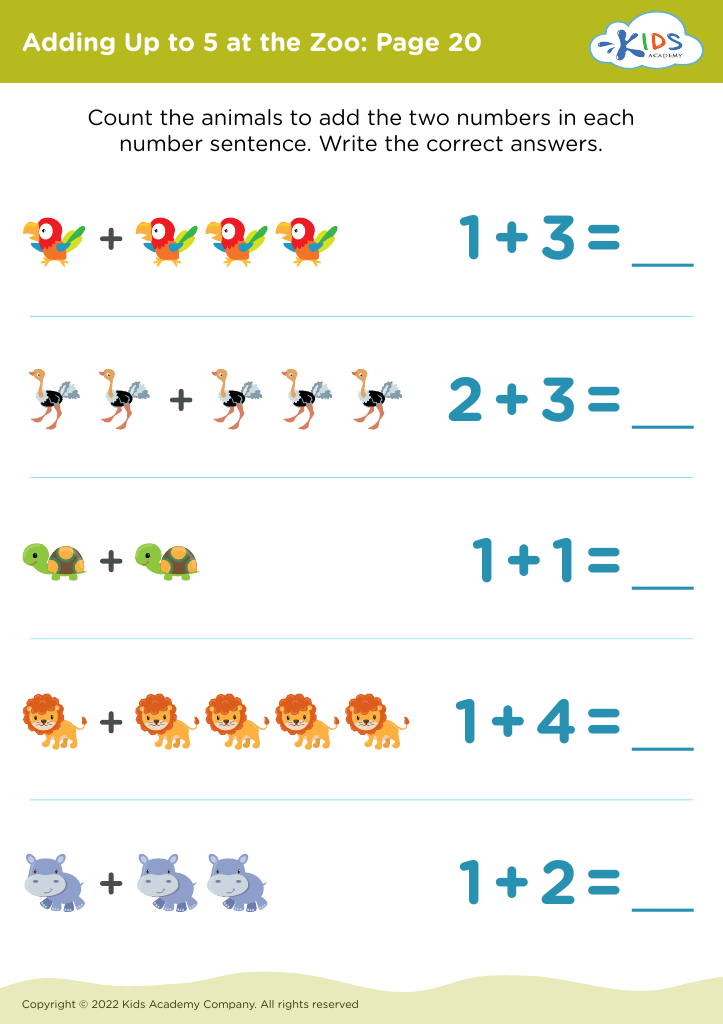
    Adding Up to 5 at the Zoo: Page 20
    Adding Up to 5 at the Zoo: Page 20
    Adding Up to 5 at the Zoo: Page 20
    Worksheet
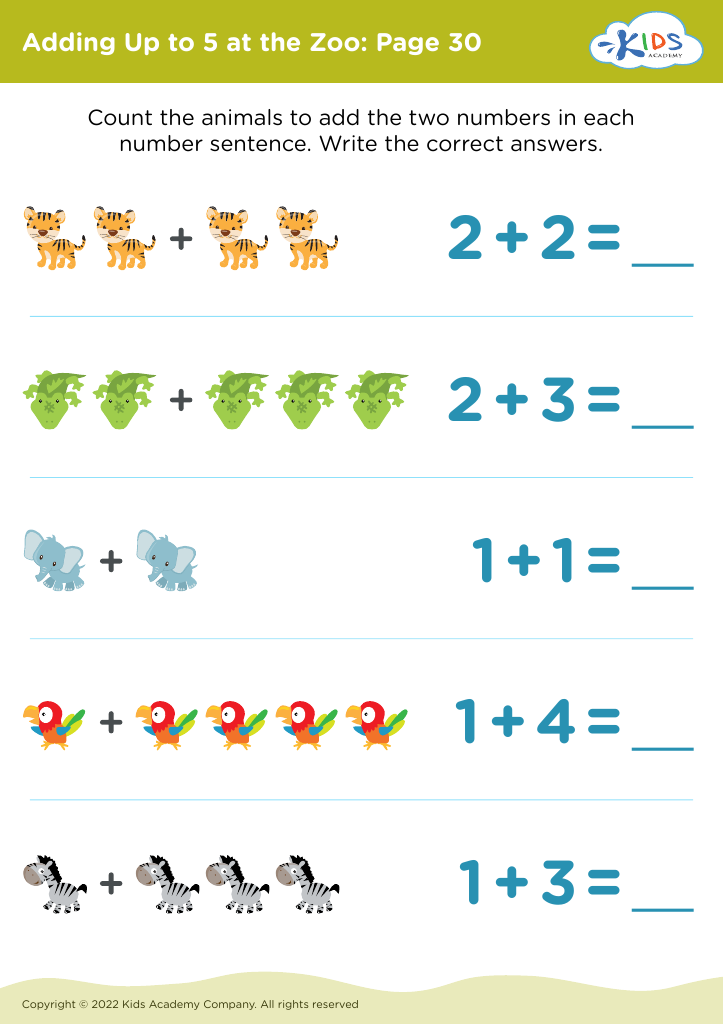
    Adding Up to 5 at the Zoo: Page 30
    Adding Up to 5 at the Zoo: Page 30
    Adding Up to 5 at the Zoo: Page 30
    Worksheet
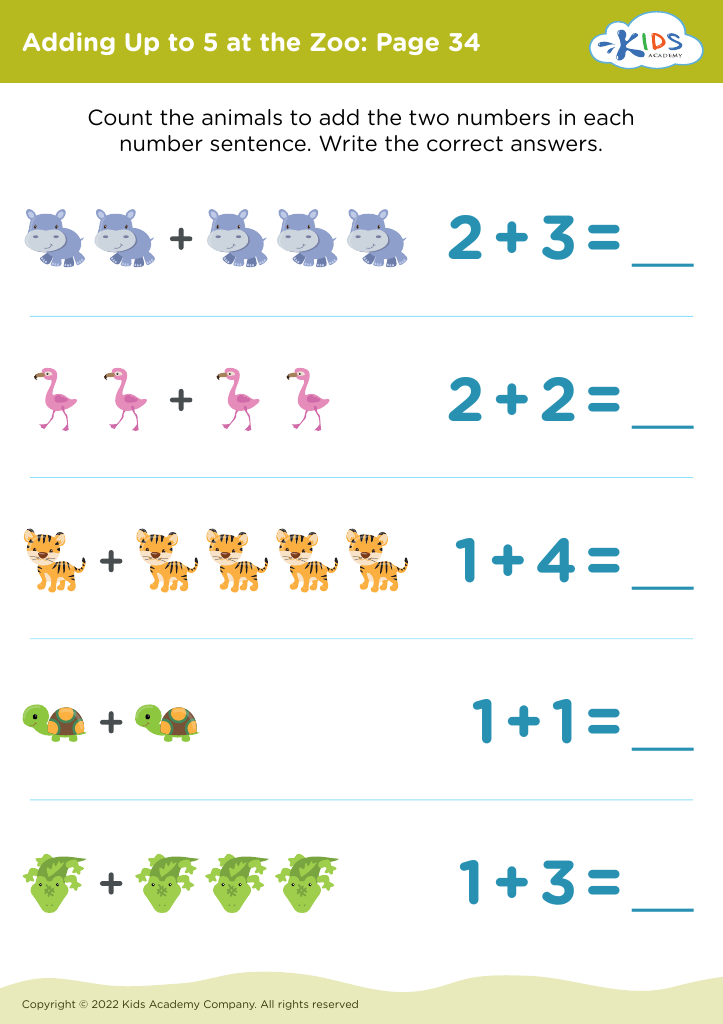
    Adding Up to 5 at the Zoo: Page 34
    Adding Up to 5 at the Zoo: Page 34
    Adding Up to 5 at the Zoo: Page 34
    Worksheet
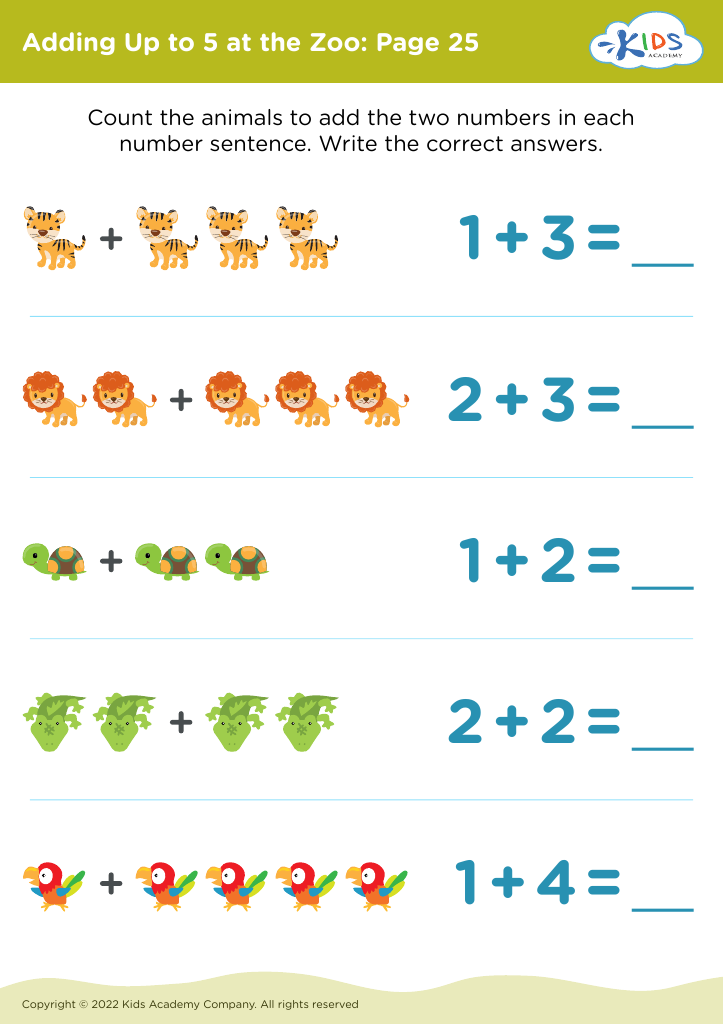
    Adding Up to 5 at the Zoo: Page 25
    Adding Up to 5 at the Zoo: Page 25
    Adding Up to 5 at the Zoo: Page 25
    Worksheet
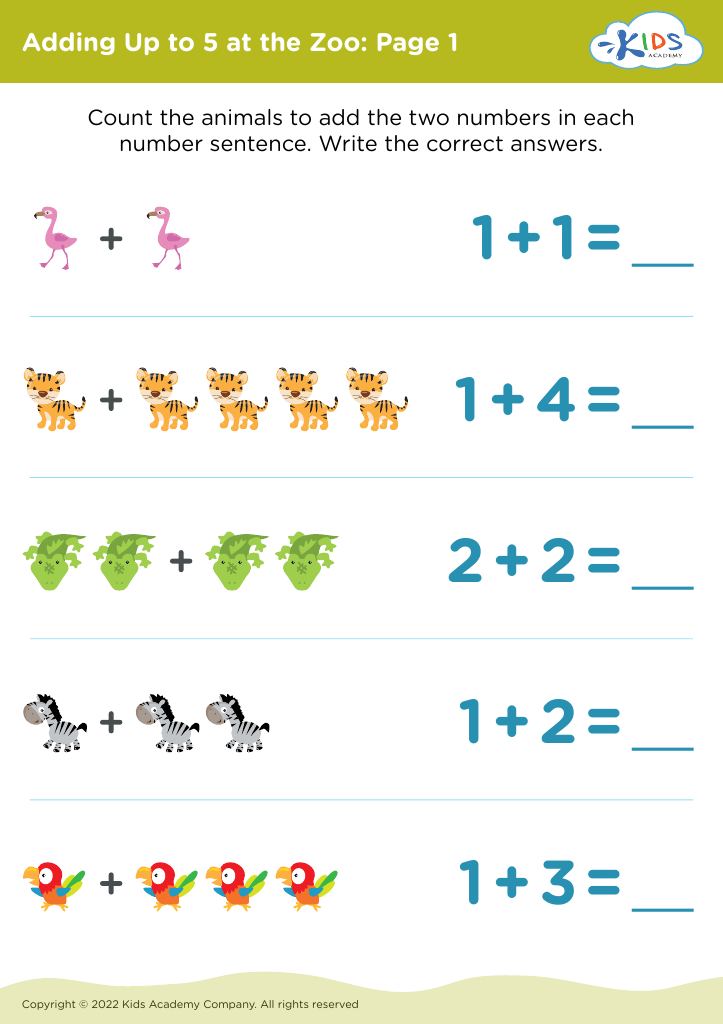
    Adding Up to 5 at the Zoo: Page 1
    Adding Up to 5 at the Zoo: Page 1

    Adding Up to 5 at the Zoo: Page 1

    Adding Up to 5 at the Zoo: Page 1
    Worksheet
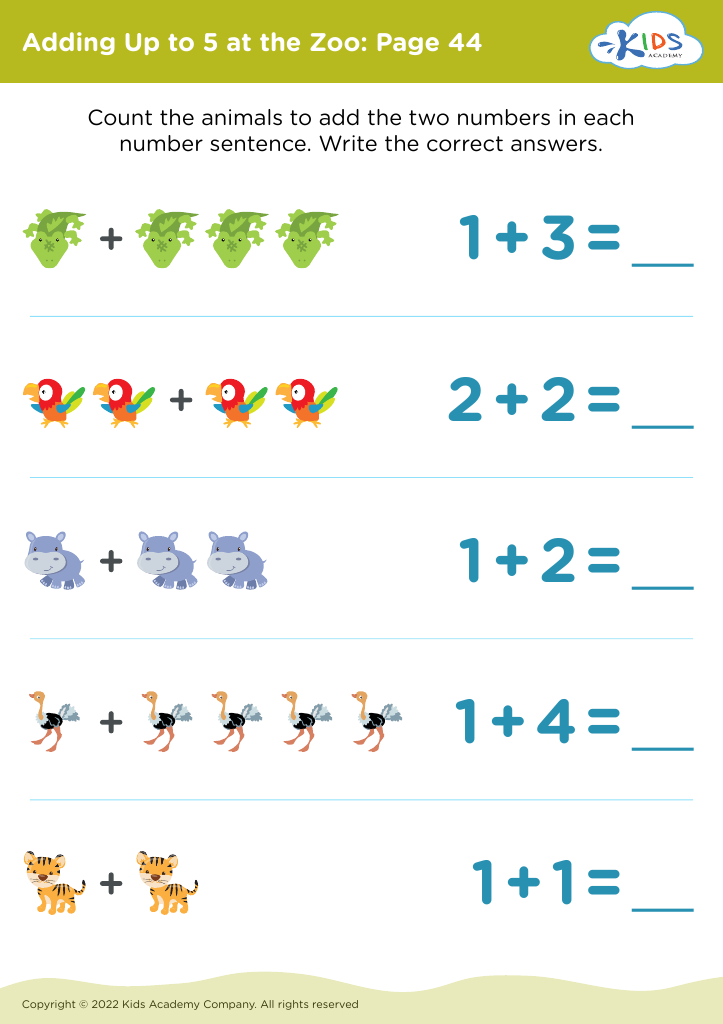
    Adding Up to 5 at the Zoo: Page 44
    Adding Up to 5 at the Zoo: Page 44
    Adding Up to 5 at the Zoo: Page 44
    Worksheet
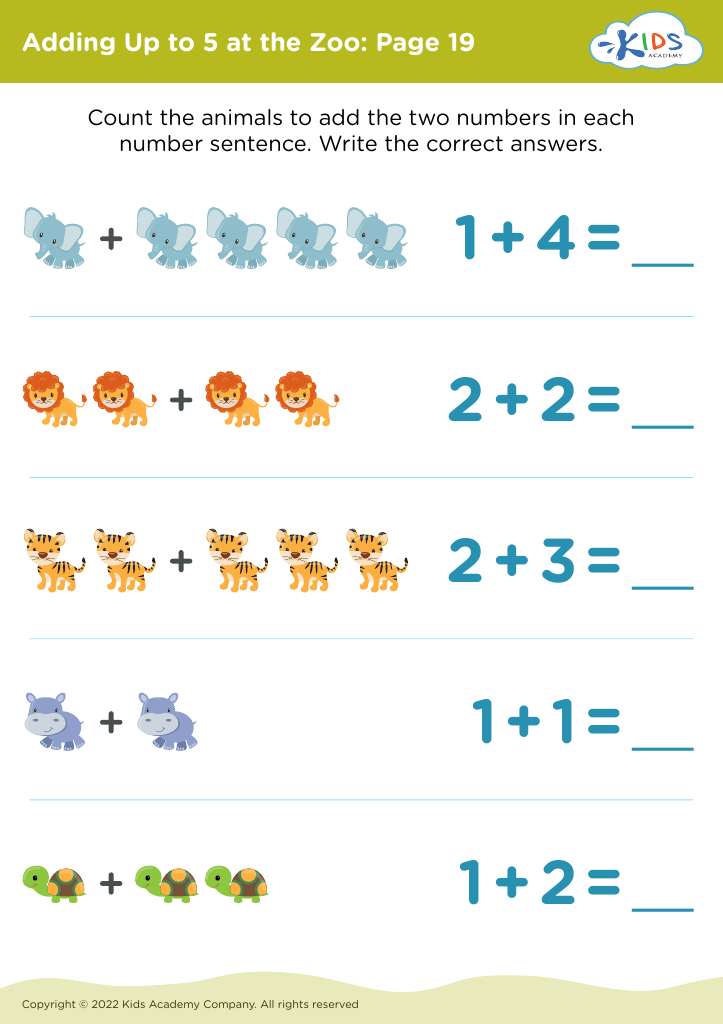
    Adding Up to 5 at the Zoo: Page 19
    Adding Up to 5 at the Zoo: Page 19
    Adding Up to 5 at the Zoo: Page 19
    Worksheet
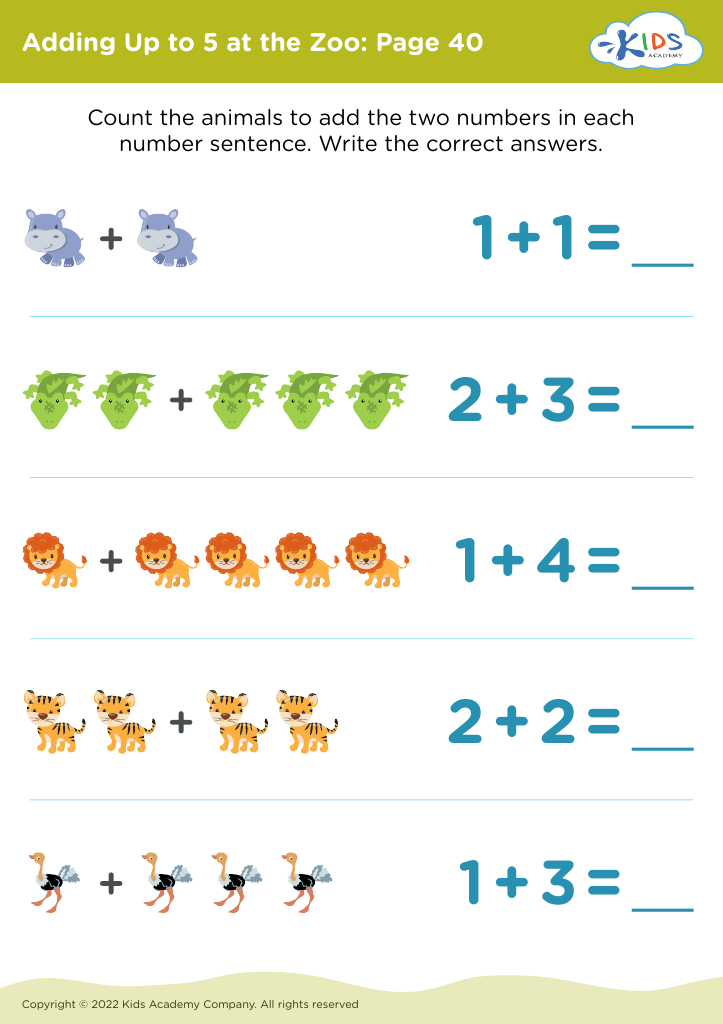
    Adding Up to 5 at the Zoo: Page 40
    Adding Up to 5 at the Zoo: Page 40
    Adding Up to 5 at the Zoo: Page 40
    Worksheet
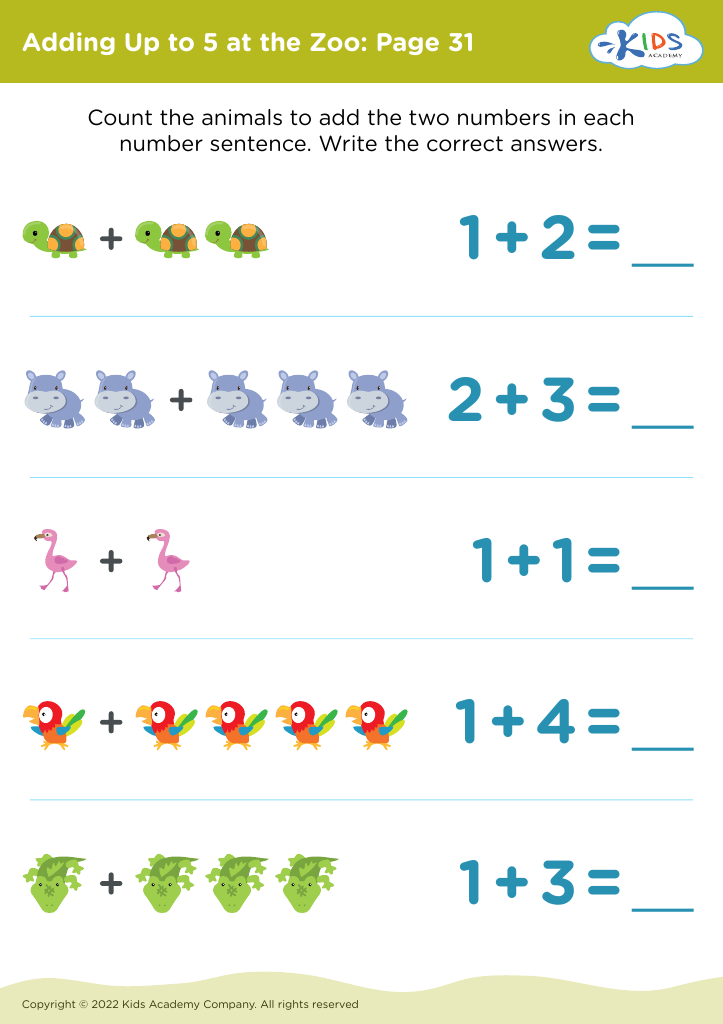
    Adding Up to 5 at the Zoo: Page 31
    Adding Up to 5 at the Zoo: Page 31
    Adding Up to 5 at the Zoo: Page 31
    Worksheet


    Cognitive development is crucial during early childhood, as it lays the foundation for lifelong learning and success. "Adding at the Zoo," an educational activity designed for children aged 5-8, integrates math skills in an engaging and relatable way. Parents and teachers should care about such activities because they promote critical thinking, problem-solving, and number sense through play, thereby creating a positive learning experience.

    This age group is a prime time for children to explore concepts like addition, subtraction, and classification, and themes such as animals and the zoo captivate their interest. By participating in fun, themed exercises like "Adding at the Zoo," children are more likely to embrace math, reducing anxiety around the subject later on.

    Moreover, cognitive development enhances social-emotional skills. Collaborative activities foster teamwork and communication skills while building self-esteem as children successfully engage in learning tasks. Ultimately, activities like these are essential because they not only develop mathematical skills but also support overall cognitive and emotional growth, enabling children to become confident learners who thrive in all subjects. Supporting such activities encourages a love of learning, setting children on a proactive path toward future educational achievements.