Counting practice Adding at the Zoo Worksheets for Ages 5-8 - Page 2
41 filtered results
-
From - To
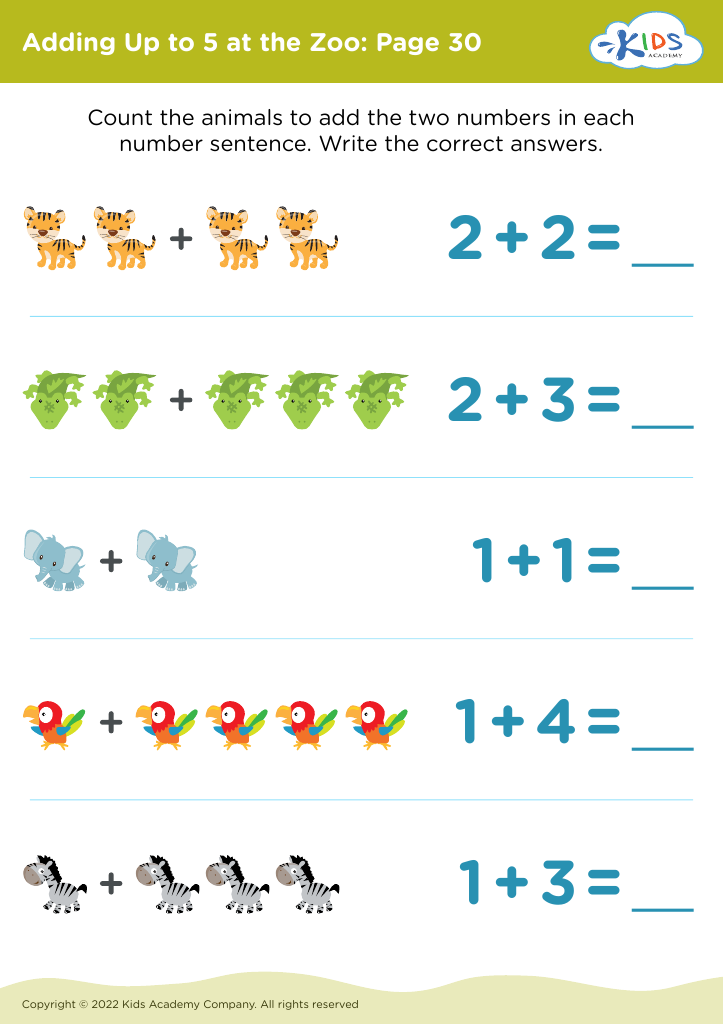
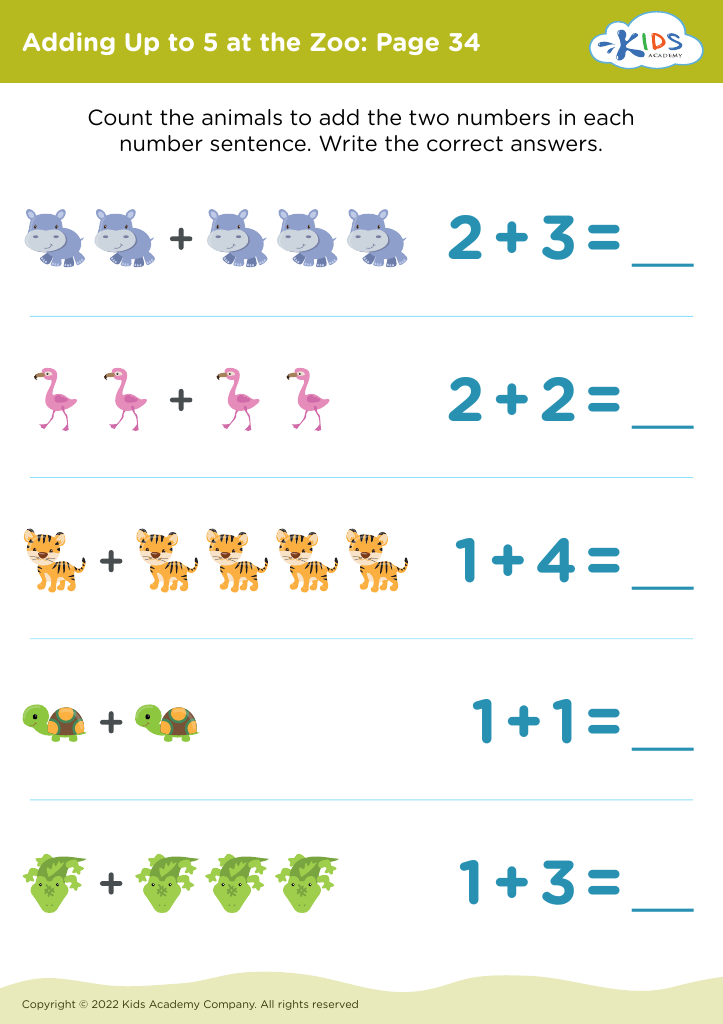
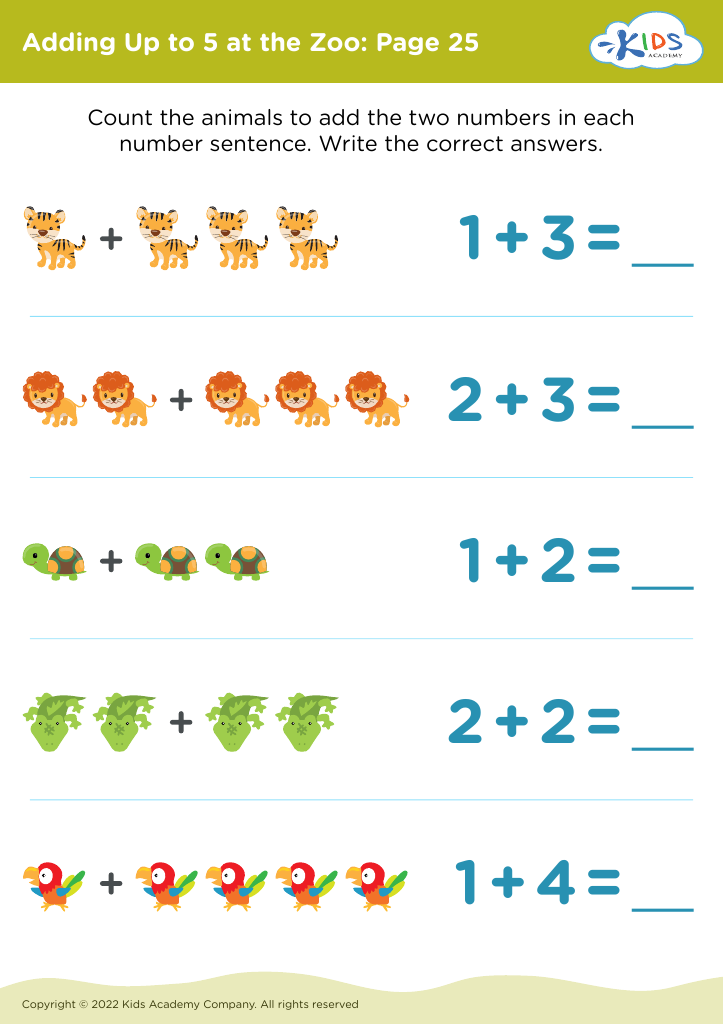
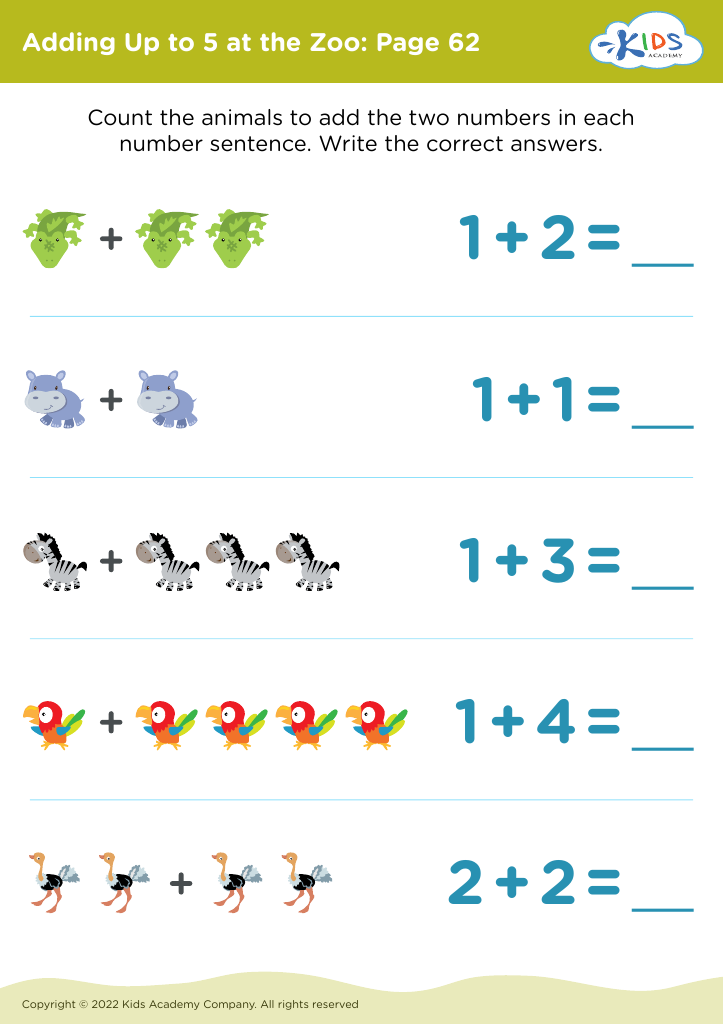
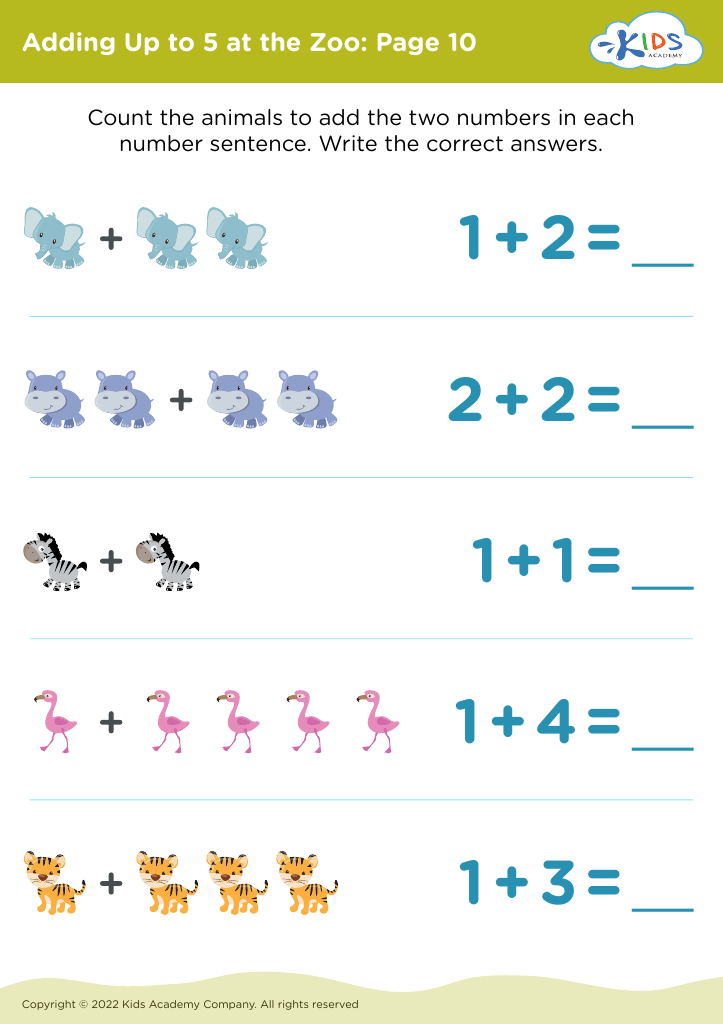
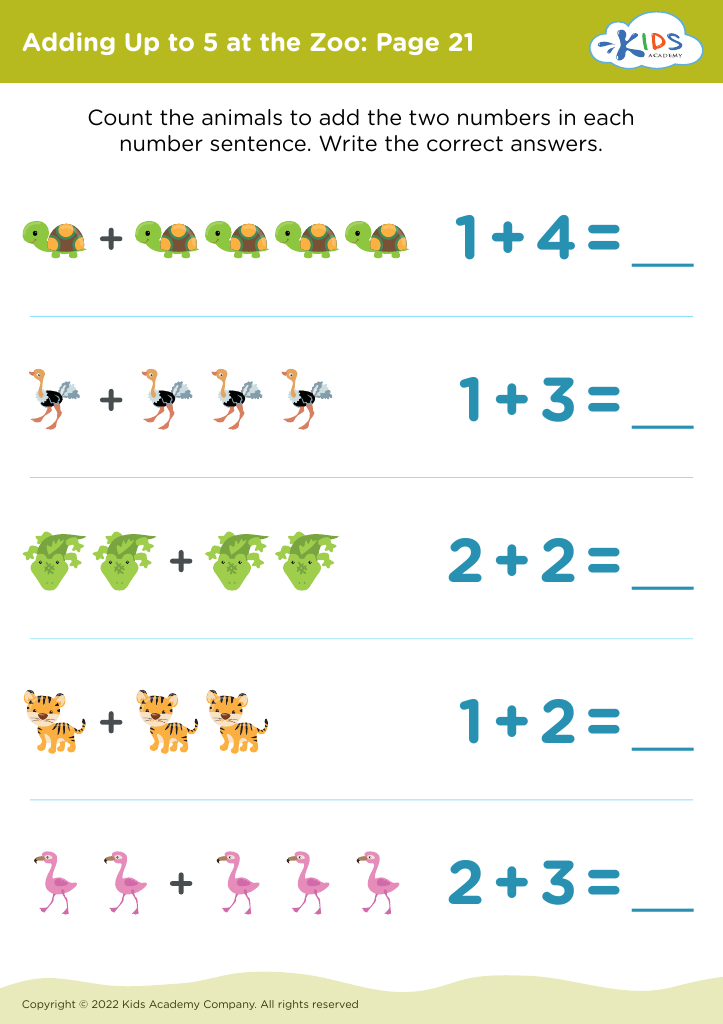
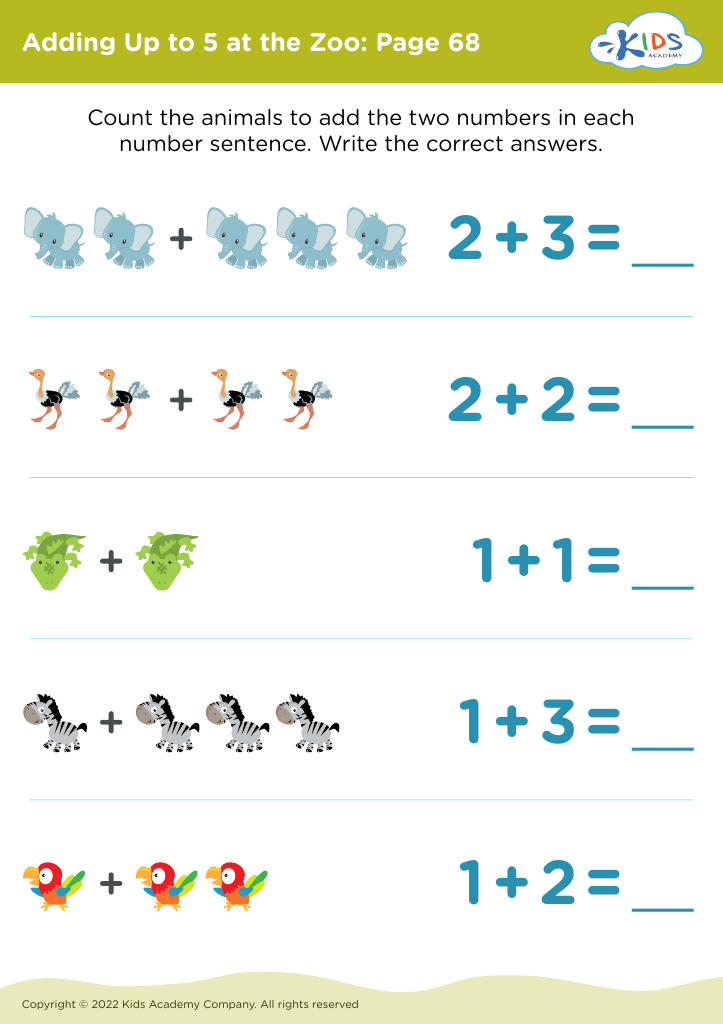
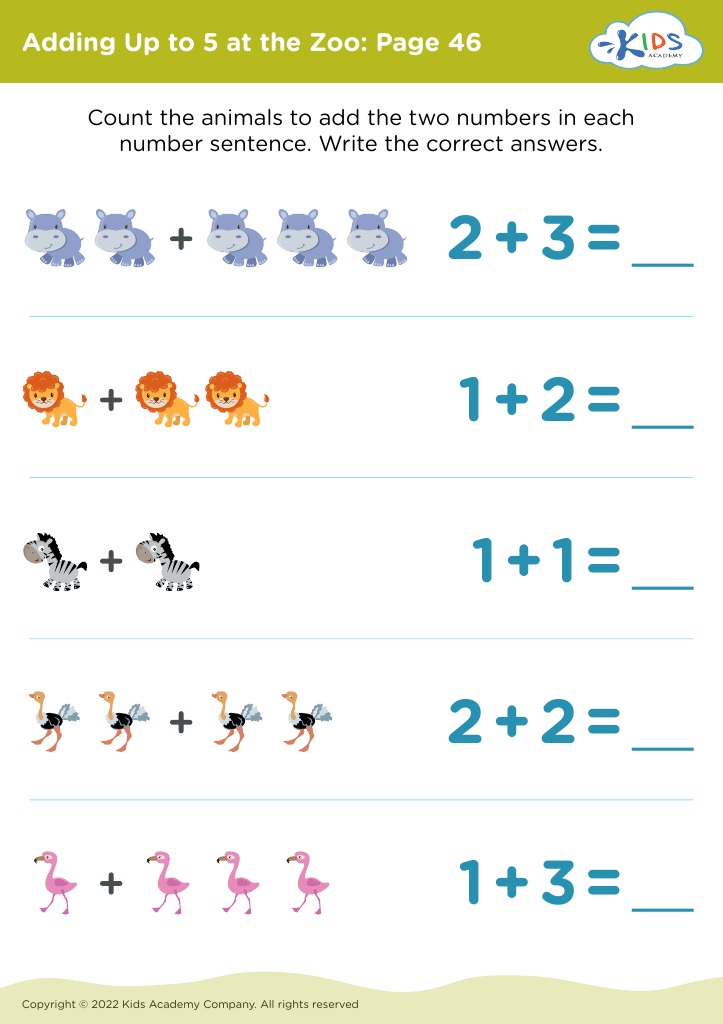
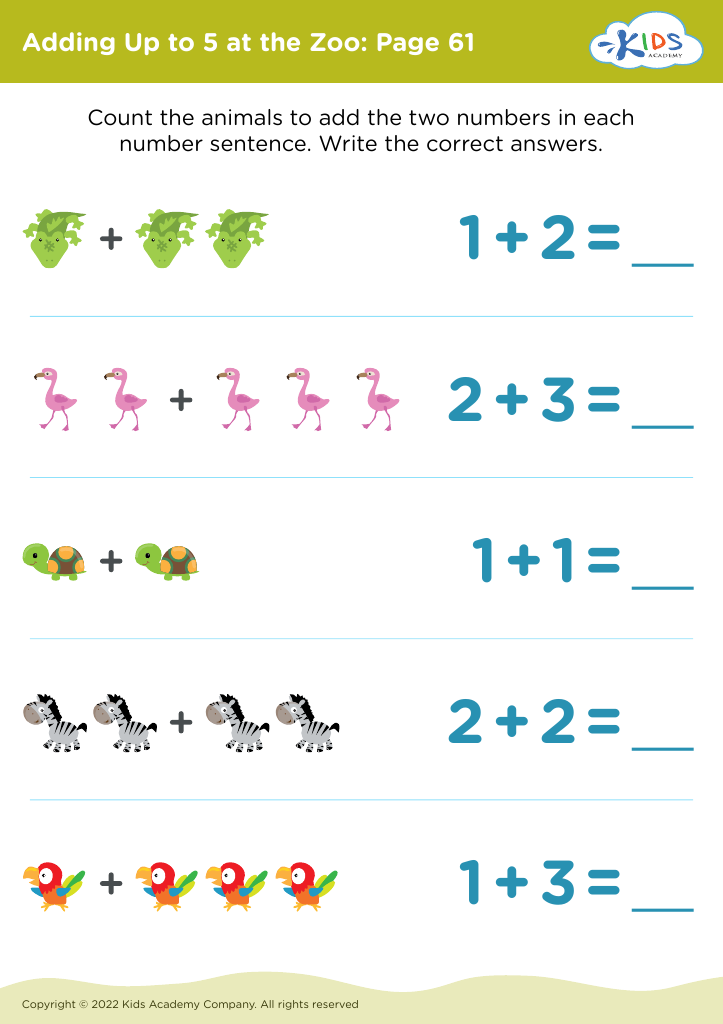
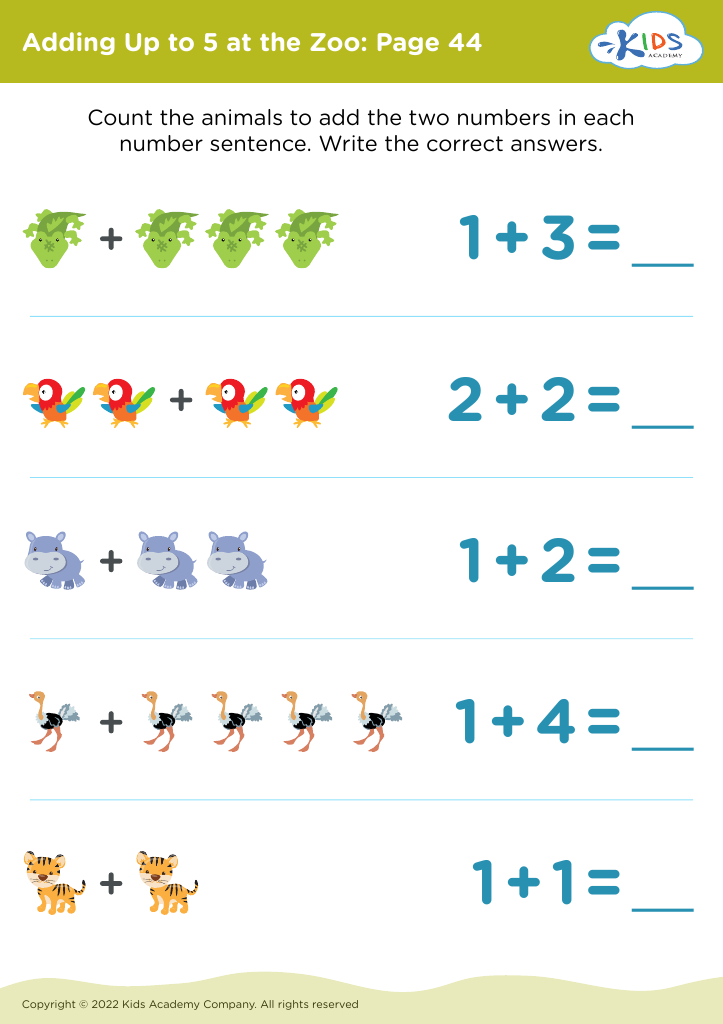
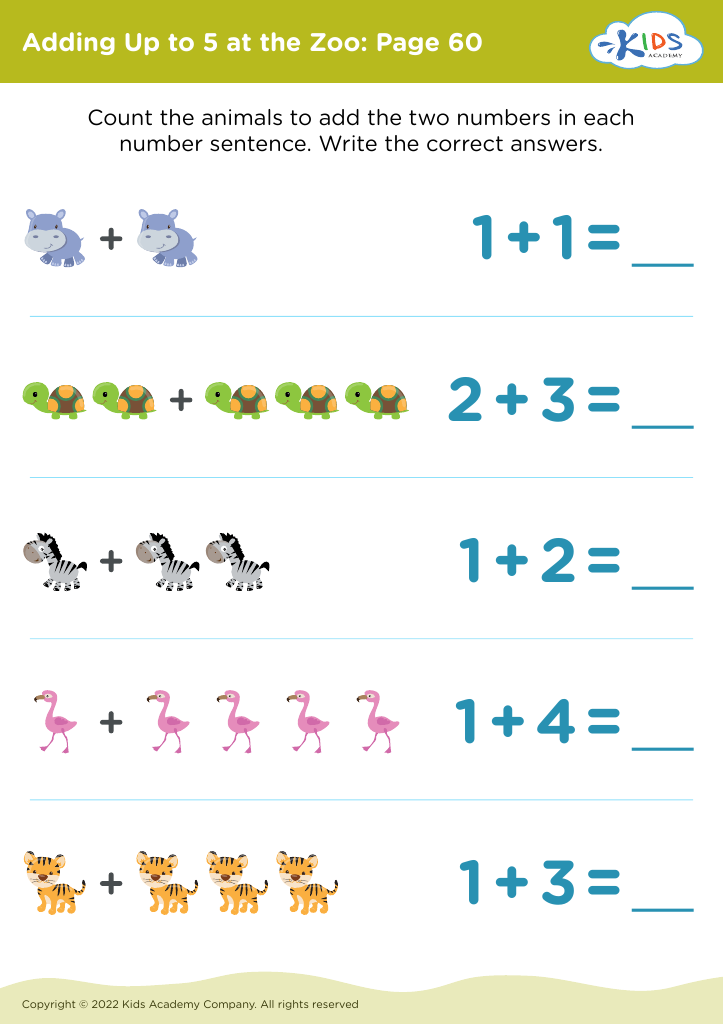
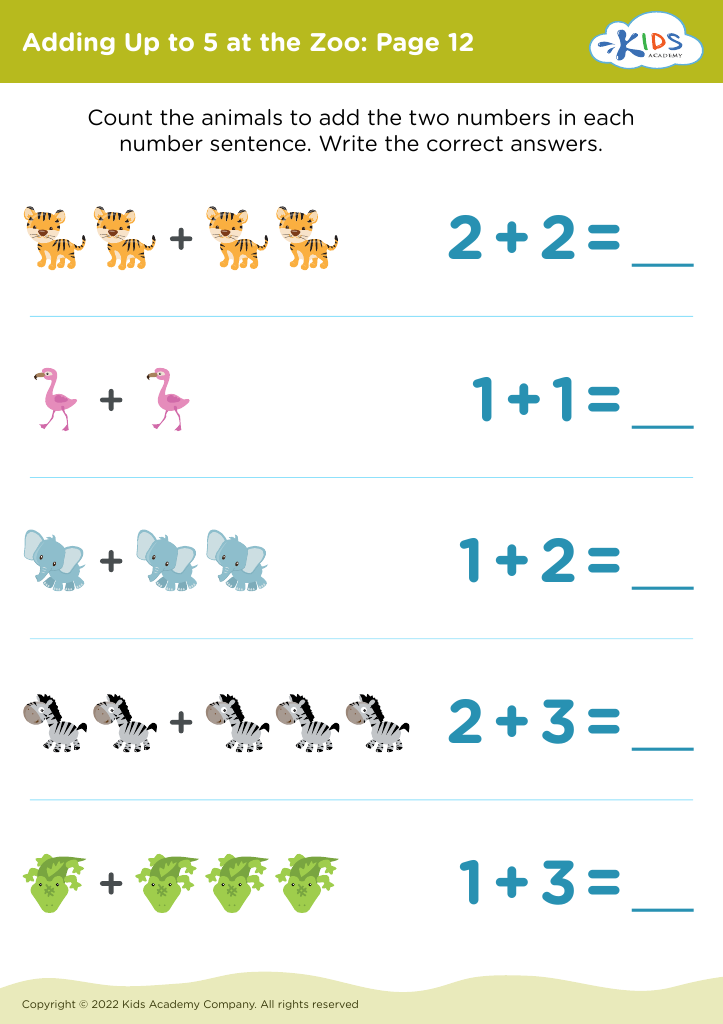
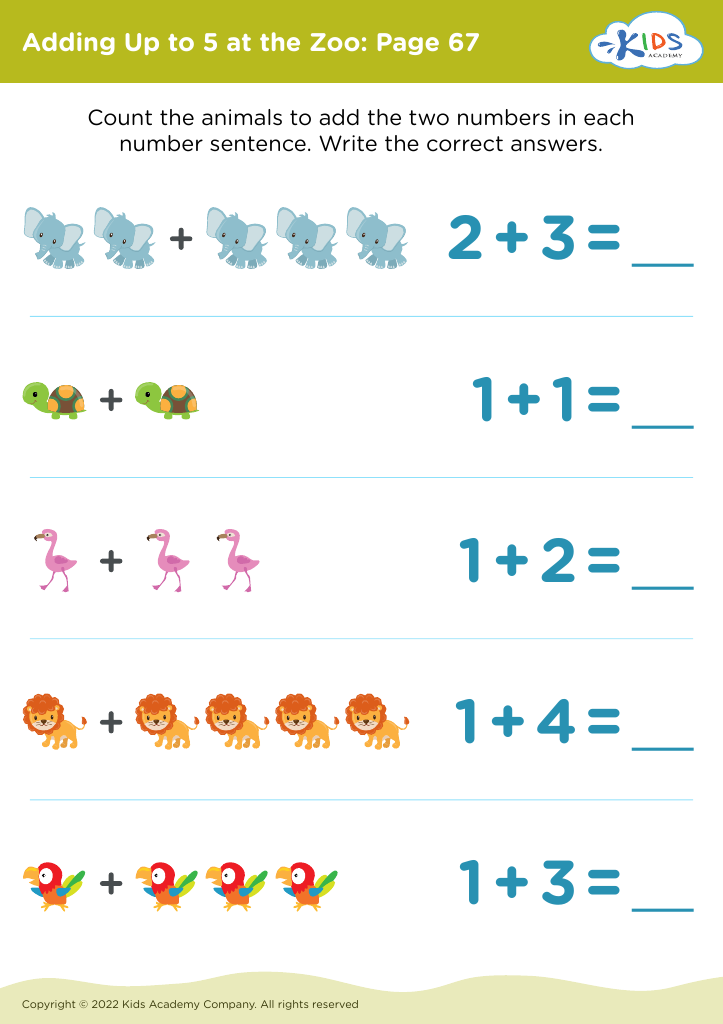
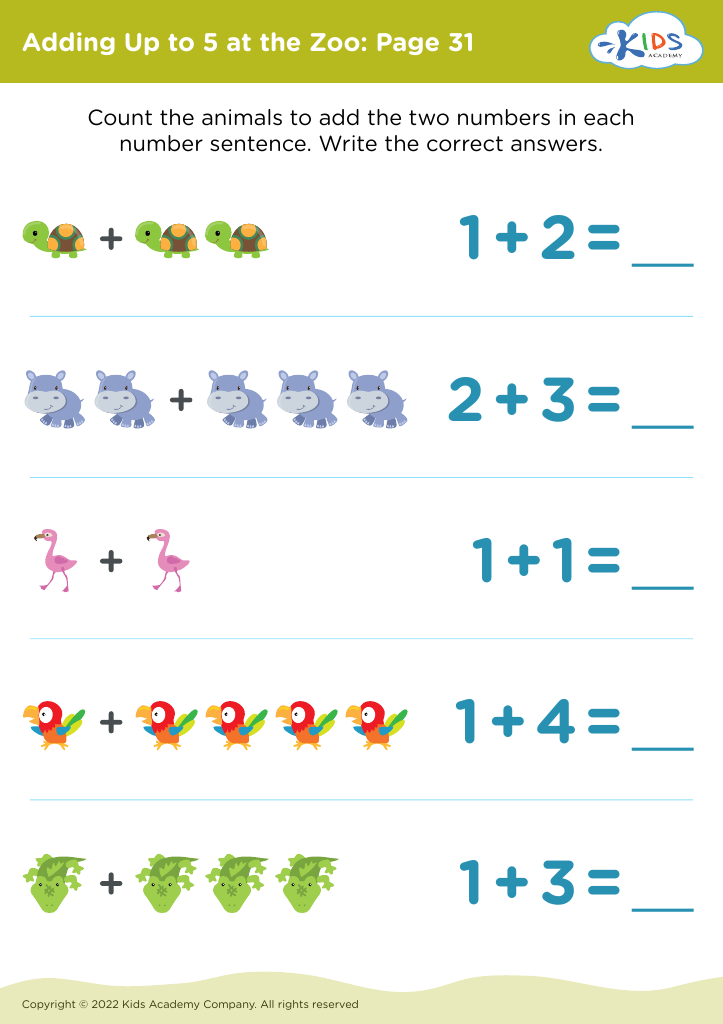
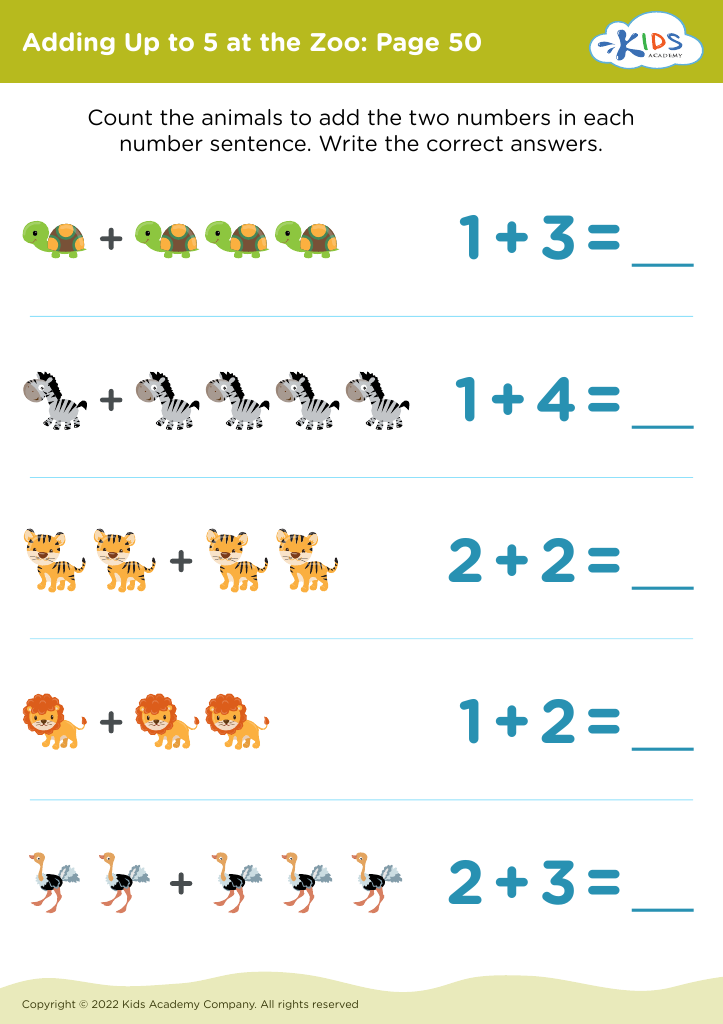
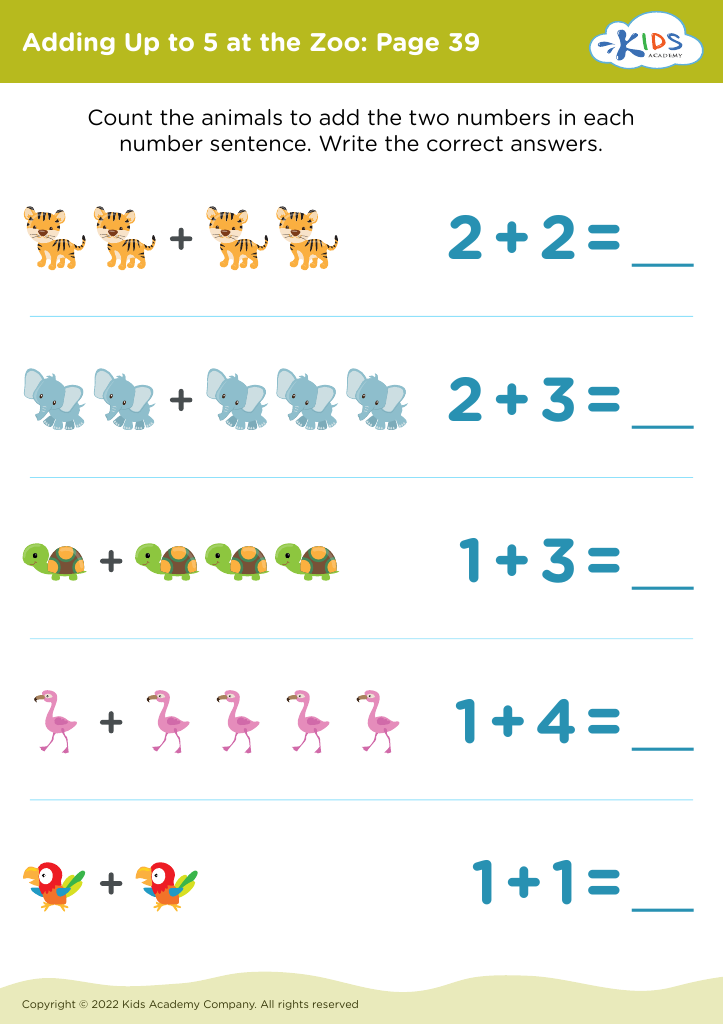
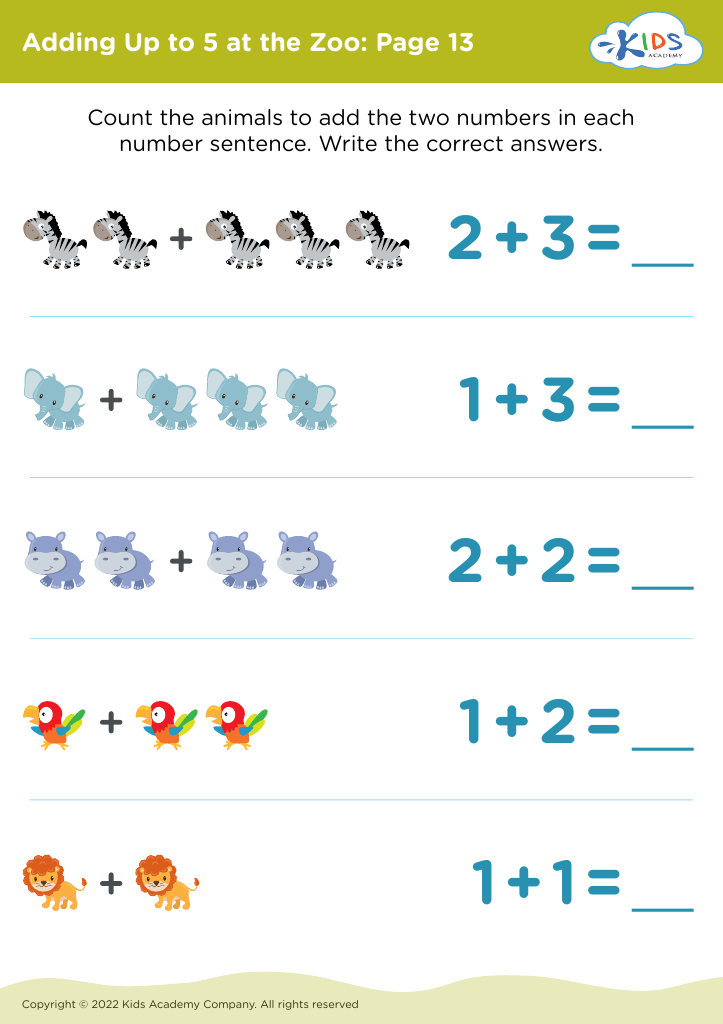



Counting practice, particularly in a fun context like "Adding at the Zoo," is essential for children aged 5 to 8 because it fosters foundational math skills in an engaging way. At this age, children are naturally curious and absorb information readily, making the zoo setting an ideal backdrop for learning. By integrating counting with enjoyable activities, such as counting animals or their characteristics, children can make connections between math and real-world experiences.
This practice enhances not just mathematical understanding but also critical thinking and problem-solving skills. For example, while learning addition, children are encouraged to visualize groups, leading to a better grasp of number sense. It reinforces counting forward and backward, foundational skills necessary for more advanced concepts in math. Moreover, incorporating themes like zoo animals can promote interest in science and nature, nurturing a well-rounded education.
Parents and teachers should prioritize such engaging activities because they make math tangible and relatable. By building confidence in these early grades, educators and caregivers set the stage for lifelong learning and a positive attitude toward math. Ultimately, practicing counting through relatable themes cultivates both enjoyment and competency in mathematics, laying a solid foundation for future academic success.