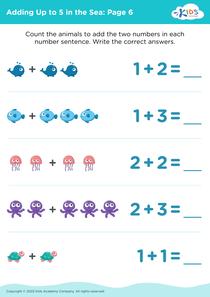
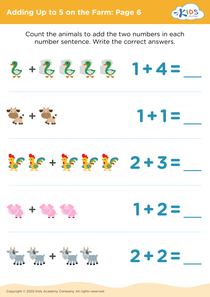
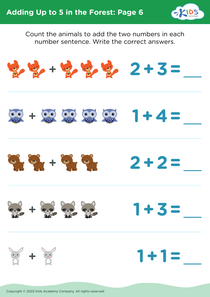
Visual comprehension Adding at the Zoo Worksheets for Ages 5-8
3 filtered results
-
From - To
Discover our engaging "Visual Comprehension Adding at the Zoo Worksheets" tailored for children ages 5-8! These printable worksheets combine math skills with vibrant zoo themes, helping young learners enhance their addition abilities while boosting visual comprehension. Each worksheet features adorable animals and fun scenarios that captivate children's attention, making learning enjoyable. As they count and add, students will develop critical thinking and problem-solving skills through visual cues and engaging illustrations. Perfect for classroom or home use, these worksheets provide a hands-on approach to math, fostering a love for learning in early grade students. Explore the excitement of mathematics at the zoo today!
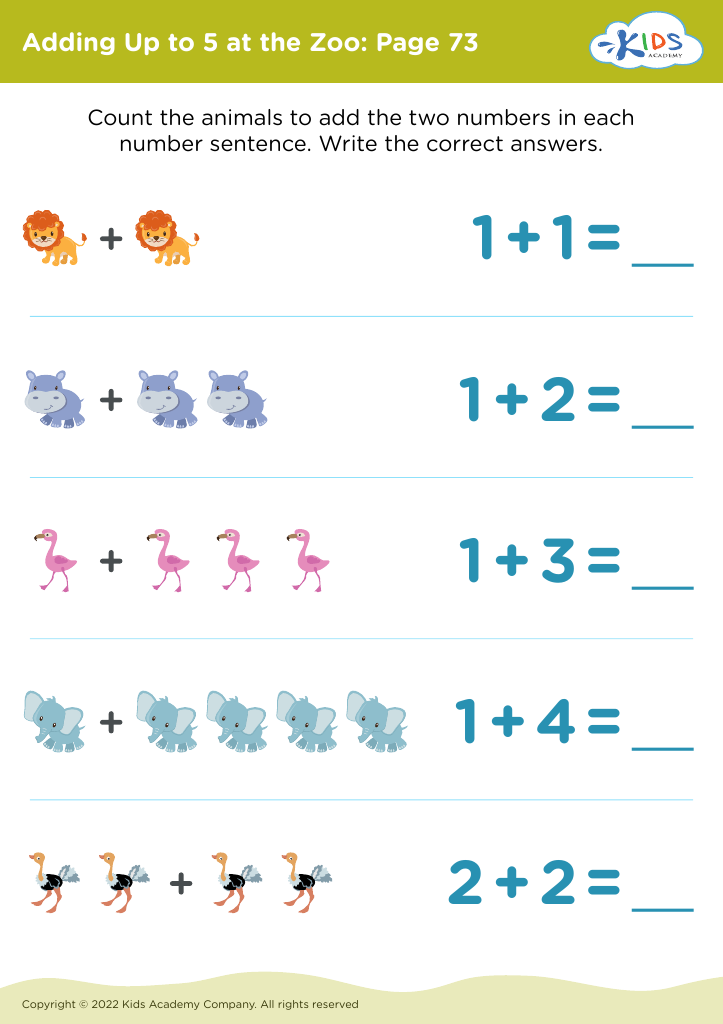
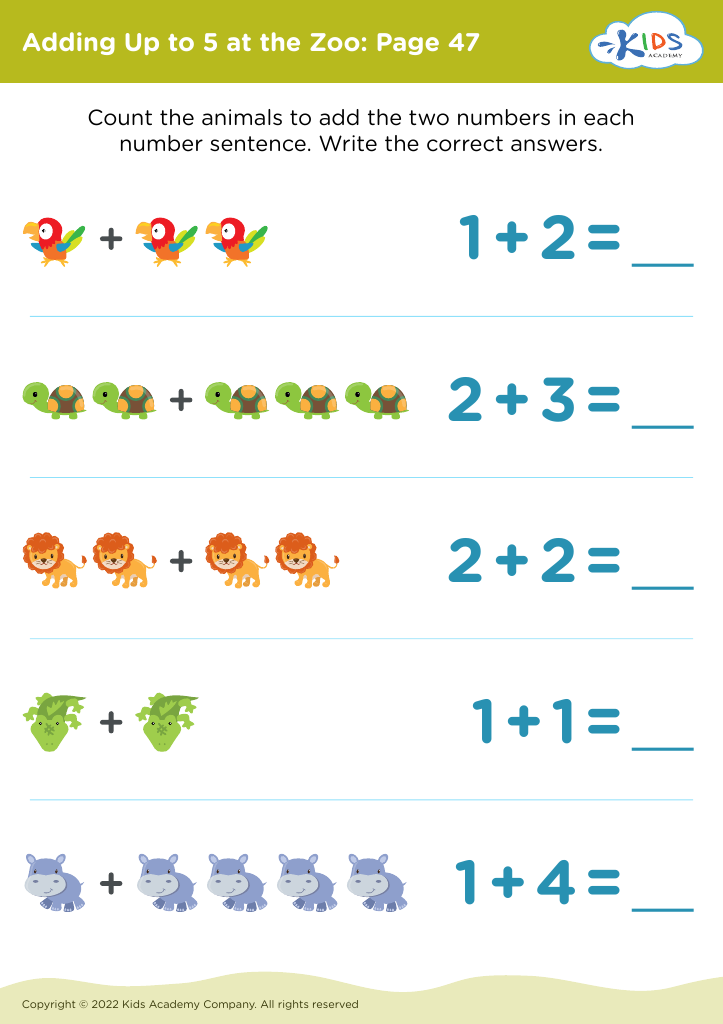
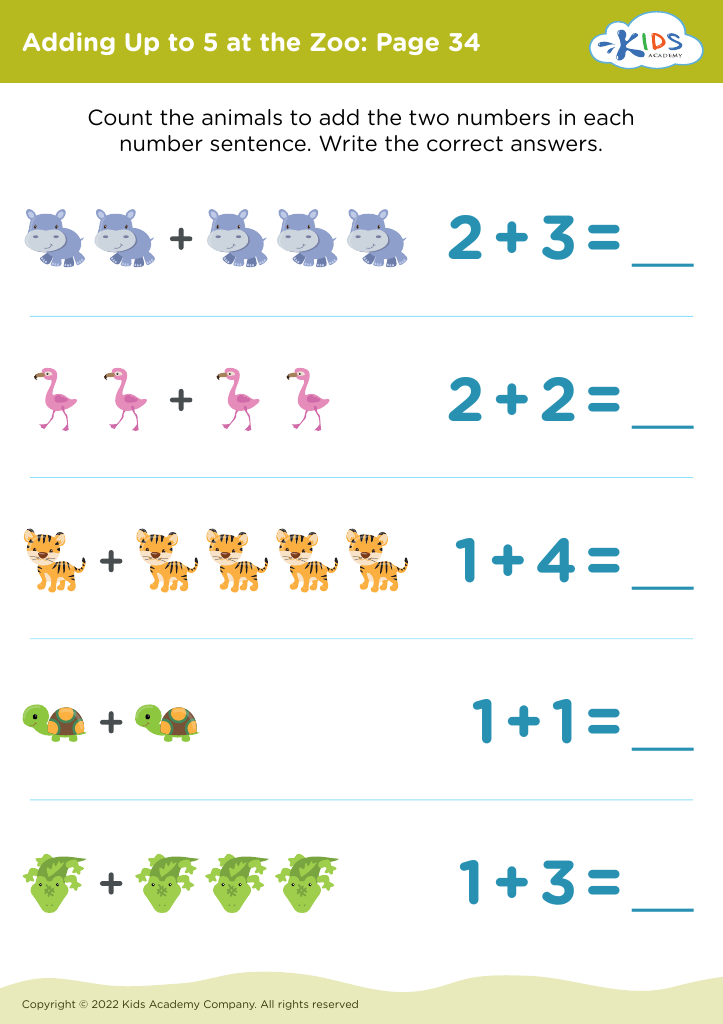



Visual comprehension is a crucial skill for children ages 5-8, significantly impacting their learning and development. Engaging with activities like "Adding at the Zoo" helps enhance their ability to interpret and analyze visual information, such as pictures, diagrams, and charts. This is especially vital in early education, as young learners are easily drawn to vivid imagery and interactive experiences.
When teachers or parents involve children in visual comprehension activities, they foster critical cognitive skills such as observation, reasoning, and problem-solving. "Adding at the Zoo" encourages learners to associate numbers with real-world contexts, enhancing their understanding of mathematical concepts while making learning enjoyable and relatable.
Additionally, engaging in these activities supports the development of language skills, as children articulate their thoughts and describe the visuals they encounter. Furthermore, it nurtures social skills when done collaboratively, enabling children to express ideas and share their reasoning. Ultimately, emphasizing visual comprehension not only aids in improving academic performance but also cultivates a lifelong love for learning by turning abstract concepts into tangible experiences that spark curiosity and foster inquiry. Thus, parents and teachers should prioritize such activities to support their children's holistic development.