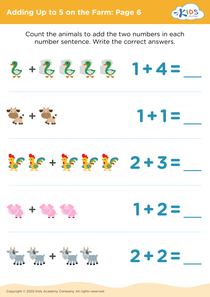
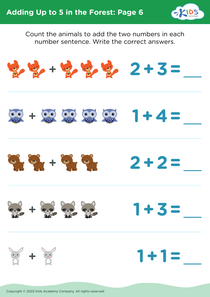
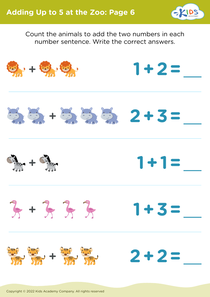
Basic Math understanding Adding in the Sea Worksheets for Ages 5-8
3 filtered results
-
From - To
Dive into fun with our "Basic Math Understanding Adding in the Sea Worksheets," designed specifically for kids ages 5-8! These engaging worksheets introduce young learners to fundamental addition concepts through vibrant marine-themed illustrations and interactive exercises. As students explore addition in an exciting under-the-sea context, they’ll strengthen their math skills while enjoying playful activities that encourage critical thinking and problem-solving. Perfect for home or classroom use, these worksheets foster a love for math and build a solid foundation in addition. Explore the world of marine life while nurturing your child's mathematical abilities with these captivating resources!
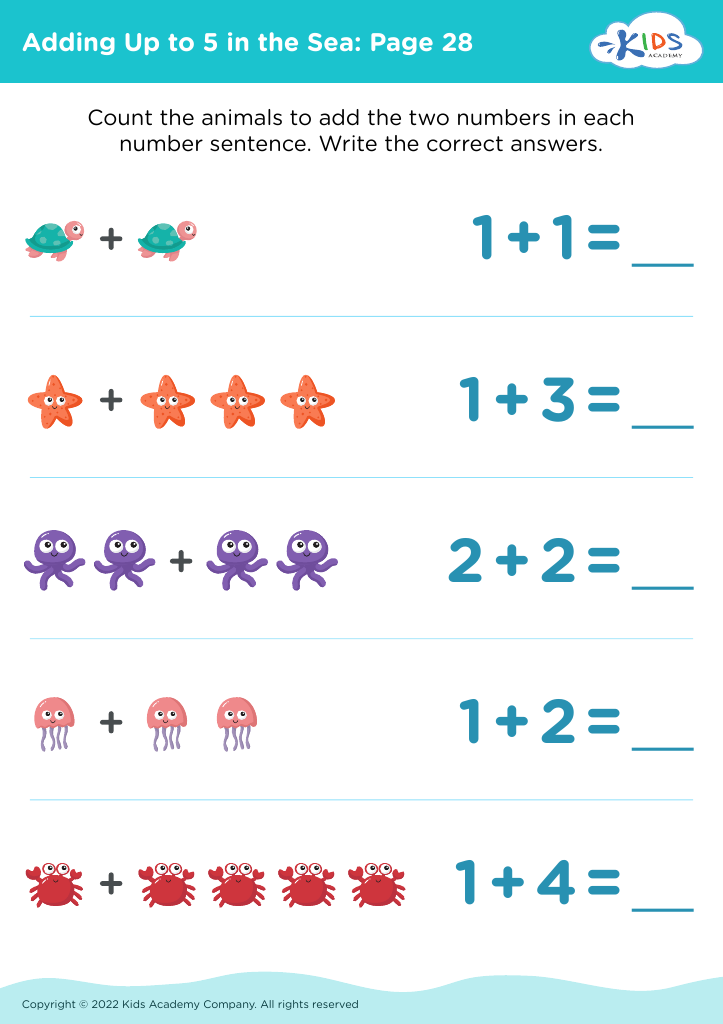
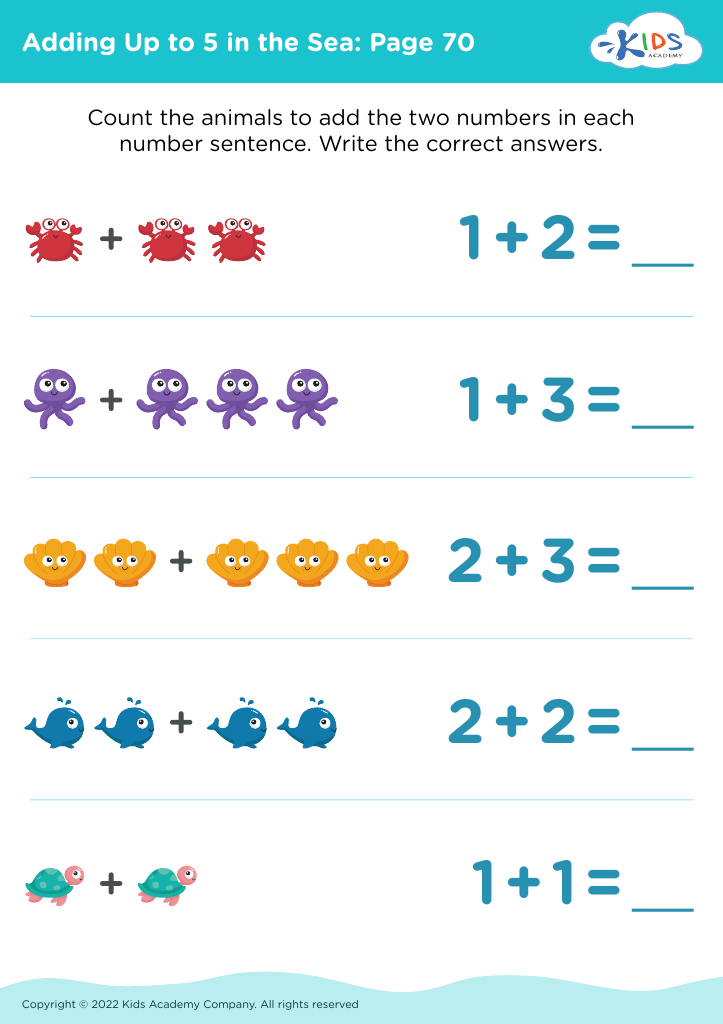
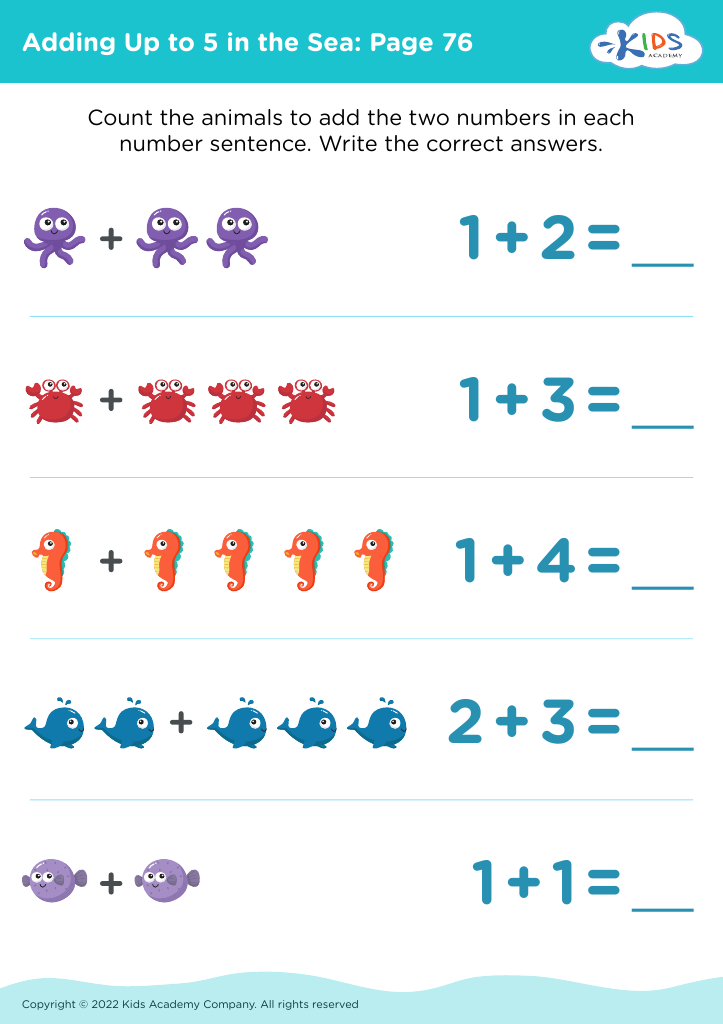



Understanding basic math, especially concepts like addition, is crucial for children aged 5-8, as it lays the foundation for their future academic success. “Adding in the Sea” provides a fun and engaging context that helps young learners grasp these essential concepts. Navigation through characters and scenarios related to marine life can make learning more relatable and enjoyable for children, ensuring that they remain engaged and motivated.
Teachers and parents should care about fostering this understanding because early math skills are linked to overall cognitive development, critical thinking, and problem-solving abilities. Mastery of basic addition empowers children to tackle more complex math concepts in later years without developing a fear of math. Furthermore, involving children in thematic learning, like exploring ocean life, encourages curiosity and creativity, making the learning process holistic and enjoyable.
Additionally, being competent in basic math boosts children's confidence in their abilities, helping them approach other subjects with a positive attitude. Parental and teacher support in this phase creates a solid educational foundation, making math not just another subject, but a lifelong skill that equips children for various real-world situations they will encounter as they grow.