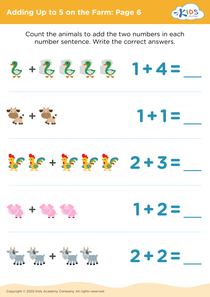
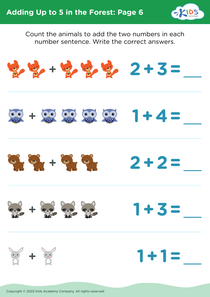
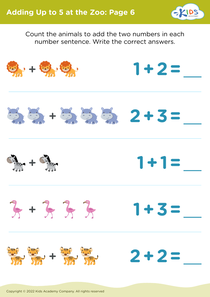
Fine motor skills (writing numbers) Adding in the Sea Worksheets for Ages 5-8
4 filtered results
-
From - To
Enhance your child's fine motor skills with our engaging "Adding in the Sea Worksheets" designed specifically for ages 5-8. These fun-filled worksheets not only focus on writing numbers but also incorporate exciting marine themes that capture young learners' imaginations. As children practice writing, they will improve their hand-eye coordination and muscle control, essential for developing their handwriting and overall dexterity. Each worksheet blends playful illustrations with interactive math problems, making learning both effective and enjoyable. Perfect for use at home or in the classroom, these resources help build foundational skills while fostering a love for learning in the early years.
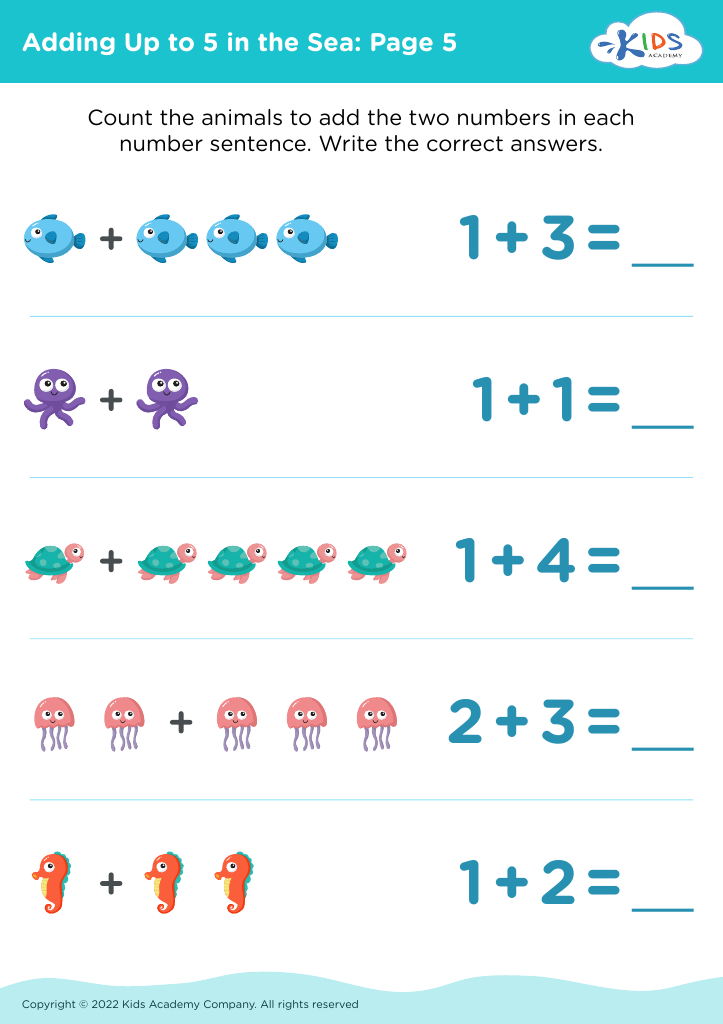
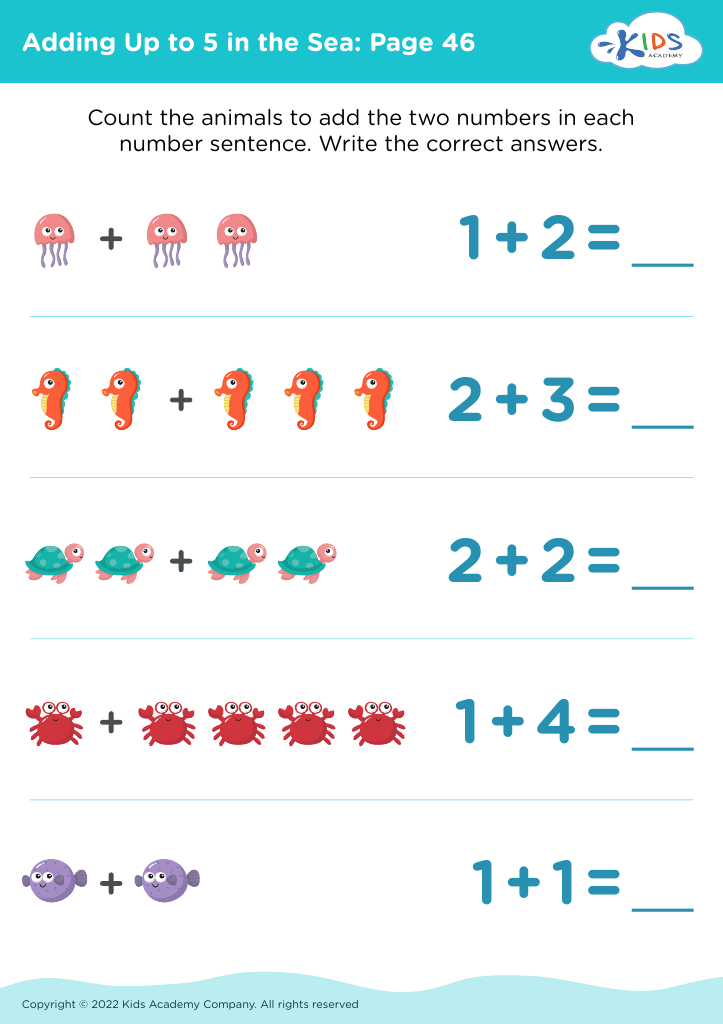
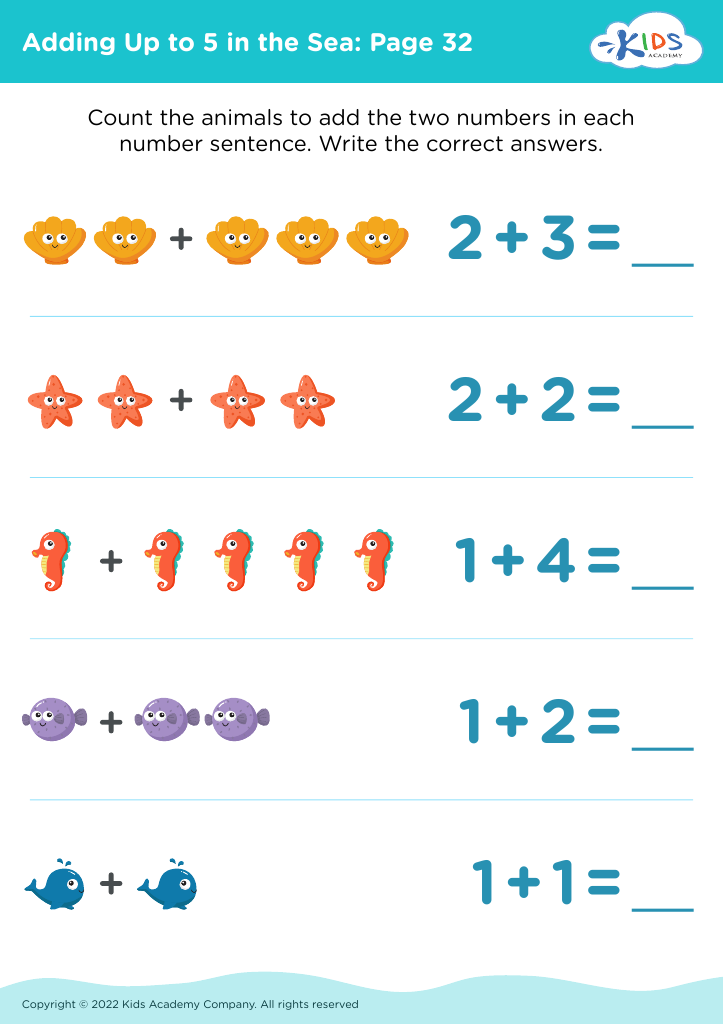
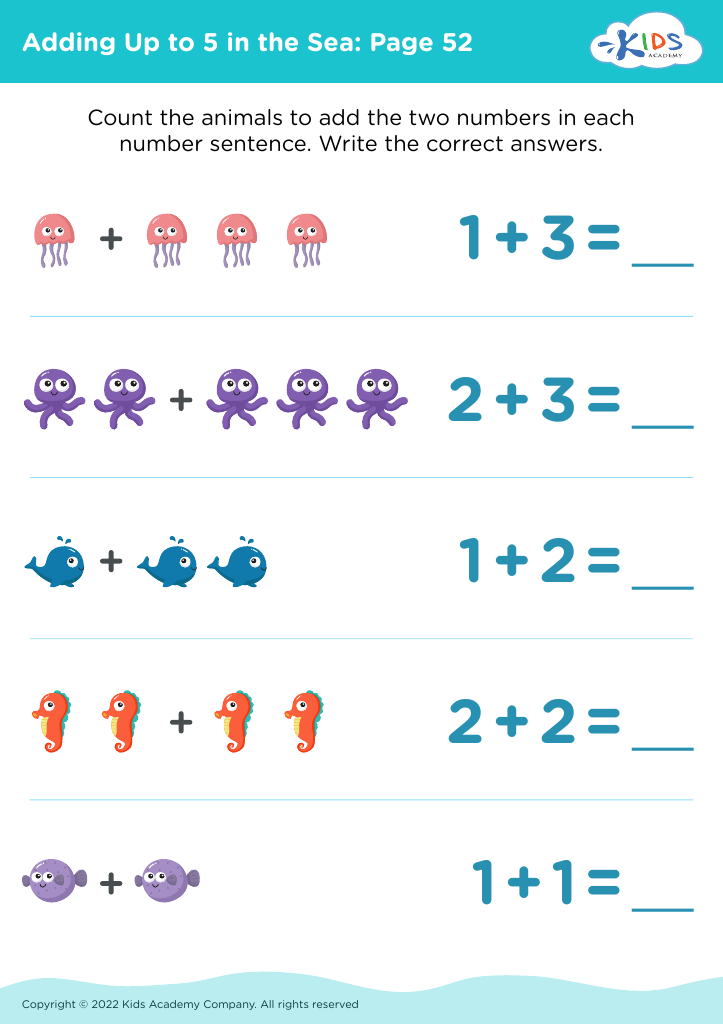



Fine motor skills are essential for young children as they lay the groundwork for numerous academic and everyday tasks. When teaching children aged 5-8 how to write numbers in a fun way, such as through a “Adding in the Sea” activity, we can foster both skill development and engagement.
Fine motor skills involve the coordination of small muscles in the hands and fingers, enabling children to perform tasks like writing, cutting, and buttoning. Mastery of writing numbers is particularly important, as it helps children express mathematical concepts clearly and accurately. Engaging in activities that promote fine motor skills, like tracing numbers with sea-themed tools or using sand and water to practice writing, can enhance their confidence and hand-eye coordination.
Parents and teachers should care about these skills because they directly influence a child’s ability to thrive academically and socially. Developing fine motor skills supports cognitive growth, as doing so often involves problem-solving and spatial awareness. Furthermore, fostering these skills early helps children build a positive attitude towards learning, leading to greater success in future educational endeavors. Cultivating fine motor abilities through creative, playful methods can pave the way for holistic development in mathematics and beyond.