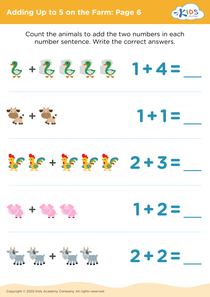
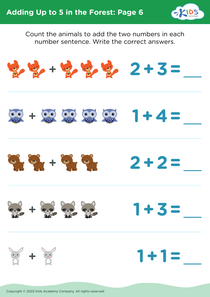
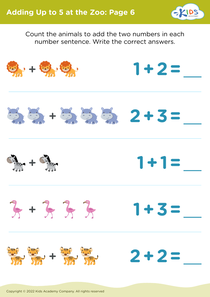
Hand-eye Coordination Adding in the Sea Worksheets for Ages 5-8
4 filtered results
-
From - To
Discover our engaging "Hand-eye Coordination Adding in the Sea" worksheets designed for children ages 5-8! These interactive resources blend foundational math skills with exciting sea-themed activities, enhancing both counting abilities and hand-eye coordination. As children navigate aquatic illustrations, they'll practice addition through fun exercises that promote fine motor skills and concentration. Perfect for home or classroom use, our worksheets provide various levels of challenges to cater to differing skill sets. Dive into learning today and watch as your child develops confidence in math while enjoying the charming underwater world! Join the adventure with our delightful worksheets and make learning fun!
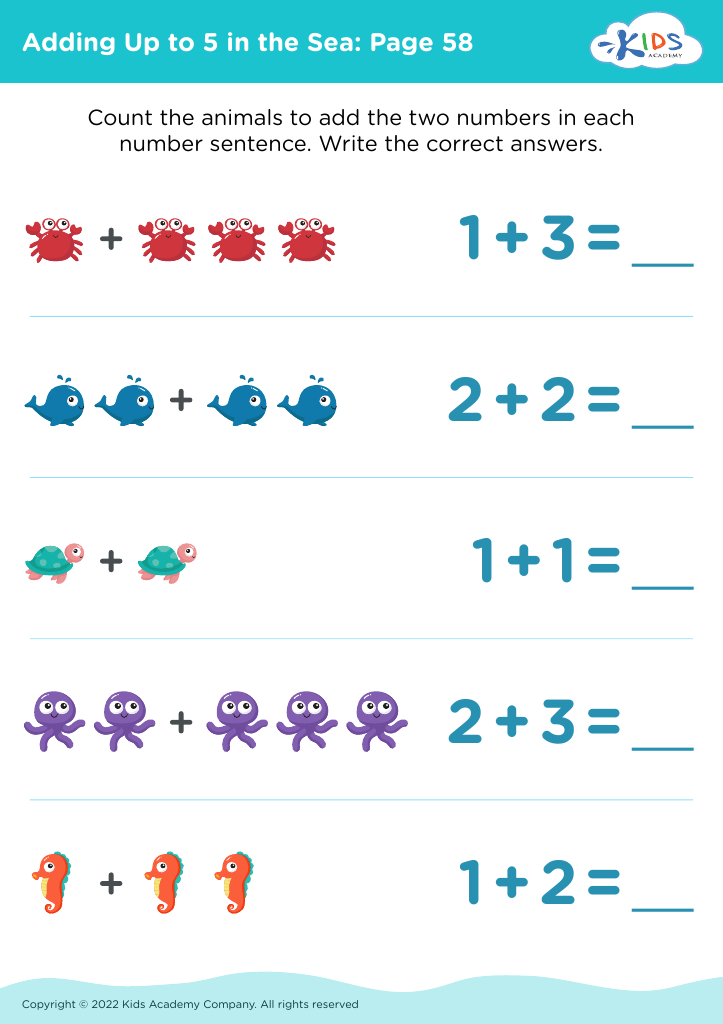
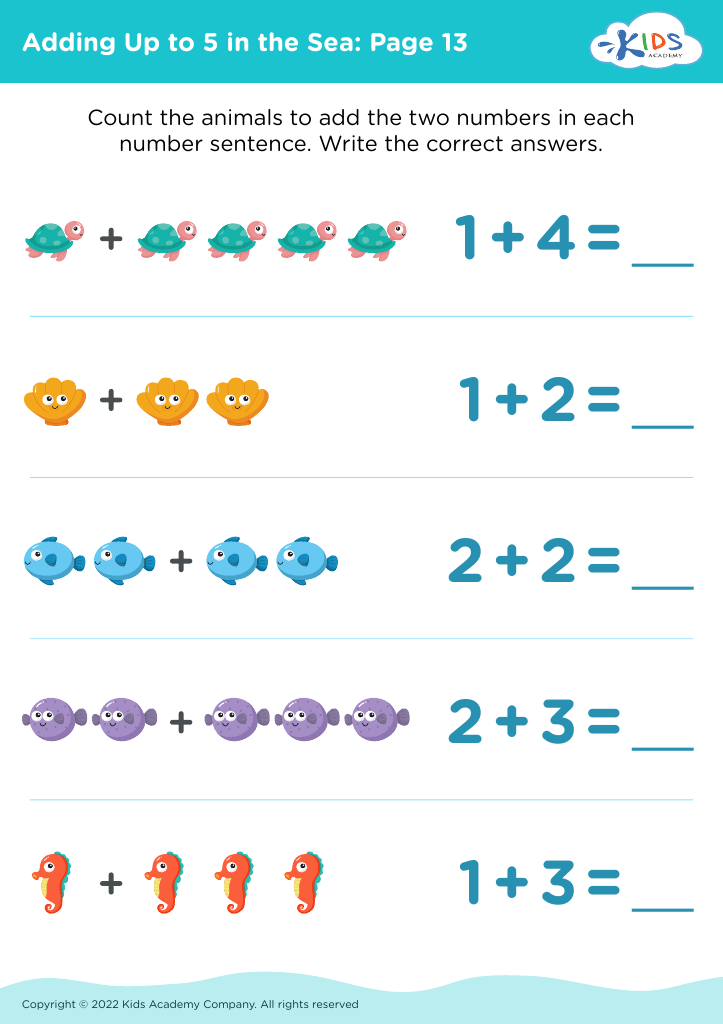
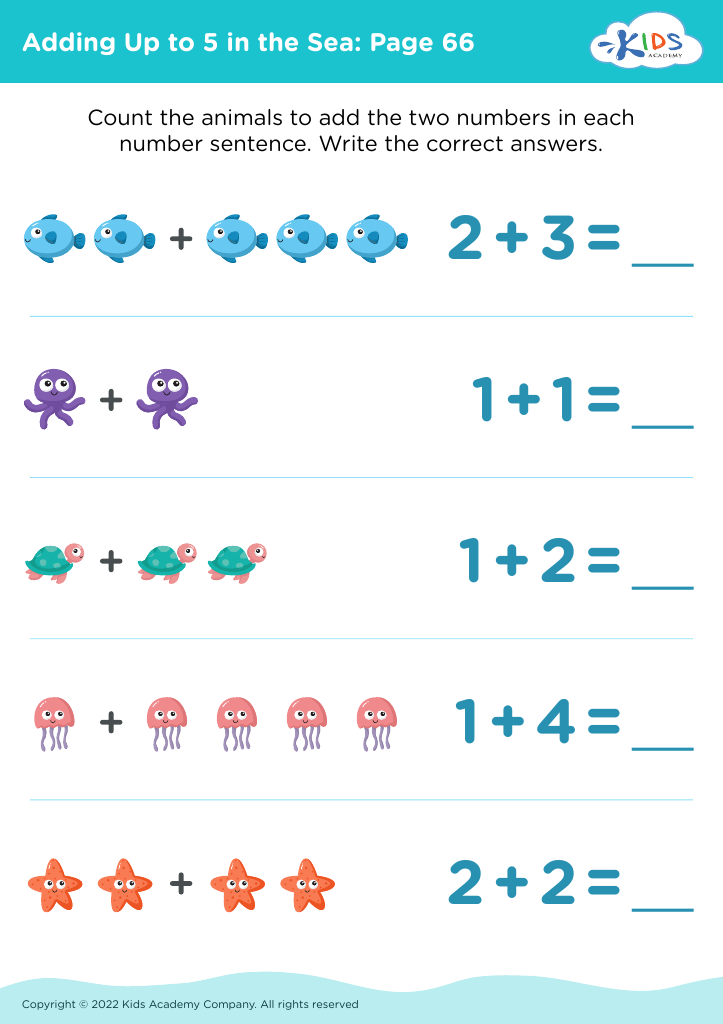
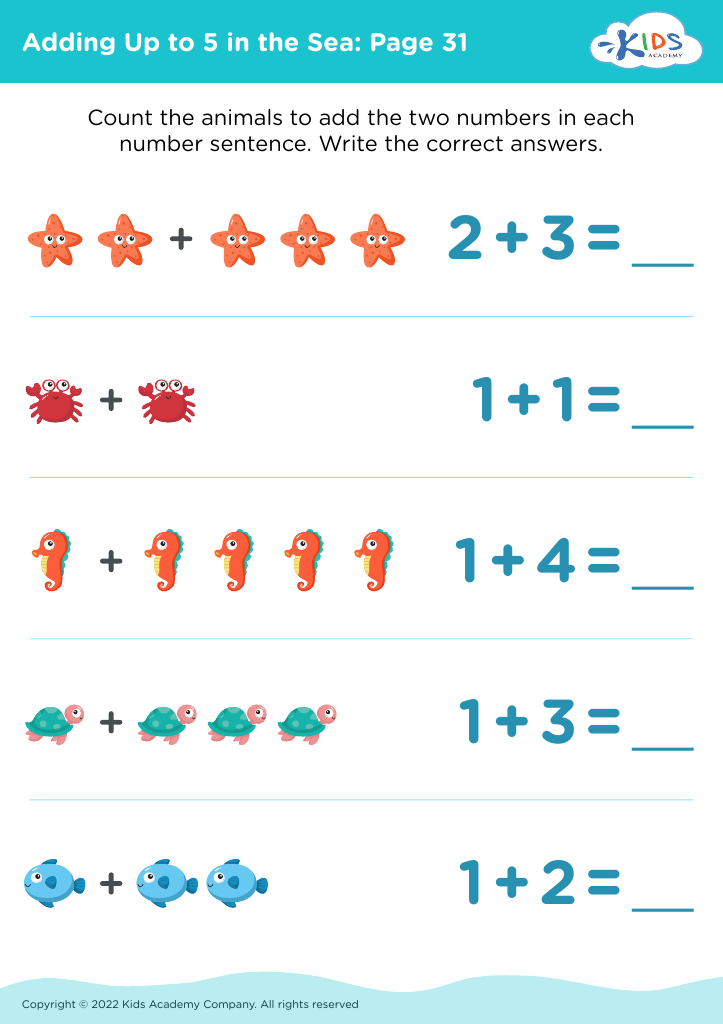



Hand-eye coordination is a crucial skill for children aged 5-8, particularly when it comes to learning through engaging activities like "Adding in the Sea." This skill involves the brain’s ability to synchronize eye movements with hand actions, which is fundamental for countless daily tasks such as writing, drawing, and playing sports. When children develop good hand-eye coordination, they become more adept at interacting with their environment, which boosts their confidence and independence.
Incorporating playful activities like “Adding in the Sea” helps foster this development in a fun and engaging way. As children engage in visual and motor tasks to add up numbers or solve problems, they improve their coordination while also honing math skills. This encourages persistent practice, making learning enjoyable and effective.
Moreover, parents and teachers should care about this skill because it lays the foundation for more complex tasks as children grow. Enhanced hand-eye coordination aids in academic performance, improves social skills through team-based activities, and promotes overall physical development. By prioritizing exercises that blend coordination with learning, adults can help children thrive both academically and personally, nurturing a holistic approach to their growth and understanding of the world around them.