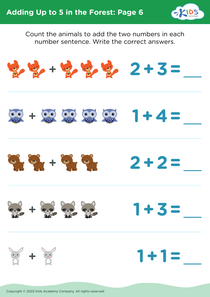
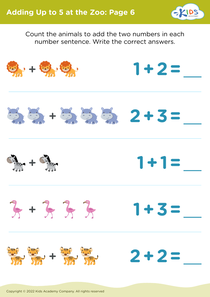
Sea creatures identification Adding in the Sea Worksheets for Ages 5-8
3 filtered results
-
From - To
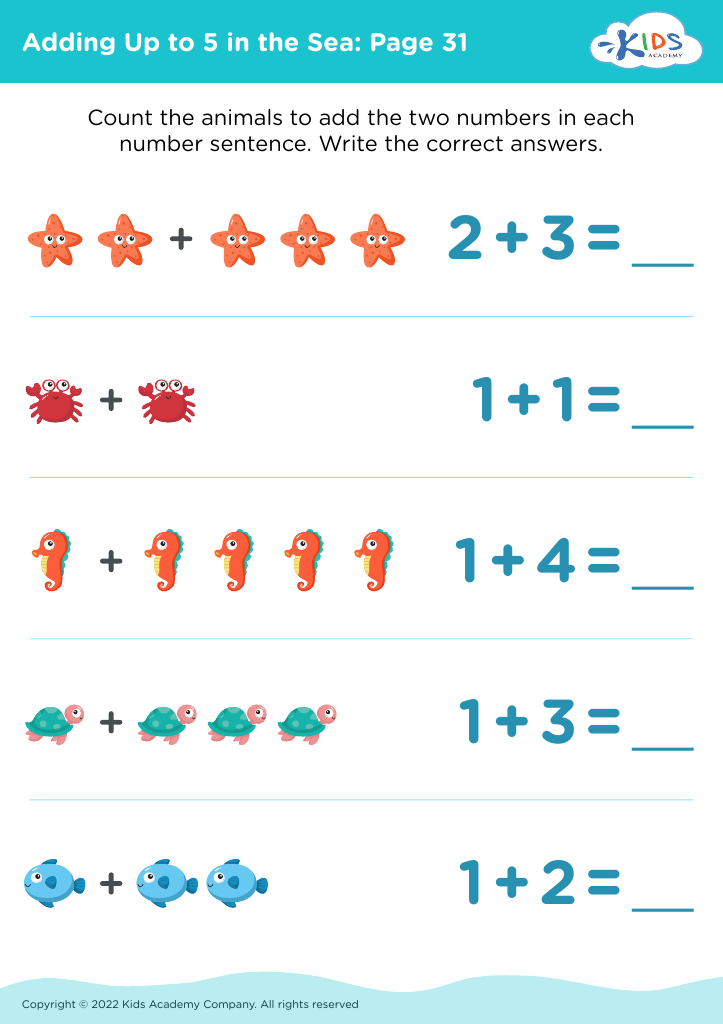
Dive into learning with our "Sea Creatures Identification Adding in the Sea" worksheets for ages 5-8! These engaging, ocean-themed activities combine math practice with familiarizing kids with various sea creatures. Children will reinforce their addition skills by working through problems set in an underwater world teeming with colorful marine life. Each worksheet features detailed illustrations and intriguing underwater scenarios, making math both educational and fun. Perfect for classrooms or at-home learning, these materials help kids enhance their arithmetic abilities and sea creature knowledge simultaneously. Get ready to explore the ocean depths and boost math confidence with these fantastic worksheets!
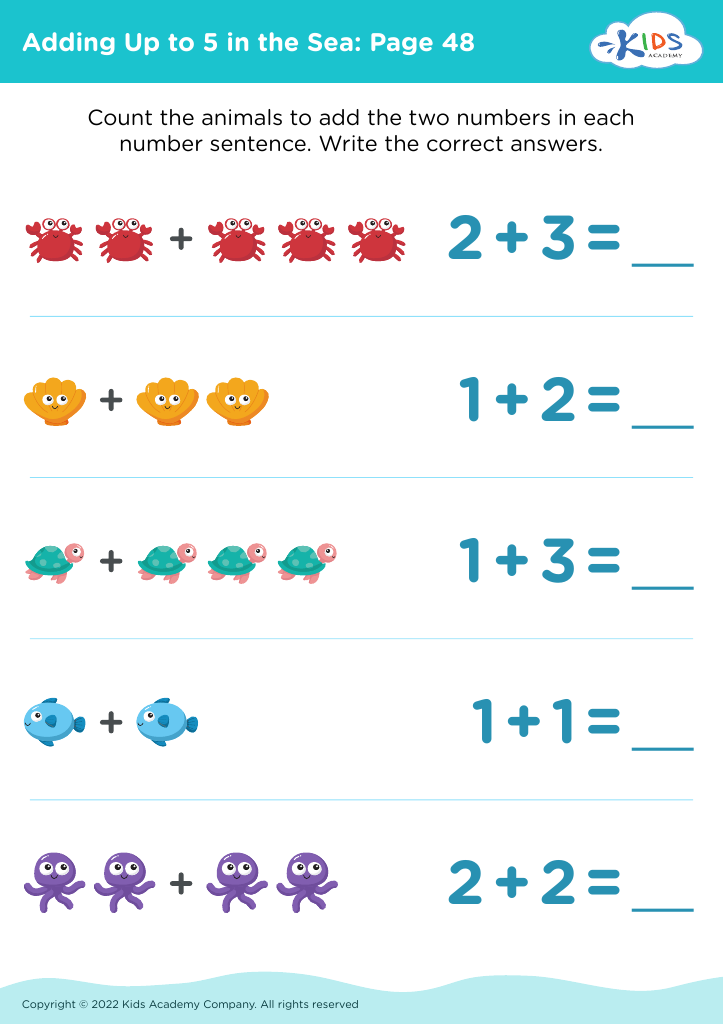
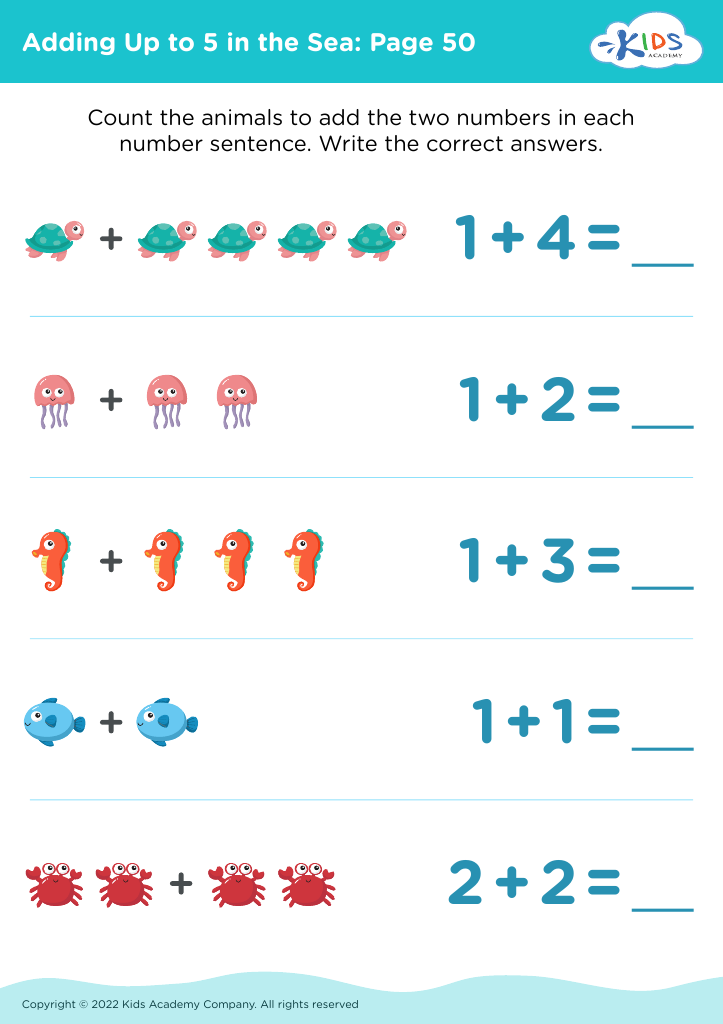



Understanding and connecting with sea creatures holds immense importance for young children, furnishing multiple educational and developmental benefits. For parents and teachers, fostering an early appreciation and knowledge of marine life can ignite curiosity and establish a foundation for lifelong learning.
Firstly, introducing children aged 5-8 to sea creature identification promotes biology and ecosystems awareness. Recognizing different species enhances basic scientific literacy and helps children understand the intricate web of life, emphasizing interdependence among living organisms.
Moreover, marine exploration supports cognitive development. Activities like identifying and classifying sea creatures improve critical thinking, observational skills, and memory. Hands-on learning experiences, such as visiting aquariums or engaging with interactive identification games, can make these abstract concepts tangible and exciting.
Social-emotional growth is another vital aspect. Engaging stories and fascinating facts about marine animals can foster empathy and a sense of responsibility toward environmental conservation. Understanding marine life encourages respect for biodiversity and nurtures stewardship of the planet from an early age.
Lastly, connecting with sea creatures provides a joyful and inspiring dimension to education. The wonderment elicited by vibrant marine life can enrich a child's creativity and self-expression, cultivating a love for adventure, exploration, and knowledge of the incredible natural world beyond our shores.