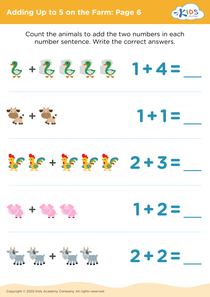
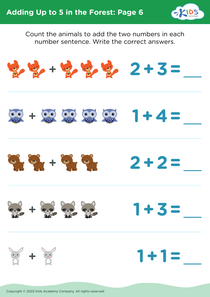
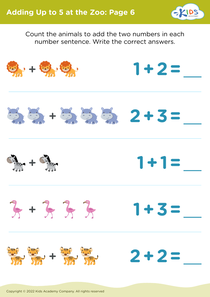
Visual perception Adding in the Sea Worksheets for Ages 5-8
3 filtered results
-
From - To
Dive into learning with our "Visual Perception Adding in the Sea Worksheets" designed for children aged 5-8! These engaging worksheets combine fun ocean-themed illustrations with essential math skills, helping young learners enhance their visual perception while mastering addition. Kids will follow along as they identify and sum colorful sea creatures, boosting their problem-solving skills and number recognition. Perfect for classroom use or at-home practice, these worksheets provide a delightful and interactive way to support early math development. Make addition an adventure as your child swims through equations and sharpens their skills beneath the sea! Join the fun today!
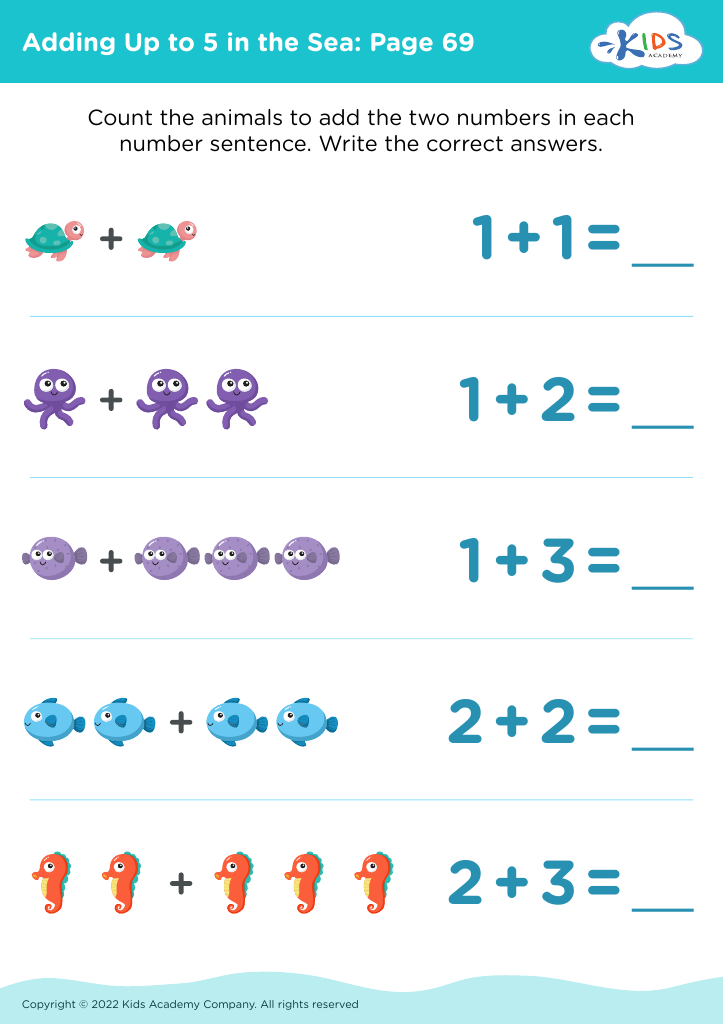
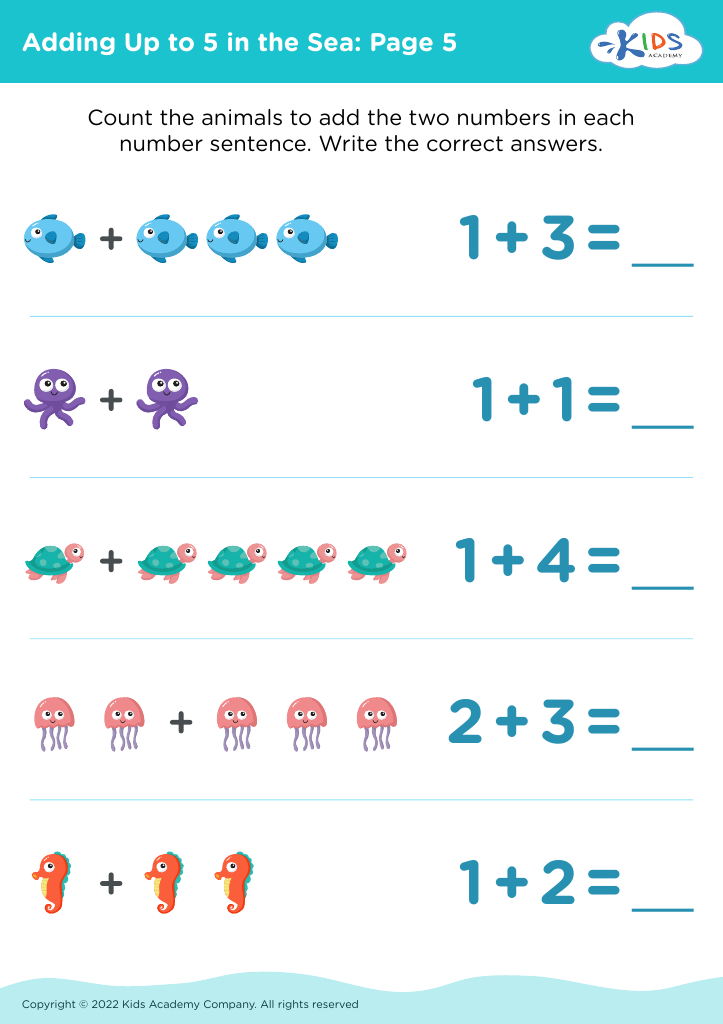
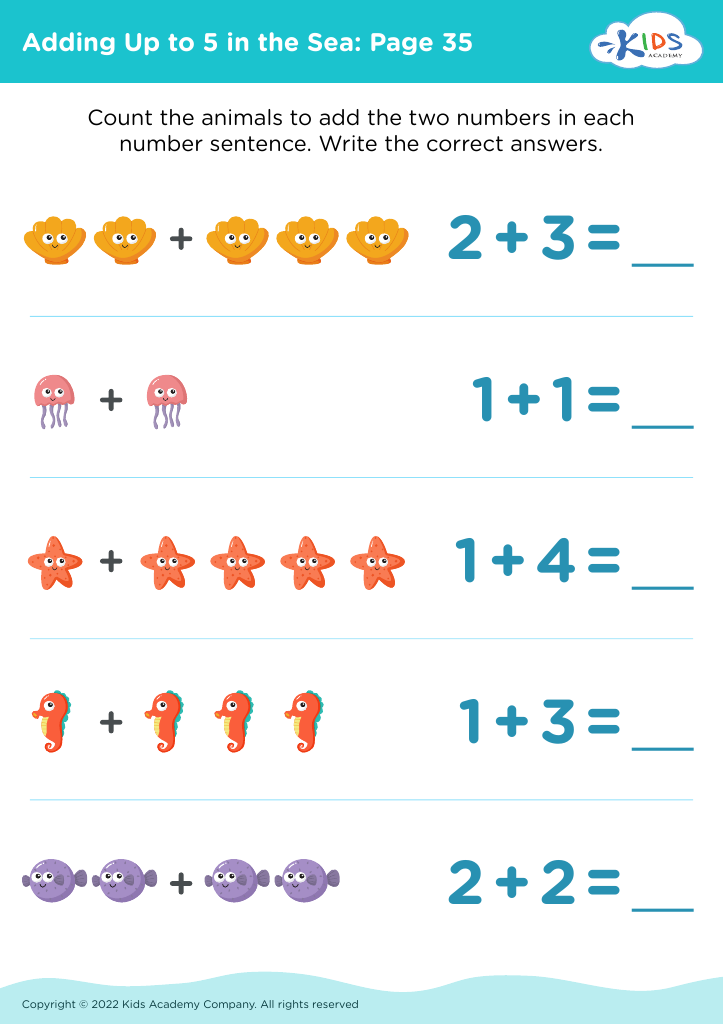



Visual perception is a critical skill for children aged 5-8, as it forms the foundation for learning across various subjects, including reading, mathematics, and art. For parents and teachers, understanding visual perception means recognizing how children interpret and make sense of visual information around them.
In the context of "Adding in the Sea," engaging activities can enhance visual perception. For example, children can use colorful sea creatures to visualize addition problems, making abstract concepts tangible. This hands-on learning method encourages active participation and helps children develop critical thinking skills.
Strong visual perception aids in reading comprehension, as it enables children to recognize shapes and letters effectively. It also supports fine motor skills, crucial for writing and drawing. Moreover, when kids can visually differentiate between items, such as various fish or shells, they enhance their ability to classify and categorize.
By fostering these skills, teachers and parents not only enhance academic performance but also promote confidence and problem-solving abilities. By making learning fun and interactive, particularly through imaginative themes like the sea, children are more likely to thrive both academically and socially. Therefore, supporting and developing visual perception in children is essential for their holistic growth and education.