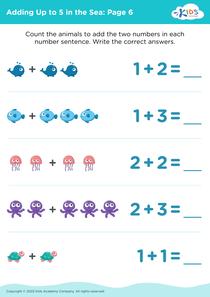
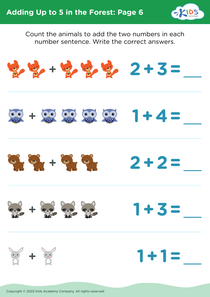
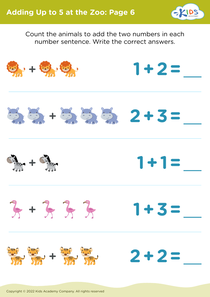
Animal recognition Adding on the Farm Worksheets for Ages 5-8 - Page 2
31 filtered results
-
From - To
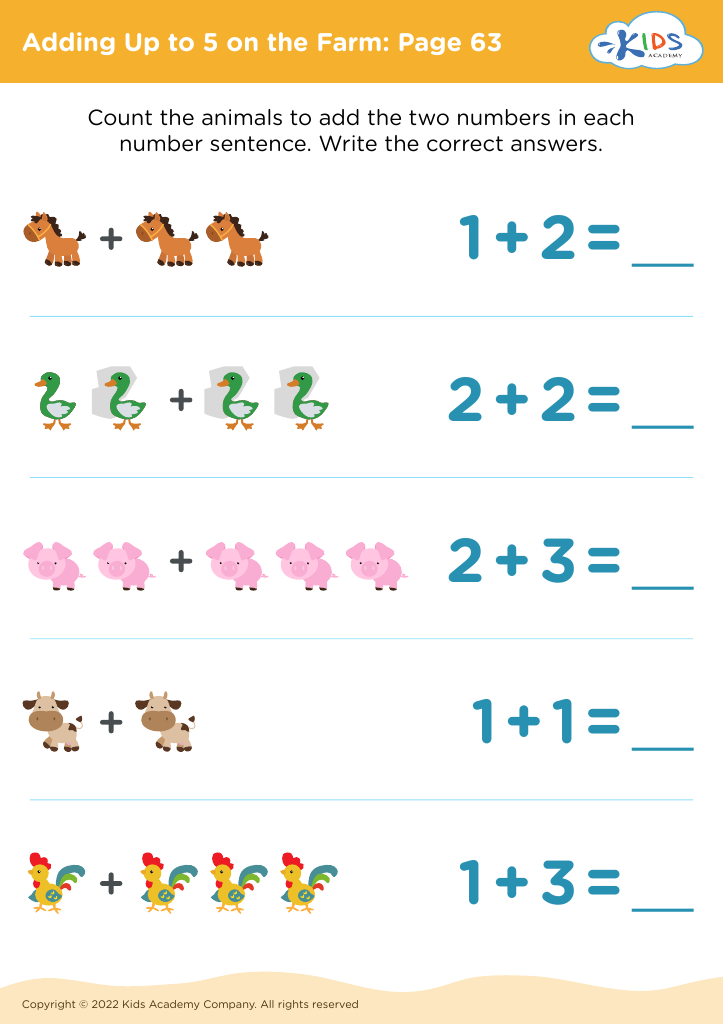
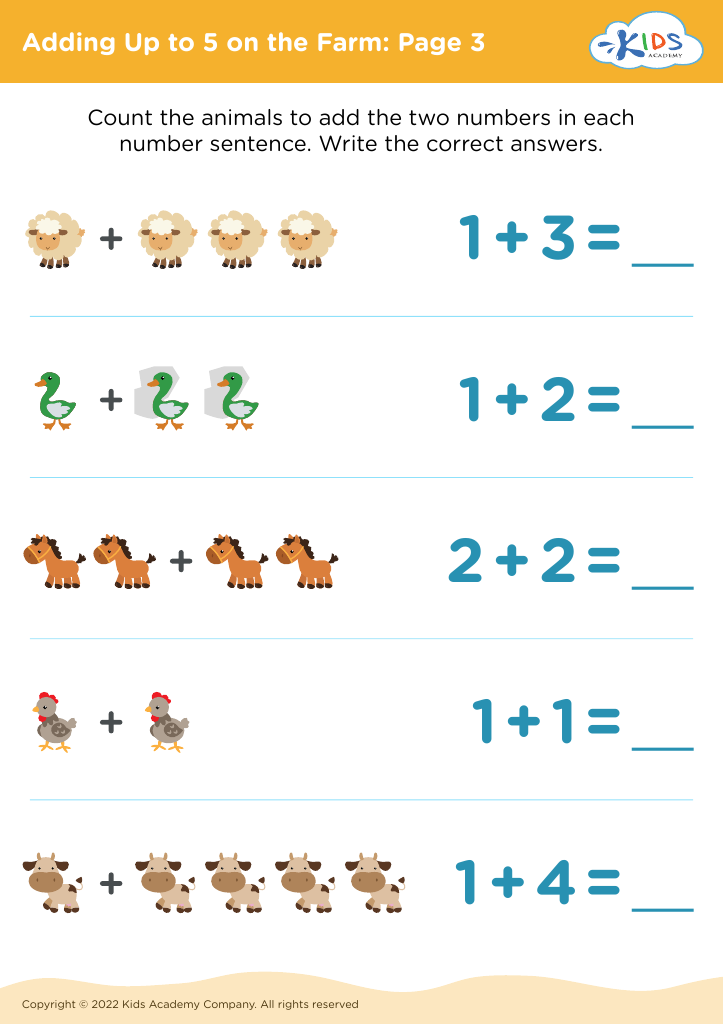
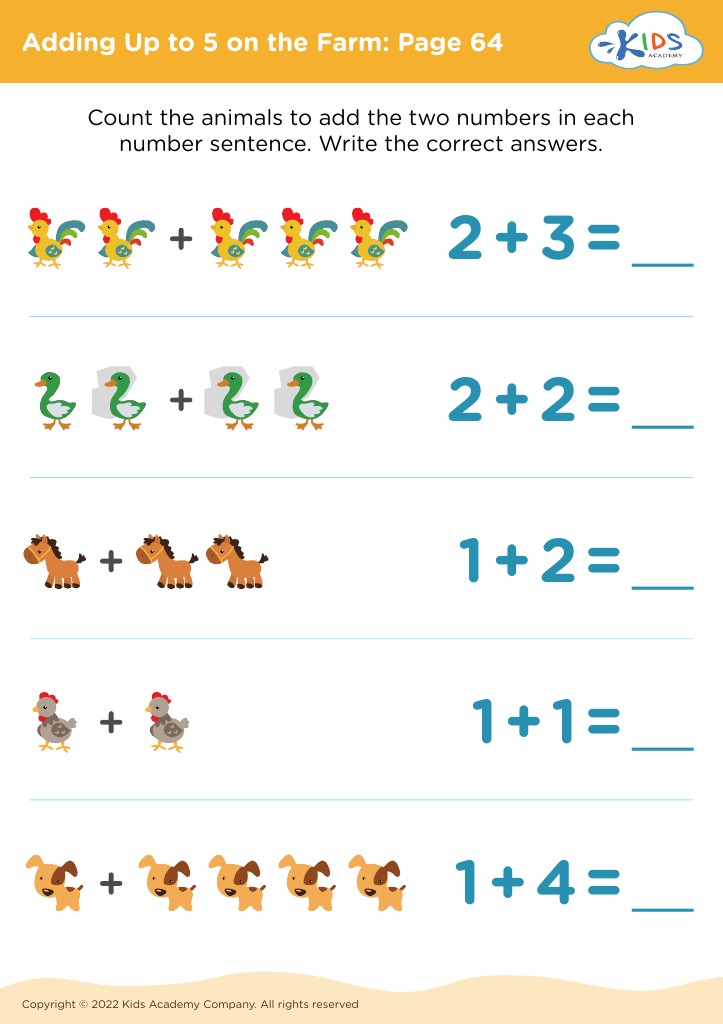
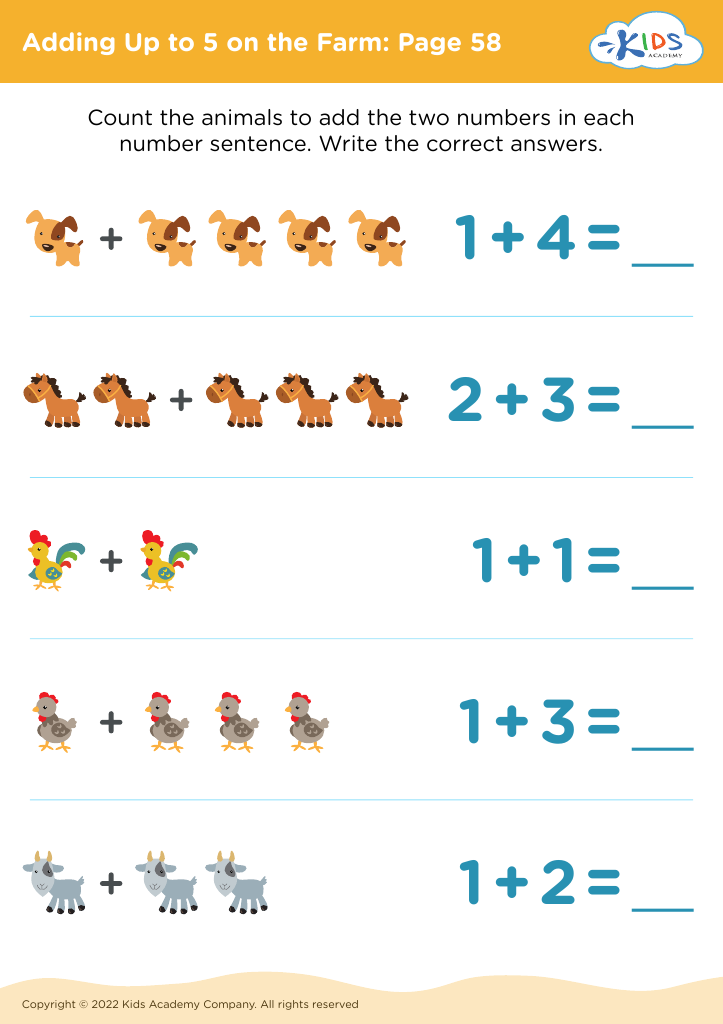
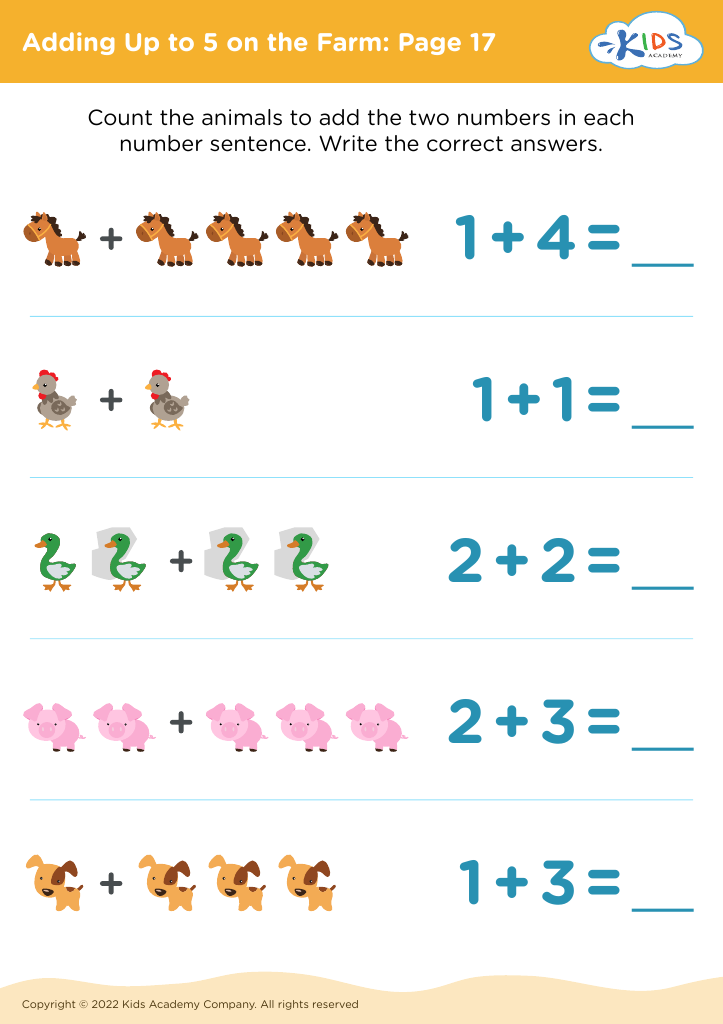
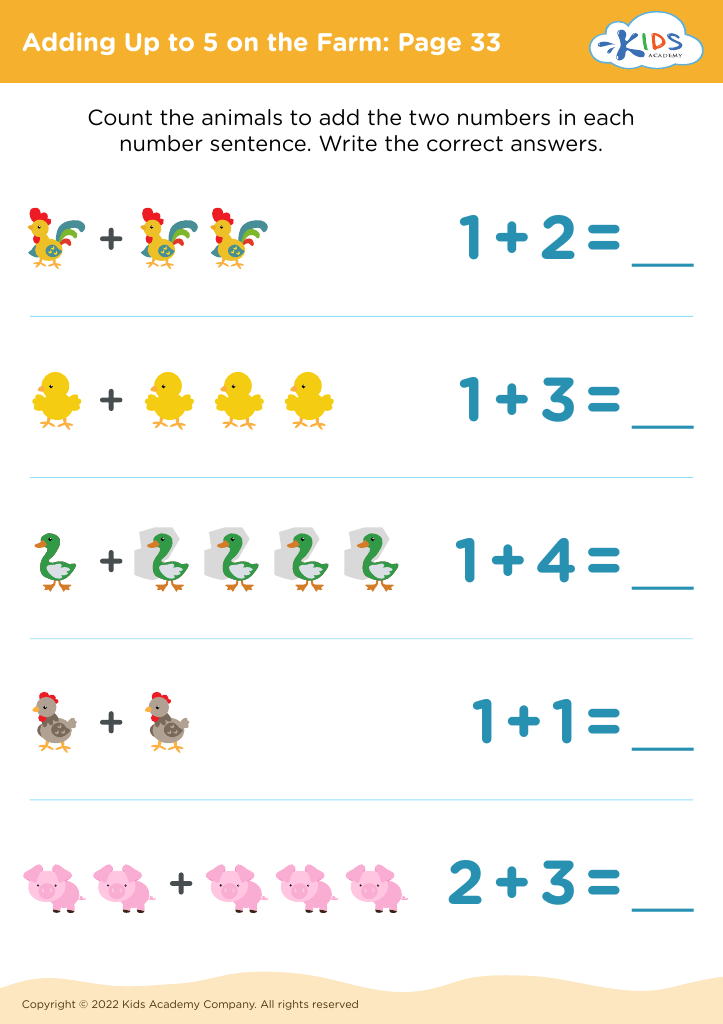
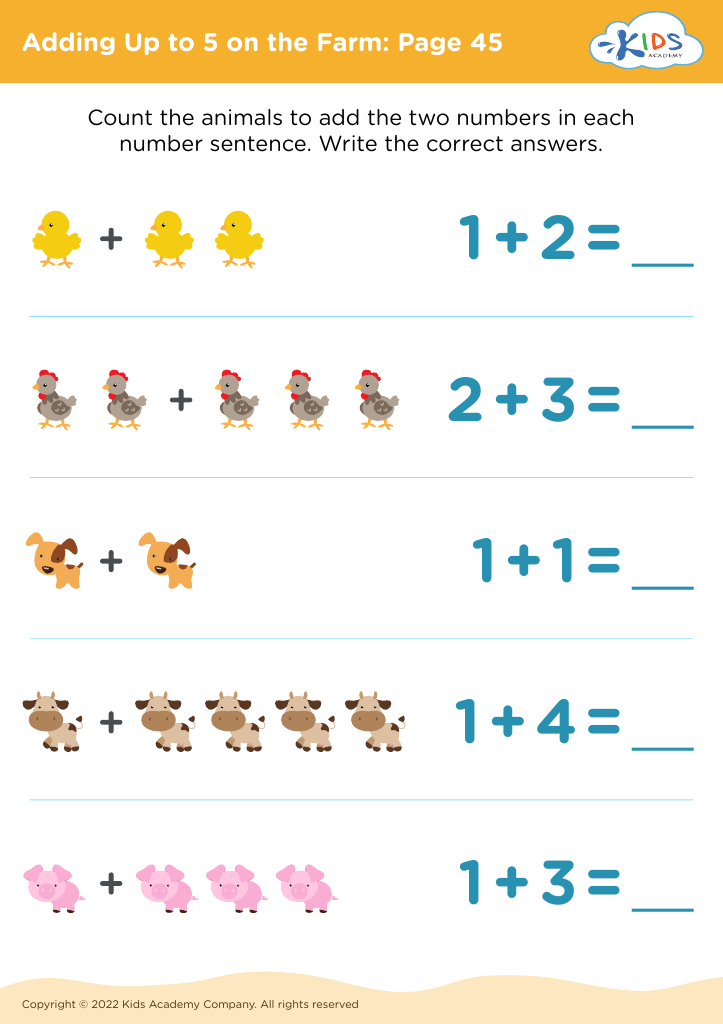



Parents and teachers should prioritize animal recognition and addition on the farm for children aged 5-8 as it offers a multitude of educational benefits. Firstly, incorporating farm animals into learning activities enhances children’s understanding of the natural world, fostering curiosity and respect for living creatures. Recognizing and naming animals builds their vocabulary and language skills, while the sensory experience of observing or interacting with animals sharpens cognitive abilities and attention to detail.
Furthermore, integrating basic math concepts, like addition, with animal recognition reinforces numeracy skills in a relatable and engaging manner. For example, asking children to count and add the number of cows and chickens on a farm combines mathematical practice with real-world scenarios, making abstract concepts like numbers and operations more tangible.
This multidisciplinary approach also promotes critical thinking and problem-solving skills. It encourages children to make connections between different subjects, such as biology and mathematics, thereby enriching their overall learning experience.
Moreover, the joy and excitement of learning about animals and farms can motivate children to participate more actively in educational activities. Ensuring learning is enjoyable fosters a love for learning that can last a lifetime. In essence, animal recognition and addition on the farm cultivate fundamental academic and life skills while keeping the learning process fun and captivating for young minds.