Basic Arithmetic Adding on the Farm Worksheets for Ages 5-8
4 filtered results
-
From - To
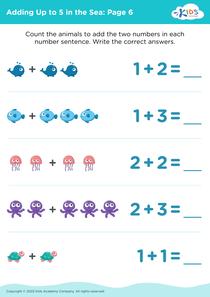
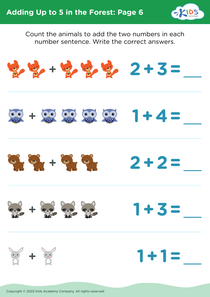
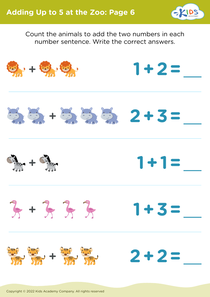
Explore our "Basic Arithmetic Adding on the Farm Worksheets" designed for children aged 5-8! These engaging worksheets combine the fun of farm-themed illustrations with fundamental addition skills, making math enjoyable and accessible. Each activity is tailored to help young learners master basic arithmetic while fostering a love for math. With colorful images of animals and farm elements, kids will easily connect with the material as they practice counting and addition in a whimsical setting. Ideal for classroom use or home practice, these worksheets encourage critical thinking and build confidence in young mathematicians. Start your adventure in learning today!
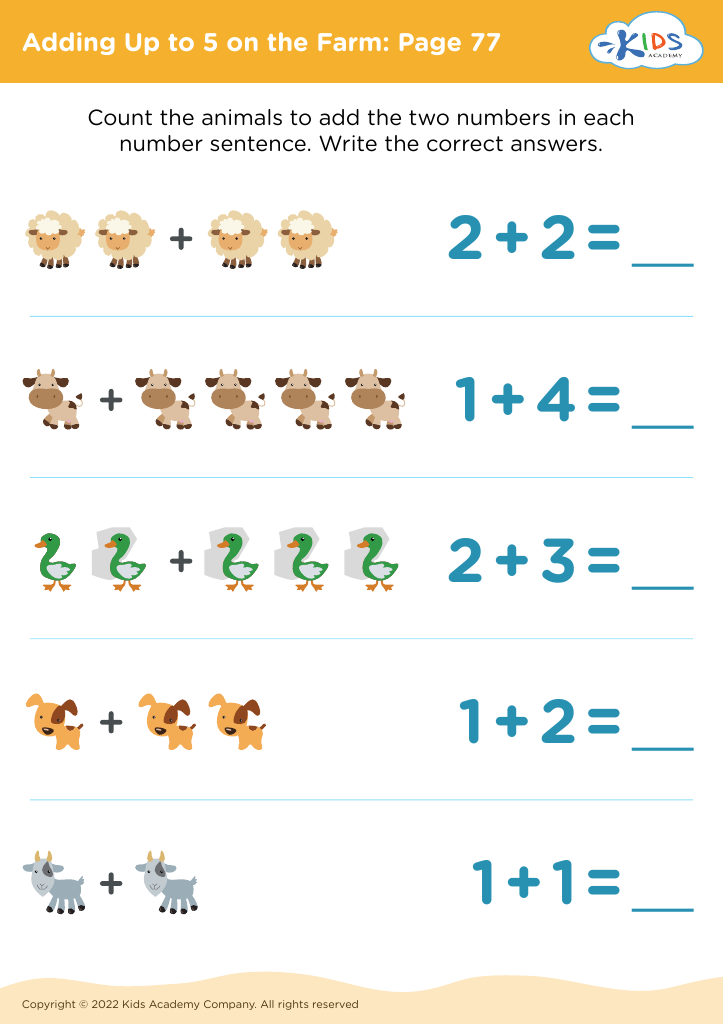
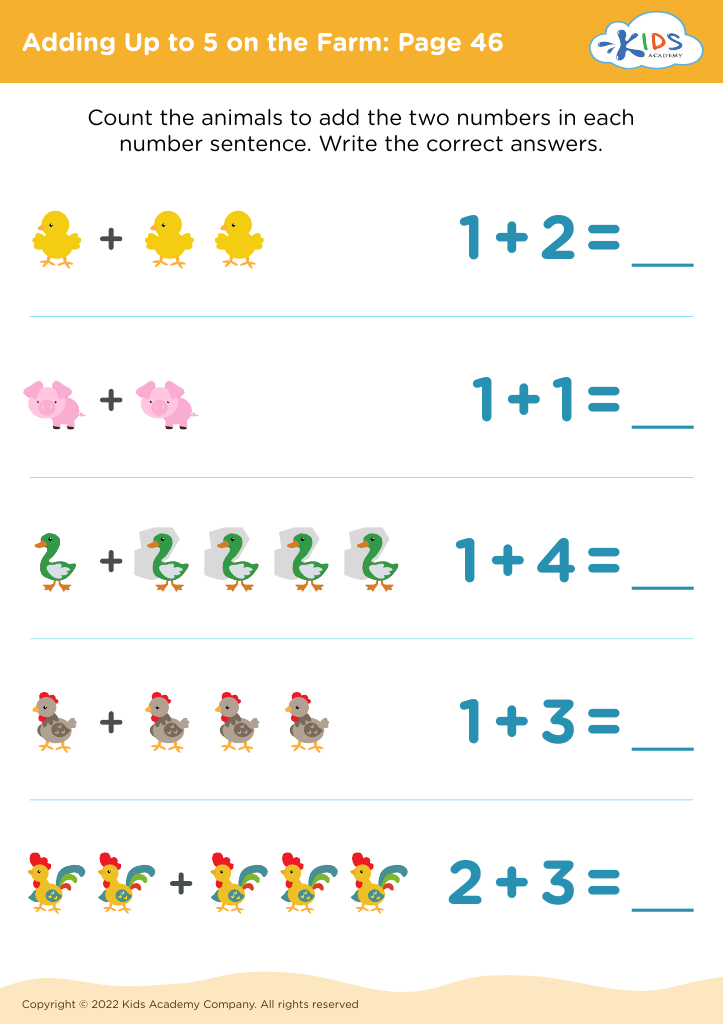
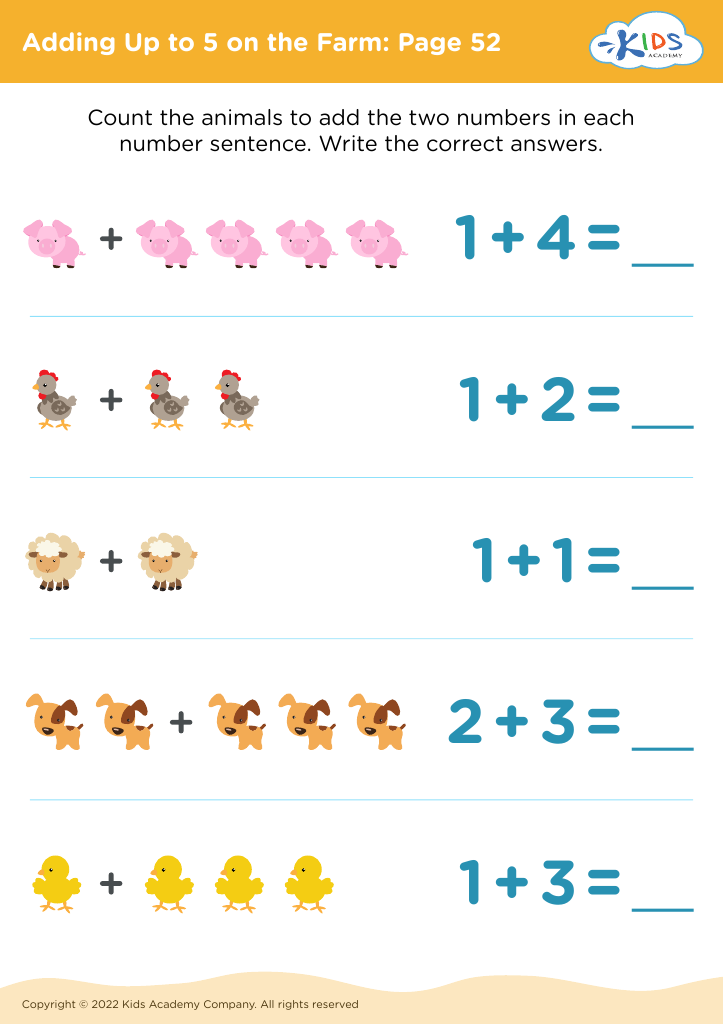
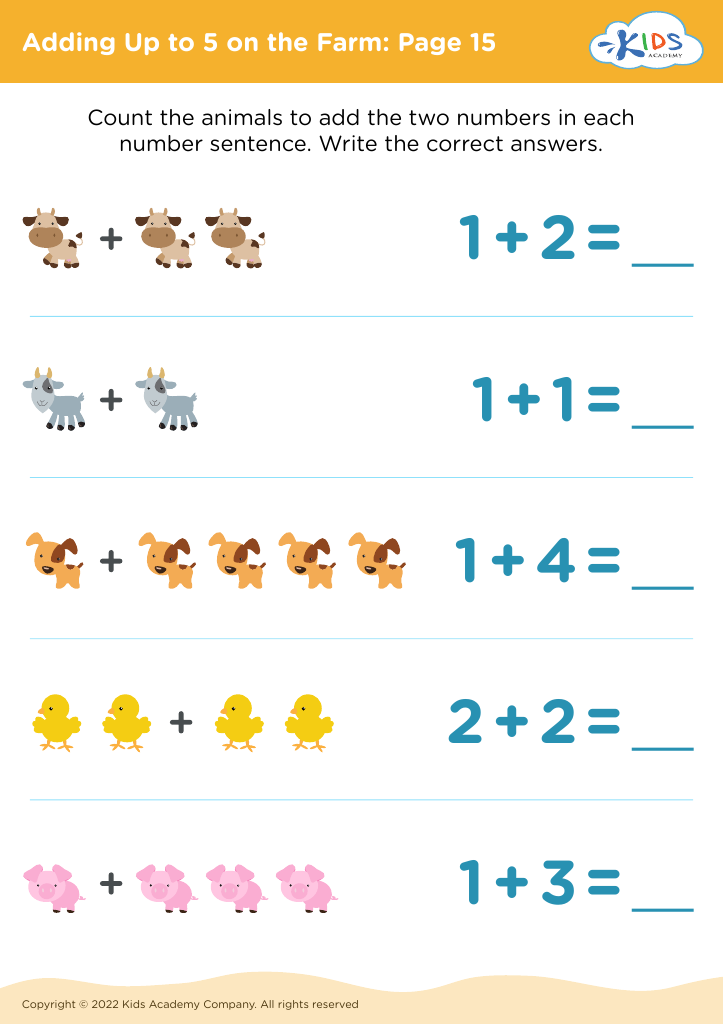



Basic arithmetic, particularly adding, is essential for young learners, especially when contextualized through everyday scenarios such as "Adding on the Farm." For children ages 5-8, understanding mathematical concepts through relatable themes can greatly enhance their engagement and comprehension. Learning math in a farm context allows students to visualize numbers through tangible objects like animals, crops, or equipment, making abstract concepts more concrete and interesting.
Additionally, the farm setting provides real-life applications of addition—counting animals, measuring produce, or determining total items needed for tasks. This not only aids in developing foundational math skills but also fosters critical thinking and problem-solving as children navigate practical situations.
Parents and teachers should recognize that supporting arithmetic skills at this age sets the stage for lifelong math fluency. Engaging children with dynamic and interactive activities associated with farming encourages a positive attitude toward math, promotes cooperation through group activities, and nurtures a sense of curiosity about the world around them.
Ultimately, a strong grasp of basic addition can equip children with the tools they need for further academic success, fostering confidence and interest in learning as they grow. Ensuring these skills are developed early is a crucial investment in children's futures.