Develop fine motor skills Adding up to 100 Misc Worksheets for Ages 5-8
4 filtered results
-
From - To
Enhance your child's fine motor skills while mastering addition with our comprehensive selection of adding up to 100 worksheets designed for ages 5-8. Our activities seamlessly blend mathematics with crucial fine motor skill development. Children will enjoy coloring, tracing, and solving addition problems, all of which promote hand-eye coordination and precise pencil control. These engaging worksheets are perfect for both classroom use and home practice, offering diverse and fun ways to reinforce essential math concepts and motor skills. Visit our website to explore an array of worksheets and give your child the confidence and tools they need to excel.
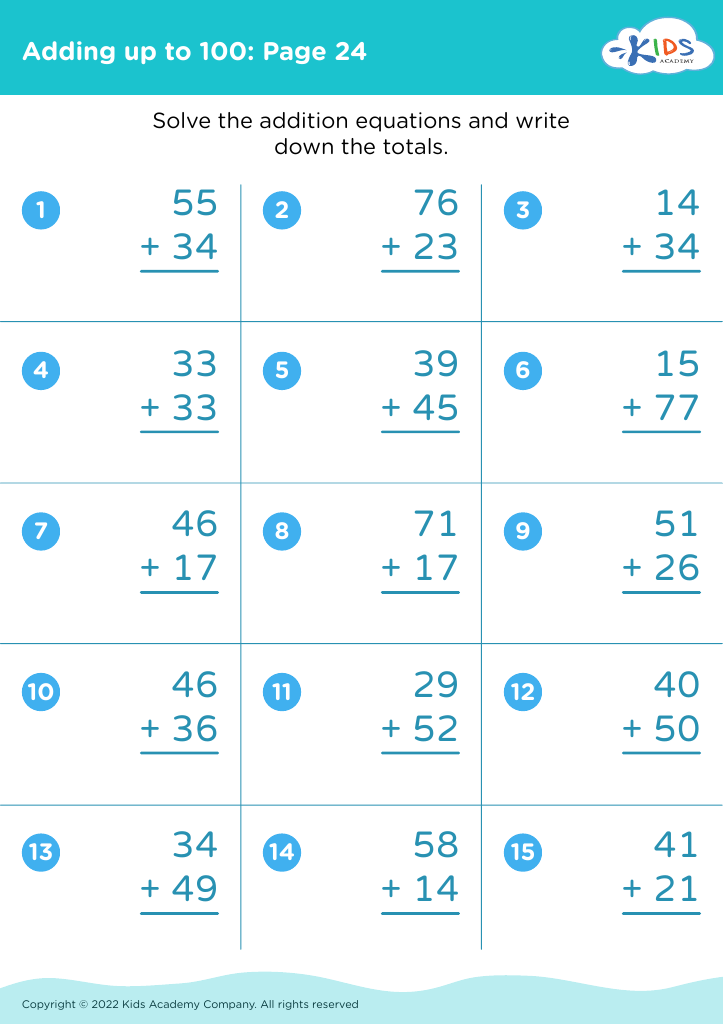
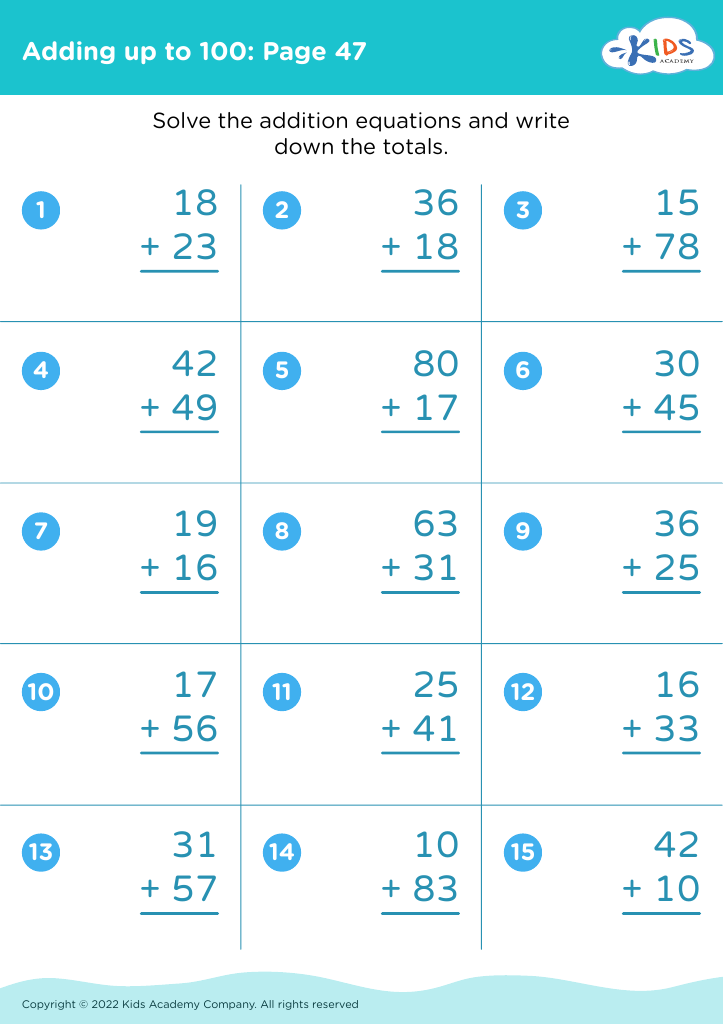
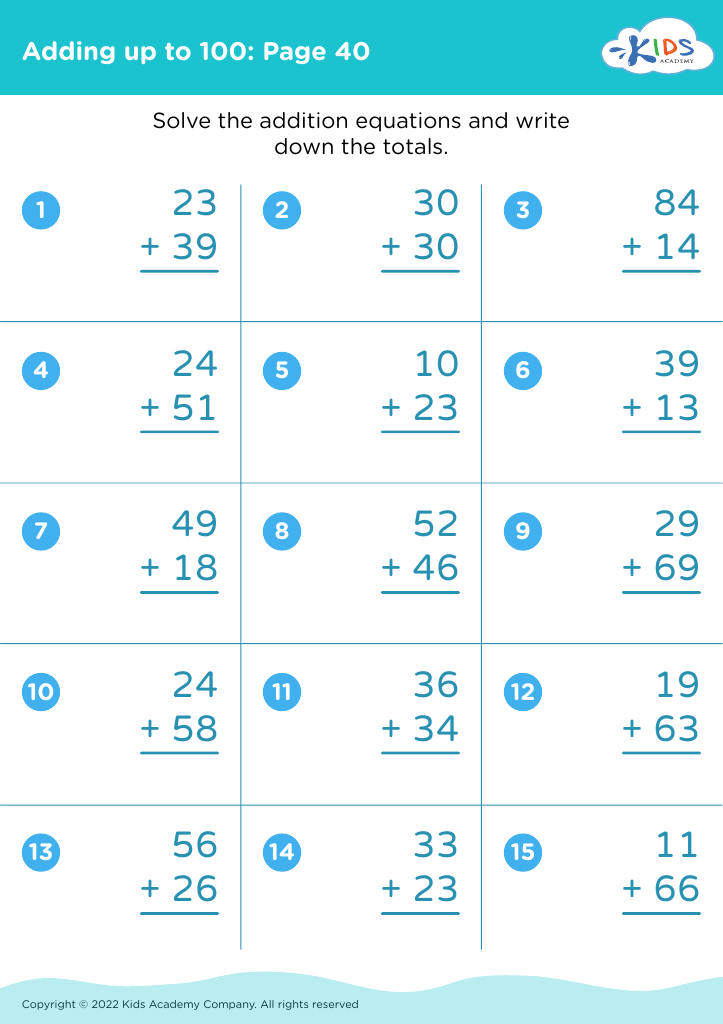
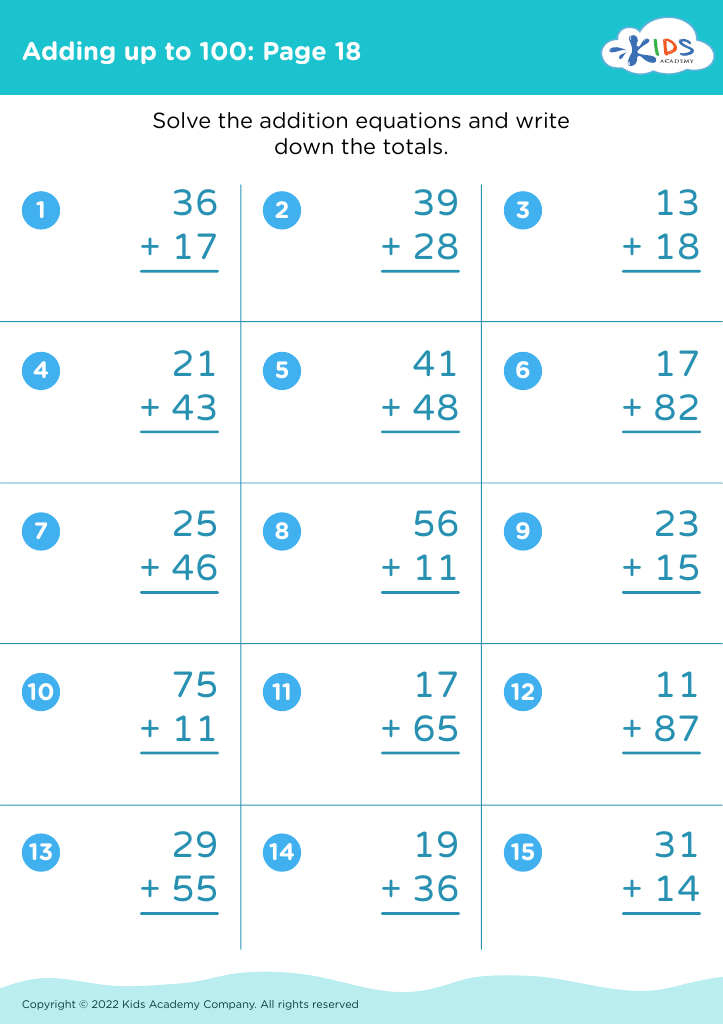


Fine motor skills, adding up to 100, and a mix of foundational academics and life skills are critical elements in early childhood education. Parents and teachers should prioritize developing fine motor skills in children ages 5-8 because these abilities are essential for mastering tasks such as writing, buttoning clothes, tying shoelaces, and other daily activities. By enhancing fine motor skills through activities like cutting with scissors, drawing, and manipulating small objects, children build hand-eye coordination and dexterity that form the foundation for more advanced skills.
Learning to add up to 100 at a young age is equally crucial. It sets the stage for mathematical literacy and confidence. Proficiency in basic arithmetic fosters critical thinking and problem-solving skills, which are vital for broader academic achievement. Children who grasp these concepts early are better poised to tackle complex mathematical problems in the future.
The amalgamation of fine motor skills and early math readiness contributes to a well-rounded development. Alongside these, incorporating miscellaneous basic academic and life skills helps build a solid groundwork for children's future learning and everyday functioning. Addressing these areas comprehensively prepares children not only for academic success but also for confident participation in daily activities, promoting independence and self-esteem. Ultimately, investing time and effort into these fundamental skills during the early years supports holistic development and paves the way for future accomplishments.