Basic Math Skills Adding up to 100 with Regrouping Worksheets for Ages 5-8
3 filtered results
-
From - To
Boost your child’s math confidence with our engaging "Adding Up to 100 with Regrouping" worksheets, designed specifically for ages 5-8. These activities provide a fun and interactive way for young learners to master essential math skills. Children will practice addition while developing their ability to regroup numbers, reinforcing their understanding of place value. Our worksheets feature colorful visuals and grade-appropriate challenges that keep kids engaged and motivated. With consistent practice, your child will gain fluency in basic math operations and enhance their critical thinking skills. Download our worksheets today to help your child shine in math!
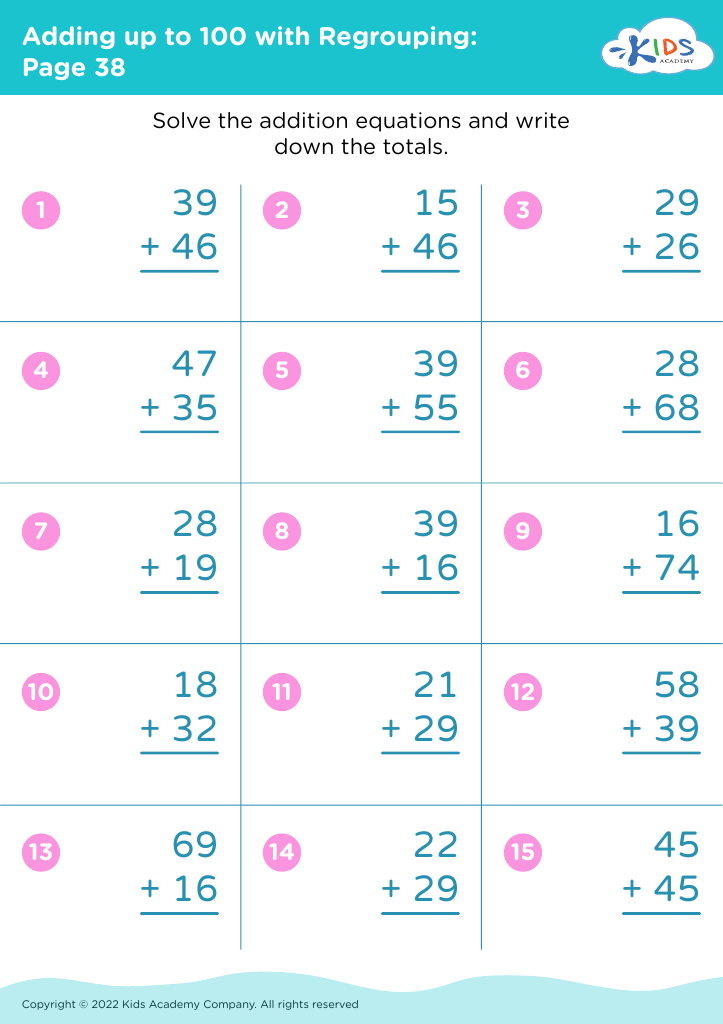
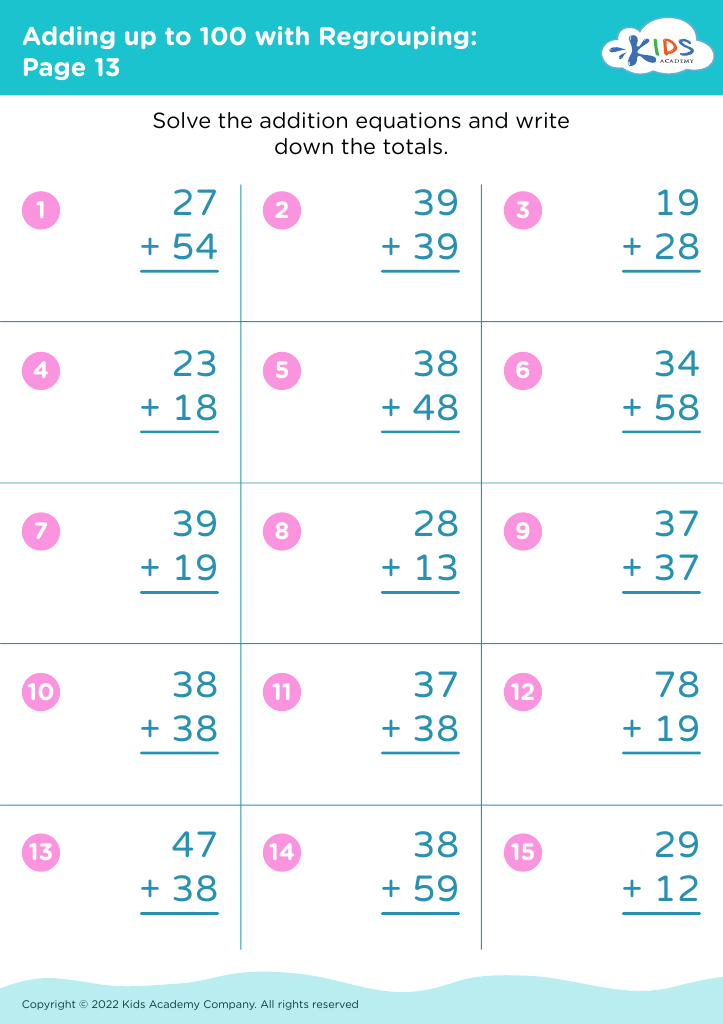
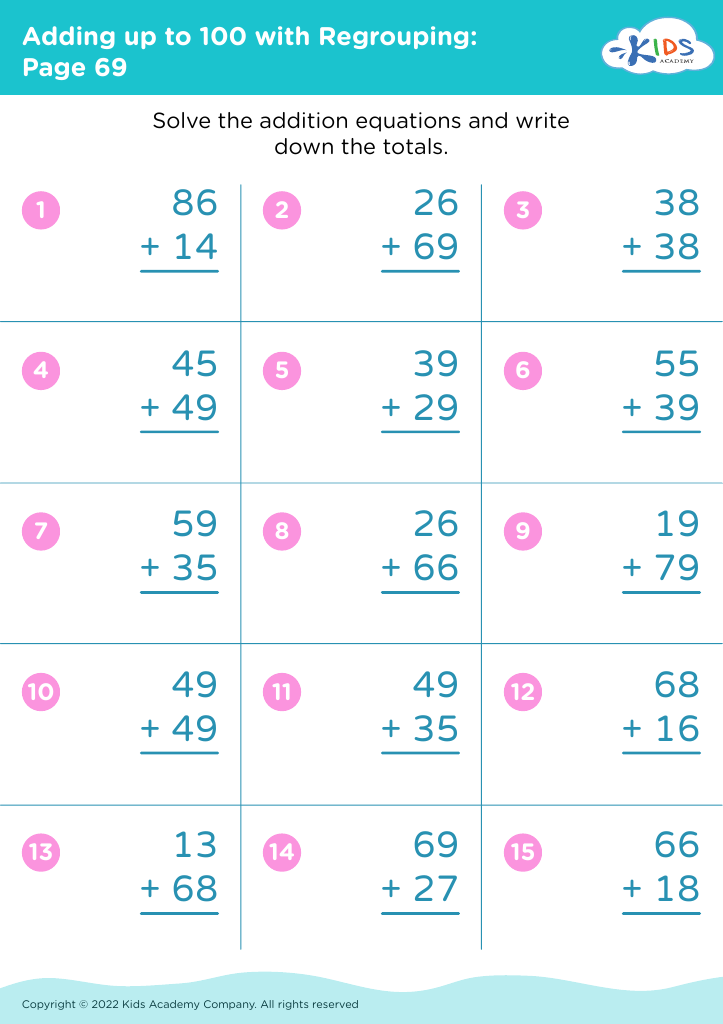




Basic math skills, particularly adding up to 100 with regrouping, are foundational for children ages 5-8. Mastering this skill builds a strong framework for future mathematical concepts and promotes confidence in their abilities. Understanding regrouping, which involves carrying over numbers to simplify additions, fosters critical thinking and enhances problem-solving skills.
For parents and teachers, nurturing these skills at an early age establishes a positive attitude towards math, making children more receptive to learning complex subjects in the future. It also directly impacts their daily lives; proficient math skills enable children to handle practical tasks like shopping, measuring, or saving a piggy bank.
Moreover, emphasizing basic math helps bridge home and school learning; it encourages collaborative engagement between parents and teachers in reinforcing concepts. Recognizing the importance of foundational skills leads to improved academic achievements, laying the groundwork for advanced mathematical endeavors.
In an increasingly digital world, where quantitative literacy is vital, ensuring that children can confidently handle math operations prepares them not only for academic success but also for everyday challenges as they grow. Therefore, understanding the significance of these skills is essential for fostering a well-rounded, numerically literate generation.