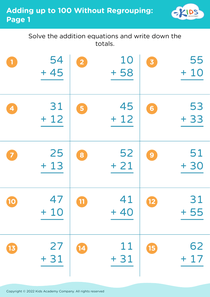
Fraction comparison Adding up to 100 with Regrouping Worksheets for Ages 5-8
3 filtered results
-
From - To
Unlock your child's mathematical potential with our engaging "Fraction Comparison: Adding up to 100 with Regrouping" worksheets designed for ages 5-8! These specially crafted resources make learning fractions fun and interactive, helping young learners enhance their understanding of number relationships and regrouping techniques. With a variety of colorful and stimulating activities, kids can practice comparing fractions while building essential skills in addition and critical thinking. Perfect for classroom use or at-home learning, our worksheets offer an excellent way to reinforce math concepts in an enjoyable way. Download now and watch your child gain confidence and proficiency in their math skills!
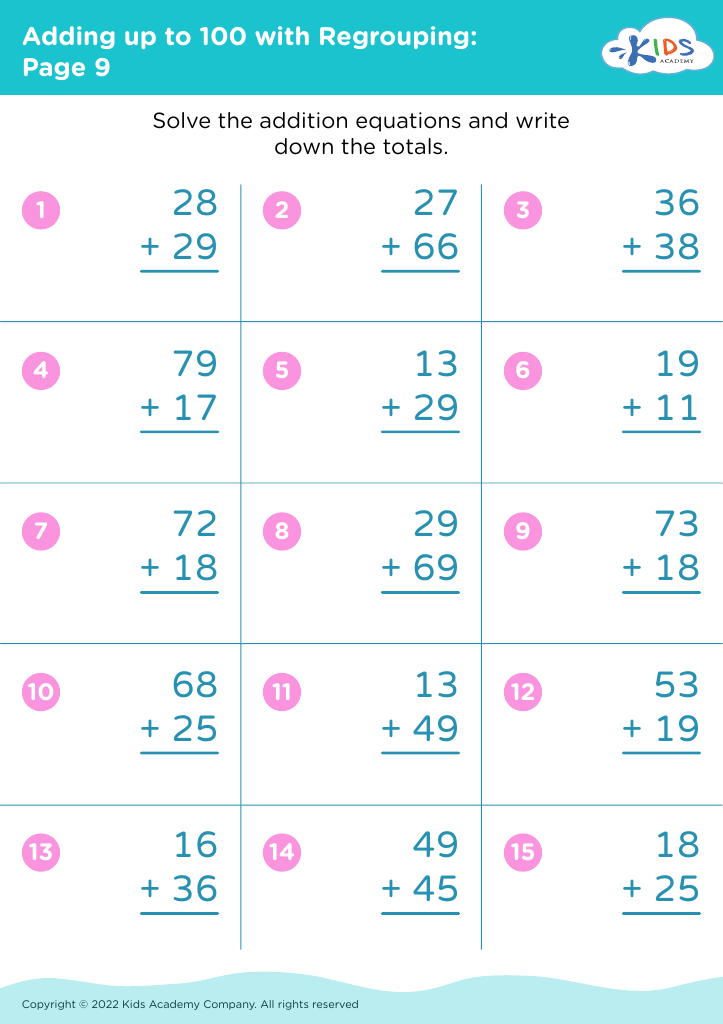
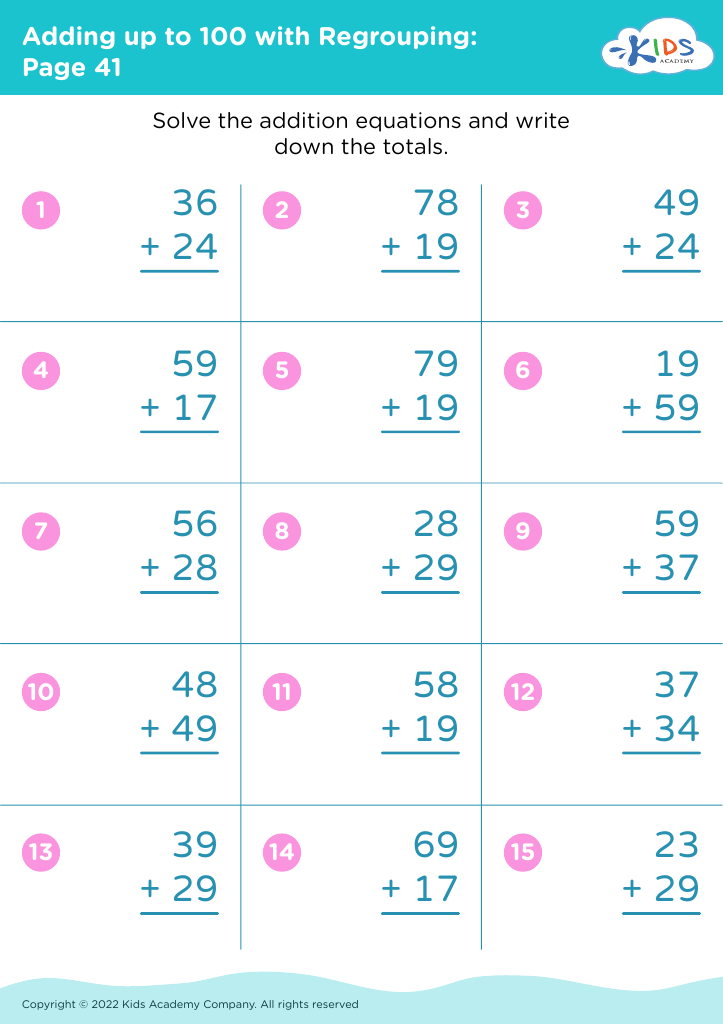
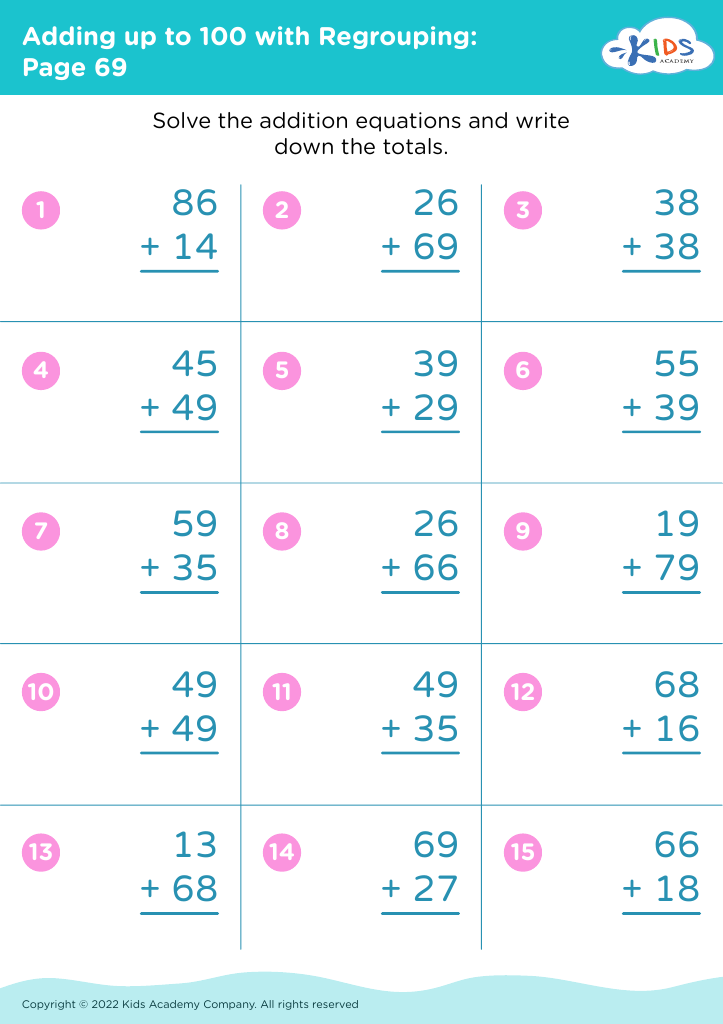




Understanding fraction comparison and regrouping is crucial for young learners aged 5-8, as it lays the foundation for more complex mathematical concepts. During this formative stage, children begin developing their number sense and mathematical reasoning. Learning to compare fractions encourages critical thinking and enhances problem-solving skills. It teaches children to recognize relationships between numbers and understand that fractions can represent parts of a whole, which is essential in daily life situations, such as cooking or sharing.
Regrouping plays an essential role in cementing these concepts. It teaches students how to carry over values, which is vital not only in fraction addition but also in whole number operations. Activities that involve adding fractions that total 100 can help students visualize the concept of part-whole relationships more clearly.
Parents and teachers should care because mastery of these skills boosts children's confidence and fosters a love for math. Furthermore, having a strong grasp of fractions supports future learning in advanced mathematical topics such as ratios, proportions, and algebra. By promoting engagement with these concepts now, we are equipping children with essential skills for academic success and real-world applications later on.