Shape Recognition Adding up to 100 with Regrouping Worksheets for Ages 5-8
5 filtered results
-
From - To
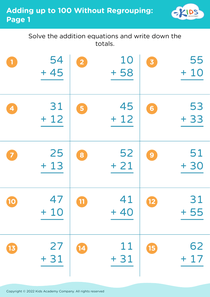
Discover our engaging "Shape Recognition Adding Up to 100 with Regrouping" worksheets designed for children aged 5-8. These activities combine essential math skills with fun shape recognition exercises, providing a vibrant way for young learners to grasp adding up to 100 through regrouping. Each worksheet is carefully crafted to enhance children's understanding of shapes while practicing their addition skills. As they identify shapes and solve problems, kids will strengthen their cognitive abilities and mathematical fluency. Perfect for home or classroom use, our worksheets make learning enjoyable and effective by integrating visual recognition with arithmetic challenges. Unlock the potential in your young learners today!
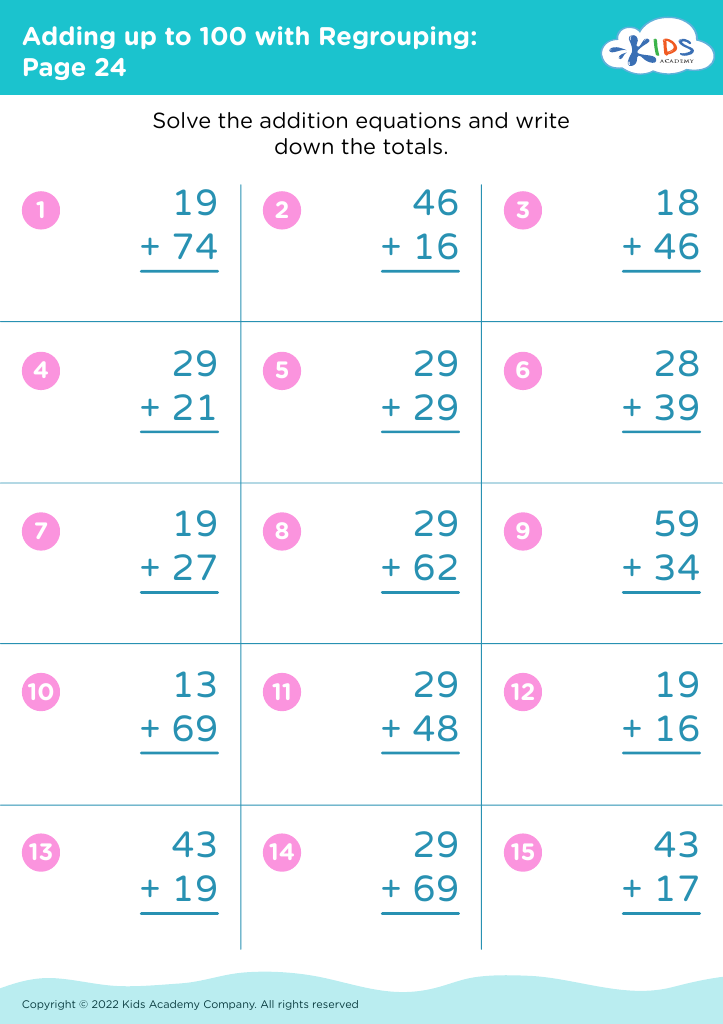
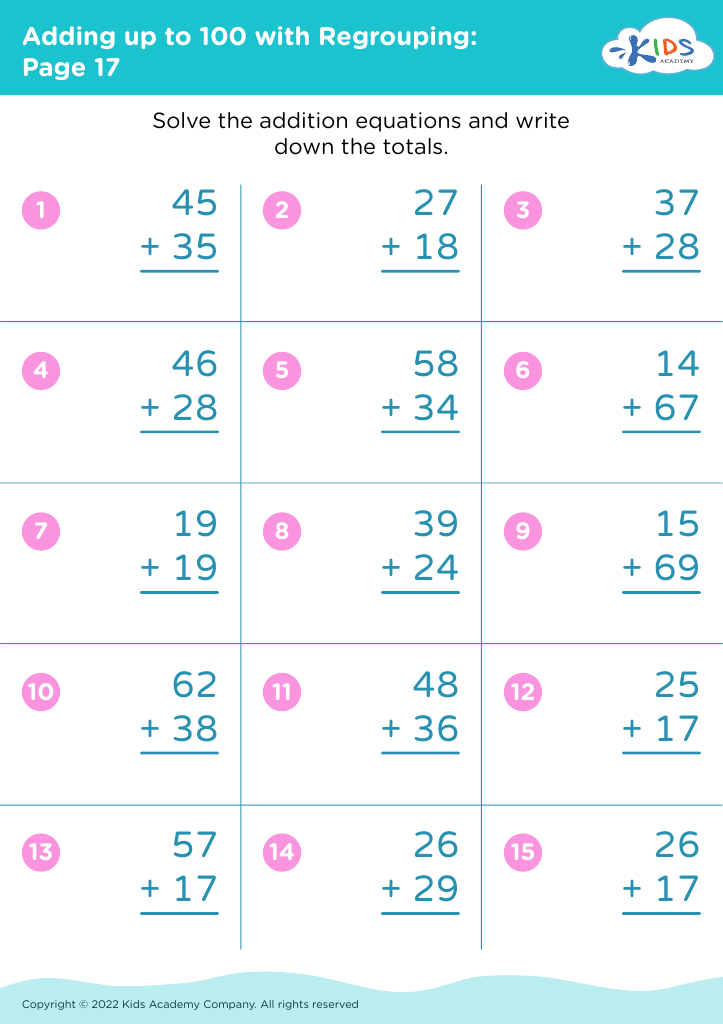
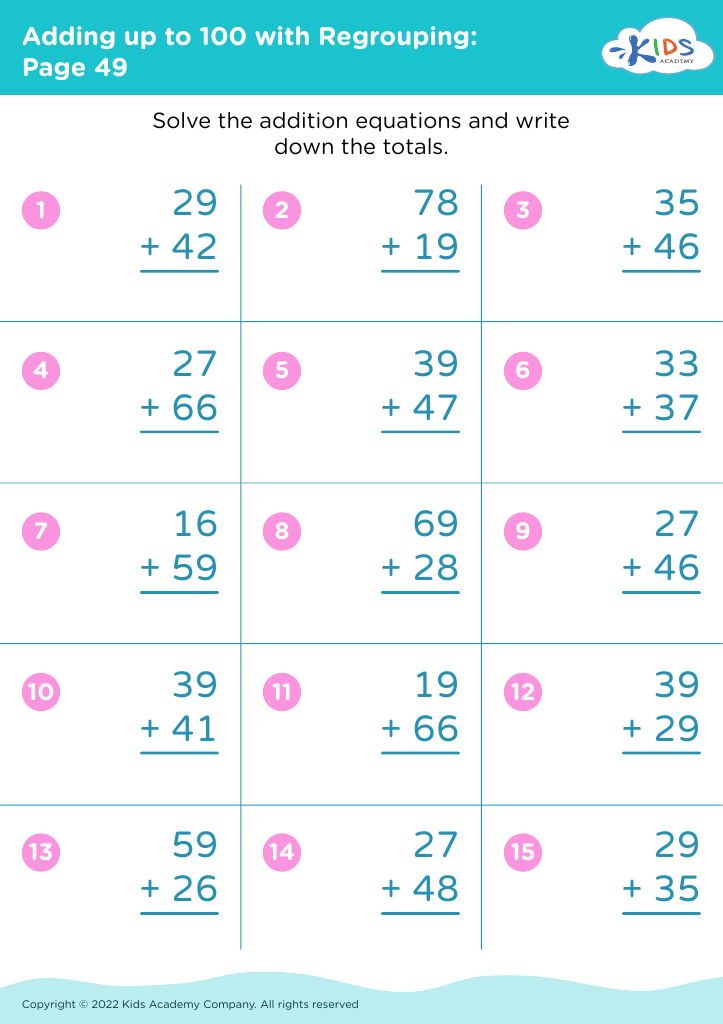
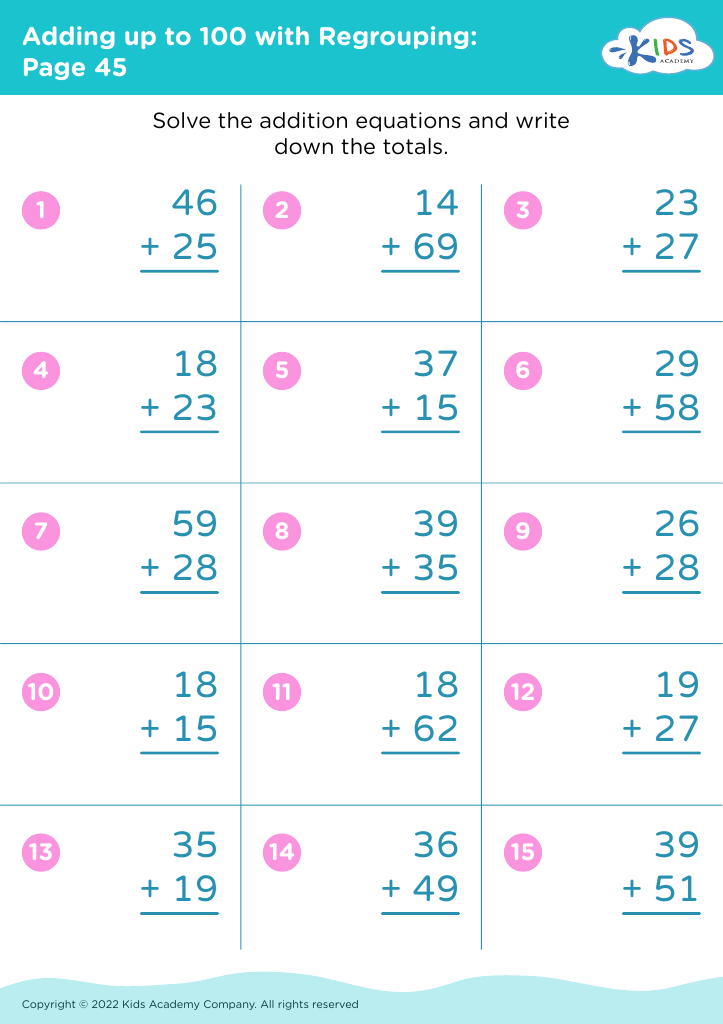
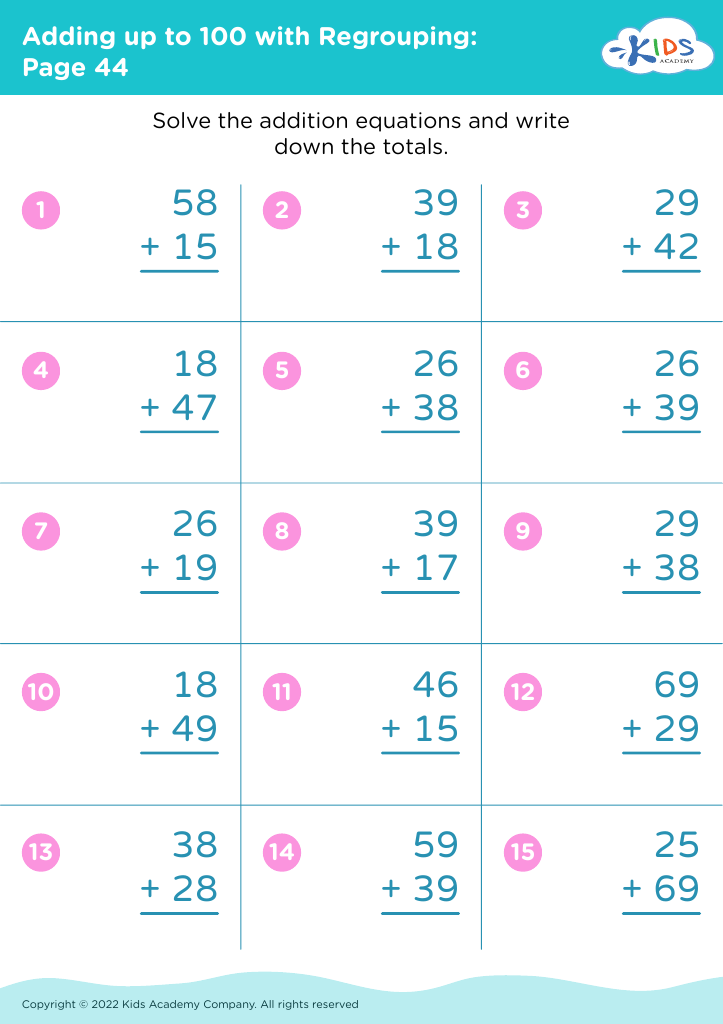




Shape recognition and addition with regrouping are fundamental skills essential for children's early mathematical development. For children aged 5-8, recognizing shapes lays the groundwork for spatial awareness and geometric understanding, which are crucial in various real-world applications such as art, architecture, and navigation. By identifying shapes, children begin to understand properties and relationships, enhancing their critical thinking abilities.
Similarly, understanding addition, particularly regrouping, equips children with the tools to tackle more complex math concepts as they progress in education. Regrouping fosters a deeper understanding of place value and the ten’s and unit’s concept, supporting mental math and problem-solving skills. When children can add numbers up to 100 and regroup effectively, they gain confidence and accuracy in their arithmetic operations.
Parents and teachers should prioritize these skills as they promote cognitive development and lay the foundation for future learning in both math and science. Engaging activities, such as shape sorting or interactive addition games, can make these concepts enjoyable and relatable, encouraging children to develop a positive attitude towards math. Ultimately, nurturing shape recognition and grouping abilities helps prepare children for more advanced mathematical concepts and everyday problem-solving in their future endeavors.