Filters

16 filtered results

Clear all filters
Favorites
With answer key
Interactive

16 filtered results

Difficulty Level

Grade


Unlock the world of fractions with our engaging "Adding Up to 100 with Regrouping" worksheets, designed specifically for children aged 5-8. These resources help young learners grasp the concept of fractions while reinforcing their addition skills. Through fun, hands-on activities, students will explore how to combine fractions effectively and understand the importance of regrouping. Our meticulously crafted worksheets cater to various learning styles, guaranteeing an enjoyable educational experience. Perfect for classroom use or at-home practice, these worksheets lay the foundation for more advanced mathematical concepts. Empower your child’s learning journey and make mathematics an exciting adventure with our comprehensive resources!
Check out this FREE Trial Lesson on Adding up to 100 with Regrouping for age 5-8!

Match Exactly the Same

Favorites
With answer key
Interactive
  • 5-8
  • Understanding fractions
  • Adding up to 100 with Regrouping
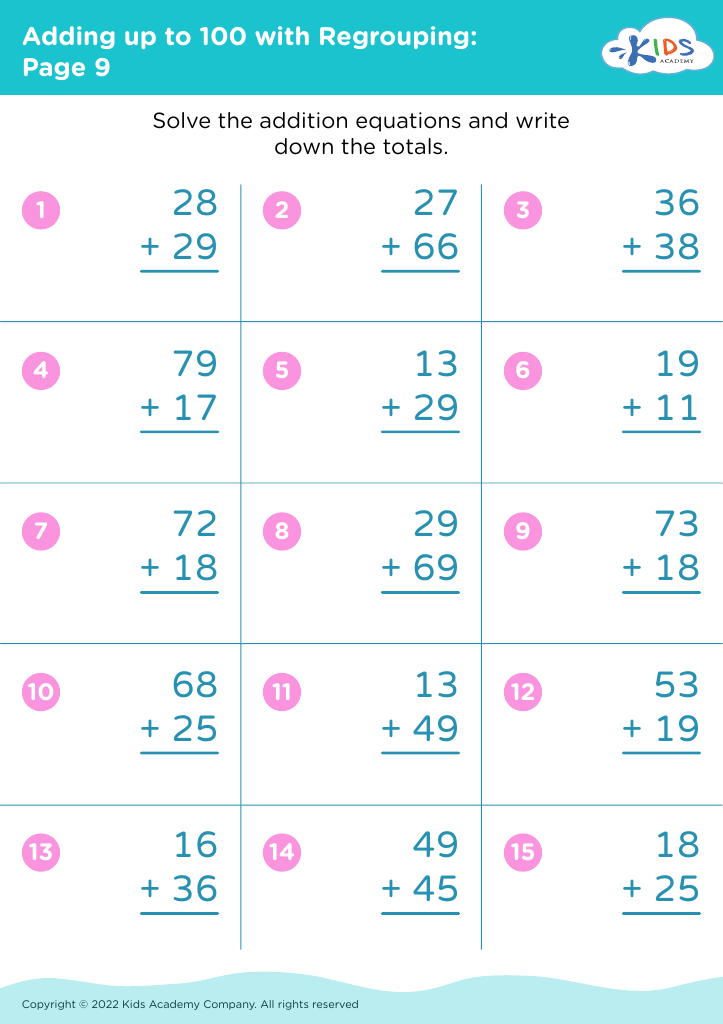
Adding up to 100 with Regrouping: Page 9
Worksheet
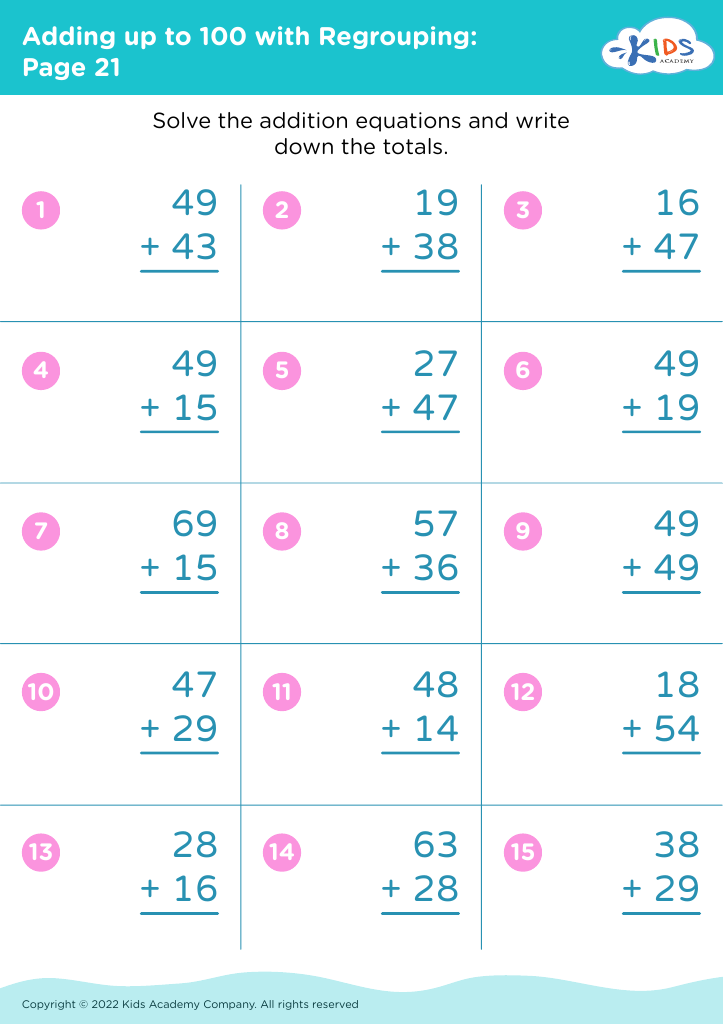
Adding up to 100 with Regrouping: Page 21
Worksheet
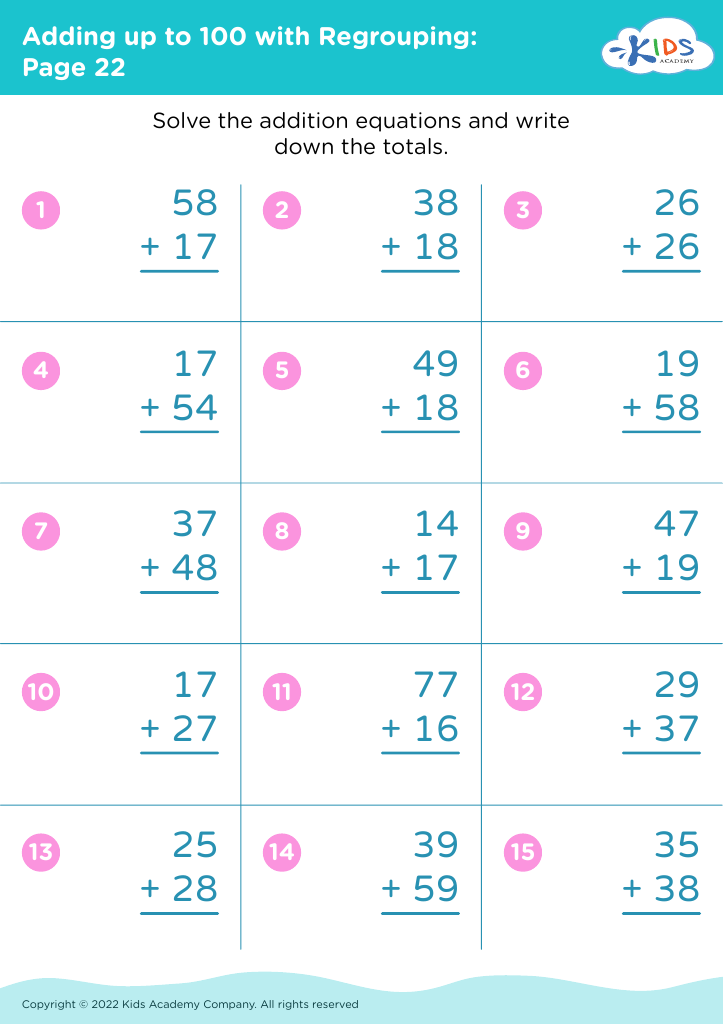
Adding up to 100 with Regrouping: Page 22
Worksheet
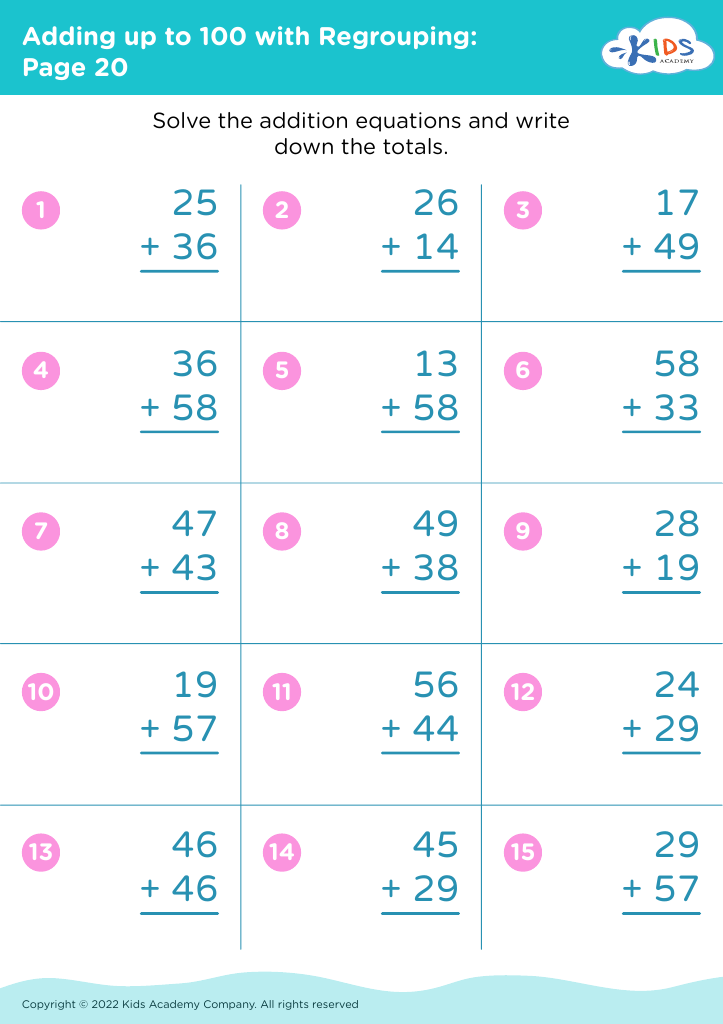
Adding up to 100 with Regrouping: Page 20
Worksheet
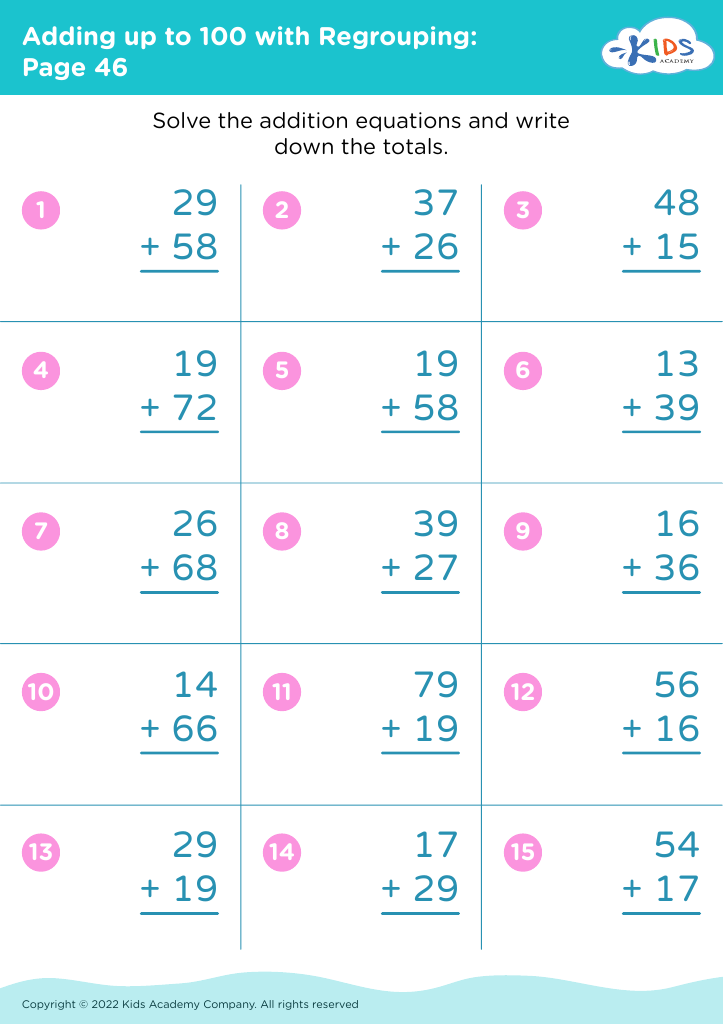
Adding up to 100 with Regrouping: Page 46
Worksheet
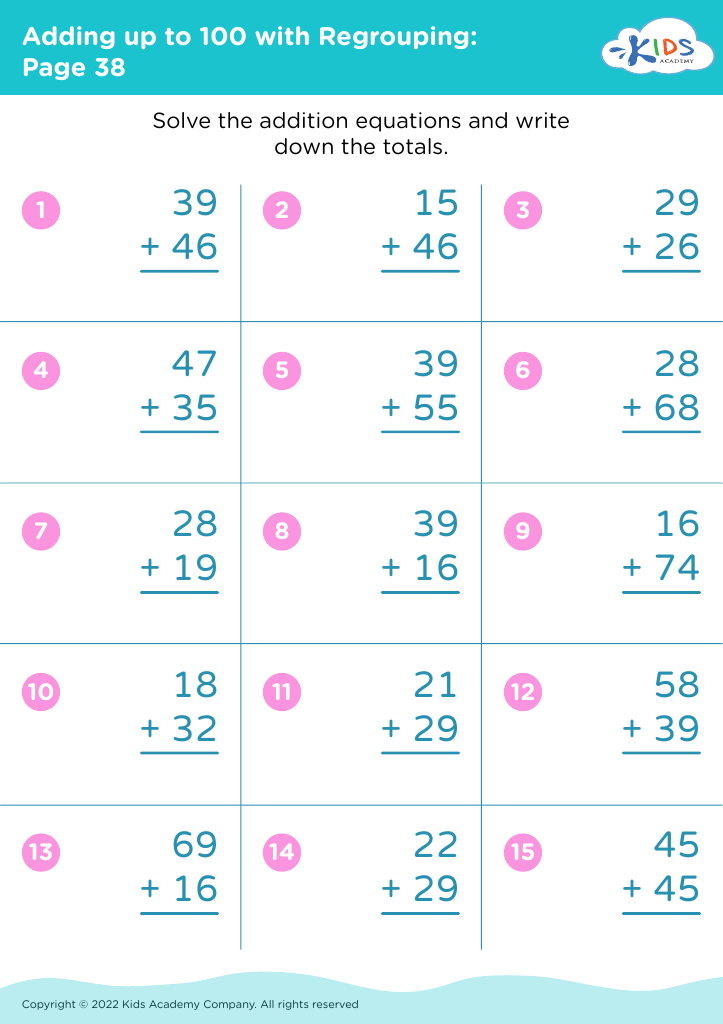
Adding up to 100 with Regrouping: Page 38
Worksheet
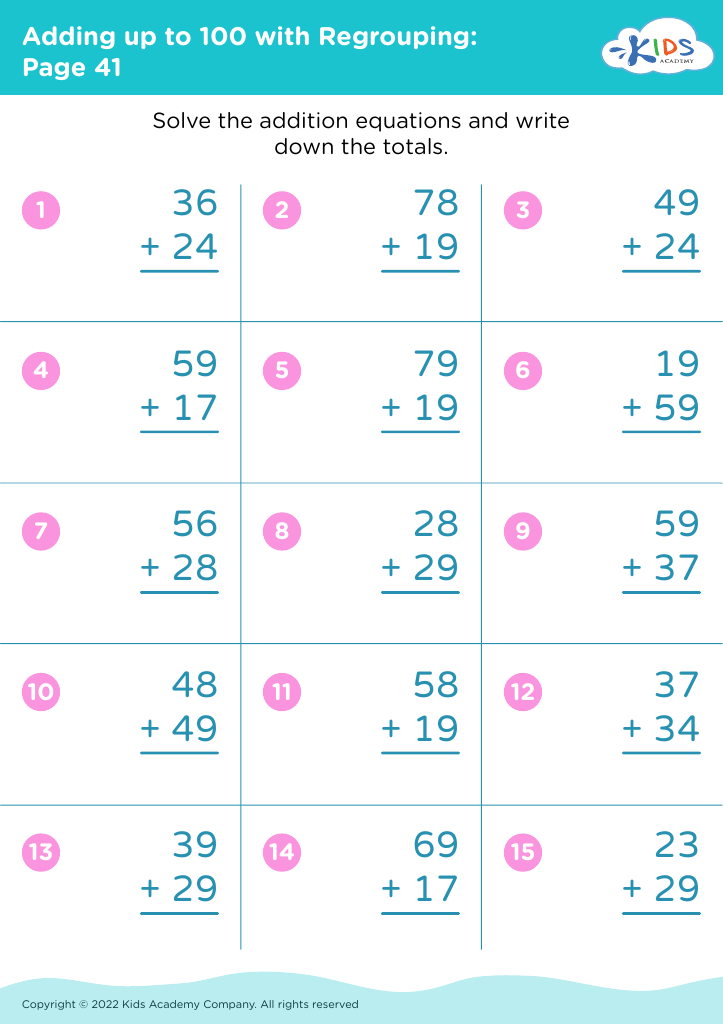
Adding up to 100 with Regrouping: Page 41
Worksheet
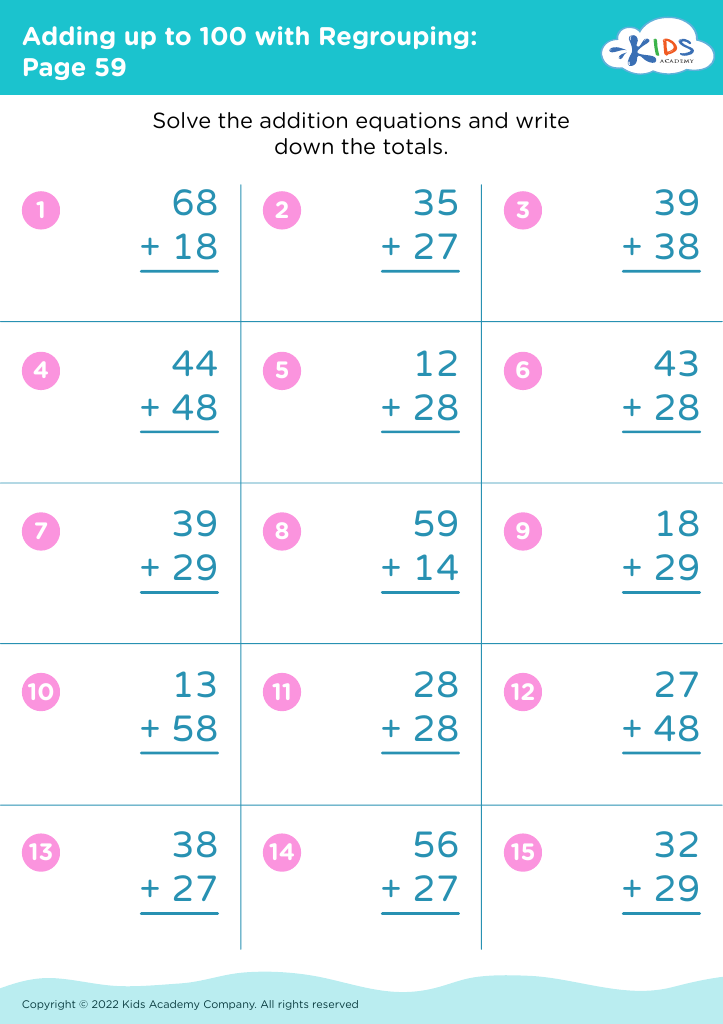
Adding up to 100 with Regrouping: Page 59
Worksheet
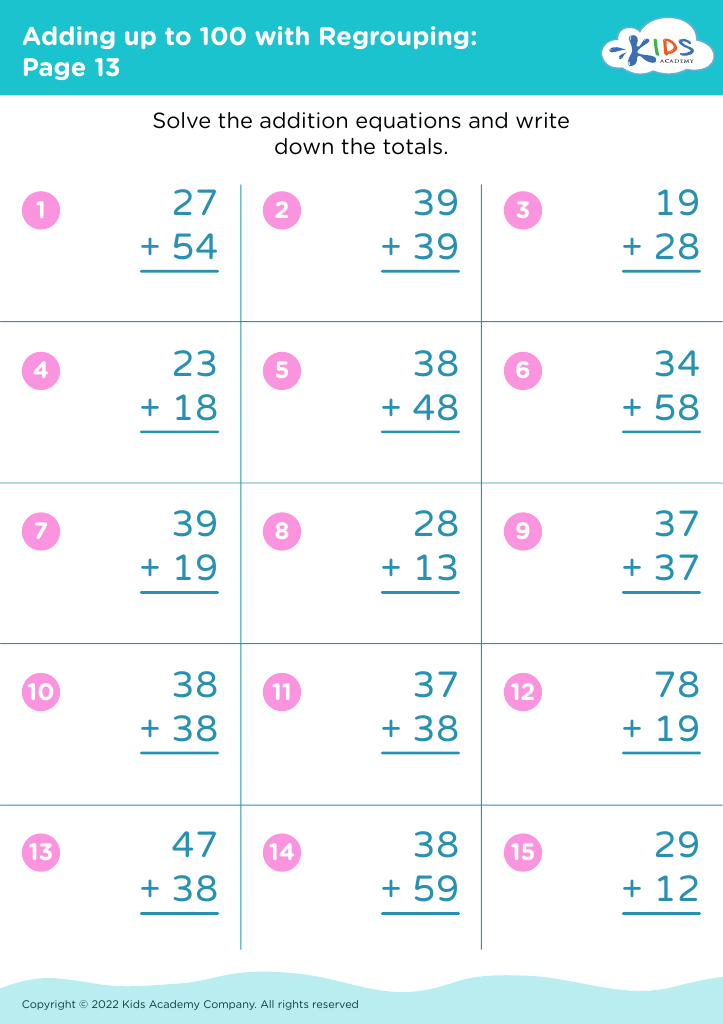
Adding up to 100 with Regrouping: Page 13
Worksheet
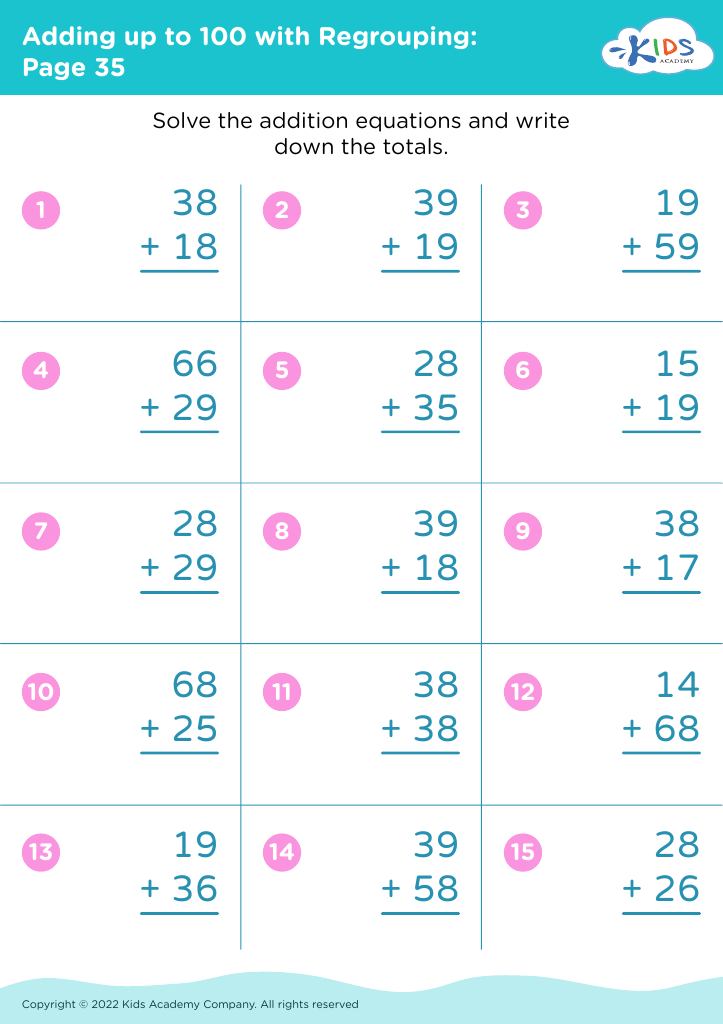
Adding up to 100 with Regrouping: Page 35
Worksheet
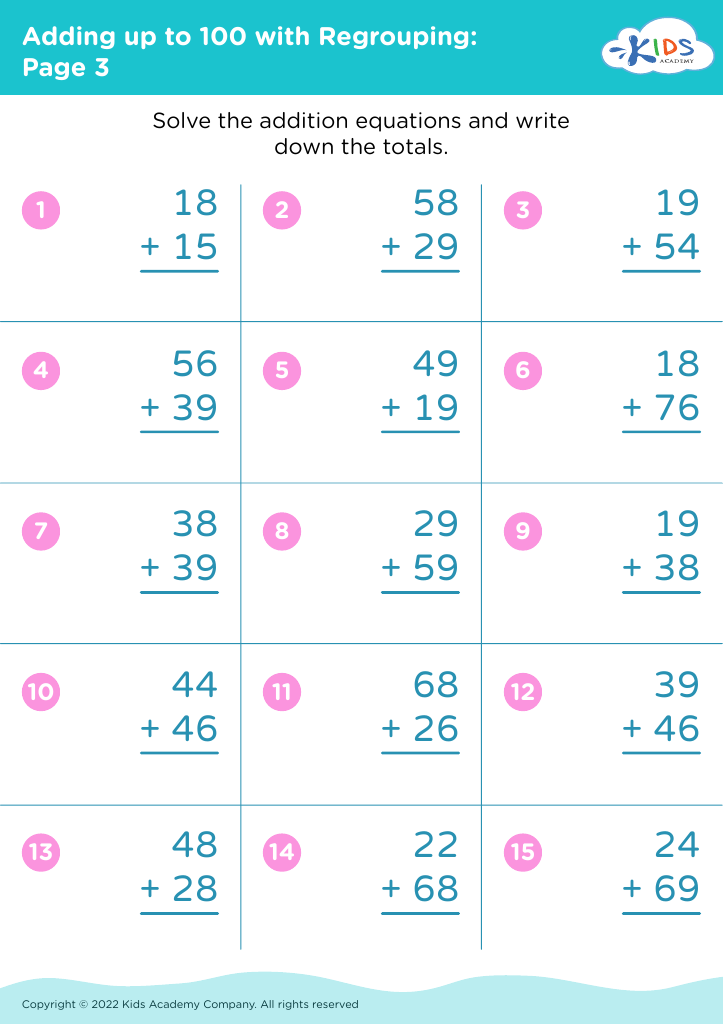
Adding up to 100 with Regrouping: Page 3
Worksheet
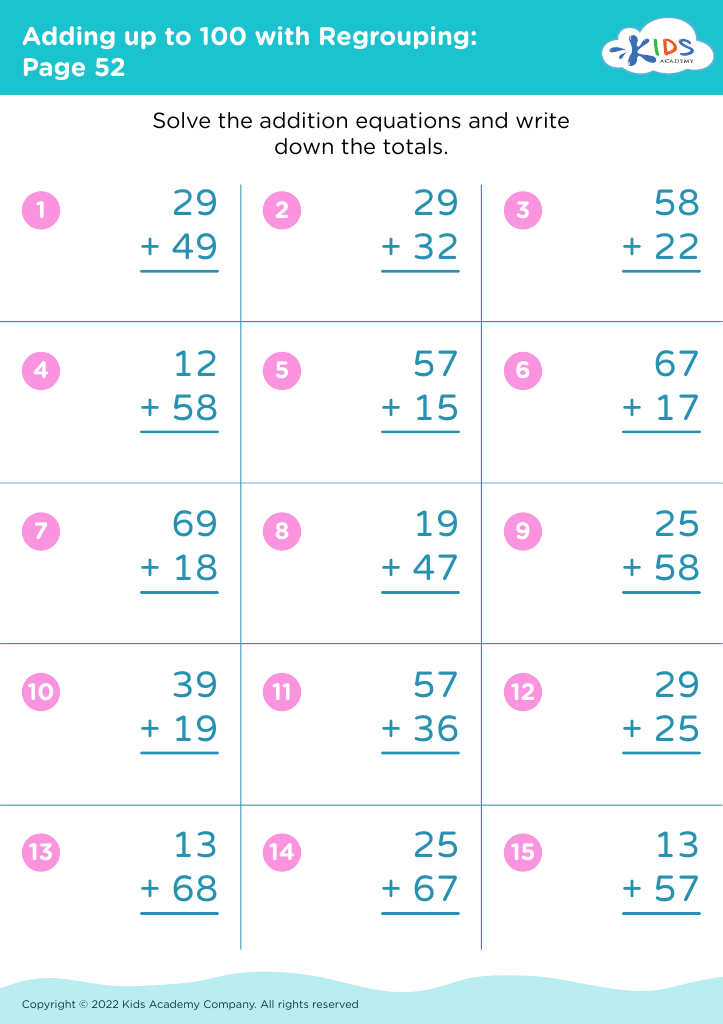
Adding up to 100 with Regrouping: Page 52
Worksheet
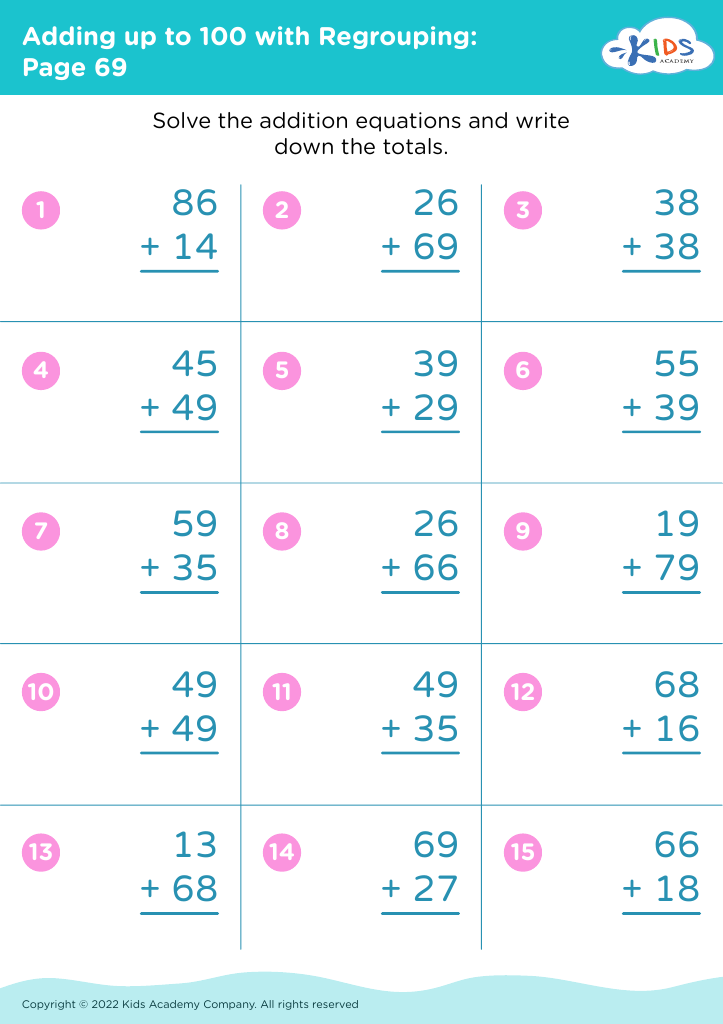
Adding up to 100 with Regrouping: Page 69
Worksheet
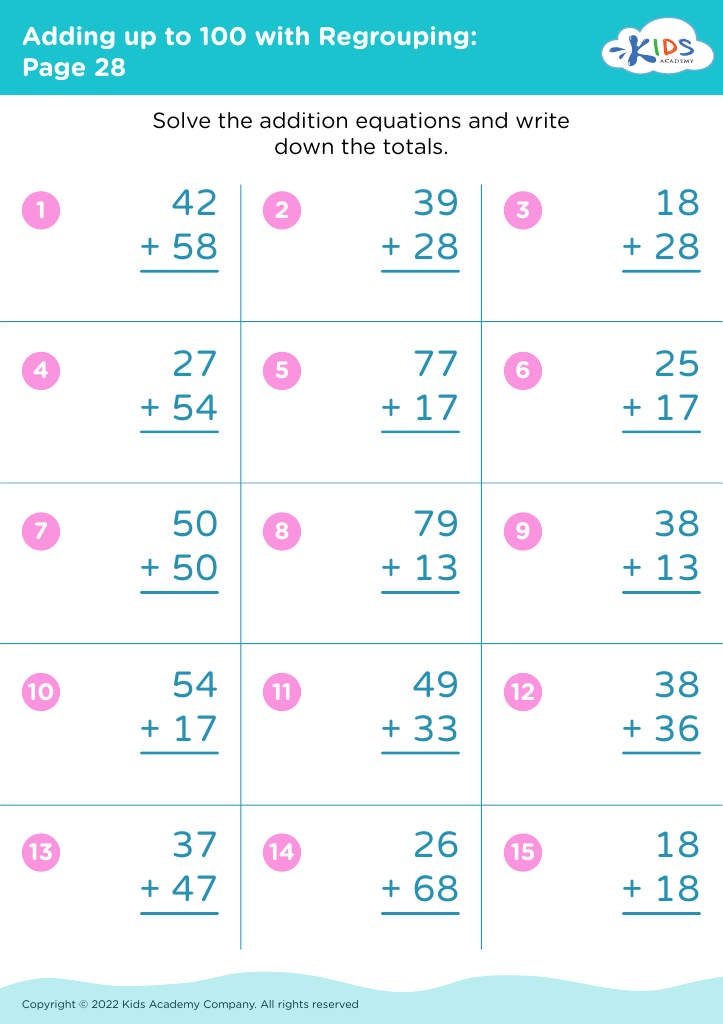
Adding up to 100 with Regrouping: Page 28
Worksheet
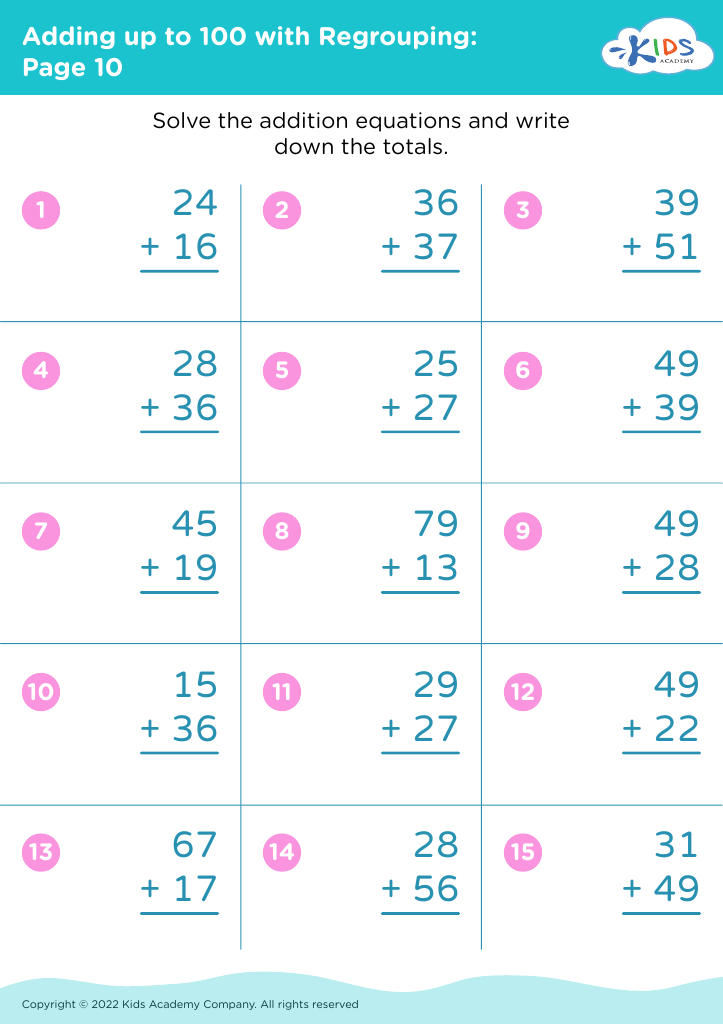
Adding up to 100 with Regrouping: Page 10
Worksheet
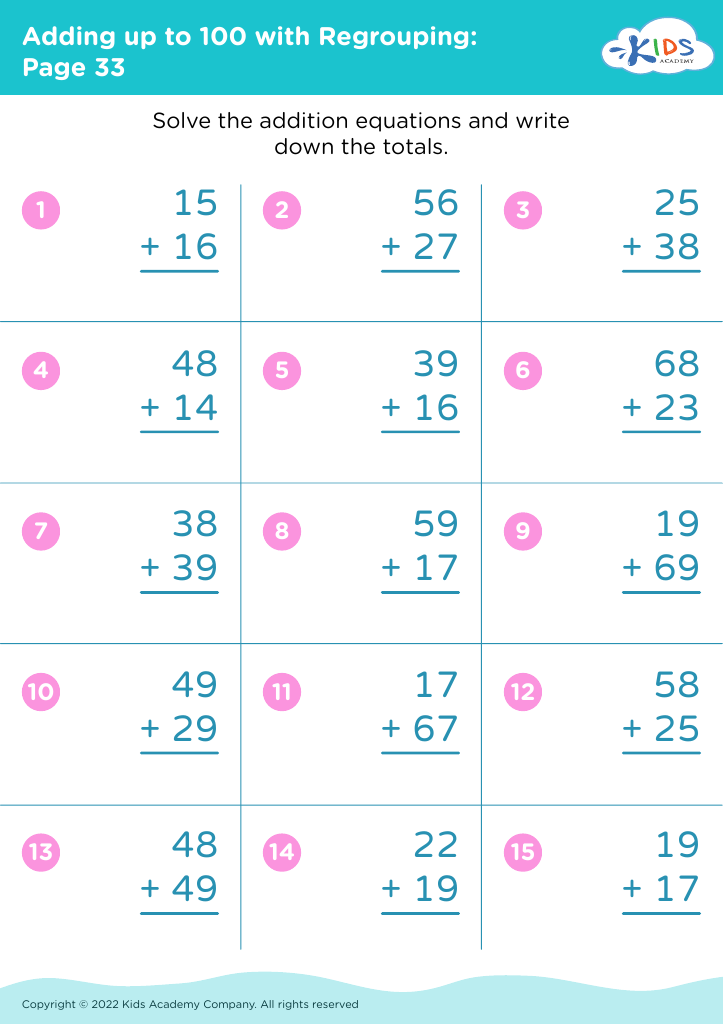
Adding up to 100 with Regrouping: Page 33
Worksheet


Understanding fractions and their relationship to whole numbers, especially in the context of adding up to 100 with regrouping, is crucial for young learners aged 5-8. At this stage, children's foundational math skills can significantly influence their future academic performance. By grasping fractions, they develop critical thinking and problem-solving abilities, which are essential not just in math but across all subjects.

For parents and teachers, fostering an understanding of fractions enhances a child's numerical literacy, placing them on a path to more complex mathematical concepts down the line. It allows them to understand proportions, comparisons, and distributions, which are integral in everyday situations—from cooking to budgeting.

Adding up to 100 with regrouping introduces children to the concept of carrying over values, bolstering their understanding of place value and addition strategies. Mastery of these techniques promotes mathematical confidence and independence. Engaging kids in fun, interactive activities around these concepts can also make learning enjoyable, laying a solid groundwork for their academic journey. When parents and teachers prioritize this understanding, they empower children with the skills needed for future success, ensuring they are equipped for the next levels of mathematics and inspired to explore more advanced topics.