Understanding symmetry Adding up to 100 with Regrouping Worksheets for Ages 5-8
3 filtered results
-
From - To
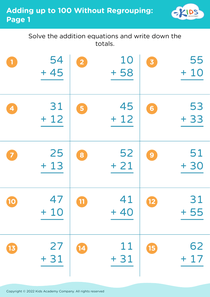
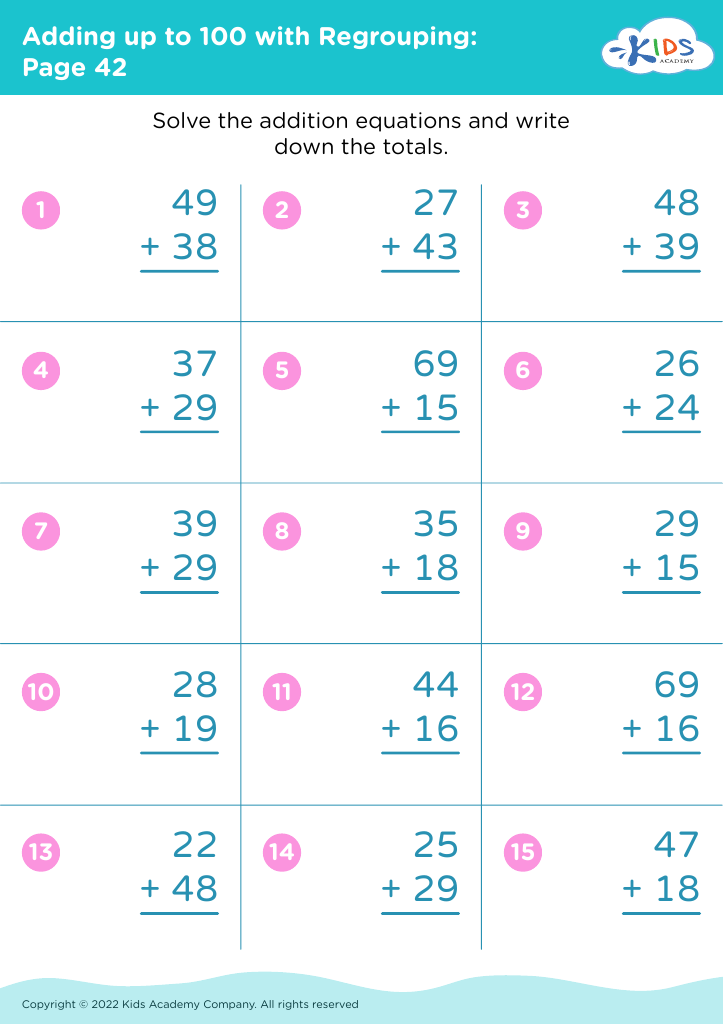
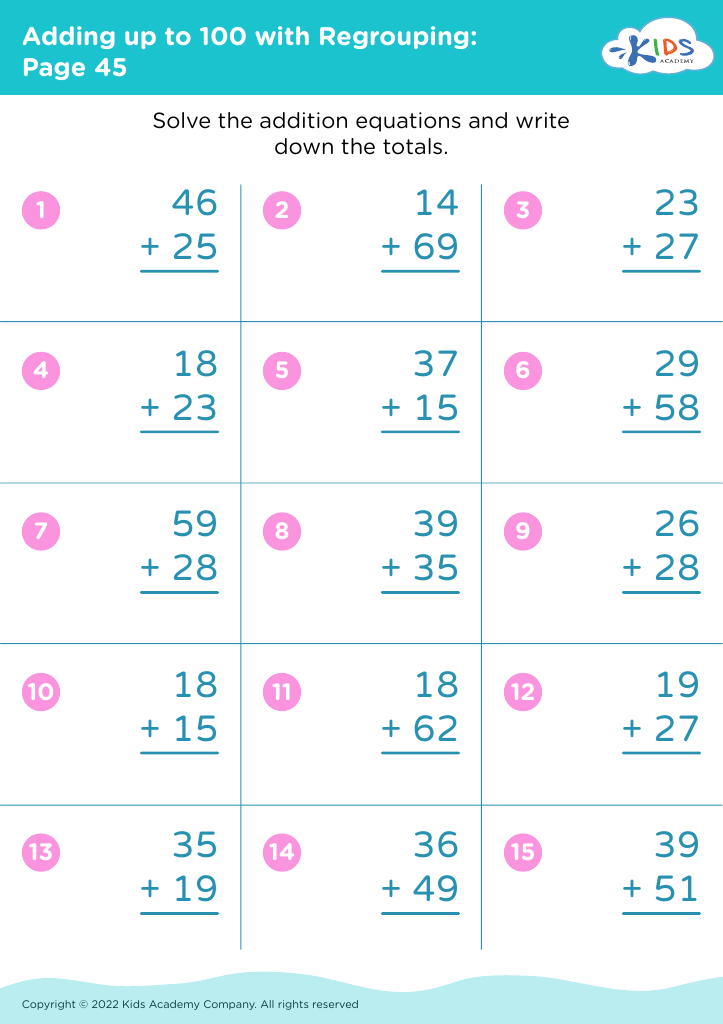
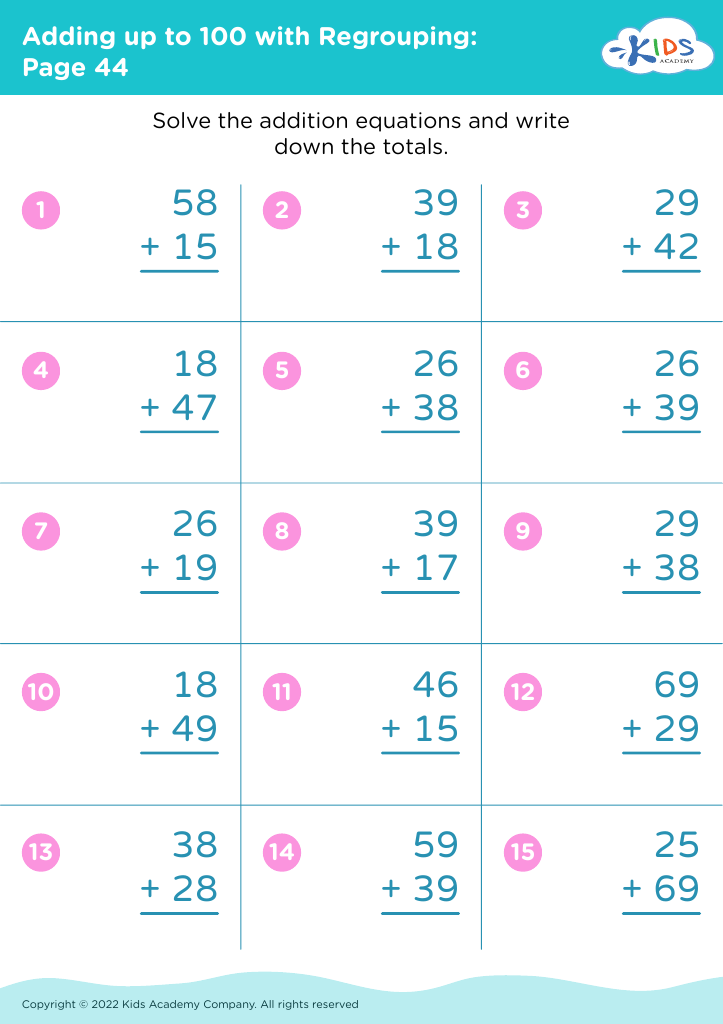
Foster a solid mathematical foundation with our "Understanding Symmetry & Adding Up to 100 with Regrouping Worksheets for Ages 5-8." These engaging worksheets enhance critical thinking by combining the exploration of symmetry with the fundamentals of addition. Kids will practice adding numbers up to 100, mastering regrouping techniques, while also identifying symmetrical patterns. Designed specifically for young learners, each worksheet is crafted to be both fun and educational, making math a delightful adventure. Ideal for parents and teachers, these resources support the development of essential math skills, preparing children for future academic success. Download today for a comprehensive, enjoyable learning experience.




Understanding symmetry and adding up to 100 with regrouping are crucial mathematical concepts for children ages 5-8, playing a pivotal role in their cognitive and academic development. Symmetry is foundational in geometry, helping children recognize patterns, spatial relationships, and the balance of shapes. It enhances their ability to observe the world methodically and develop an appreciation for aesthetic balance in natural and human-made environments. Introducing symmetry early on fosters critical thinking and analytical skills, providing a groundwork for more complex mathematical and scientific understanding in later years.
Adding up to 100 with regrouping, often referred to as carrying or borrowing, is essential for building numerical fluency and a deep understanding of our base-ten number system. This skill is central to broader arithmetic competence, paving the way for proficient computation in addition and subtraction. By mastering regrouping, children develop strategies for breaking down complex problems into manageable steps, enhancing their problem-solving capabilities. This not only boosts their confidence in handling larger numbers but also prepares them for future challenges in mathematics, such as multiplication and division.
Both concepts also carry significant real-life applications, like recognizing symmetrical patterns in nature and managing money. Therefore, instilling these mathematical principles fosters a comprehensive and practical understanding of mathematics, essential for children's overall intellectual growth.