Comparing Fractions Adding up to 100 Without Regrouping Worksheets for Ages 5-8
11 filtered results
-
From - To
Enhance your child's understanding of fractions with our "Comparing Fractions Adding up to 100 Without Regrouping" worksheets, specially designed for ages 5-8. These engaging, kid-friendly activities provide an excellent way to introduce young learners to the world of fractions. Children will practice comparing fractions, honing their skills in visual understanding and numerical reasoning. Each worksheet encourages critical thinking and problem-solving as students learn how to identify and compare different fractions without the need for regrouping. Foster a strong mathematical foundation in your child with these interactive and fun worksheets that make learning enjoyable and effective.
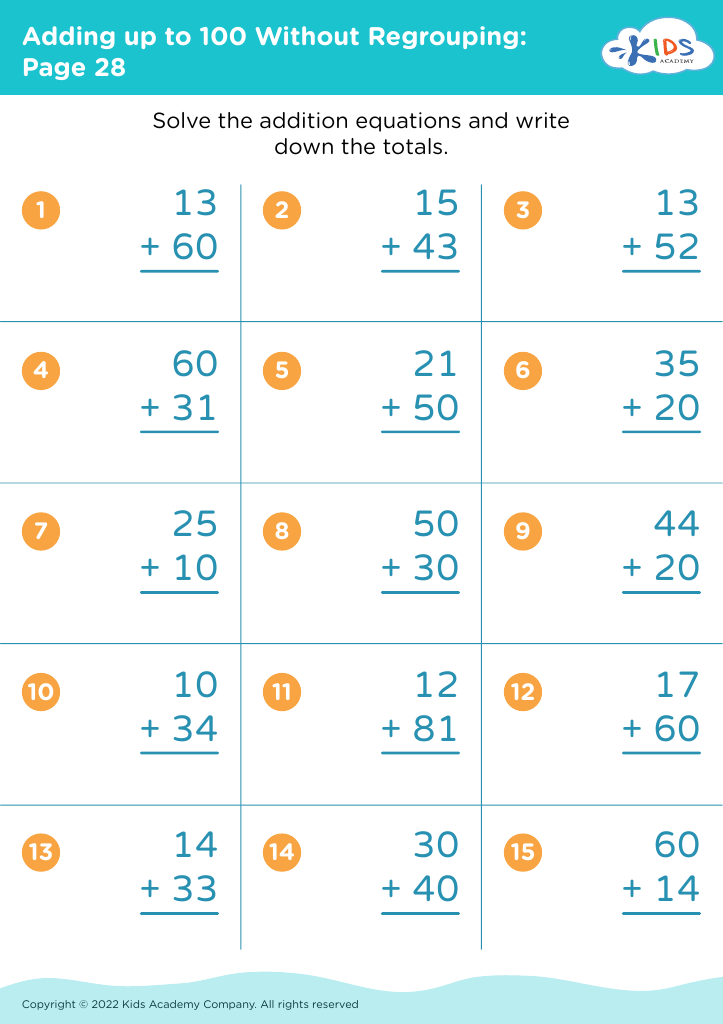
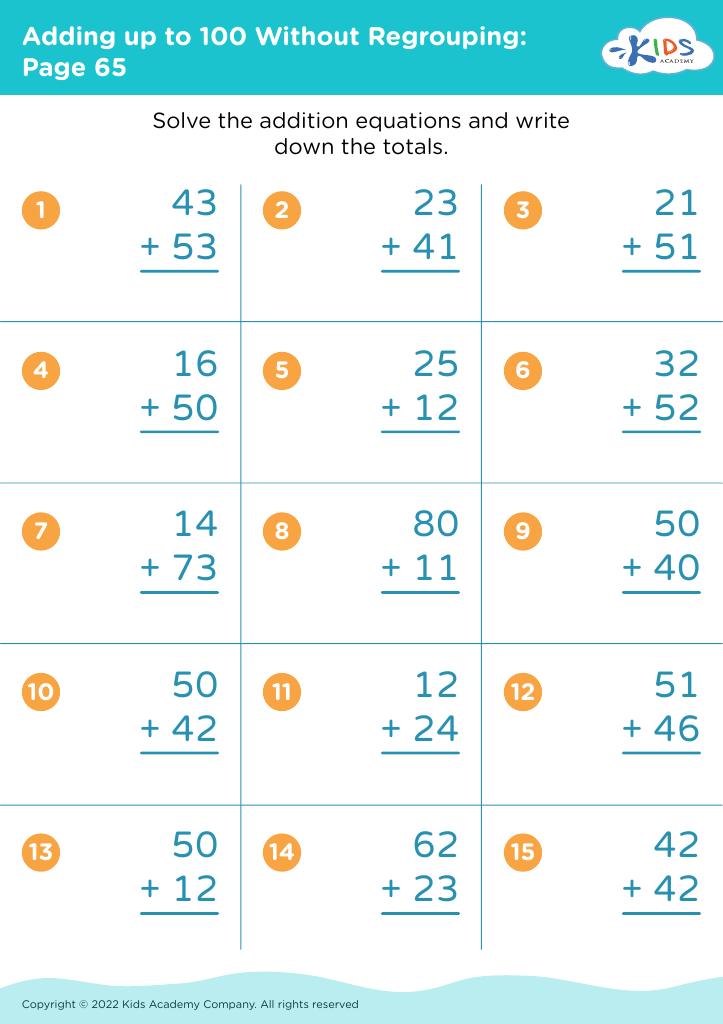
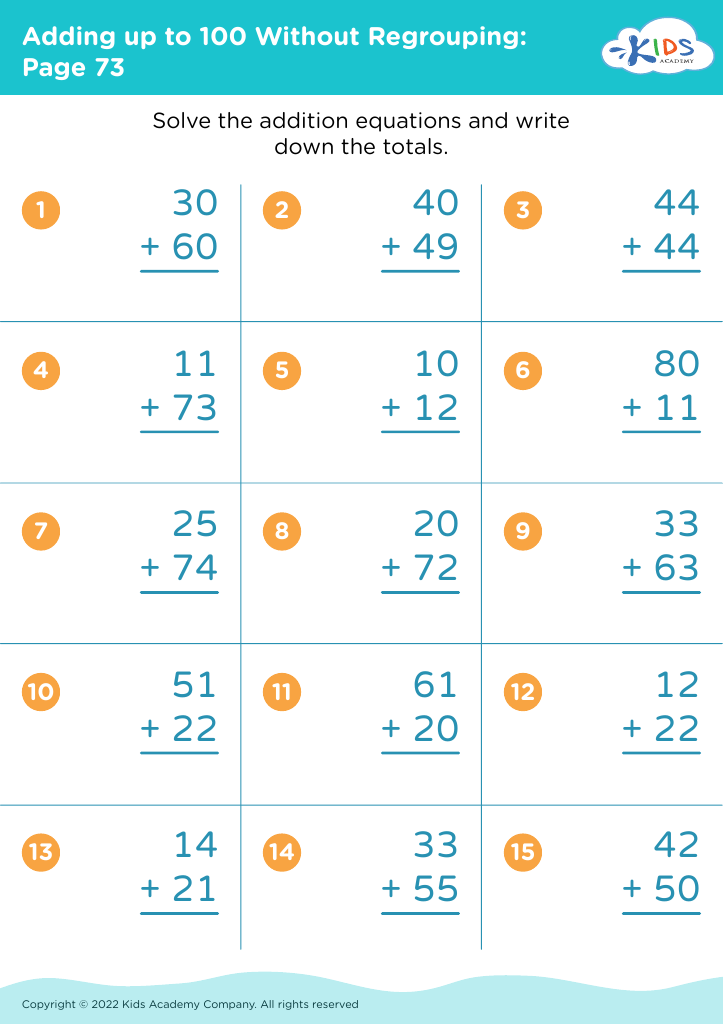
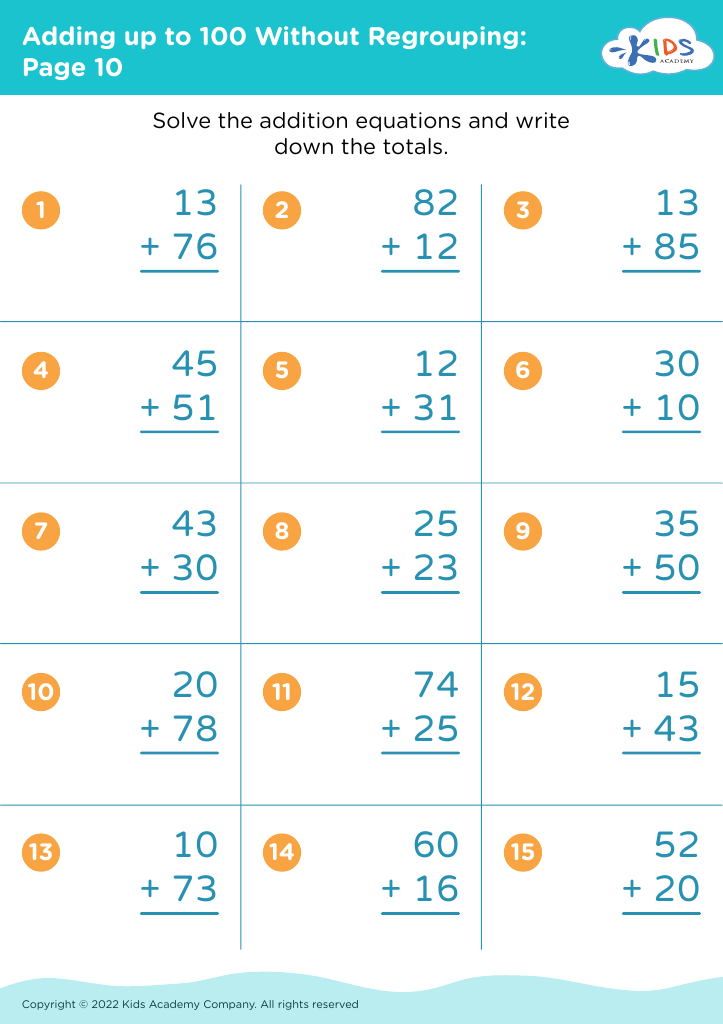
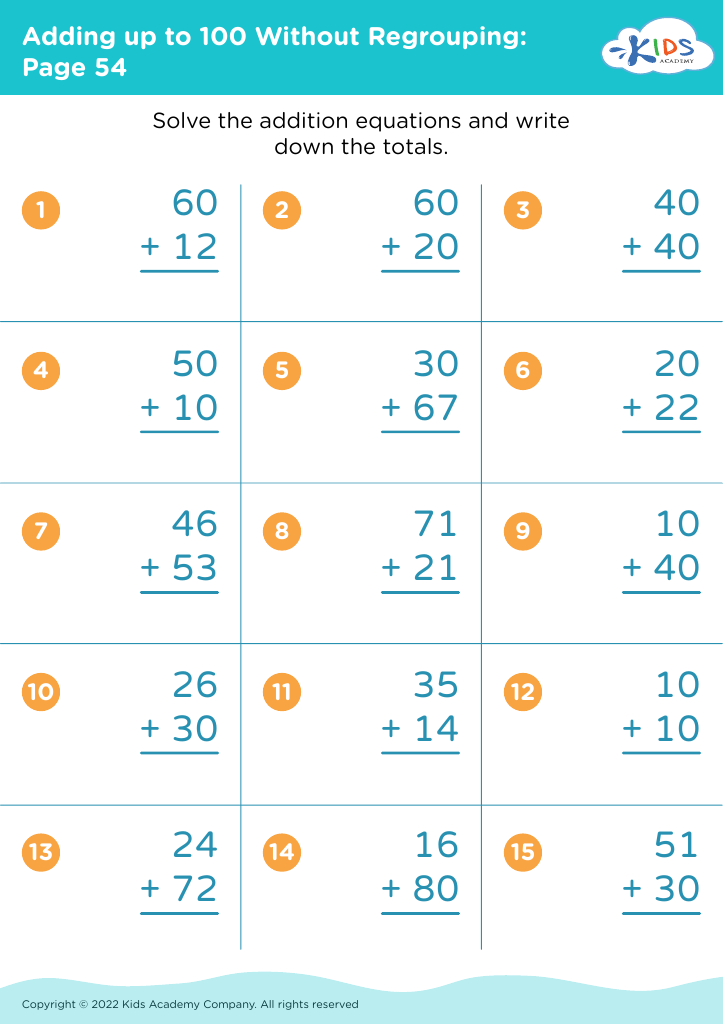
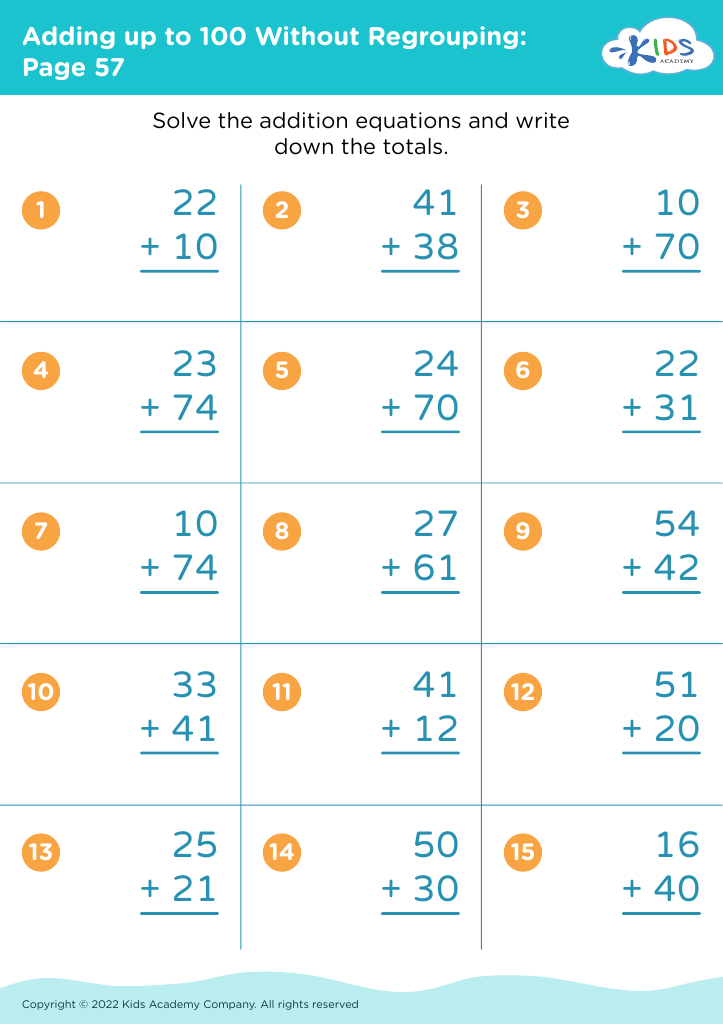
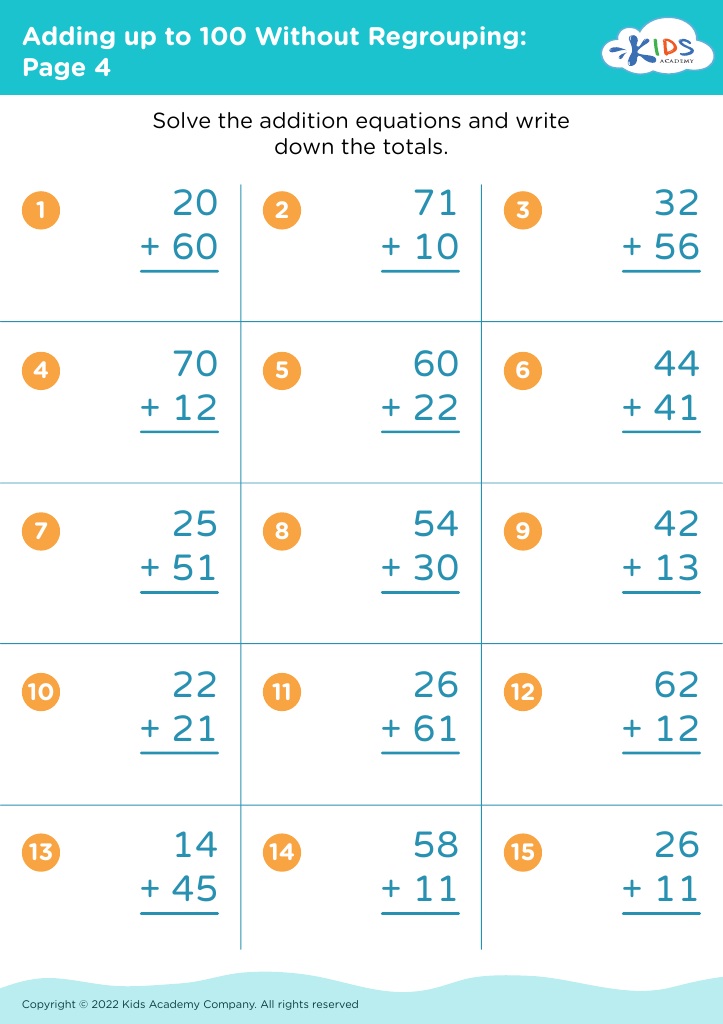
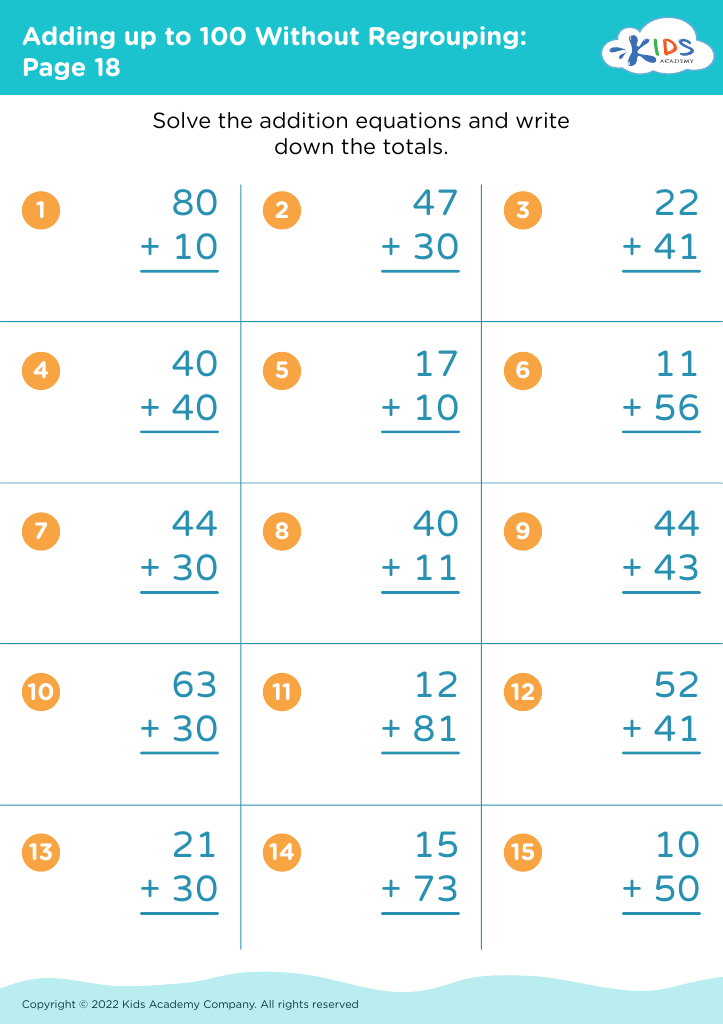
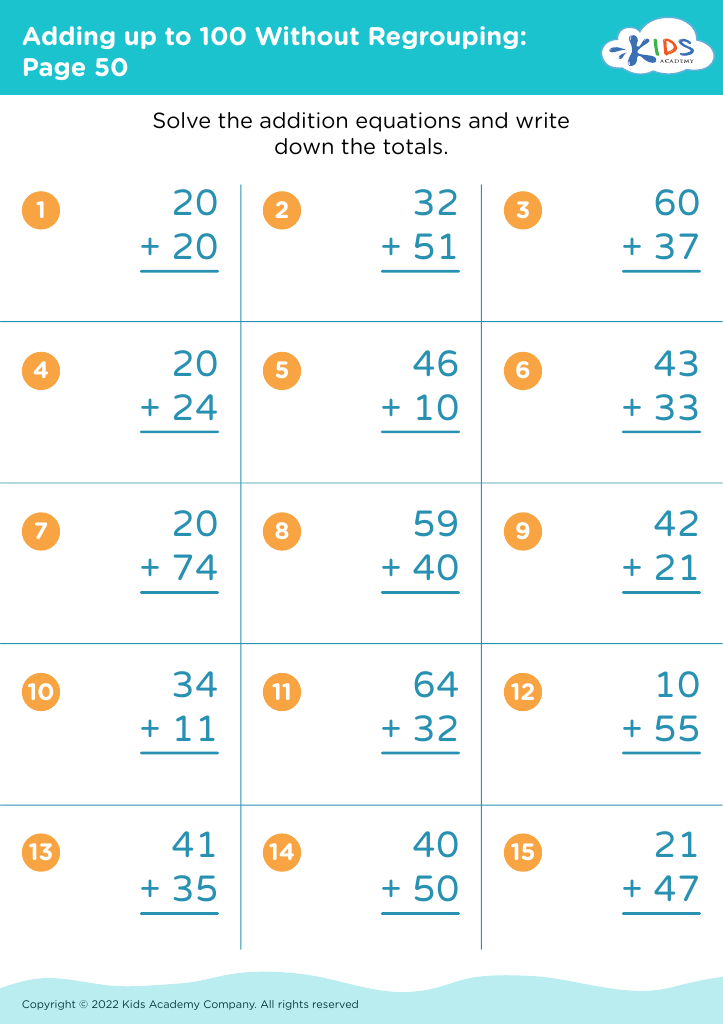
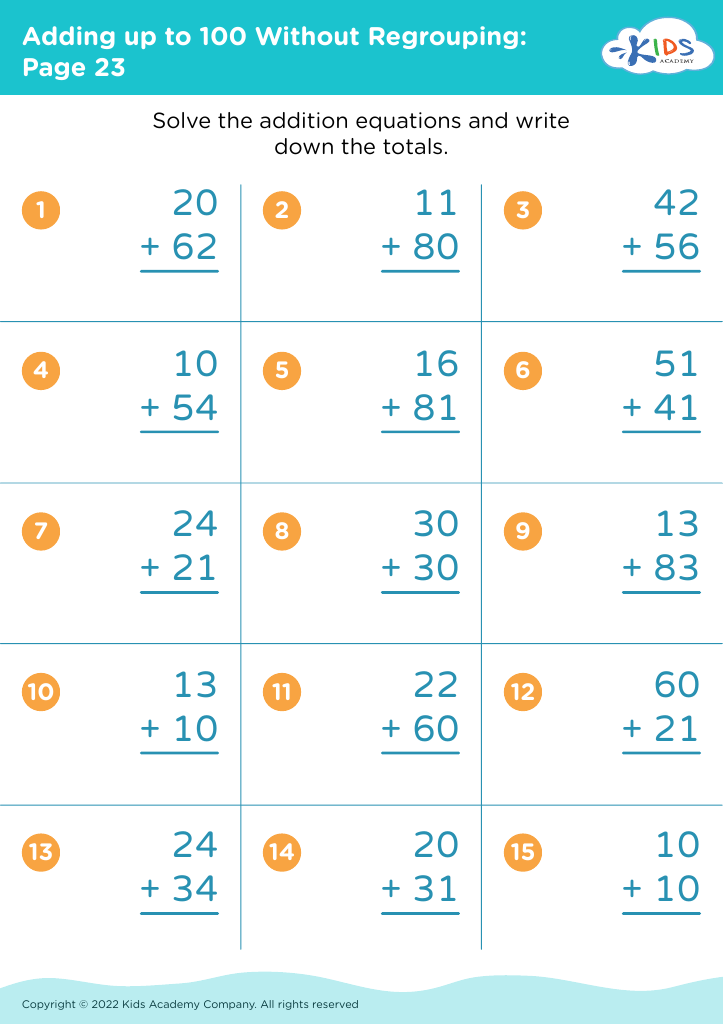
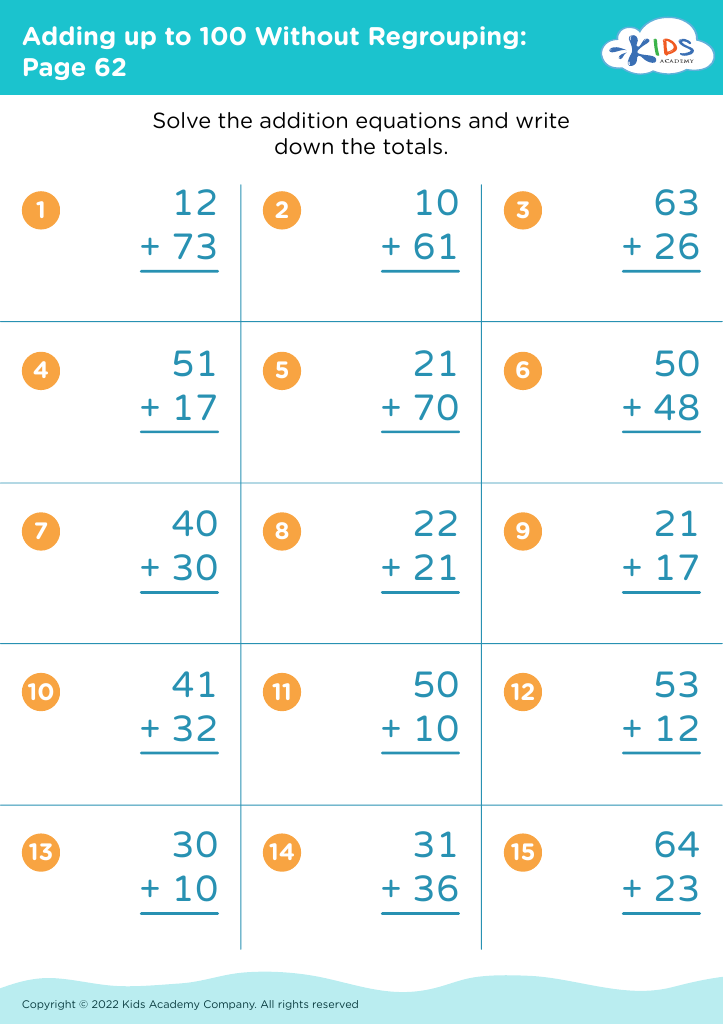




Comparing fractions that add up to 100 without regrouping is a foundational skill crucial for young learners aged 5 to 8. Understanding fractions enhances children's overall mathematical literacy, helping them make sense of the world around them. Parents and teachers should care about this concept as it encourages critical thinking and problem-solving skills, which are vital at this developmental stage.
Learning to compare fractions strengthens a child’s number sense—an essential building block for future math concepts, including addition, subtraction, and even basic algebra. It provides a practical way for children to grasp numbers, promoting their ability to articulate the relationship between quantities. For instance, when children recognize that 25/100 is smaller than 50/100, they are not merely working with abstract numbers but making meaningful connections between visual representations and real-life contexts, such as sharing food or resources.
Moreover, this skill fosters strategic thinking, as children learn to choose the most efficient method for comparison. By integrating fun, interactive activities focusing on comparing fractions, parents and teachers can create a positive learning environment that cultivates confidence and enthusiasm in young learners, setting the stage for more advanced mathematical concepts in the future.