Critical Thinking Adding up to 100 Without Regrouping Worksheets for Ages 5-8
3 filtered results
-
From - To
Enhance your child's critical thinking skills with our engaging "Adding up to 100 Without Regrouping" worksheets, designed for ages 5-8. These carefully crafted exercises encourage children to solve addition problems creatively and independently, fostering essential analytical skills. They will learn how to make connections among numbers, recognize patterns, and develop strategies for reaching the sum of 100 without regrouping. Each worksheet features a variety of fun problems that maintain interest while promoting comprehension and confidence in math. Perfect for homeschool or classroom use, these resources will equip your young learners for success in their mathematical journey!
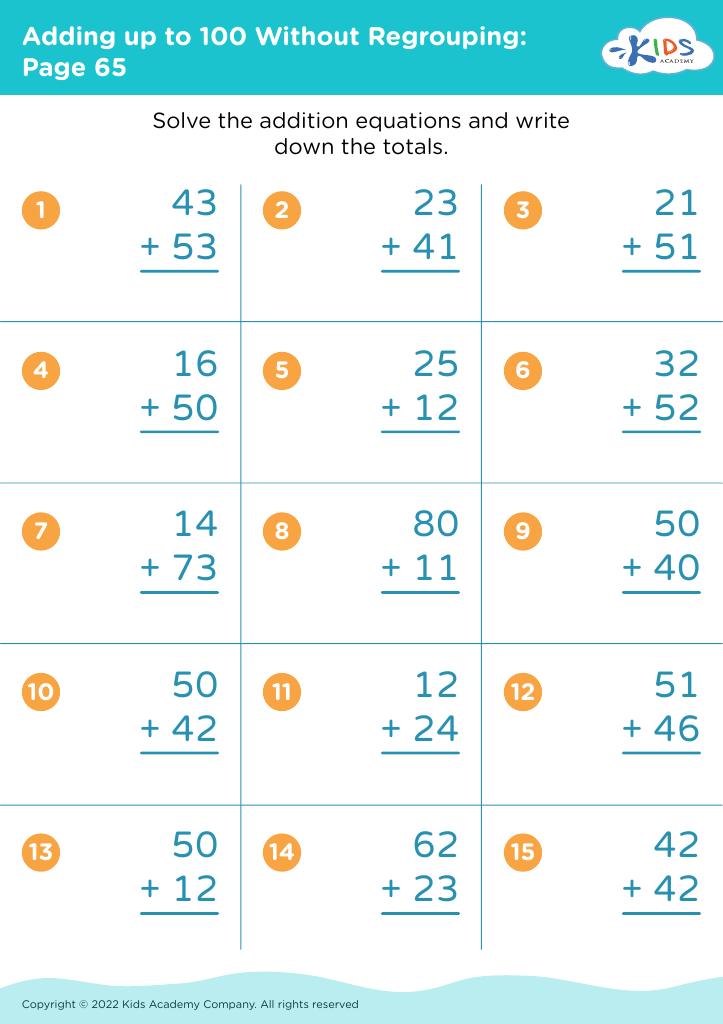
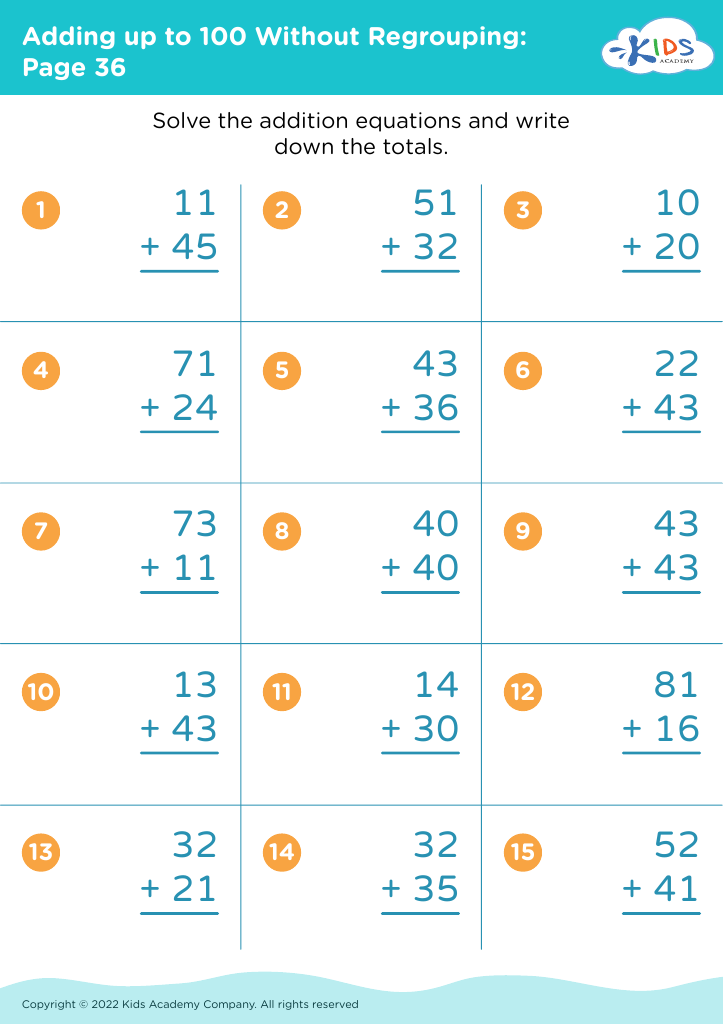
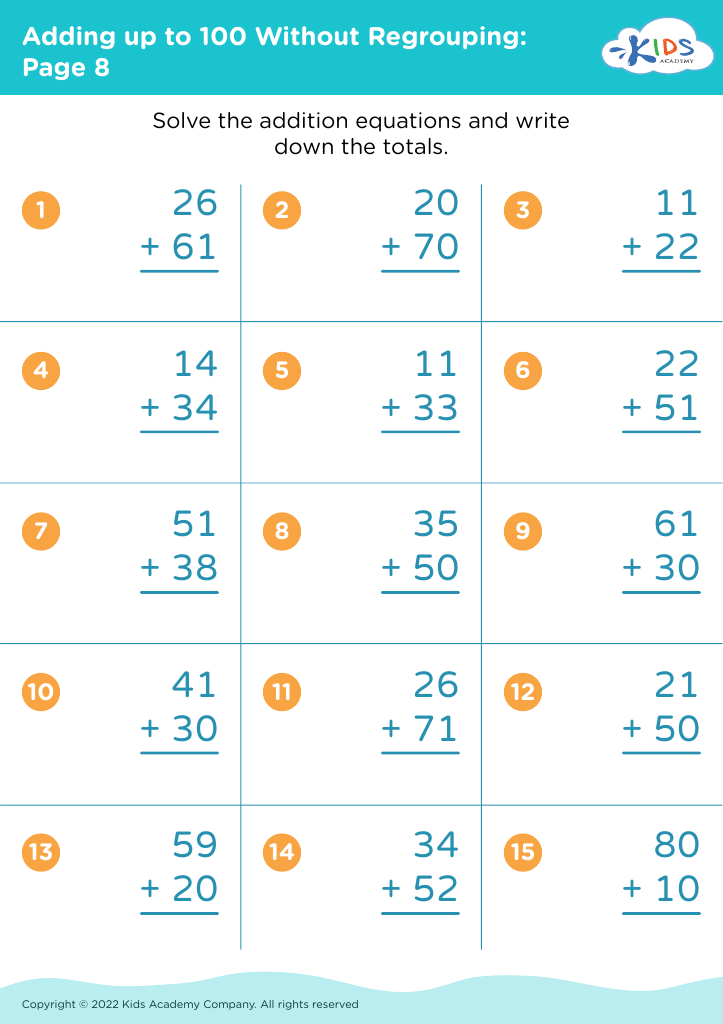




Critical thinking is essential for young learners, particularly when it comes to foundational math skills like adding up to 100 without regrouping. For children aged 5-8, fostering critical thinking encourages them to understand the "why" behind mathematical concepts rather than just memorizing facts. This understanding enhances their problem-solving abilities, allowing them to tackle more complex problems as they progress.
When parents and teachers focus on developing critical thinking in mathematics, they provide students with the tools to analyze problems, make predictions, and verify results. For example, adding up numbers strategically without regrouping helps children recognize patterns, reason through different approaches, and ultimately build a sense of mathematical confidence.
Additionally, engaging with critical thinking activities enriches children’s cognitive development. These skills promote curiosity, resilience, and creativity, which are valuable not just in math but across all disciplines.
By emphasizing critical thinking, adults play a crucial role in equipping children with essential life skills such as logical reasoning, decision-making, and effective communication, which will serve them well beyond the classroom. Ultimately, nurturing critical thinking paves the way for students to become independent thinkers and lifelong learners.