Develop critical thinking Adding up to 100 Without Regrouping Worksheets for Ages 5-8
3 filtered results
-
From - To
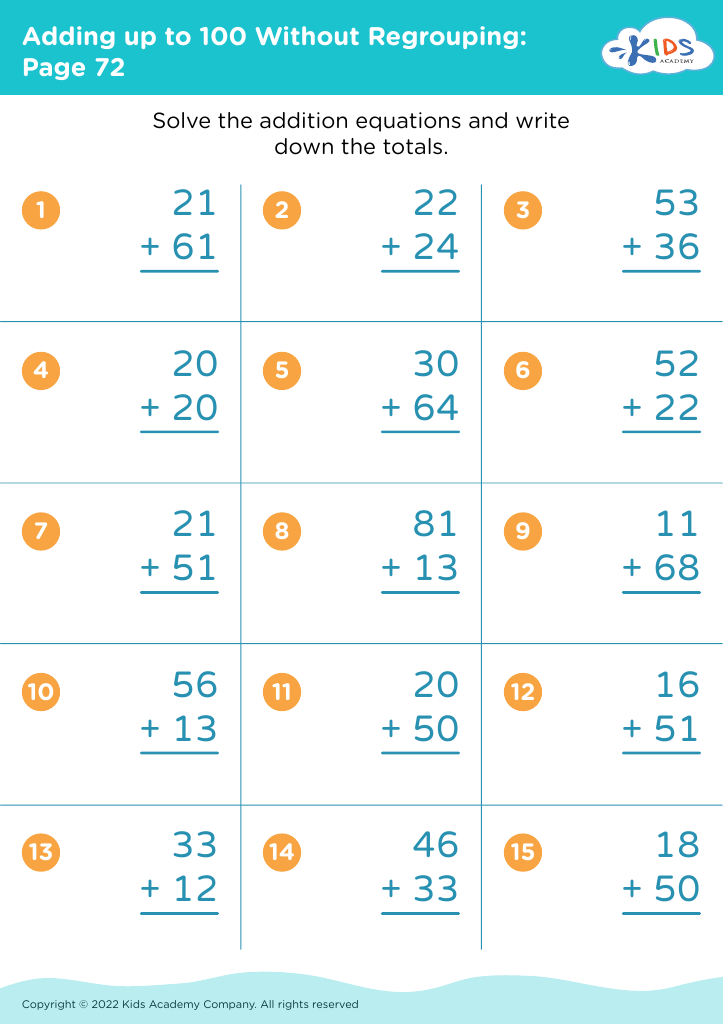
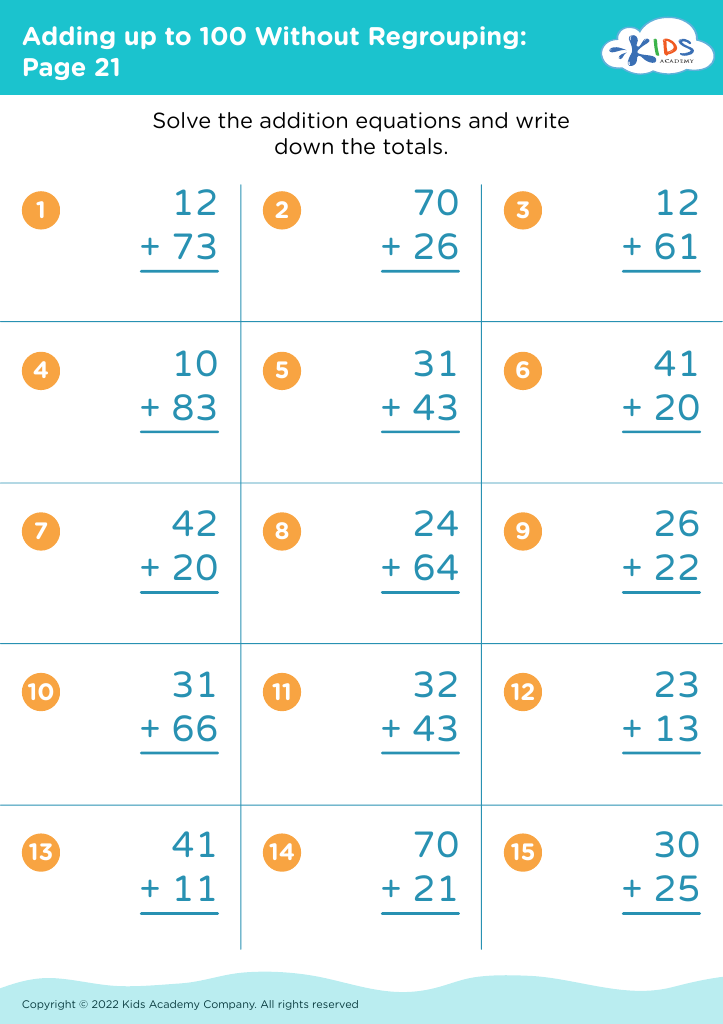
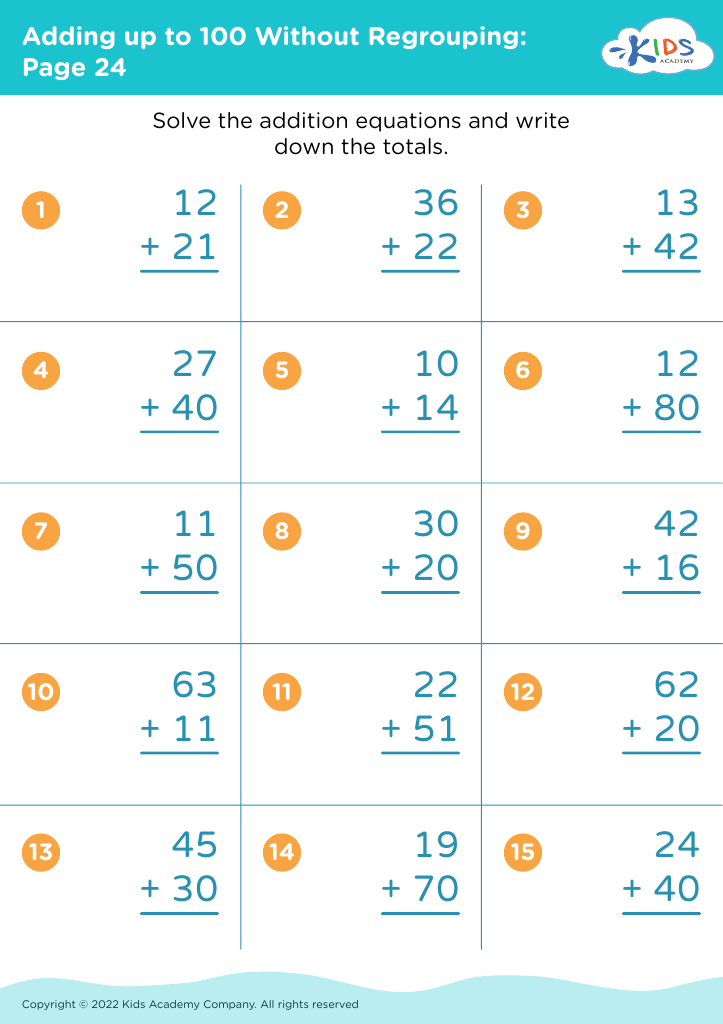
Boost your child's math skills with our engaging "Adding up to 100 Without Regrouping" worksheets designed explicitly for ages 5-8. Perfect for young learners, these worksheets are crafted to develop critical thinking and problem-solving capabilities. They offer a fun way to practice addition without the complexity of regrouping, making math easy to understand and enjoyable. Through playful exercises and colorful visuals, children will strengthen their number sense and confidence in mathematics. Ideal for both classroom and home use, these worksheets are the foundation for successful math learning and critical thinking enhancement. Unlock your child's potential today!




Developing critical thinking and math skills, such as adding up to 100 without regrouping, at an early age is crucial for children's long-term academic success and daily life application. Fostering critical thinking from a young age enables children to analyze information, solve problems, and make informed decisions. These skills are foundational, impacting learning across subjects.
Understanding addition up to 100 without regrouping introduces young children to essential math concepts. It enhances numerical literacy, helps with understanding place value, and builds a strong arithmetic foundation. These skills are not just academic but also practical, aiding in simple everyday tasks like counting money or time management.
Moreover, successfully managing these mathematical operations boosts a child's confidence in their academic abilities, fostering a positive attitude towards math. Confidence and a can-do attitude can positively influence their approach to more complex math topics in later years.
Teachers and parents play a critical role by providing a supportive learning environment and engaging activities that stimulate critical thinking and math practice. Developing these skills between the ages of 5 and 8 ensures that children are better prepared for future educational challenges and everyday problem-solving, benefiting their all-around cognitive development.