Identifying shapes Adding up to 100 Without Regrouping Worksheets for Ages 5-8
4 filtered results
-
From - To
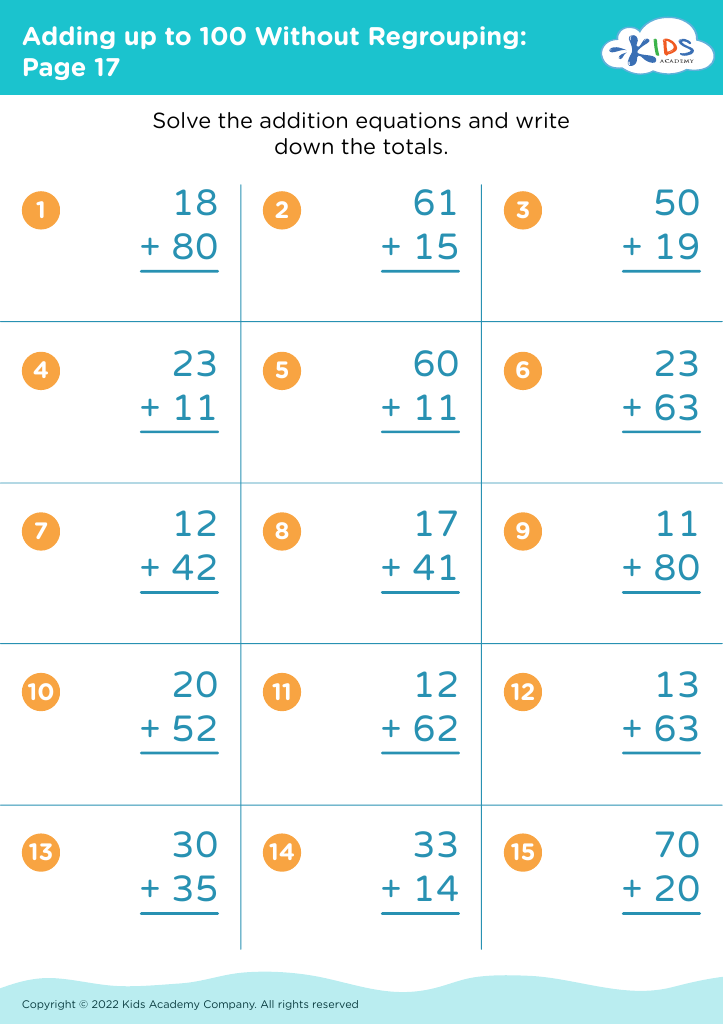
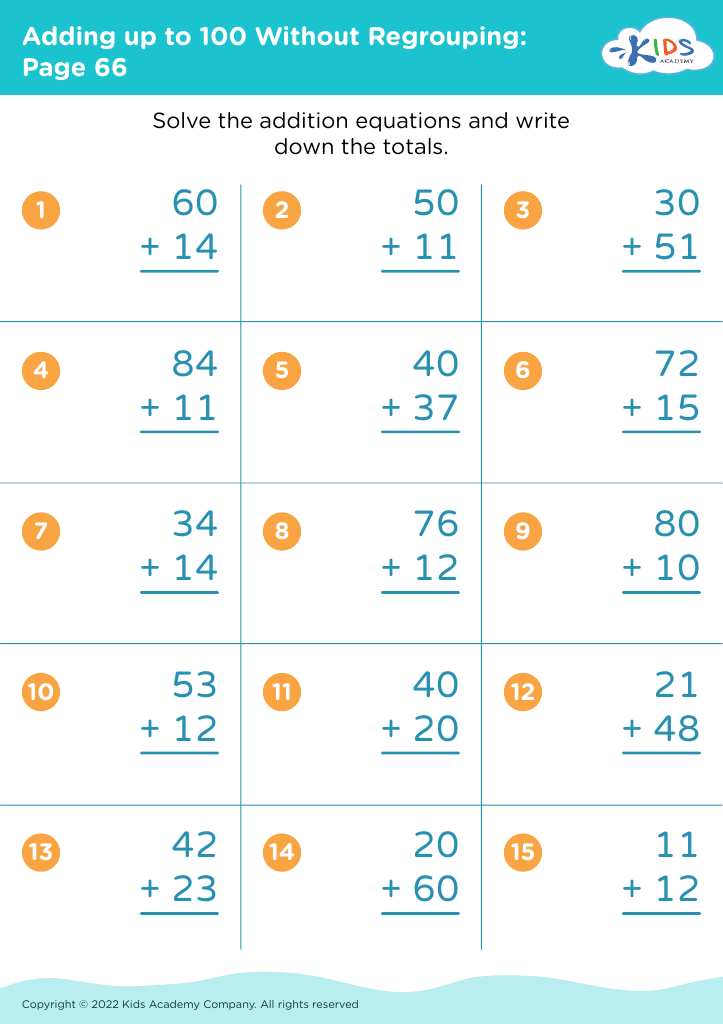
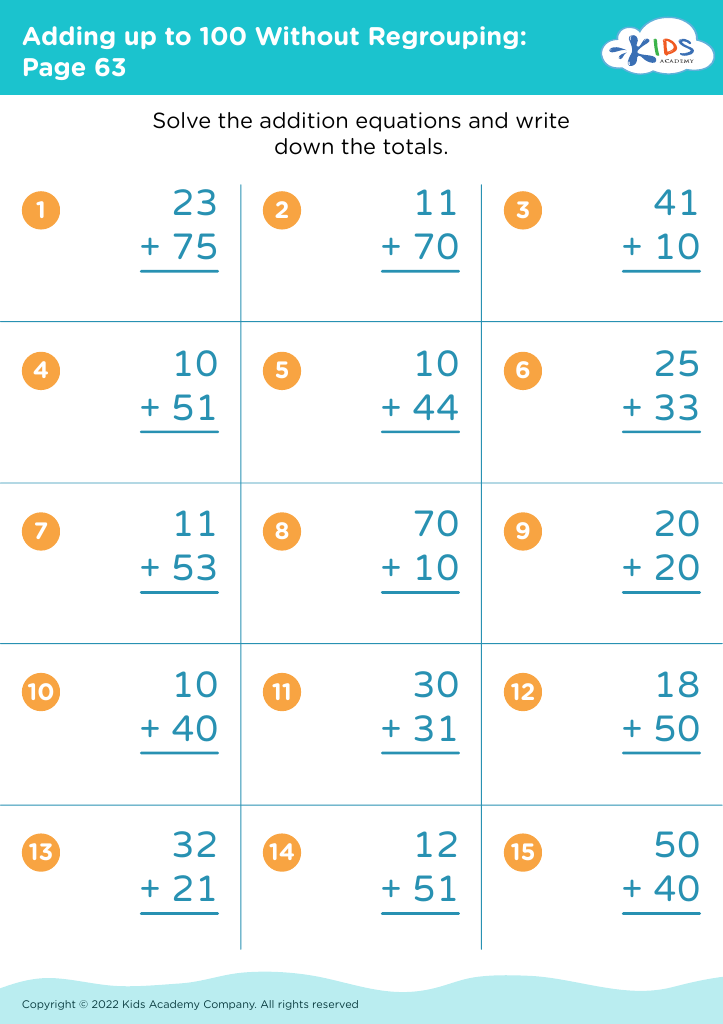
Our "Identifying Shapes Adding Up to 100 Without Regrouping Worksheets" are perfect for children ages 5-8, combining essential math practice with fun shape recognition! These engaging worksheets help young learners master addition up to 100, focusing on simple calculations that don't require regrouping. Kids will enjoy identifying various shapes like circles, squares, and triangles while reinforcing their math skills. Each engaging activity is designed to enhance cognitive development, improve problem-solving abilities, and build confidence in math. Perfect for classroom or homeschooling, these worksheets offer a creative way for children to learn math fundamentals through interactive play and learning. Download now!
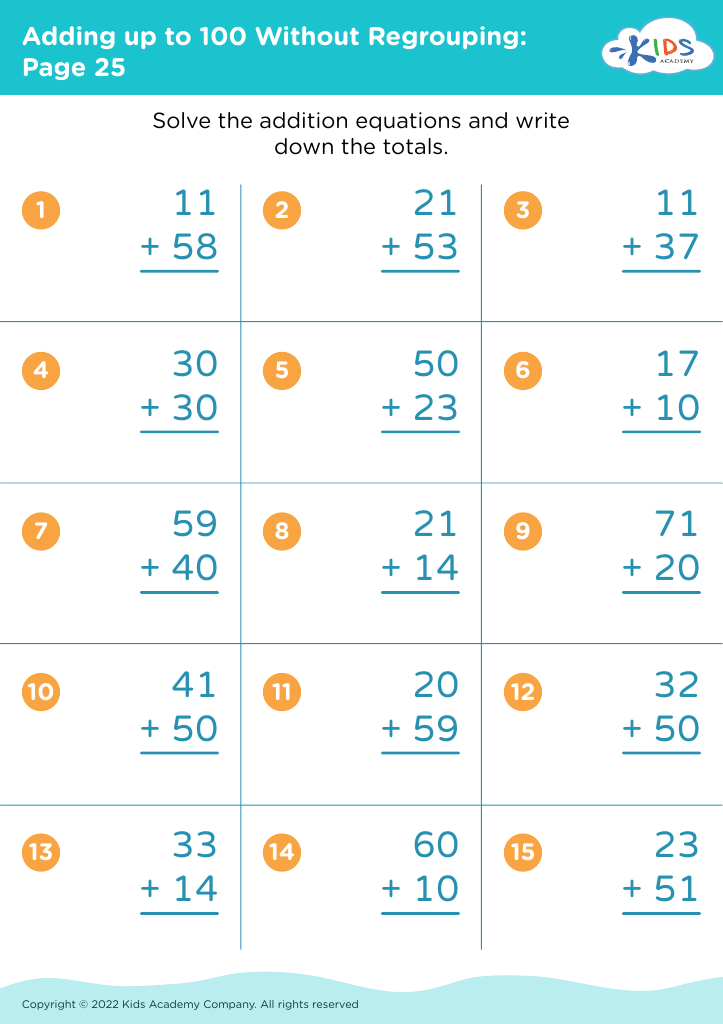




Identifying shapes and mastering addition without regrouping are foundational skills for children aged 5-8, laying the groundwork for future academic success. Recognizing shapes enhances spatial awareness and critical thinking. It enables children to connect mathematical concepts with the physical world, fostering a deeper understanding of geometry and art in everyday life.
Addition with sums up to 100 without regrouping helps develop mental math skills and number sense. At this age, children learn to combine numbers efficiently, reinforcing their confidence in math. This skill facilitates smoother transitions into more complex arithmetic, reducing anxiety during advanced problem-solving as they progress in school.
Fostering these skills is crucial for parents and teachers. Engaging children in fun activities centered around shapes and addition can make learning enjoyable and help them appreciate mathematics. By ensuring proficiency in these basics, educators and caregivers build a strong foundation, preparing students for future challenges in academics and real-life situations. Ultimately, the ability to identify shapes and perform addition with ease cultivates a lifelong love for learning and problem-solving. Recognizing these skills' significance encourages continued support and engagement in children's educational journeys.