Improve reading comprehension Adding up to 100 Without Regrouping Worksheets for Ages 5-8
3 filtered results
-
From - To
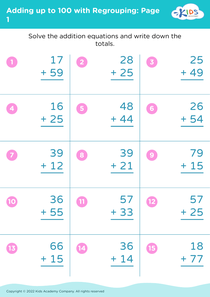
Enhance your child's reading comprehension while mastering basic addition skills with our "Adding Up to 100 Without Regrouping Worksheets" designed for ages 5-8. These engaging worksheets not only focus on mathematics but also foster critical thinking and reading skills. Each activity encourages young learners to read carefully, understand instructions, and apply their knowledge to solve problems. Perfect for independent practice or guided learning, our resources promote confidence in math while sharpening comprehension abilities. Download these worksheets today to create a fun and effective learning experience that blends arithmetic mastery with essential reading skills! Ideal for both home and classroom use!
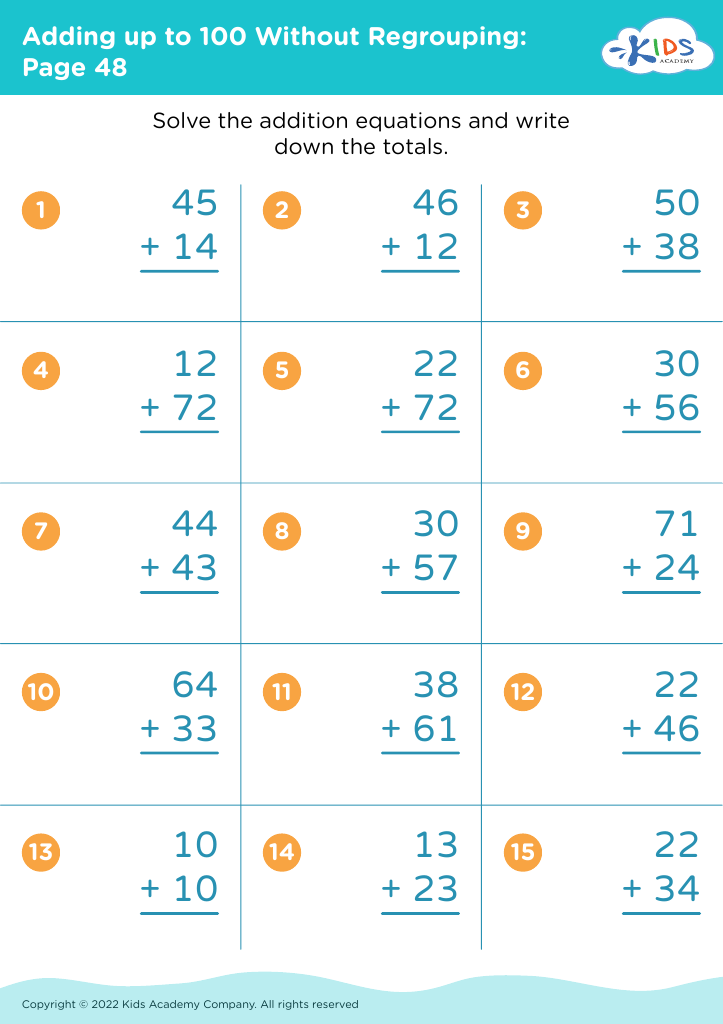
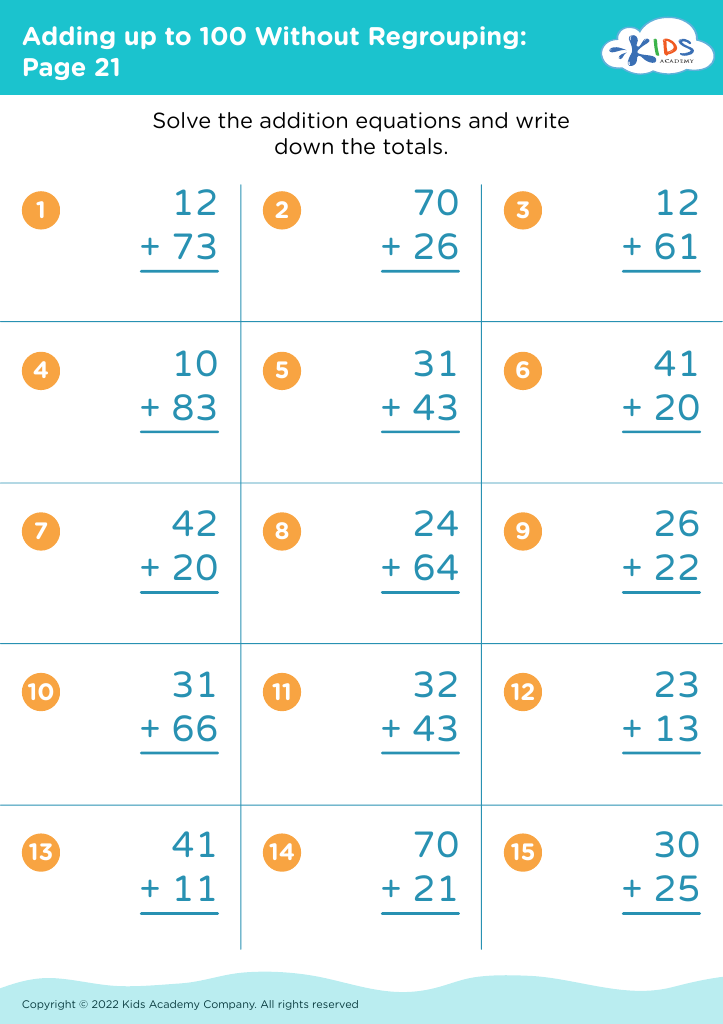
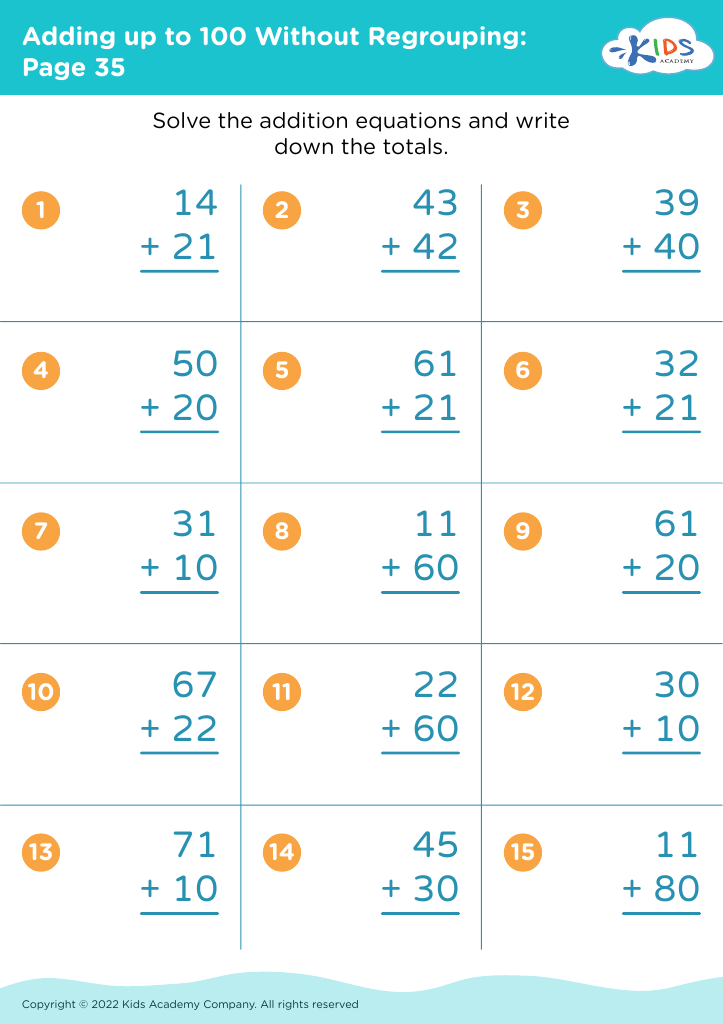




Improving reading comprehension and mathematical skills, such as adding up to 100 without regrouping, is crucial for children aged 5-8. For parents and teachers, fostering these skills lays the foundation for a child’s academic success and lifelong learning.
Reading comprehension enables children to understand and engage with texts, facilitating their ability to gain information and express thoughts. It's essential for enhancing vocabulary, critical thinking, and imagination. When children grasp what they read, they become more confident and motivated learners.
Mathematically, adding up to 100 without regrouping helps build a strong numerical foundation. It encourages mental math skills, promoting quick thinking and problem-solving capabilities that are vital in everyday life. Mastering these concepts also strengthens cognitive development and boosts self-esteem through accomplishments.
Moreover, both skills are interconnected; strong reading skills allow children to understand word problems, while solid math abilities can enhance understanding of quantitative information in texts. Parents and teachers should prioritize these areas to create a well-rounded educational experience, ultimately preparing children for future academic challenges and equipping them with essential life skills. By investing time in these competencies now, they nurture confident, capable, and resourceful individuals.