Improve reading skills Adding up to 100 Without Regrouping Worksheets for Ages 5-8
3 filtered results
-
From - To
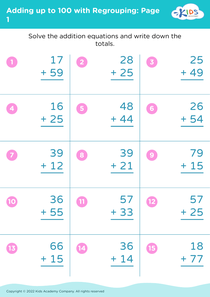
Enhance your child's reading and math skills with our "Adding Up to 100 Without Regrouping" worksheets, designed for ages 5-8. These engaging resources combine mathematical practice with reading comprehension, fostering a holistic learning experience. Your child will develop essential reading skills while mastering addition concepts. Each worksheet includes colorful visuals and friendly instructions that encourage independent learning and make math fun. Watch as your child builds confidence and competence in both subjects, ready to tackle more complex challenges. Perfect for classrooms and at-home learning, these worksheets are a valuable tool in early education. Start nurturing a love for learning today!
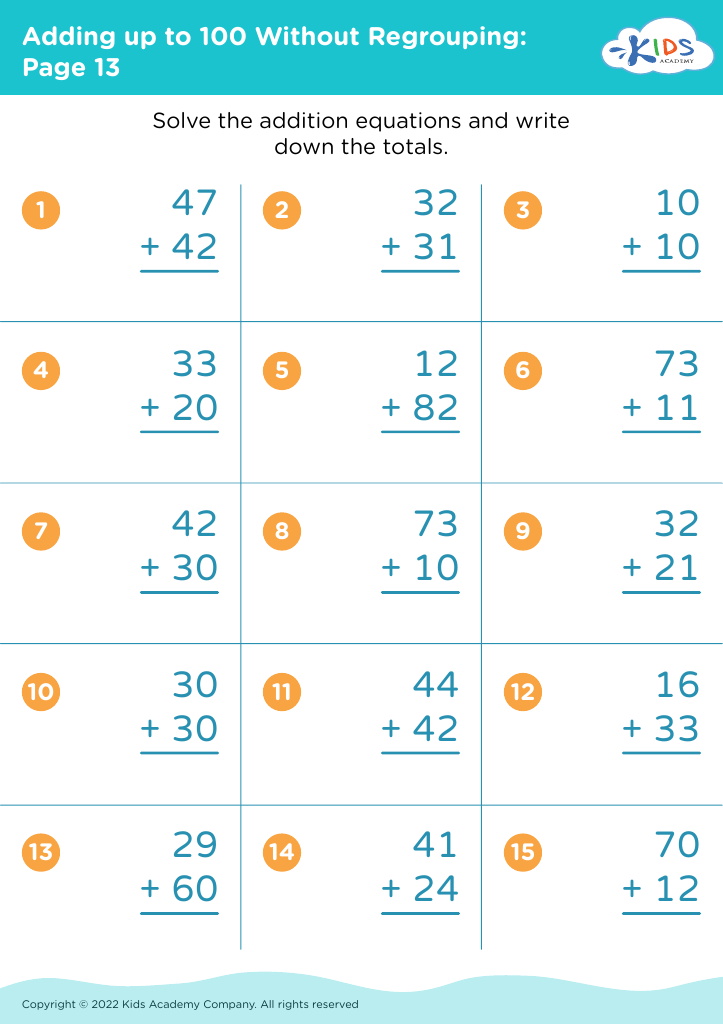
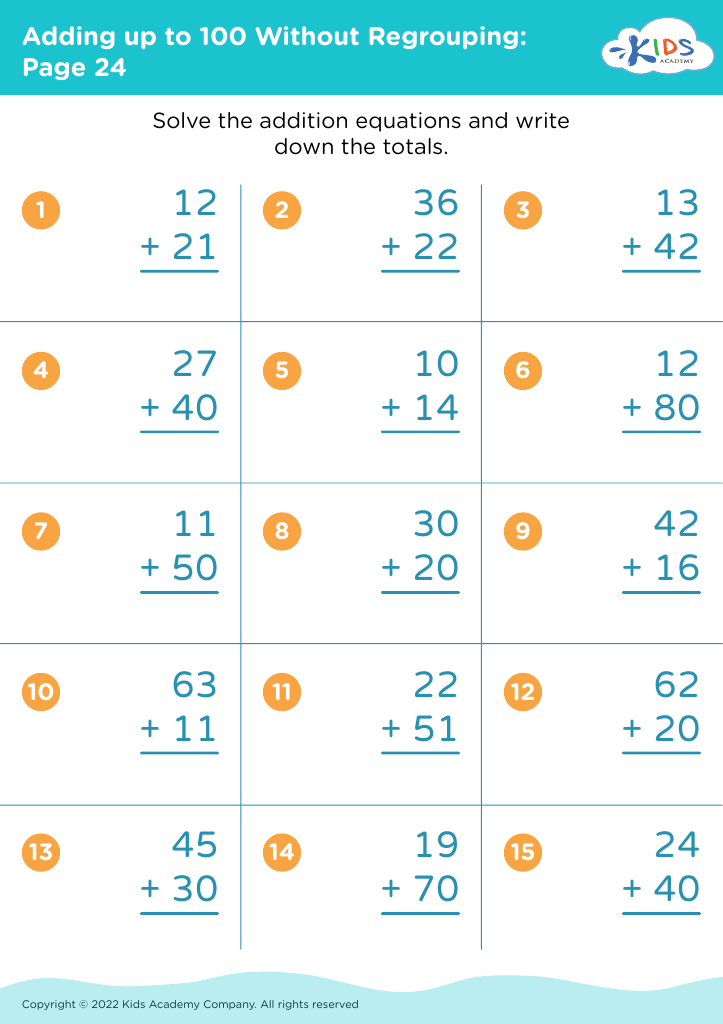
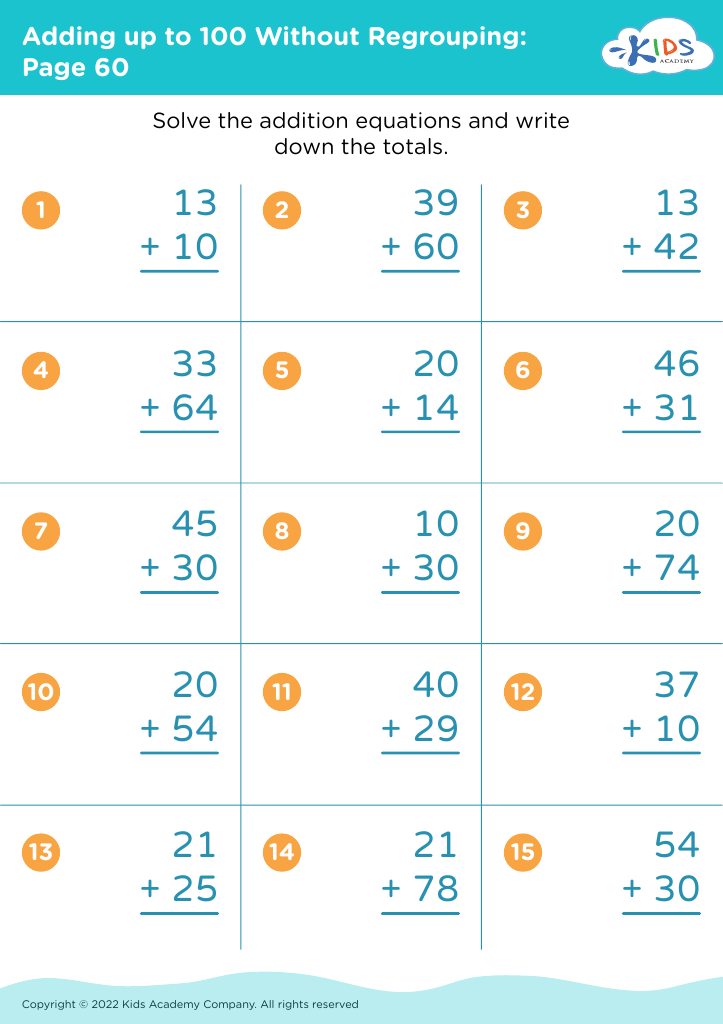




Improving reading skills and mastering addition up to 100 without regrouping are crucial for children aged 5-8, as these foundational skills support overall academic success and cognitive development. Proficient reading abilities enable children to access a wide range of information, develop critical thinking, and foster creativity through literature. Early mastery of reading also enhances language skills, vocabulary, and comprehension, which are vital for effective communication.
On the math side, learning to add numbers up to 100 without regrouping helps develop mental math skills, lays a foundation for more complex mathematical concepts, and builds confidence in problem-solving. This competency encourages logical thinking and improves a child's ability to handle everyday situations, such as budgeting or time management.
For parents and teachers, supporting these skill sets means investing in a child's educational journey and preparing them for future learning challenges. When children become confident readers and mathematicians, they cultivate a love for learning that can last a lifetime. Ultimately, fostering improvement in these areas leads to well-rounded, independent learners who can excel academically and contribute positively to their communities. Therefore, prioritizing these skills is essential for every child's growth and development.