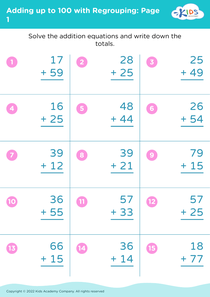
Practicing multiplication Adding up to 100 Without Regrouping Worksheets for Ages 5-8
3 filtered results
-
From - To
Welcome to our "Practicing Multiplication Adding up to 100 Without Regrouping" worksheets, designed specifically for ages 5-8. These engaging and interactive resources help young learners build foundational multiplication skills while confidently working with sums up to 100. Our worksheets offer colorful visuals and enjoyable exercises that promote a smooth understanding of multiplication concepts without the complexities of regrouping. Tailored to enhance your child's math abilities, these resources can be used at home or in the classroom. Dive into the world of multiplication with our worksheets and watch your child's confidence grow as they master essential math skills!
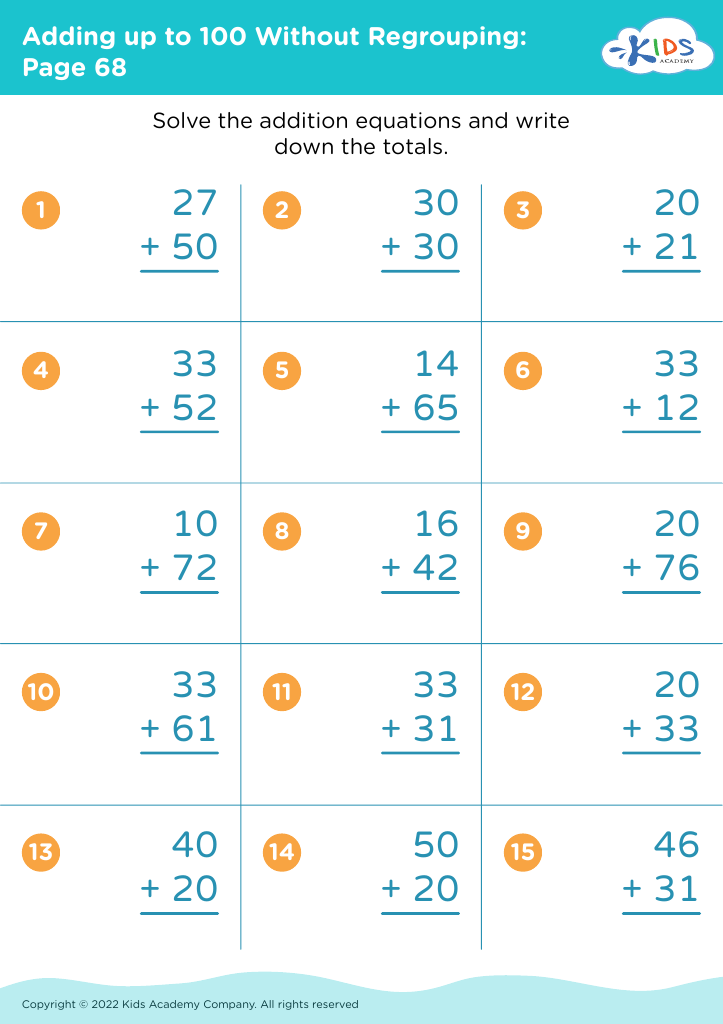
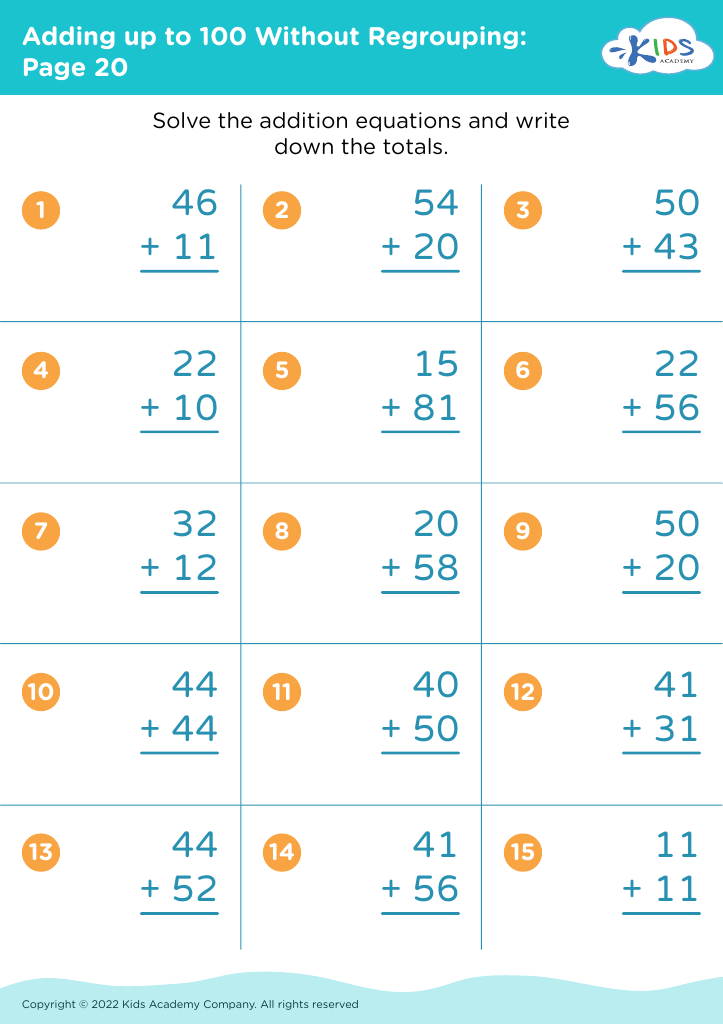
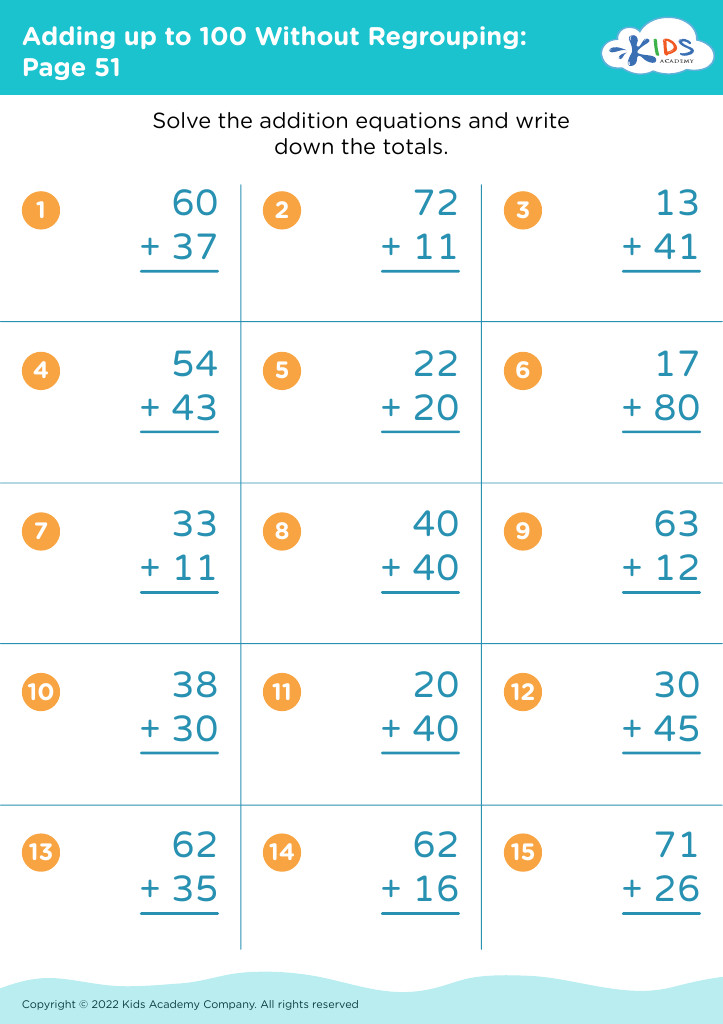




Practicing multiplication without regrouping for children aged 5-8 is crucial as it lays a strong foundation for their mathematical understanding. At this age, students are typically transitioning from simple addition and subtraction to more complex operations like multiplication. Engaging with multiplication, especially in equations that add up to 100 without the need for regrouping, enhances their ability to think logically and solve problems systematically.
Furthermore, mastering these skills boosts their confidence in mathematics and encourages a growth mindset. Children become more comfortable with numbers and operations, fostering a positive attitude toward math as they see success in their abilities. This early practice stimulates cognitive development and supports critical thinking skills. It also enhances their ability to recognize patterns, which is essential in mathematics.
Additionally, understanding multiplication aids in daily life skills, such as budgeting, measuring, or even playing games. For parents and teachers, encouraging these foundational skills helps ignite a passion for learning and prepares children for future math challenges, ensuring they have a solid grasp of essential concepts. Ultimately, consistent and focused practice in multiplication promotes not just academic success, but also cognitive and emotional growth, setting children on a path to becoming proficient, confident learners.