Problem-Solving Skills Adding up to 100 Without Regrouping Worksheets for Ages 5-8
10 filtered results
-
From - To
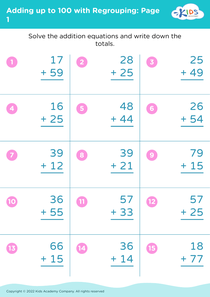
Our "Problem-Solving Skills Adding up to 100 Without Regrouping Worksheets for Ages 5-8" are meticulously crafted to bolster your child's arithmetic capabilities. Tailored for young learners, these worksheets focus on addition within 100, developing critical thinking, and enhancing problem-solving skills. Each exercise is designed to challenge and engage, using a variety of fun and interesting activities to maintain attention and interest. Perfect for classroom use or at-home practice, these worksheets help your child build a solid mathematical foundation, promoting confidence and mastery in addition without regrouping. Make math fun and easy to grasp for your young learner today!
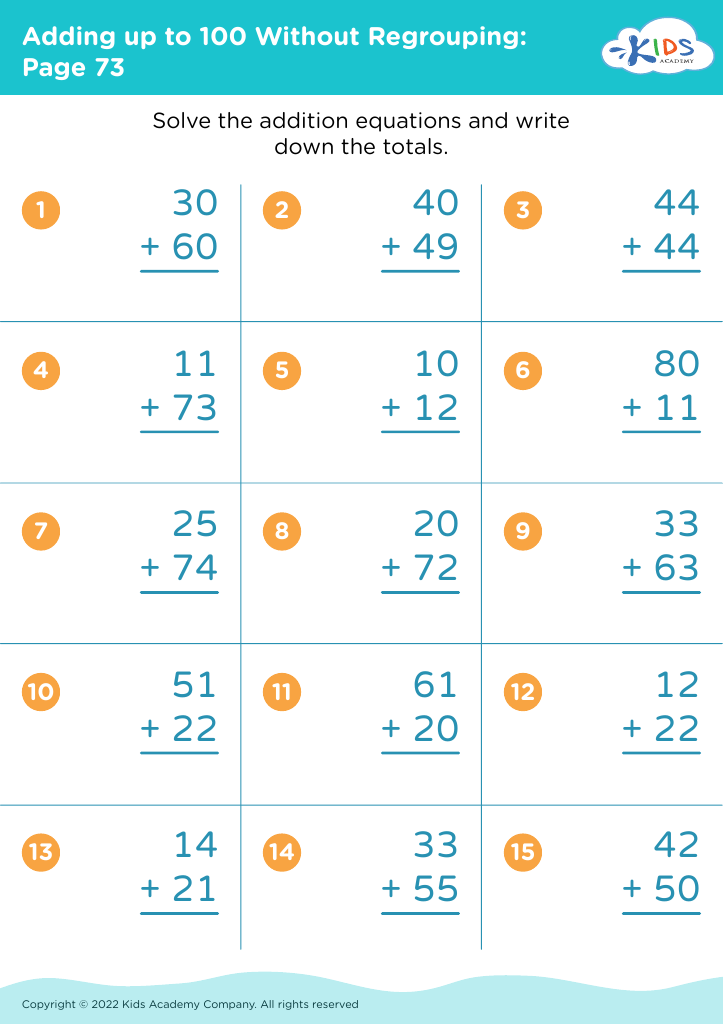
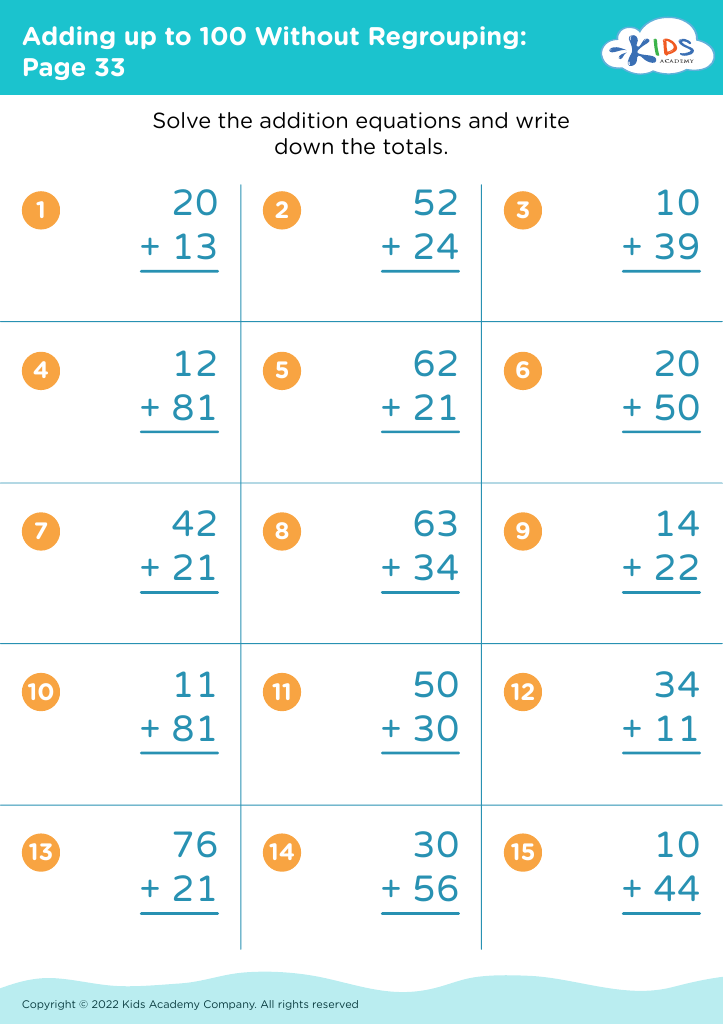
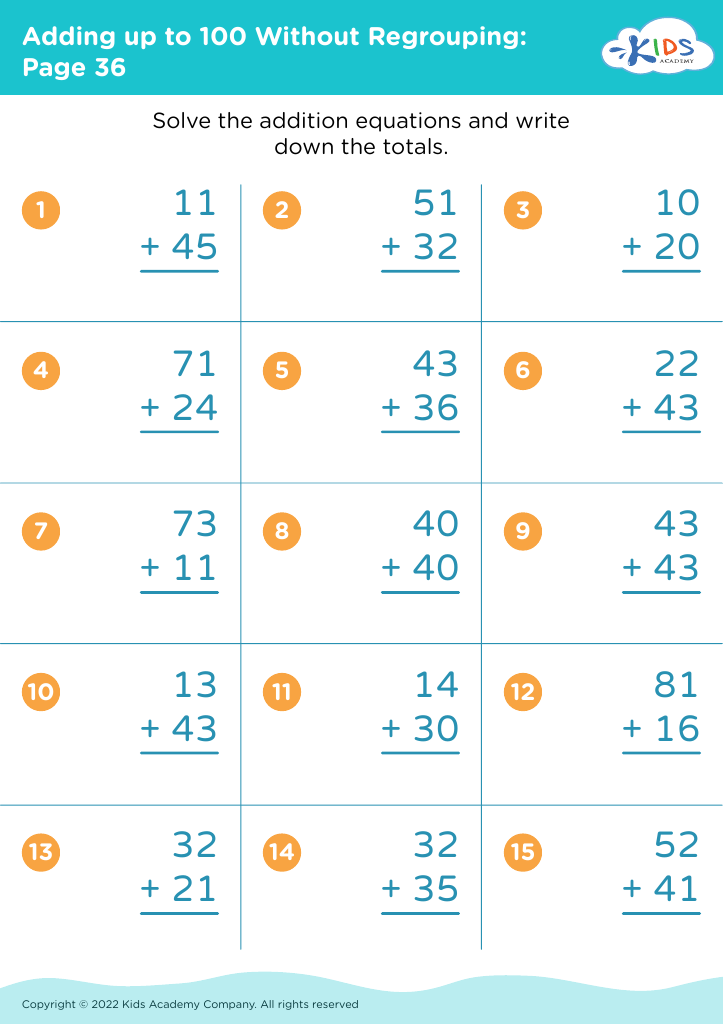
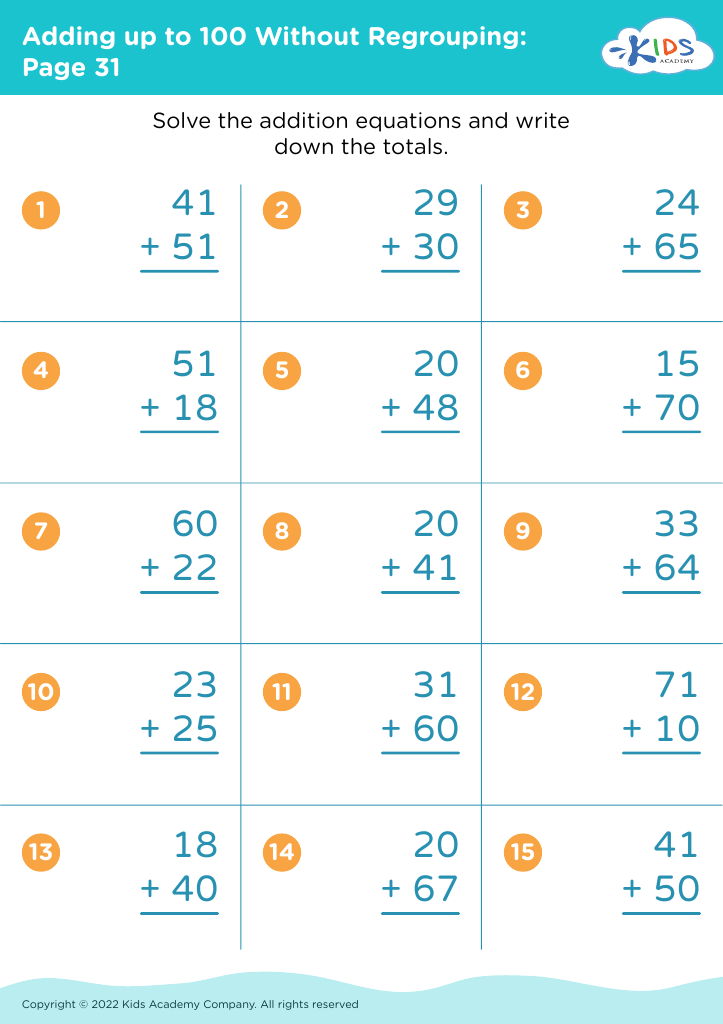
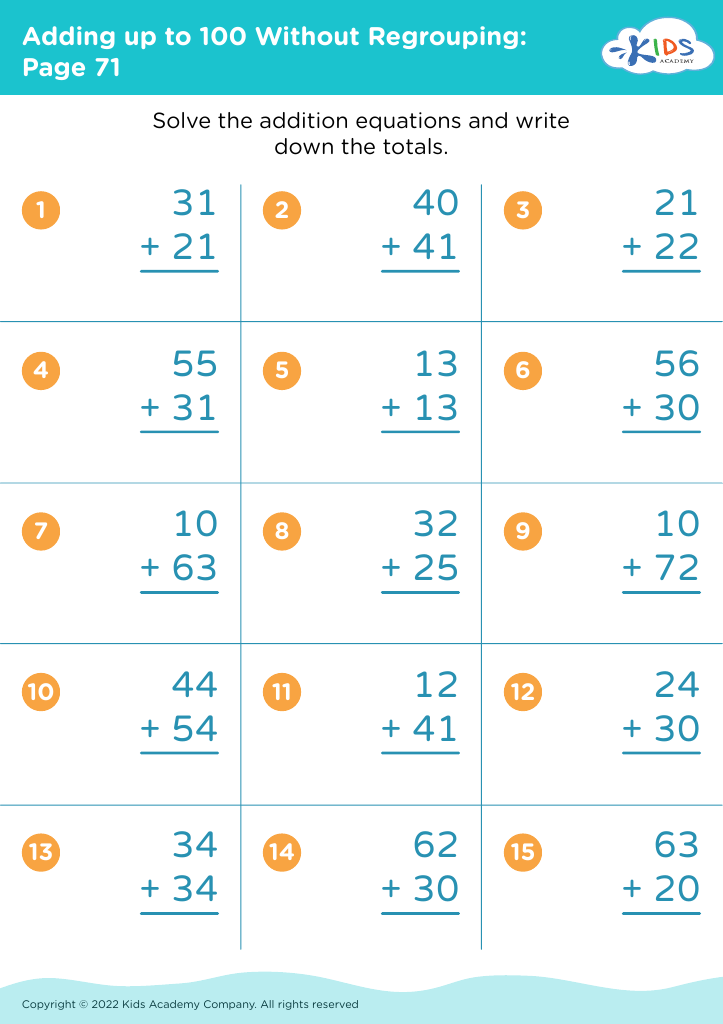
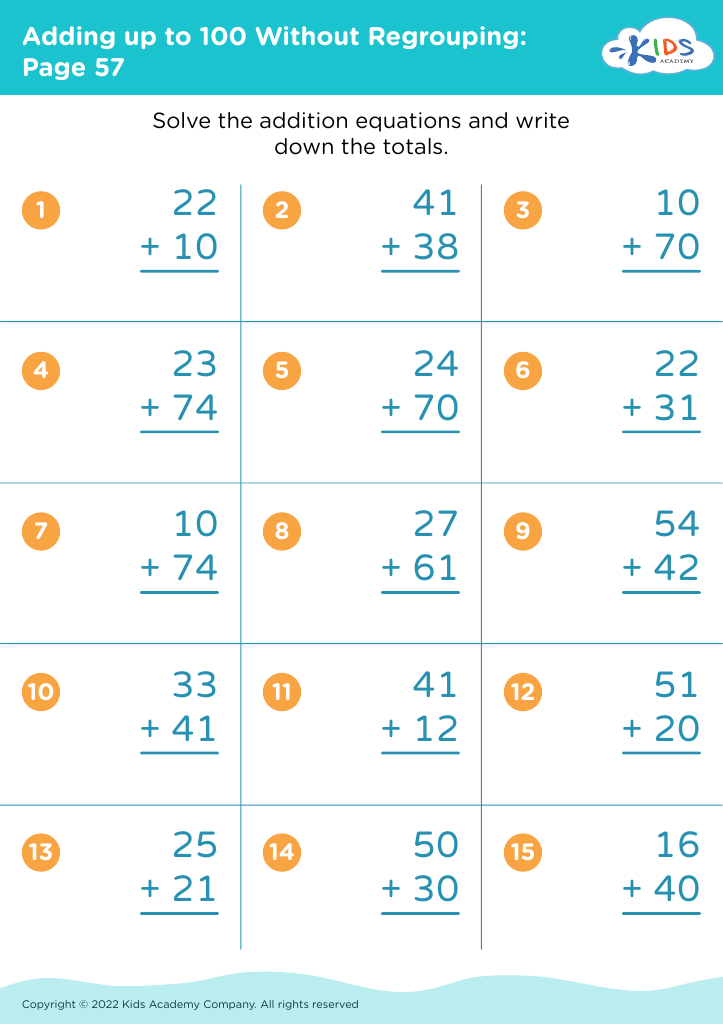
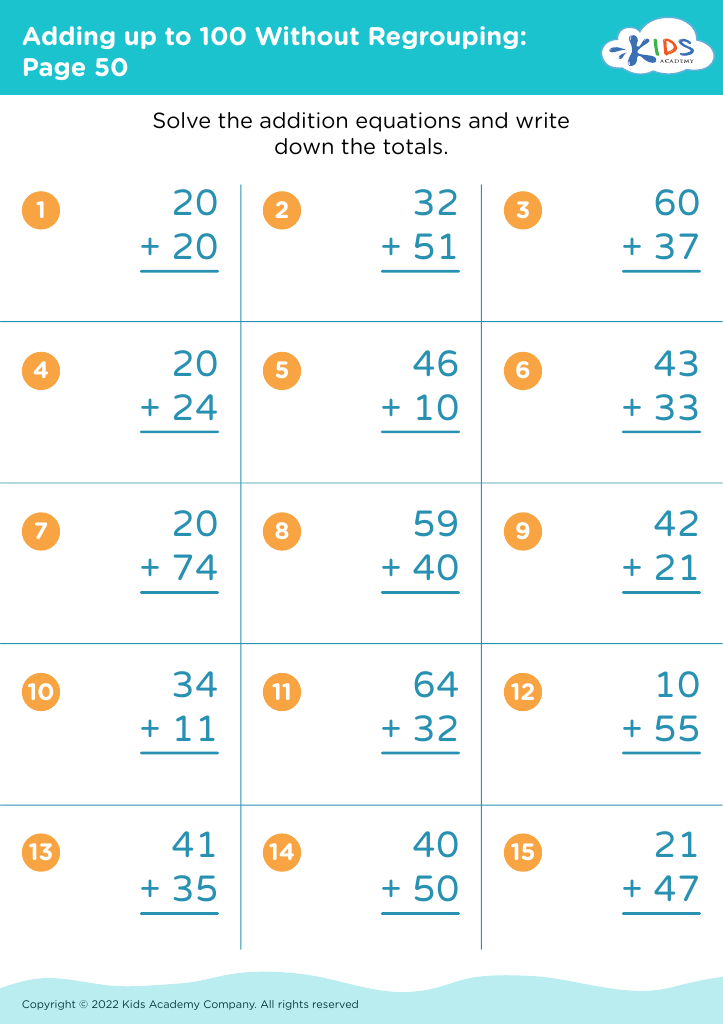
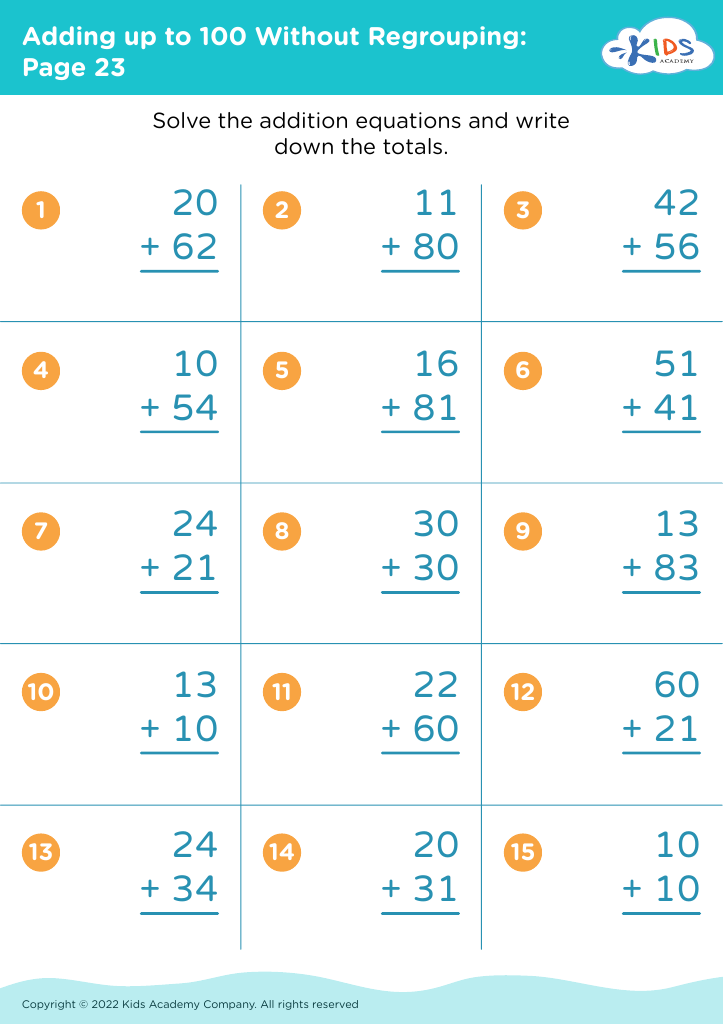
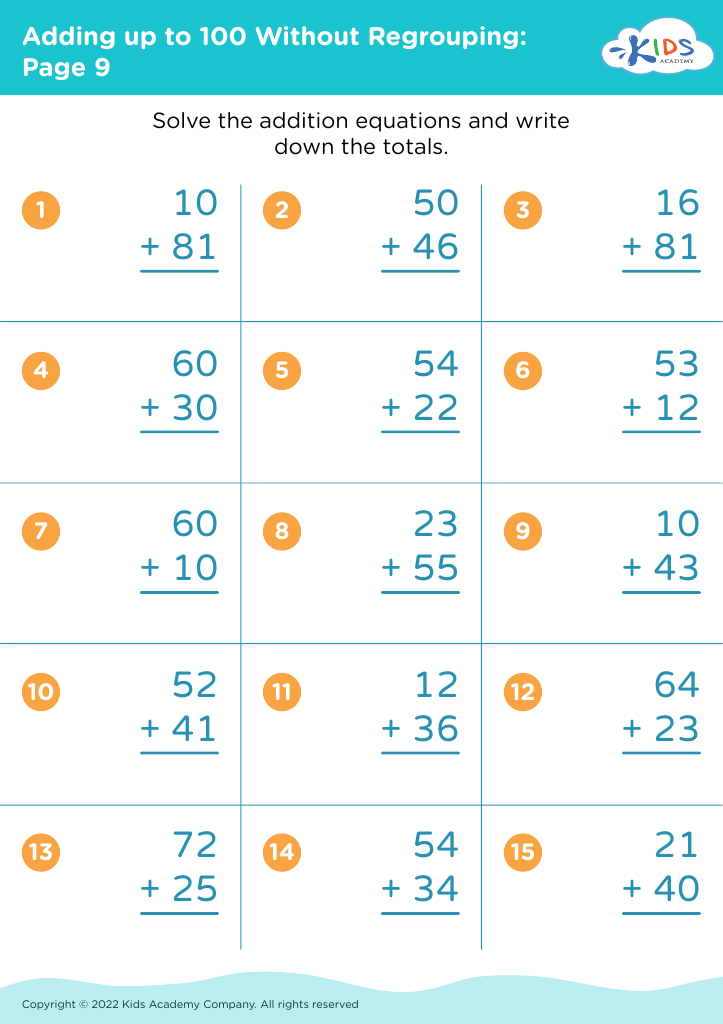
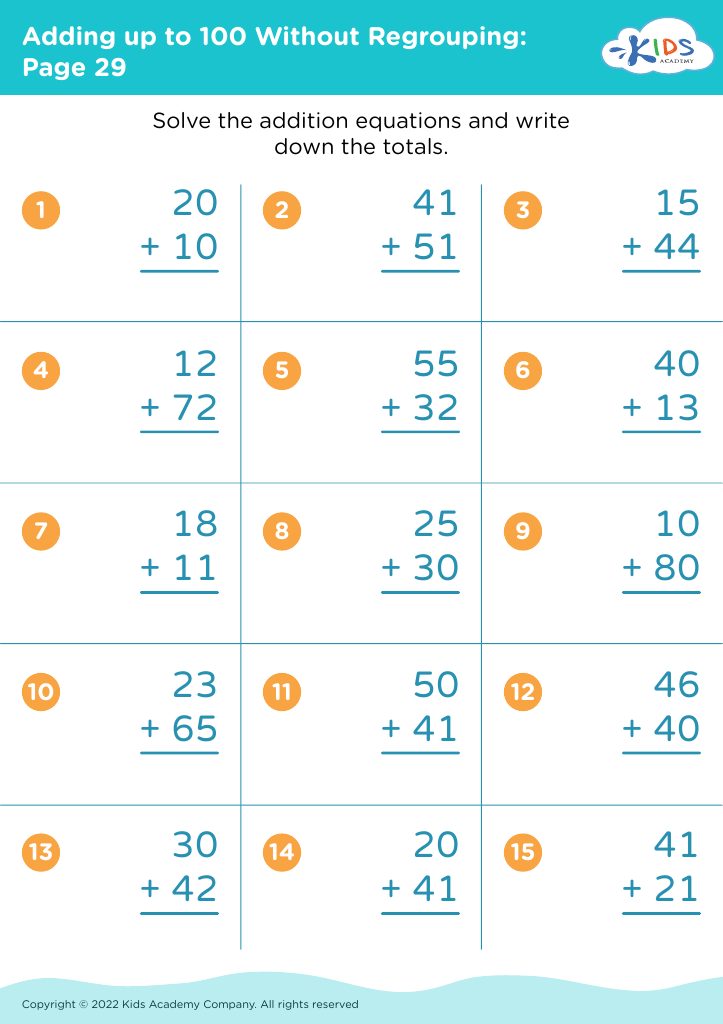




Teaching problem-solving skills, specifically adding up to 100 without regrouping, to children aged 5-8 is foundational for several key reasons. Firstly, mastering this skill strengthens their understanding of basic mathematical concepts. It solidifies knowledge of number values and arithmetic operations, which are building blocks for more complex math topics they'll encounter later in their academic journey.
Secondly, developing problem-solving abilities aids cognitive development. Engaging in these exercises promotes critical thinking, logical reasoning, and boosts memory and mental agility. It encourages children to approach challenges methodically rather than guessing, a skill useful beyond mathematics and applicable to everyday situations.
Thirdly, early success in math boosts confidence and fosters a positive attitude towards learning. As children feel competent in adding up to 100, they are likely to be more engaged and motivated. This encourages a growth mindset, where they understand that perseverance and practice can lead to mastery.
Lastly, in a world increasingly reliant on STEM (Science, Technology, Engineering, and Mathematics) skills, an early, robust foundation in math sets children up for future success. Therefore, by focusing on addition without regrouping at this crucial stage, parents and teachers are investing in their child's overall academic and personal growth.