Reading comprehension Adding up to 100 Without Regrouping Worksheets for Ages 5-8
3 filtered results
-
From - To
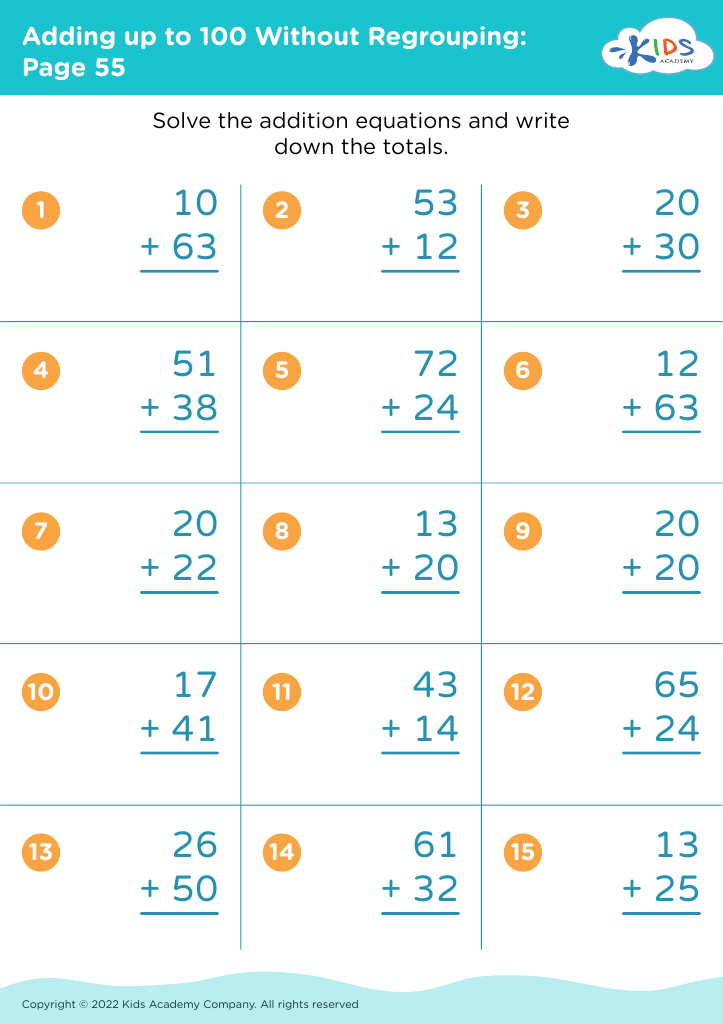
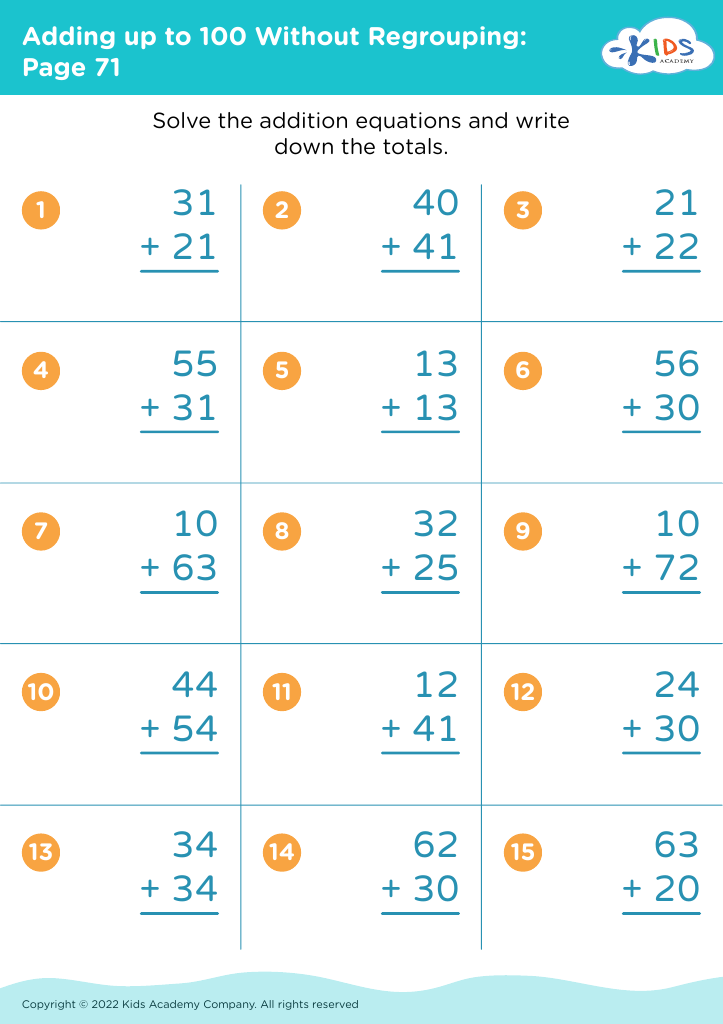
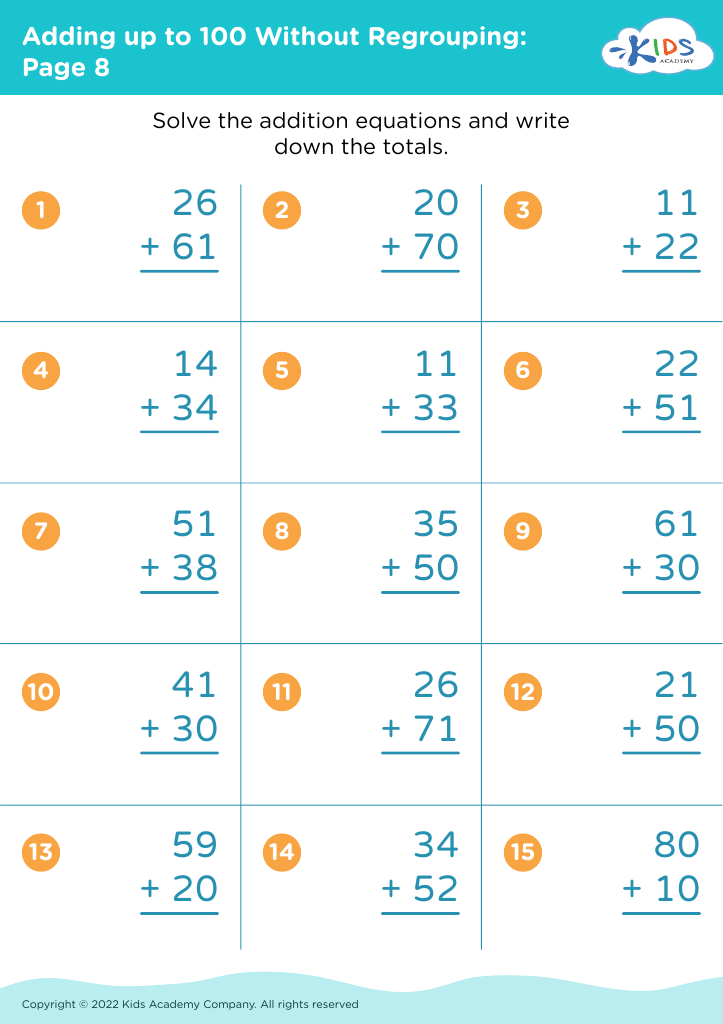
Enhance your child's reading comprehension skills with our engaging "Adding Up to 100 Without Regrouping Worksheets" designed for ages 5-8! These worksheets integrate math and literacy, promoting critical thinking through fun problem-solving activities. Children will read various age-appropriate scenarios that encourage them to visualize and apply their mathematical knowledge of addition without regrouping. This dual-focus approach reinforces understanding while improving vocabulary and contextual analysis. Perfect for homeschooling or supplementary practice, these worksheets make learning enjoyable and interactive, laying a solid foundation for future academic success. Grab your printable resources today and watch your young learners thrive in both reading and math!




Reading comprehension and mathematical skills like adding without regrouping are fundamental to a child's overall education and development. For children ages 5-8, mastering these skills is crucial as they build a strong foundation for future learning.
Reading comprehension helps children understand and process what they read. This skill not only supports their literacy development but also enhances critical thinking, vocabulary, and listening skills. When children are engaged with texts, they're better equipped to learn from stories, instructions, and informational content, fostering a love for reading that can last a lifetime.
Similarly, addition without regrouping is an essential math skill that promotes number sense and boosts confidence. Children need to develop a firm grasp of basic arithmetic operations to progress into more complex mathematical concepts. This foundational knowledge helps them solve real-world problems, understand patterns in numbers, and enhances logical reasoning.
Parents and teachers play a critical role in nurturing these skills. Ensuring children engage in both reading and math activities will not only improve their academic performance but also foster essential life skills like critical thinking, problem-solving, and effective communication. Investing time in supporting these areas of learning equips children for long-term success, both in school and beyond.