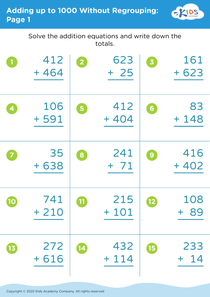
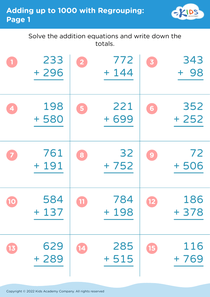
Addition Practice Adding up to 1000 Misc Worksheets for Ages 5-8
5 filtered results
-
From - To
Supercharge your child’s math skills with our "Addition Practice: Adding up to 1000" printable worksheets designed for ages 5-8. These engaging exercises help young learners master addition through fun and challenging problems. Tailored to support various learning styles, our worksheets cover a wide range of addition scenarios, ensuring your child develops strong numerical skills and confidence. Perfect for classroom activities or home practice, each worksheet offers step-by-step guidance to nurture your child’s understanding of addition concepts, paving the way to math success. Download and unlock the joy of learning today!
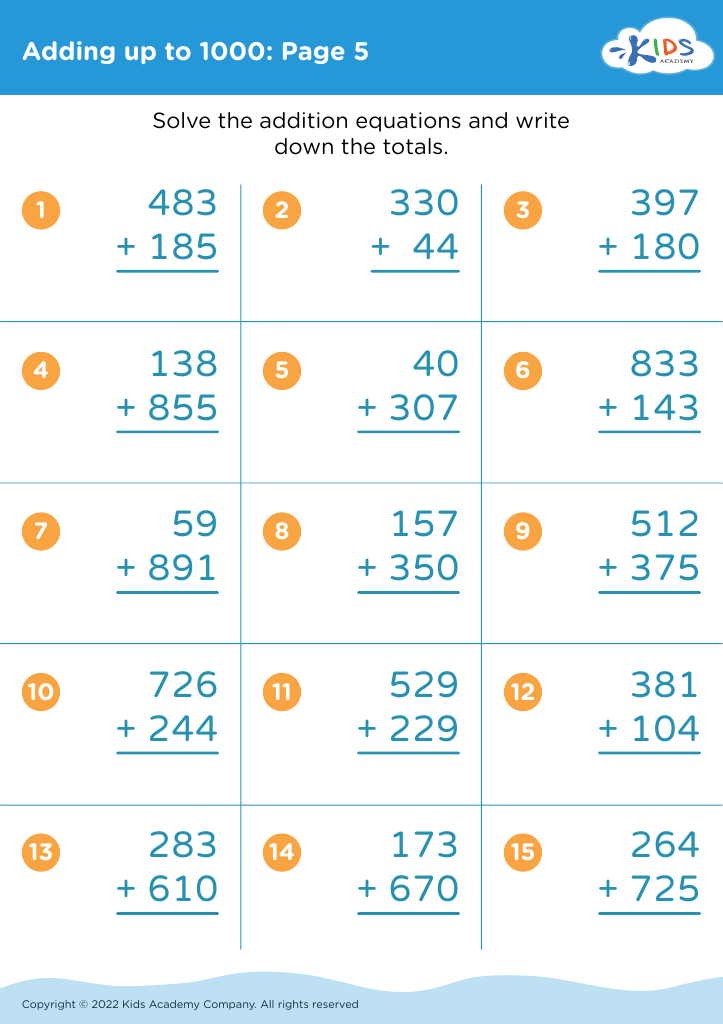
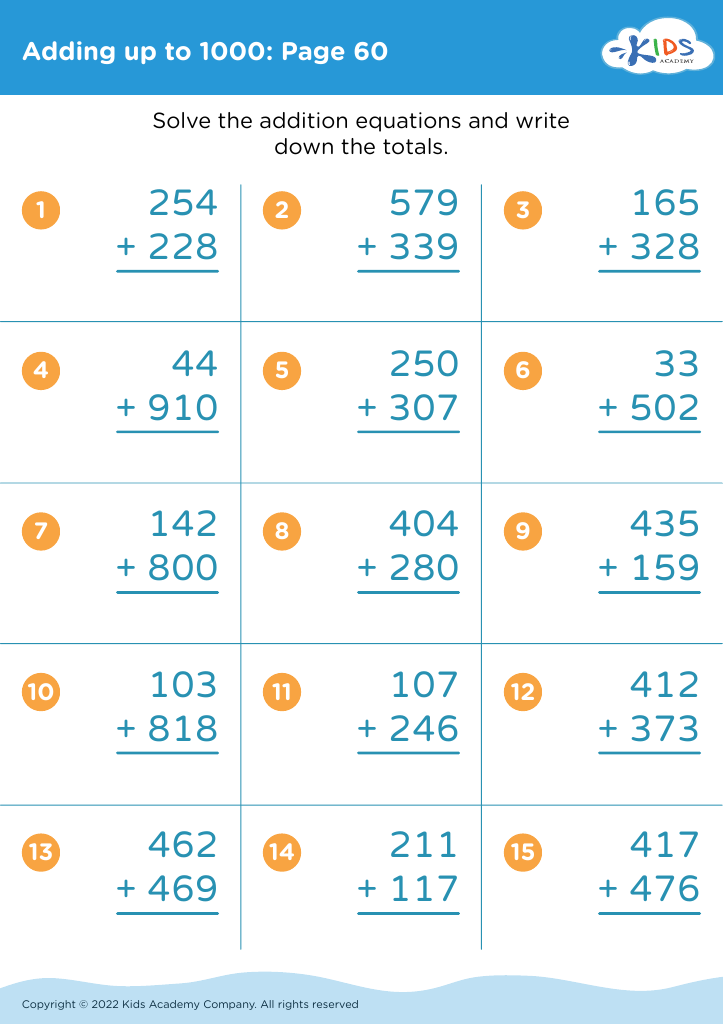
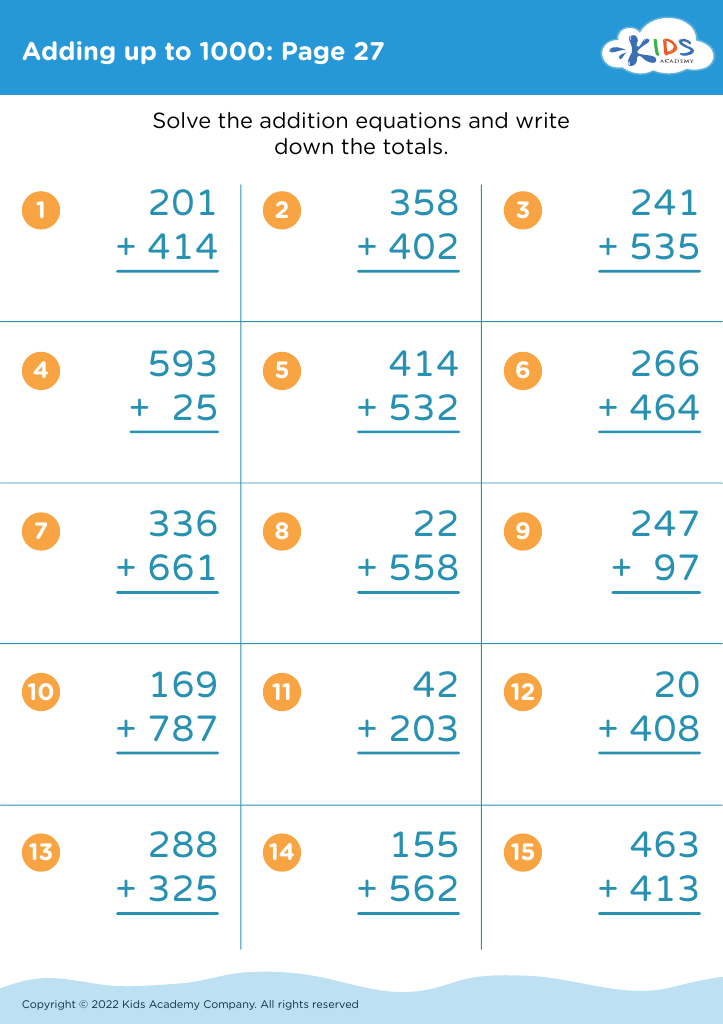
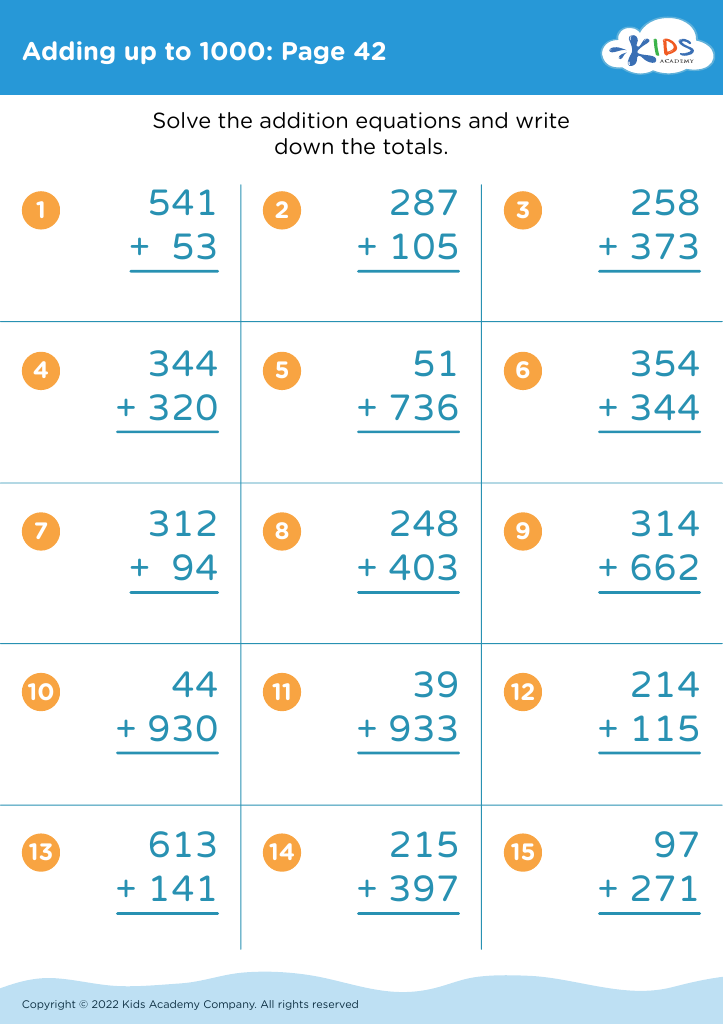
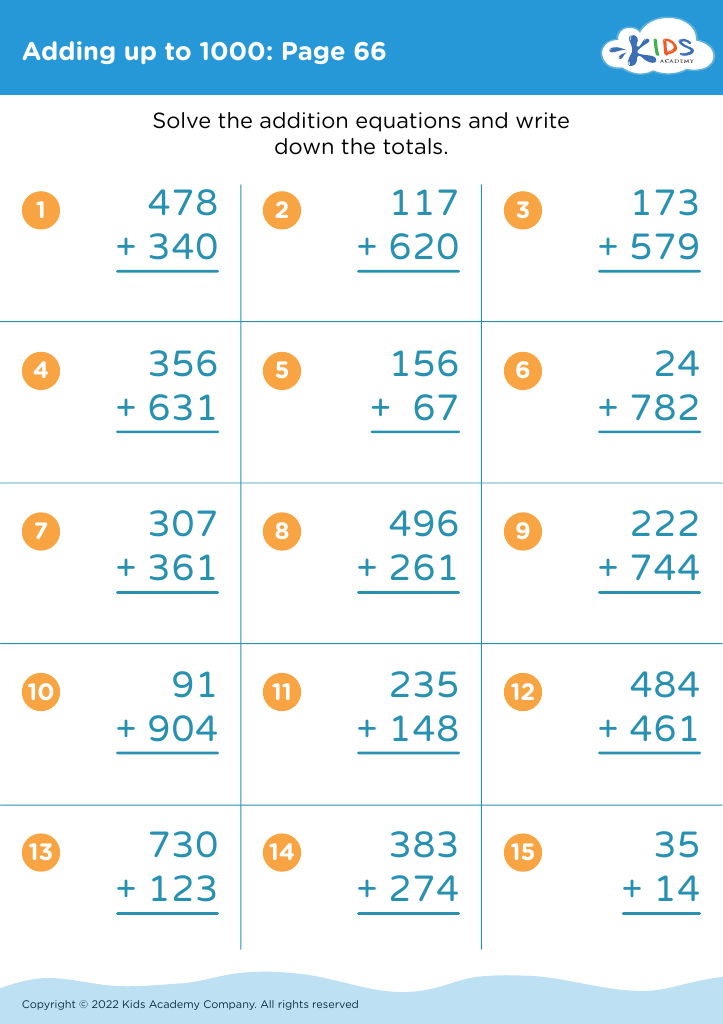


Parents and teachers should prioritize Addition Practice Adding up to 1000 for children aged 5-8 because it forms a critical foundation for their mathematical development. At this age, children are in the phase of transitioning from simple arithmetic to more complex operations, and mastering addition up to 1000 helps solidify their understanding of basic math principles. Ensuring proficiency in this area promotes confidence and reduces anxiety about math as they progress in their education.
Incorporating these practices enhances numerical fluency, enabling children to approach problems more efficiently and improving their problem-solving skills. It also introduces them to the concept of carrying over numbers, a fundamental skill for multi-digit addition and subtraction.
Establishing a strong numerical base early on supports their ability to grasp more advanced mathematical concepts in later years, such as multiplication, division, fractions, and even early algebra. Additionally, integrating math exercises into daily routines nurtures a positive attitude towards learning and fosters curiosity.
Parents and teachers who actively engage children in addition practice witness significant improvements not only in math but also in cognitive skills such as attention span, memory, and logical reasoning. Therefore, focusing on addition up to 1000 during these formative years ensures well-rounded academic and cognitive development, setting children up for long-term educational success.