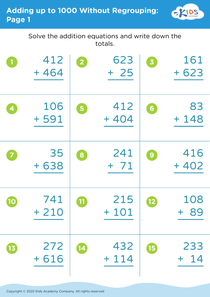
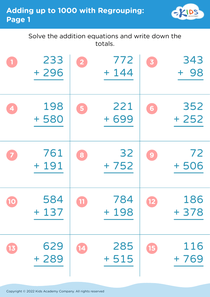
Number Recognition Adding up to 1000 Misc Worksheets for Ages 5-8
13 filtered results
-
From - To
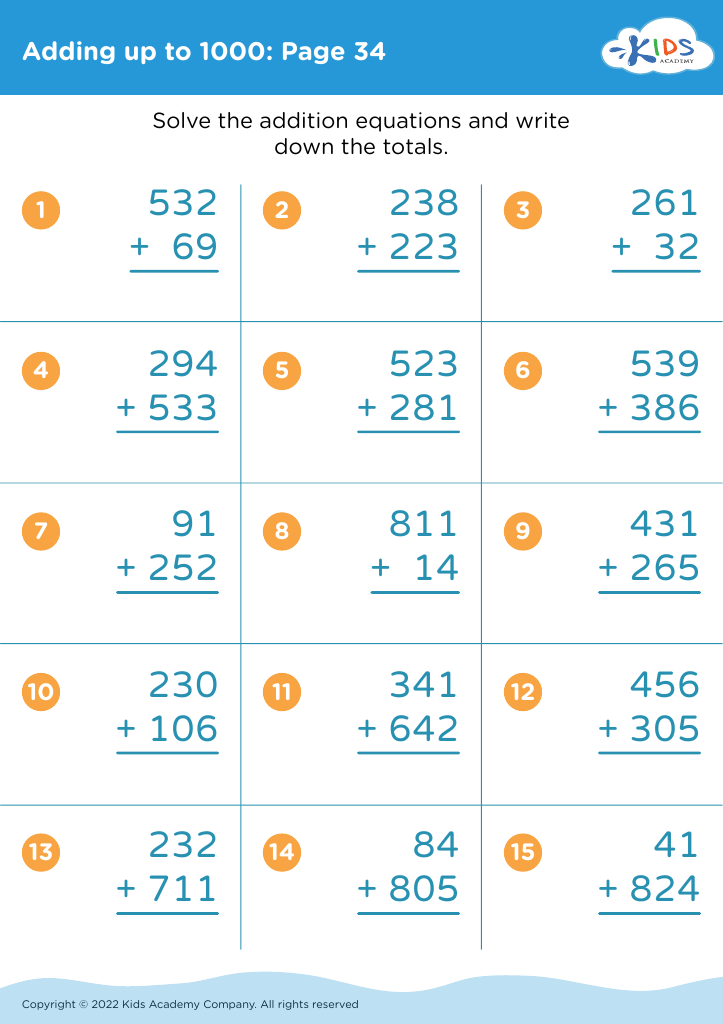
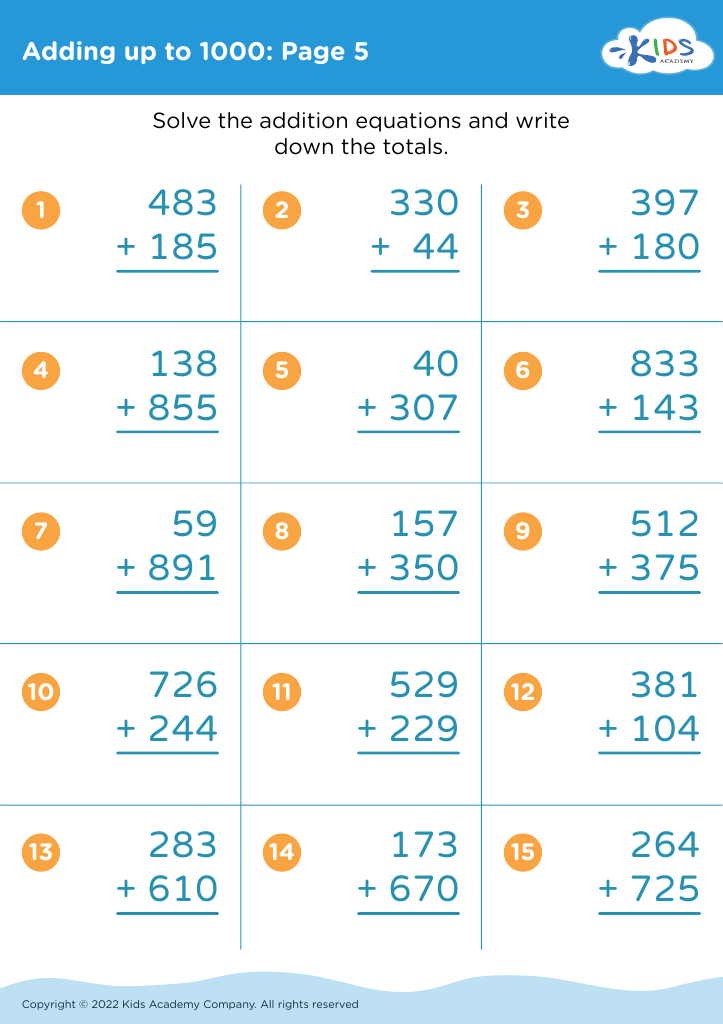
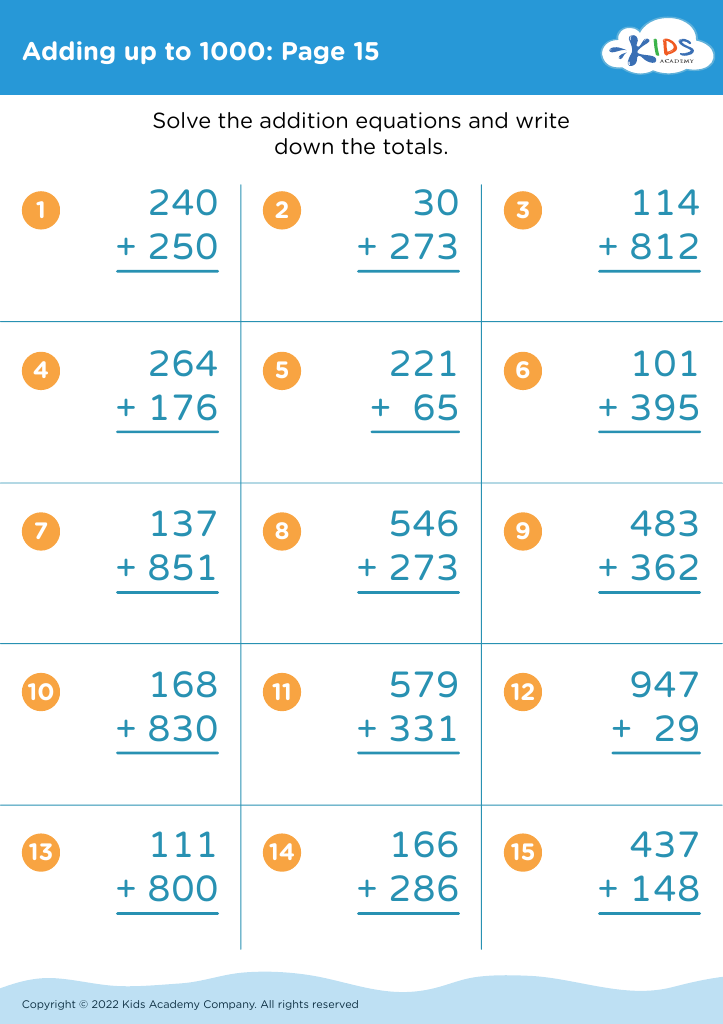
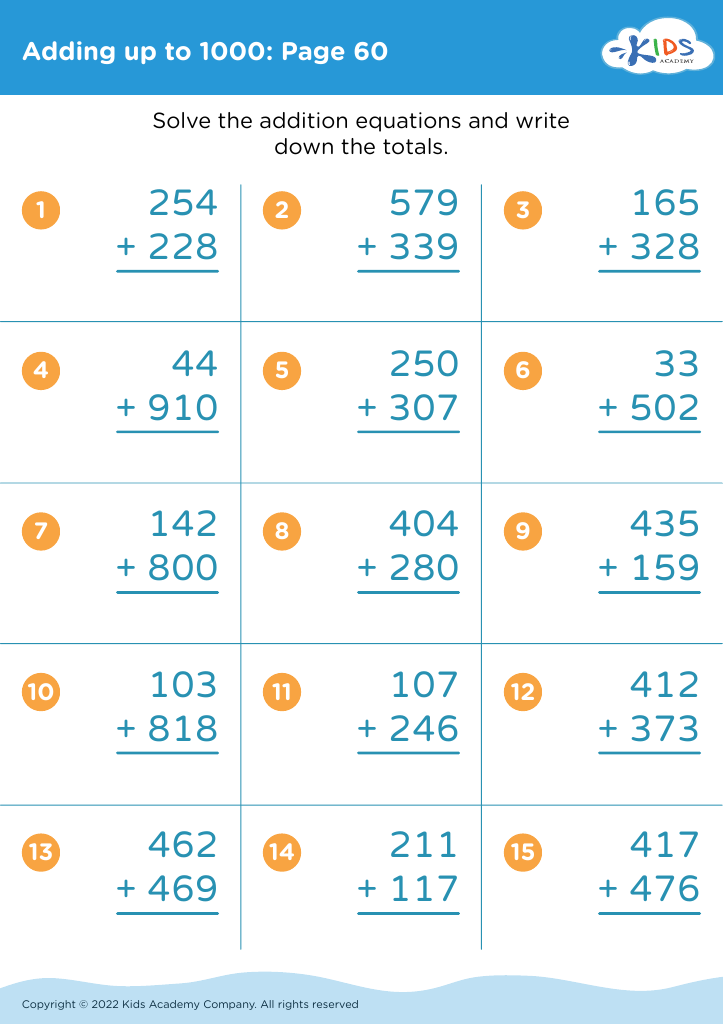
Discover a world of number recognition with our "Number Recognition Adding Up to 1000 Misc Worksheets," specially designed for young learners aged 5-8. These engaging worksheets help children develop essential math skills as they explore numbers up to 1000. Featuring a variety of fun activities, your child will practice identifying, writing, and counting numbers in an interactive way. Ideal for both classroom and home use, these worksheets encourage learning through play, making math enjoyable and accessible. Watch your child build confidence in their numerical abilities while laying a strong foundation for future math success! Download now and start learning today!
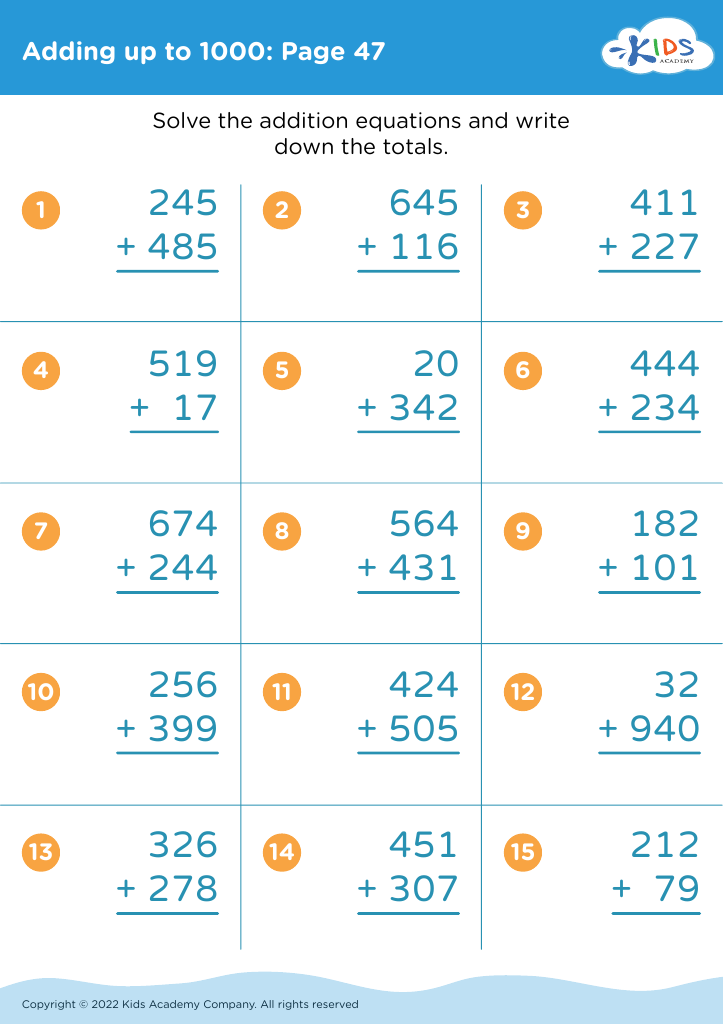
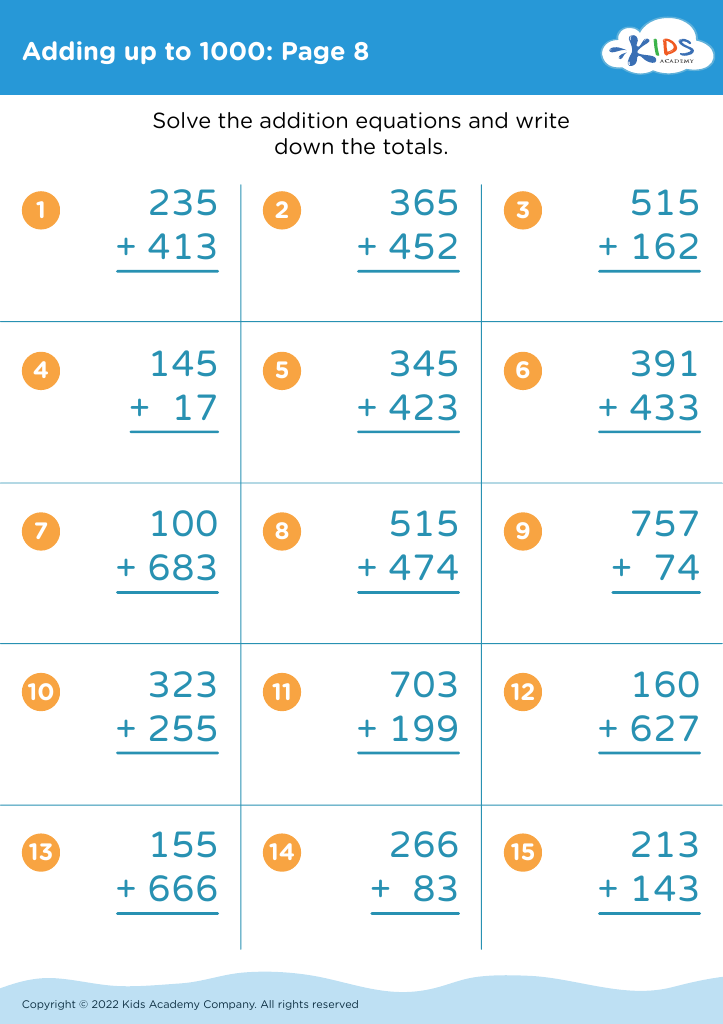
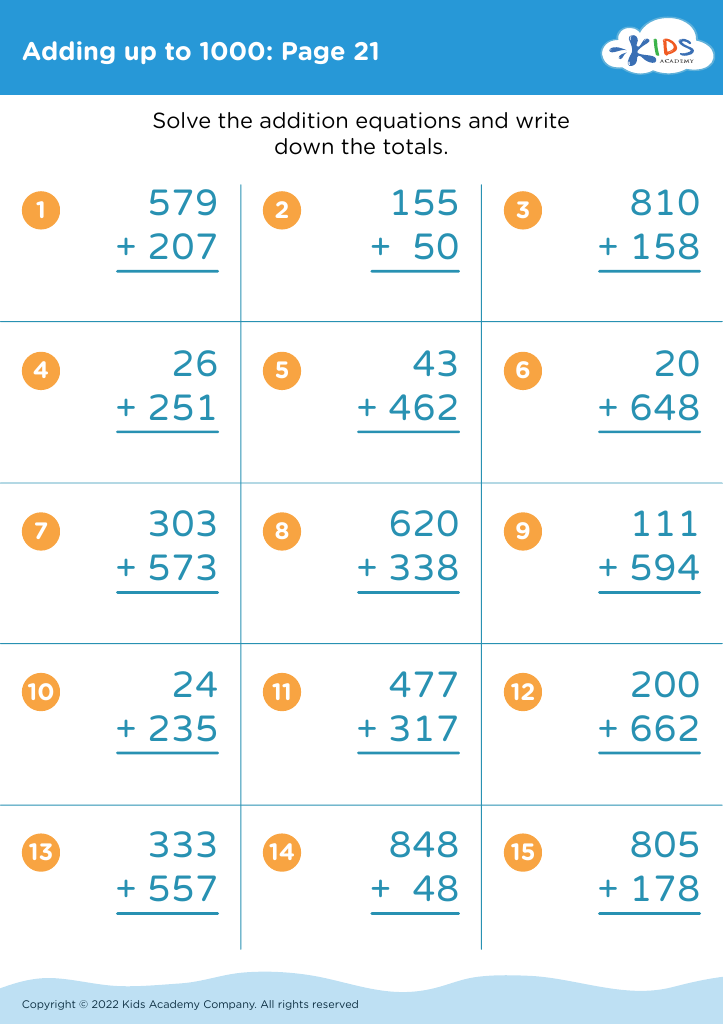
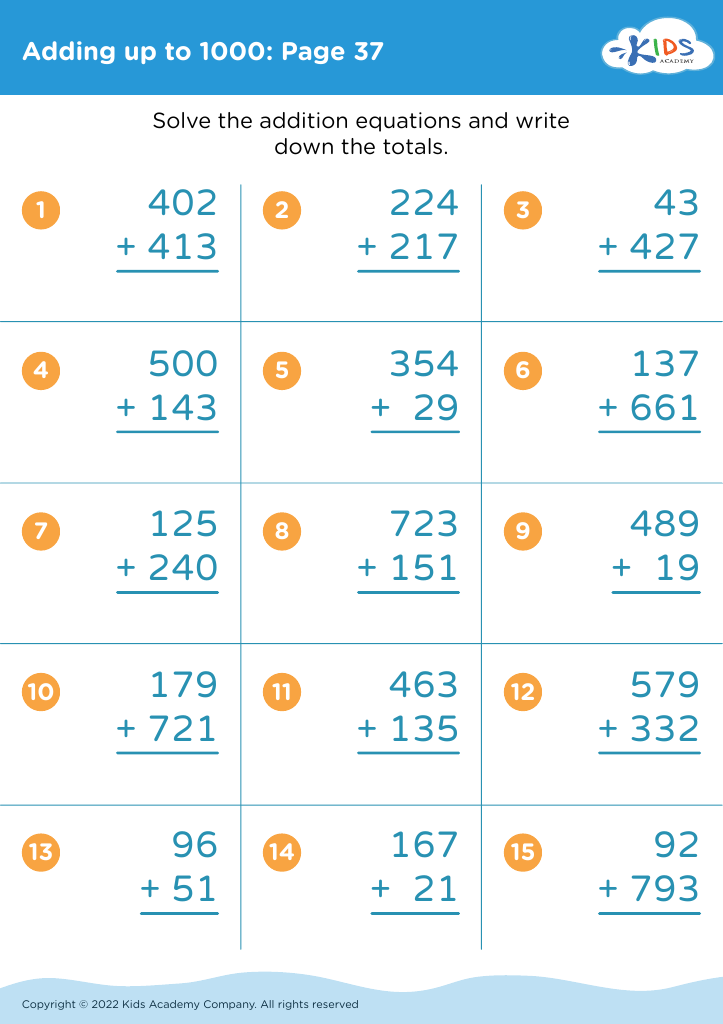
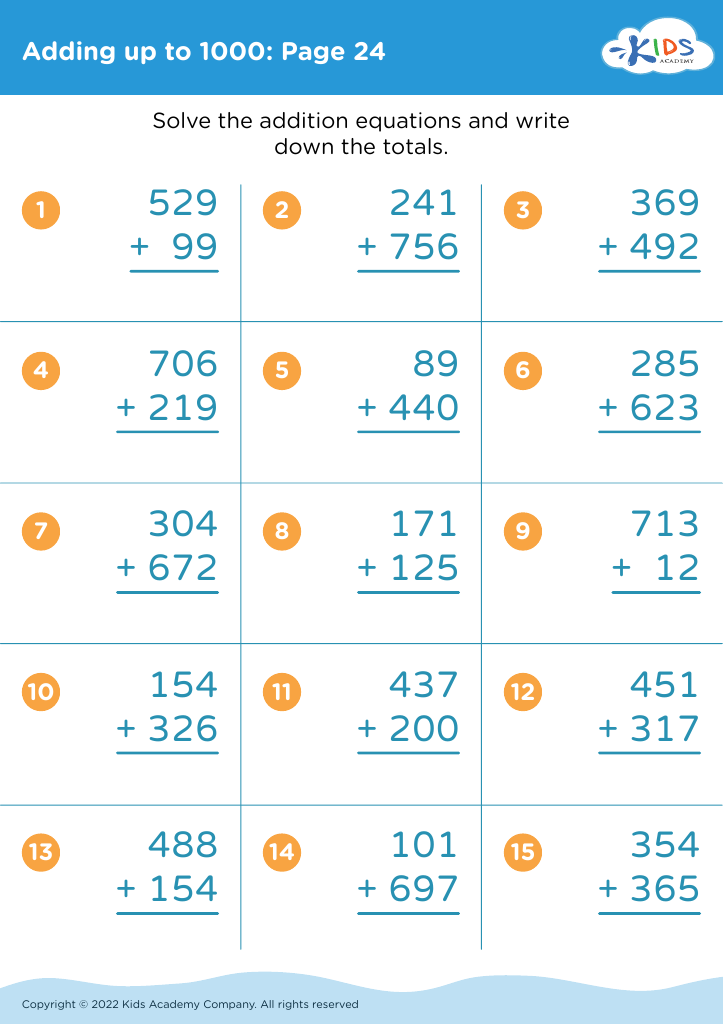
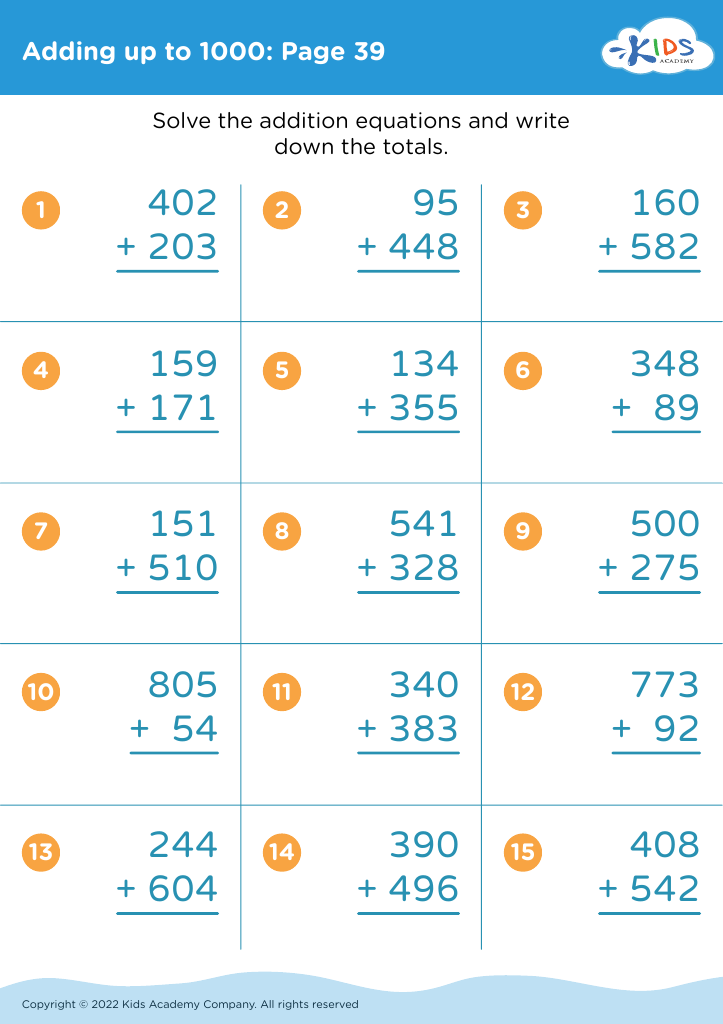
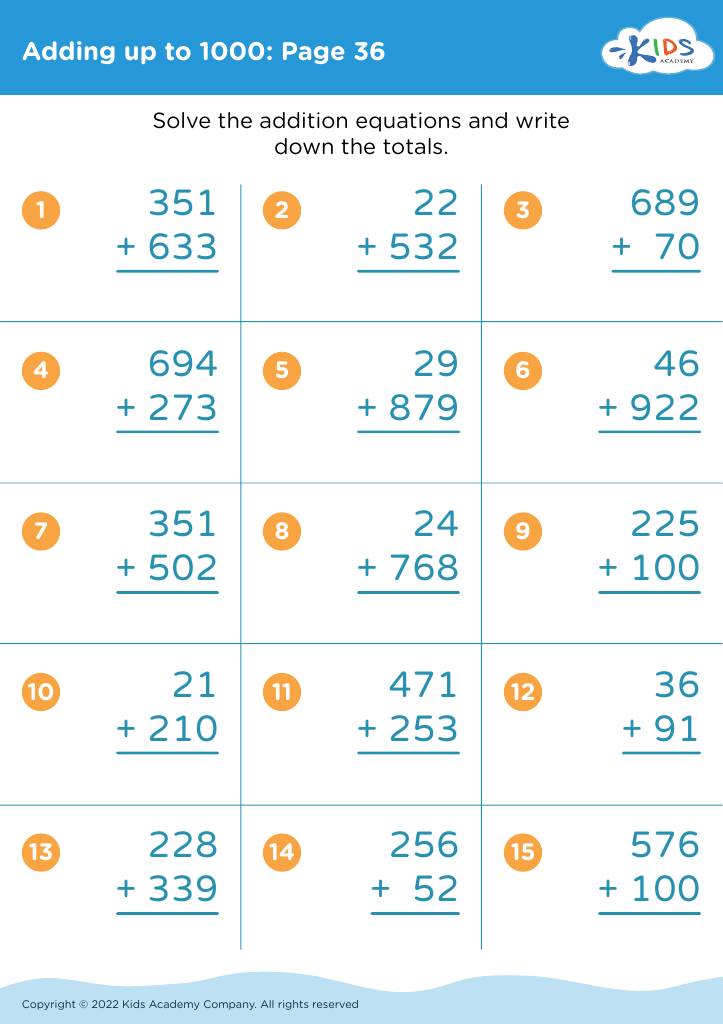
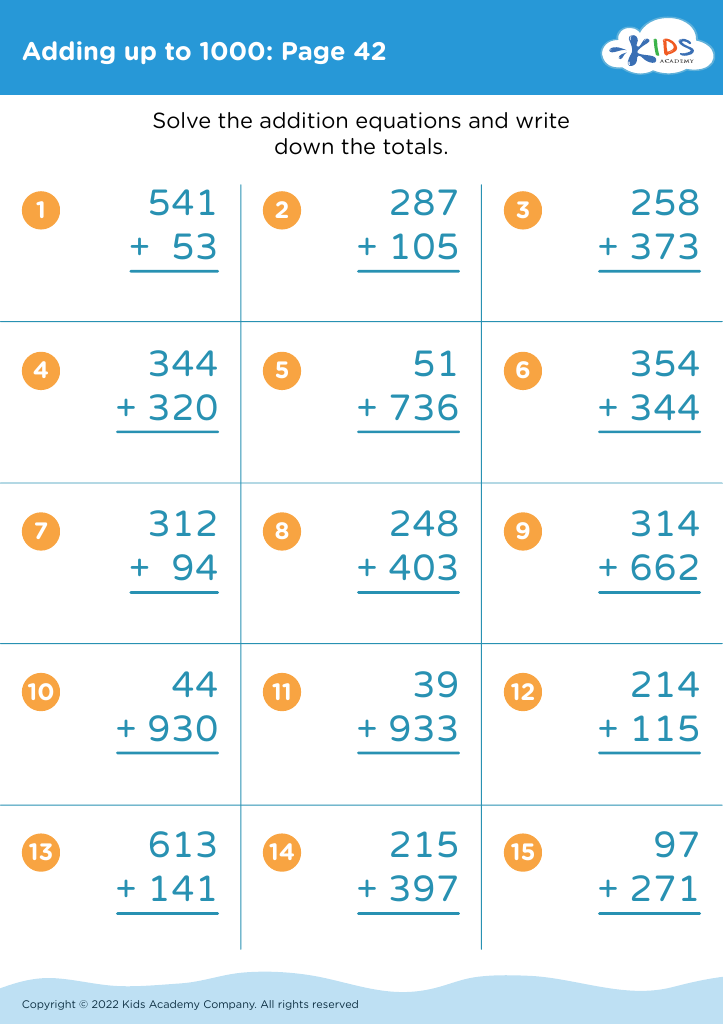
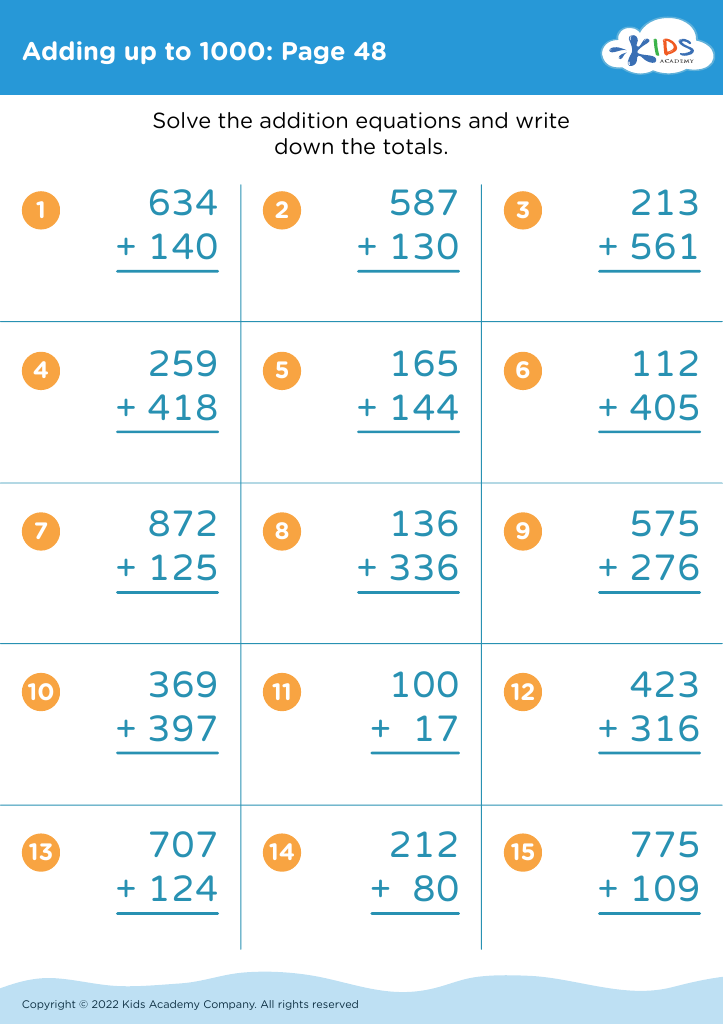


Number recognition is a crucial foundational skill for children aged 5-8, as it lays the groundwork for future mathematical learning. When children can accurately recognize numbers, they gain confidence in their ability to understand and apply mathematical concepts. As they progress to adding numbers up to 1000, they begin to grasp the significance of quantity, value, and the relationships between numbers.
For parents and teachers, fostering number recognition is essential because it promotes critical cognitive development. Recognizing numbers enables children to engage in everyday activities and problem-solving tasks, such as counting toys, understanding change when shopping, and measuring ingredients in simple recipes. Strong number recognition skills set the stage for more advanced mathematics, including addition, subtraction, and eventually multiplication and division.
Teaching this skill also encourages language development, as children learn number names and associated vocabulary, enhancing their communication abilities. Furthermore, engaging in number recognition activities cultivates focus and perseverance, valuable traits that extend beyond mathematics.
By prioritizing number recognition and related activities, parents and educators can inspire a love for learning, facilitate academic success, and empower children with essential skills for their lifelong journeys in education and everyday life.