Understand fractions Adding up to 1000 Misc Worksheets for Ages 5-8
3 filtered results
-
From - To
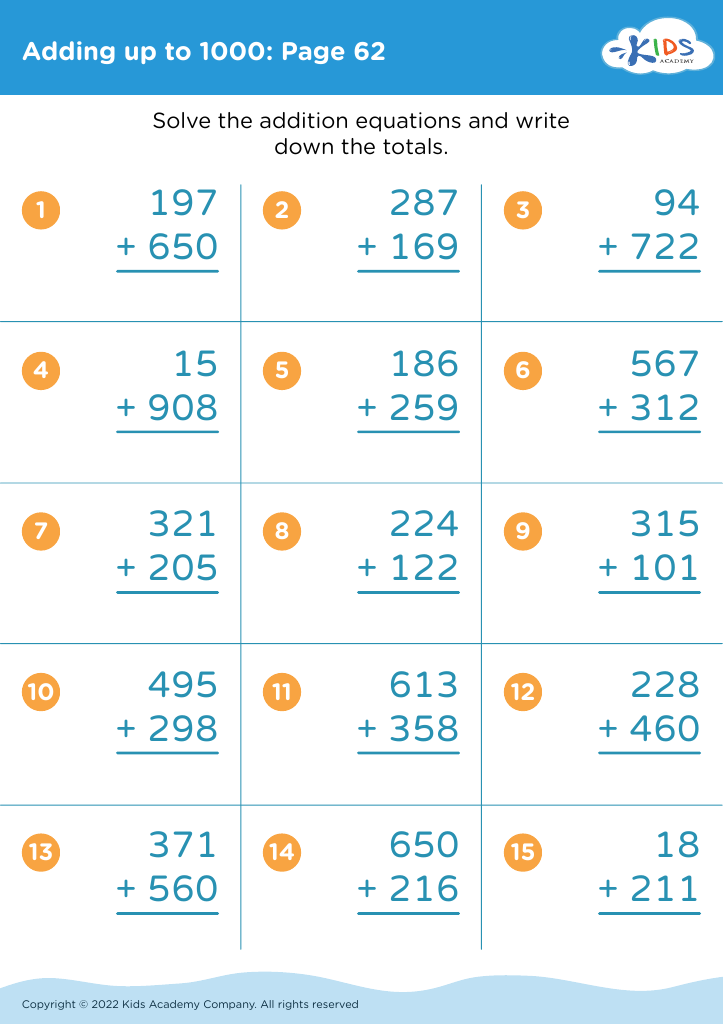
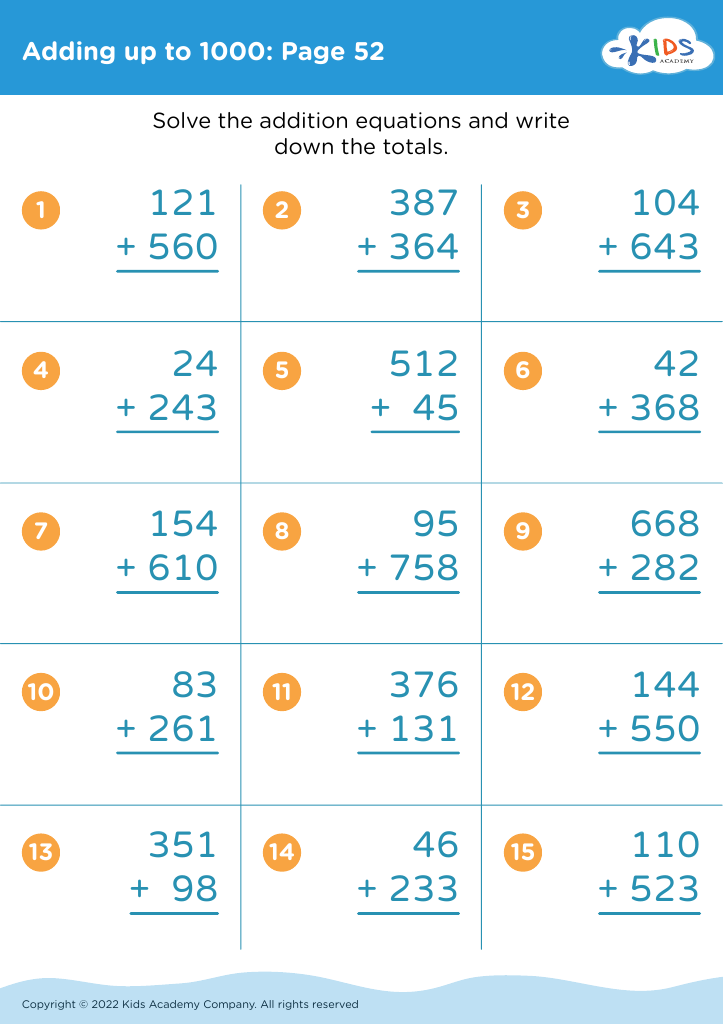
Explore the exciting world of fractions with our engaging worksheets designed for kids aged 5-8! Our "Understand Fractions: Adding up to 1000 Misc Worksheets" offer a fun and educational way to help young learners grasp essential math concepts. Through a variety of activities, children will learn to identify, compare, and add fractions, enhancing their numerical skills and building a strong foundation in mathematics. Perfect for use in the classroom or at home, these worksheets make learning fractions an enjoyable adventure. Foster a love for math in your child with our expertly crafted resources!
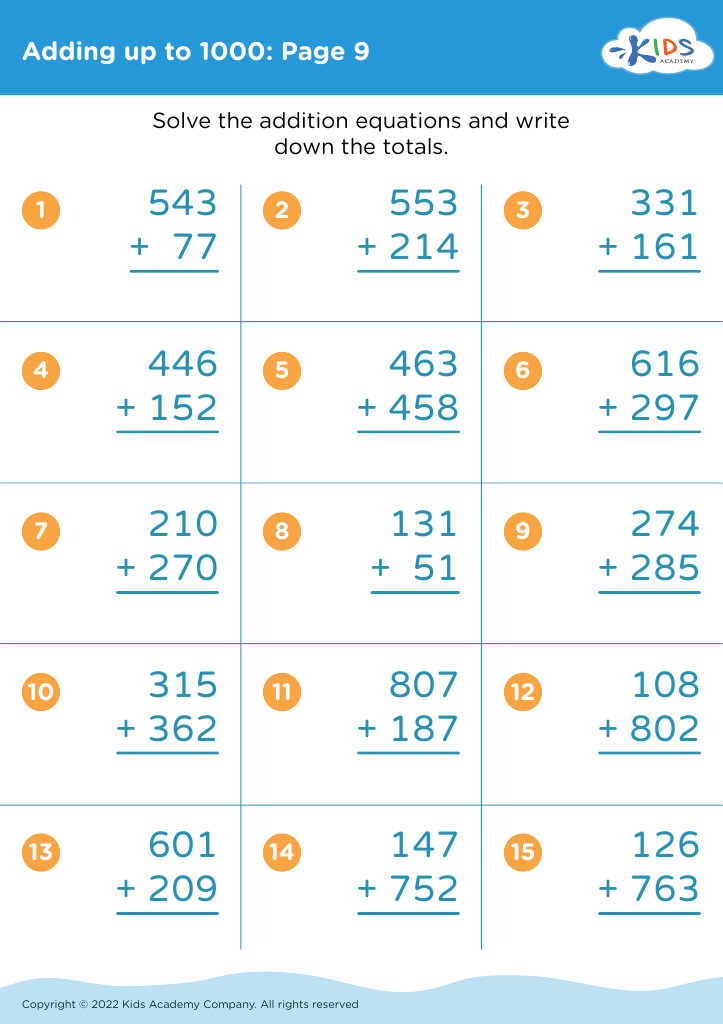


Understanding basic math concepts, including fractions, is crucial for children aged 5-8 as it lays the foundation for more advanced mathematical learning. At this formative stage, fostering arithmetic skills enhances cognitive development and problem-solving abilities. When young learners grasp the idea of fractions, they become adept at understanding parts of a whole and the relationships between numbers, which are foundational for their future studies.
Learning fractions can be surprisingly relatable and fun. It helps children understand real-world scenarios such as dividing snacks among friends or measuring ingredients for a recipe. Such practical applications make the abstract concept of fractions tangible and easier to comprehend.
Moreover, introducing fractions and ensuring proficiency by combining numbers up to 1000 at an early age encourages a positive attitude toward math. This builds self-confidence as children experience success and feel accomplished.
As educators and parents, investing time in teaching these concepts meaningfully prepares children not just for academic success but also for everyday activities that require basic math. Utilizing engaging tools (like visual aids and interactive activities) ensures that learning about fractions, adding numbers up to 1000, and related skills are both effective and enjoyable for young minds.