Recognizing shapes Adding up to 1000 with Regrouping Worksheets for Ages 5-8
4 filtered results
-
From - To
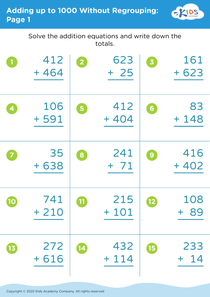
Discover our engaging "Recognizing Shapes Adding Up to 1000 with Regrouping Worksheets" designed specifically for children aged 5-8. These carefully crafted worksheets seamlessly integrate shape recognition with advanced addition skills, allowing young learners to explore math in a fun and interactive way. As students work through exercises that require regrouping while identifying various shapes, they’ll enhance their cognitive abilities and strengthen their foundational math skills. Our resources encourage playful learning, making complex concepts easier to grasp. Perfect for classrooms or homeschooling, these worksheets foster a love for learning in mathematics while supporting essential skills needed for future success. Start learning today!
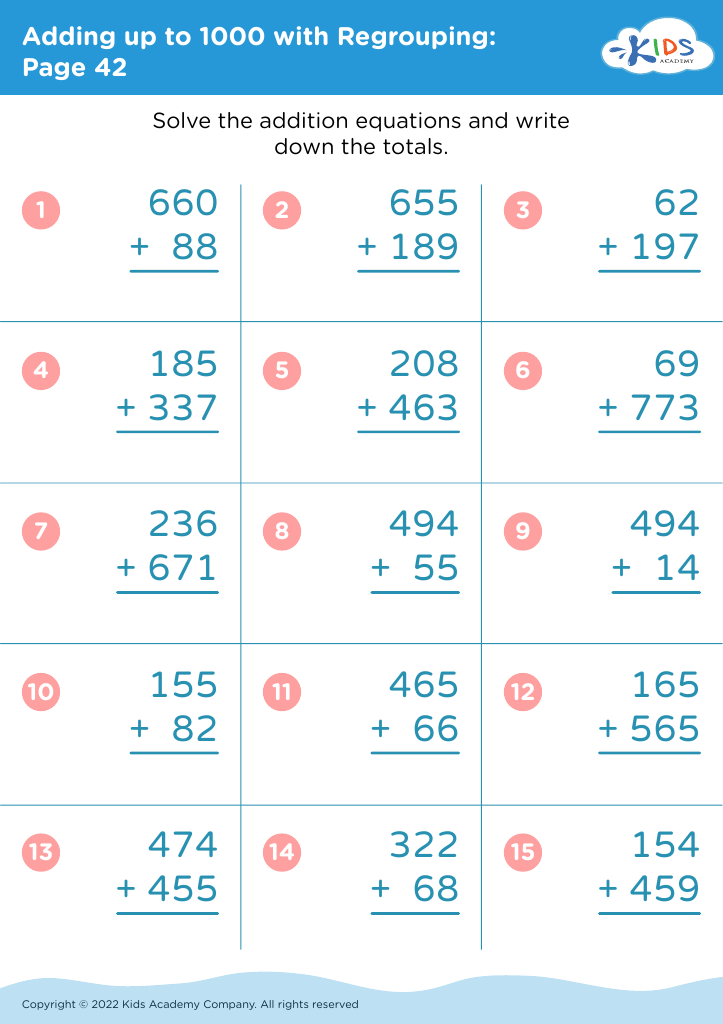
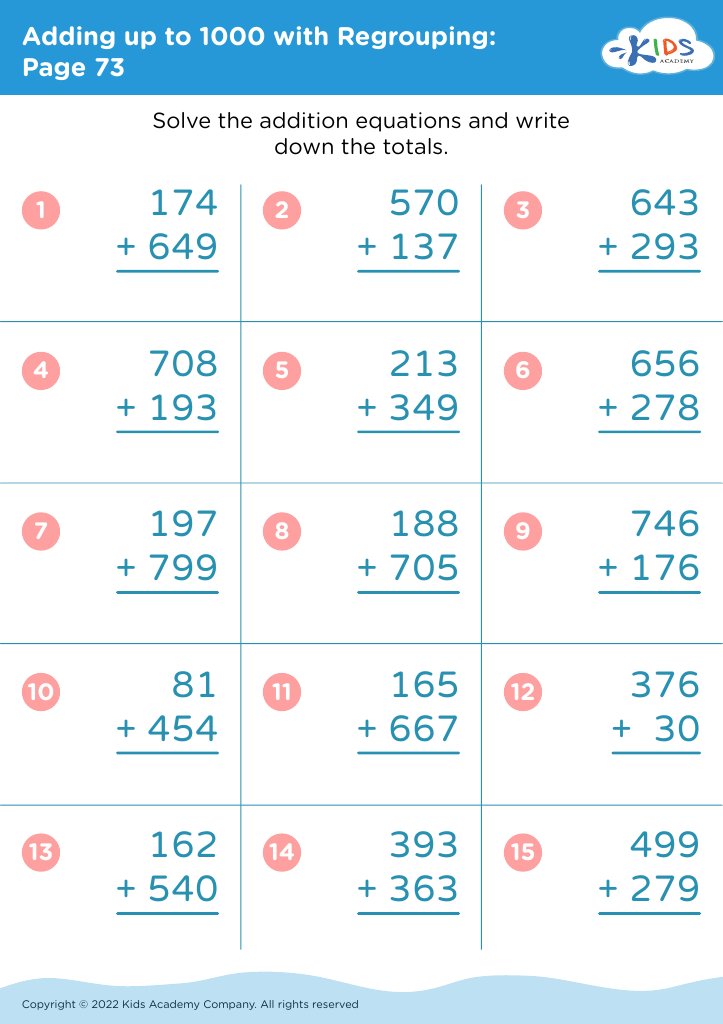
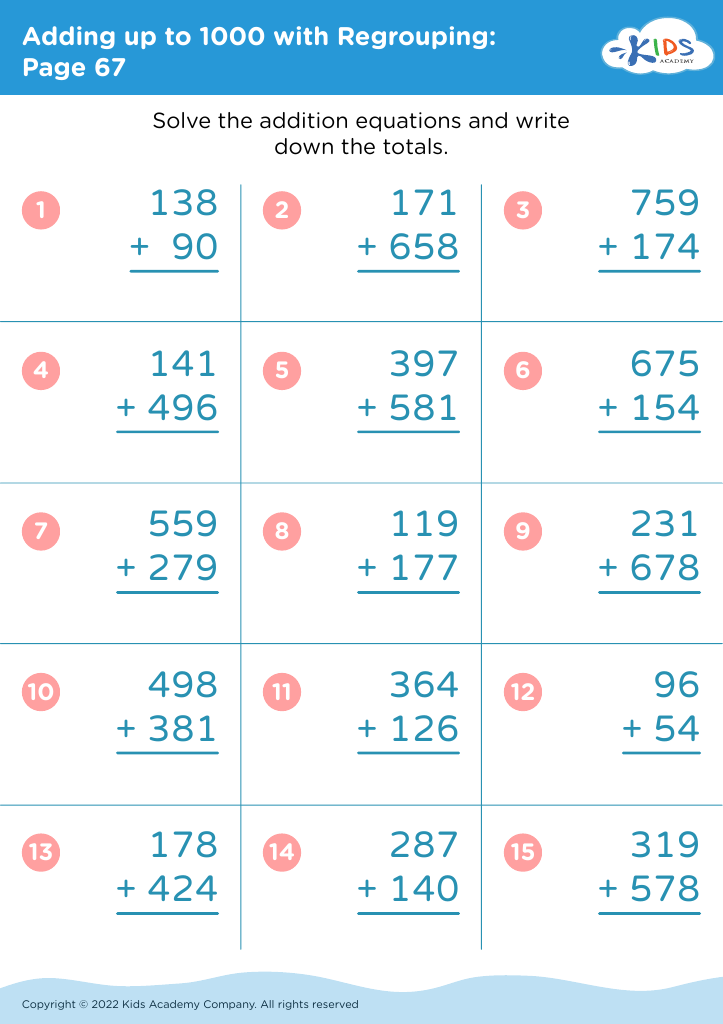
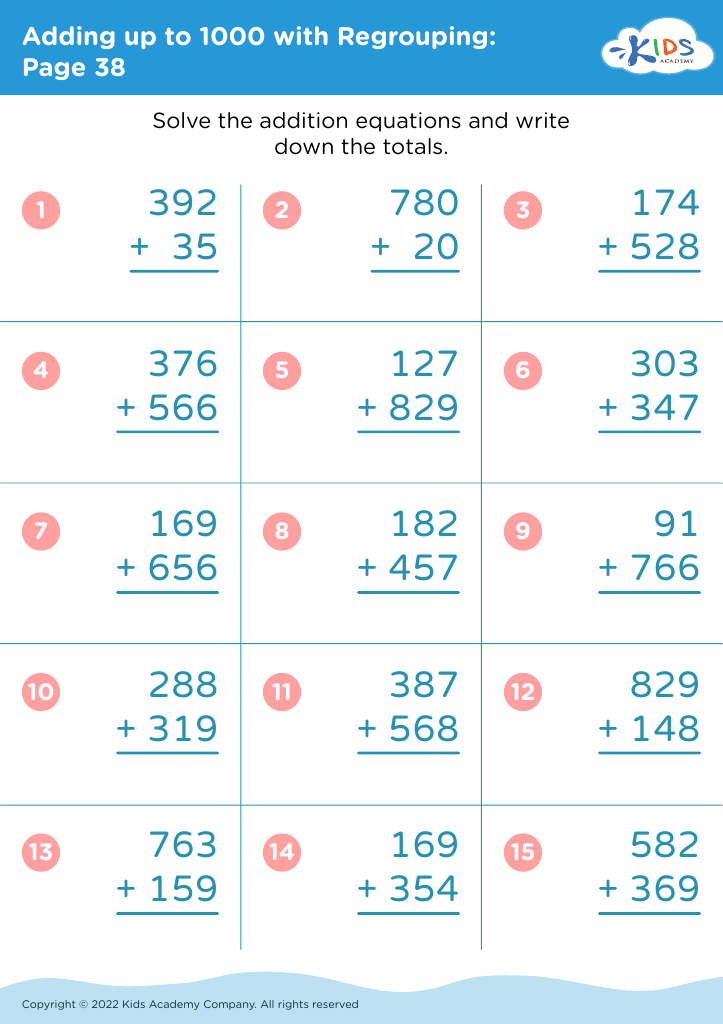


Recognizing shapes and advancing in addition, particularly skills such as adding up to 1000 with regrouping, are essential foundational skills for children aged 5-8. For parents and teachers, fostering these skills is crucial as they underpin later math and even literacy development.
Recognizing shapes helps children understand their environment. It enhances spatial awareness and supports logical thinking, which are critical for problem-solving in math and science. When kids distinguish between different shapes, they begin to identify patterns, an important precursor to more complex mathematical concepts.
Additionally, mastering addition with regrouping equips children with essential strategies needed for more advanced math. As they learn to add larger numbers effectively, they build confidence and reduce math anxiety. These skills serve as building blocks for critical thinking and future academic success. Moreover, familiarity with regrouping forms a basis for multiplication and division, establishing a strong math foundation.
By prioritizing these skills, parents and teachers empower children to think critically, solve problems, and navigate their surroundings with confidence, programming them for success both inside and outside the classroom.