Enhance comprehension Adding up to 1000 Without Regrouping Worksheets for Ages 5-8
4 filtered results
-
From - To
Boost your child's understanding of addition with our "Enhance Comprehension: Adding Up to 1000 Without Regrouping" worksheets, designed specifically for ages 5-8. These engaging activities facilitate a solid grasp of fundamental math concepts, allowing young learners to practice adding large numbers confidently. Our worksheets support various learning styles, integrating visuals and hands-on exercises to enhance retention and mastery. Designed to foster a love for math, these resources encourage independent learning while building essential arithmetic skills. Ideal for classroom use or at-home practice, these worksheets will empower your child to excel in math and reinforce critical thinking abilities! Start their journey today!
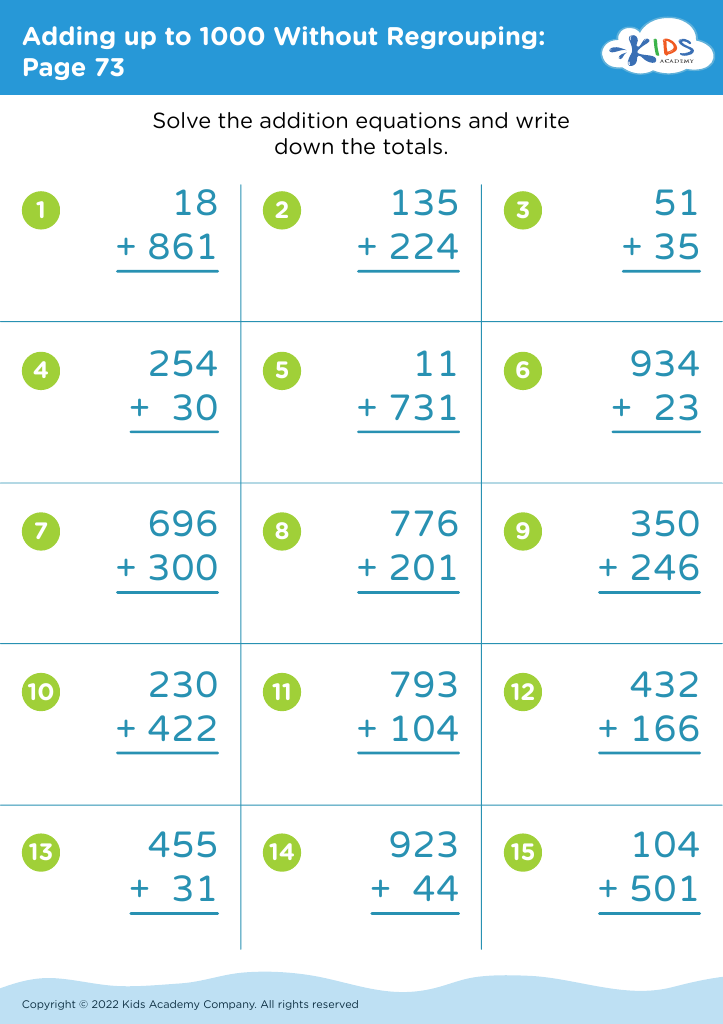
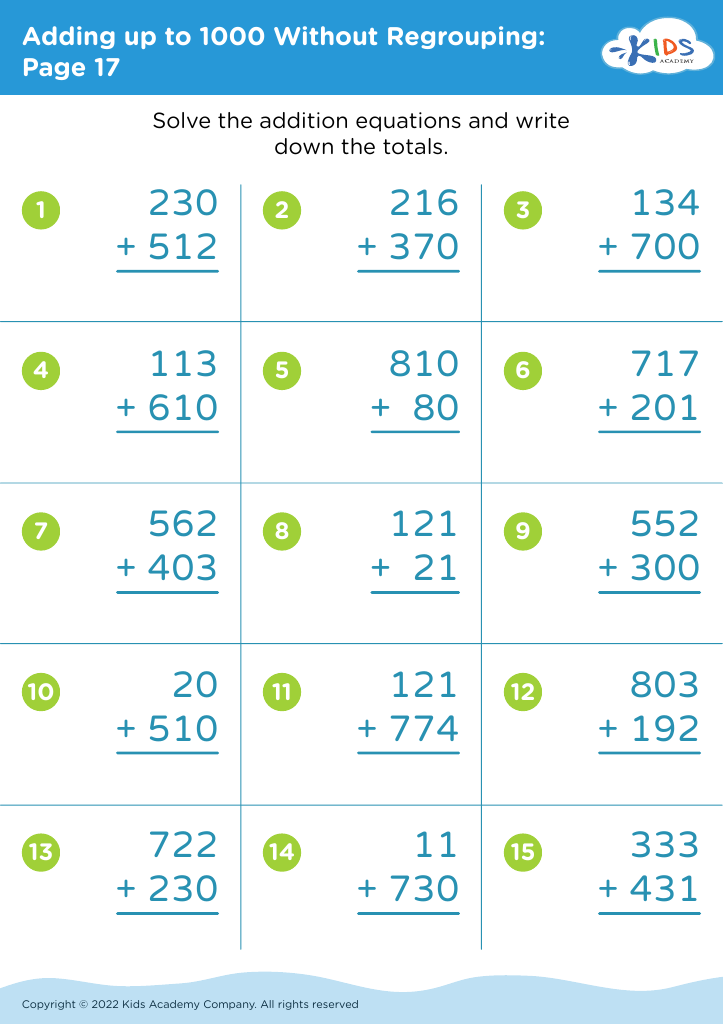
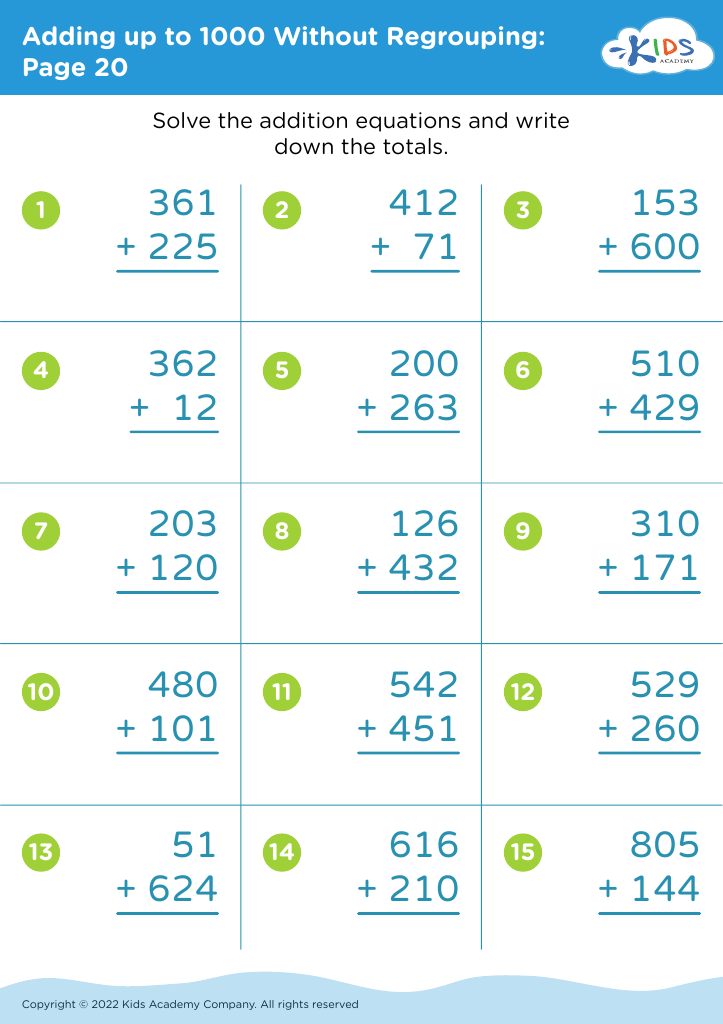
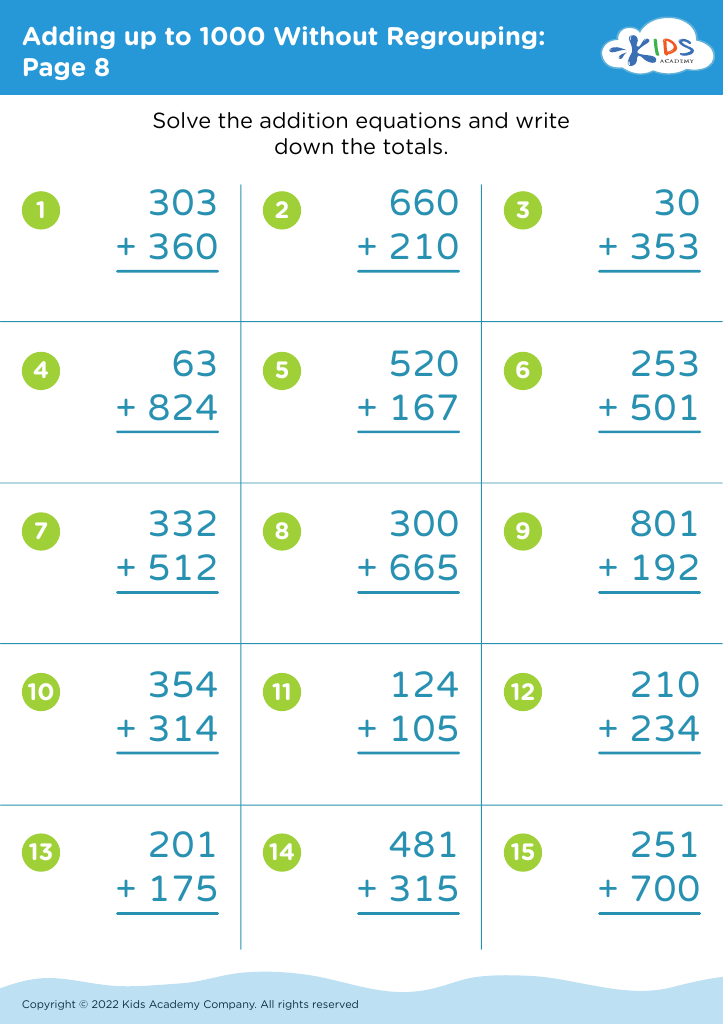


Enhancing comprehension of addition without regrouping for children aged 5-8 is crucial for several reasons. First and foremost, mastering foundational arithmetic sets the stage for more complex mathematics later on. At this age, students are at a pivotal point in their cognitive development, and understanding how to add numbers accurately helps boost their confidence and fosters a positive attitude towards learning.
When children comprehend addition techniques, such as grouping numbers in tens and ones, they develop critical thinking and problem-solving skills. These skills extend beyond mathematics, helping children become more adept at reasoning and making connections in various subjects. Furthermore, early comprehension in math can lead to better performance overall in school, as numeracy skills are intricately linked to literacy.
Parents and teachers should prioritize these skills not only for academic success but also for building perseverance and resilience. Children who understand addition can approach math challenges with confidence, reducing anxiety and frustration. By cultivating these abilities at an early stage, adults are empowering children with the tools necessary for lifelong learning and success. With a strong foundation, children are better prepared for future academic endeavors and real-world applications of mathematics.