Simplifying Fractions Adding up to 1000 Without Regrouping Worksheets for Ages 5-8
3 filtered results
-
From - To
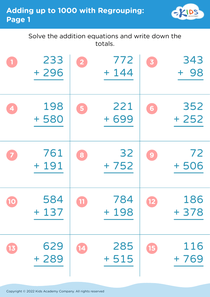
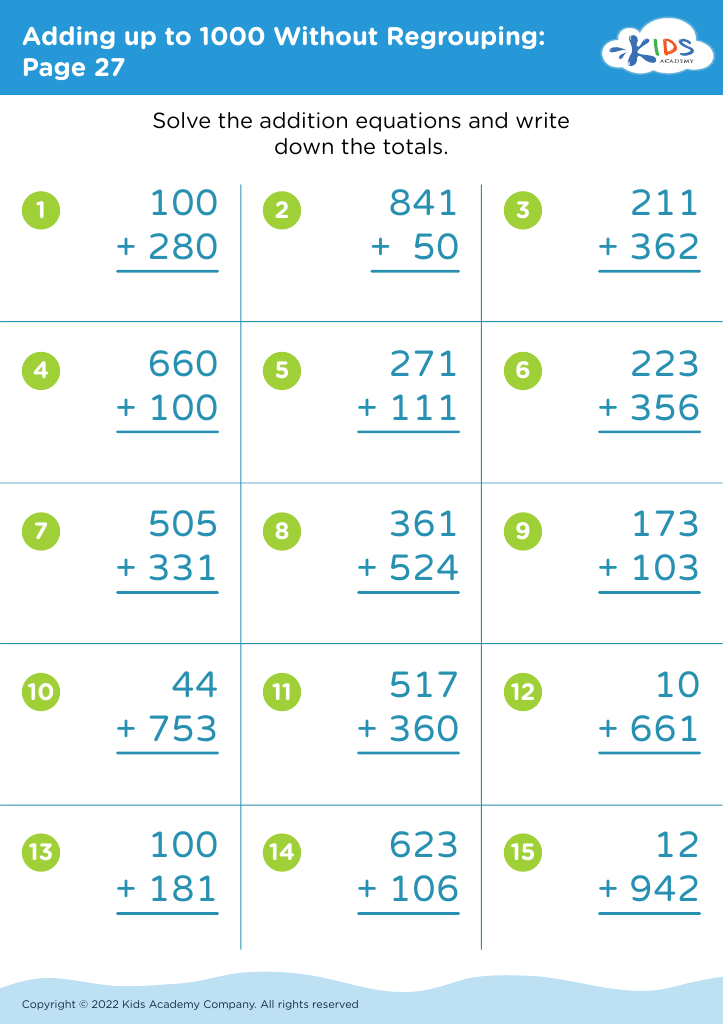
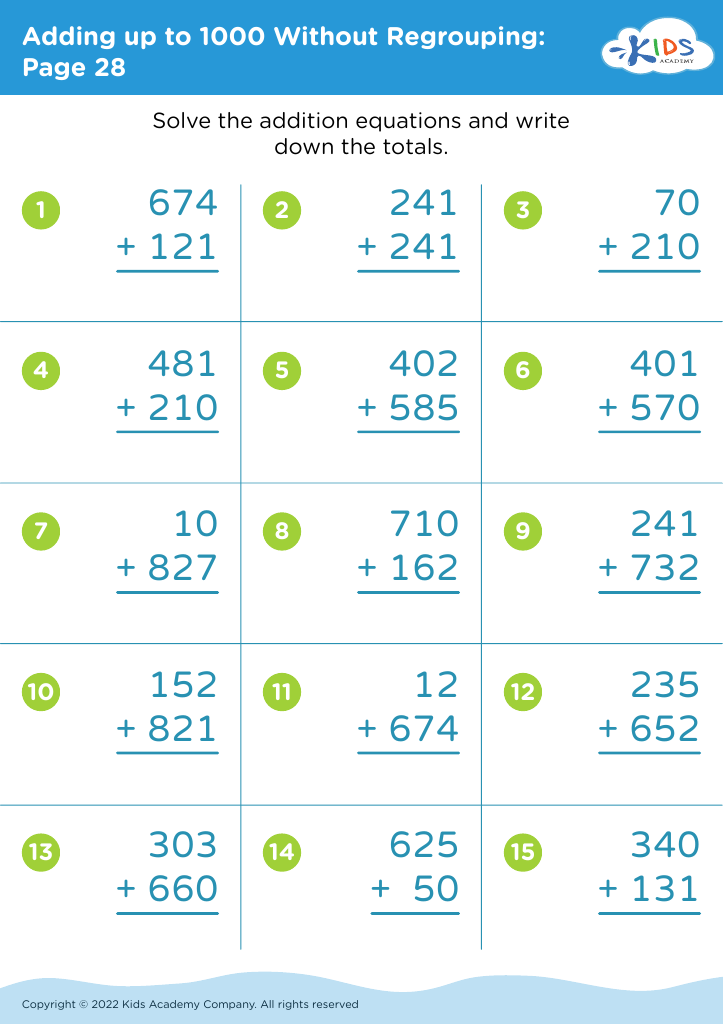
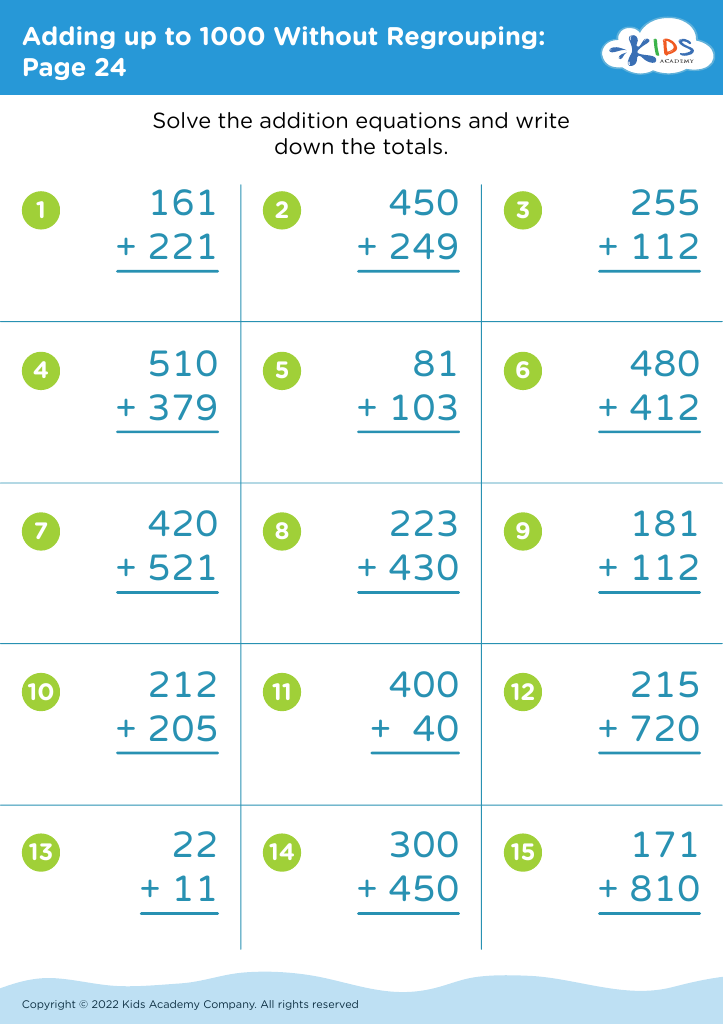
Our "Simplifying Fractions Adding up to 1000 Without Regrouping Worksheets" are expertly designed for children ages 5-8. These engaging worksheets help young learners master the concept of simplifying fractions effortlessly. Structured activities focus on adding fractions without the need for regrouping, bolstering their confidence in math. Perfect for both classroom and home practice, our printables support skill development in a fun, interactive way. Tailored to nurture a strong math foundation, these resources align with educational standards, ensuring your child gains essential proficiency in fraction simplification. Unlock your child's potential with our enriching and user-friendly worksheets!


Understanding the concept of simplifying fractions and basic arithmetic, such as adding numbers up to 1000 without regrouping, lays a solid foundation for math skills in young students aged 5-8. Parents and teachers should prioritize this for several key reasons.
First, early math skills are critical for cognitive development. Simplifying fractions and basic addition helps children develop logical thinking, pattern recognition, and problem-solving abilities, which are crucial for academic success in later years.
Second, mastering these skills boosts confidence. When children see that they can solve math problems correctly, their self-esteem grows, fostering a positive attitude towards learning. This confidence carries over to other subjects and even social interactions.
Third, these foundational skills enable smoother transitions to more complex math concepts. Understanding fractions and addition without regrouping means children are better prepared for topics like multi-digit addition and subtraction, multiplication, division, and more advanced fraction operations encountered in higher grades.
Lastly, parents and teachers engaging with these math concepts can create enriching and fun learning experiences. Through games, puzzles, or practical examples, children can relate math to the real world, making learning enjoyable and meaningful.
Investing time in these early math skills sets children up for long-term academic and intellectual growth, ultimately benefiting their overall educational journey.